NITECORE TUP2 Review
The NITECORE TUP2 is a somewhat compact flashlight that delivers impressive brightness, durable construction, and useful features in a pocket-friendly size.
Our Verdict
Save time. Get access to brief summaries of our reviews so you can browse and make decisions more efficiently.
Pros
- 1,200 lumens is powerful for how small it is
- The 1,300 mAh battery is capable
- We have no issues with durability or water resistance
Cons
- It is large for a keychain flashlight
- When not locked, it turns on accidentally very easily
- The keychain feels a bit cheap
Technical Details
-
Capacity
1300mAh
-
Weight (oz)
2.05 oz (58.1 g)
-
Dimensions
2.76 in x 1.06 in x 1.18 in (7 x 2.7 x 3 cm)
-
Notable Materials
Aluminum, Plastic
-
Manufacturing Country
China
-
Warranty Information
Buying Options


Full Review
Get up to 15% off NITECORE • Join Pack Hacker Pro
We’ve tested a handful of NITECORE flashlights over the years, and one thing we’ve learned is that they like to pack a lot of power into small packages. The NITECORE TUP2 is no exception.
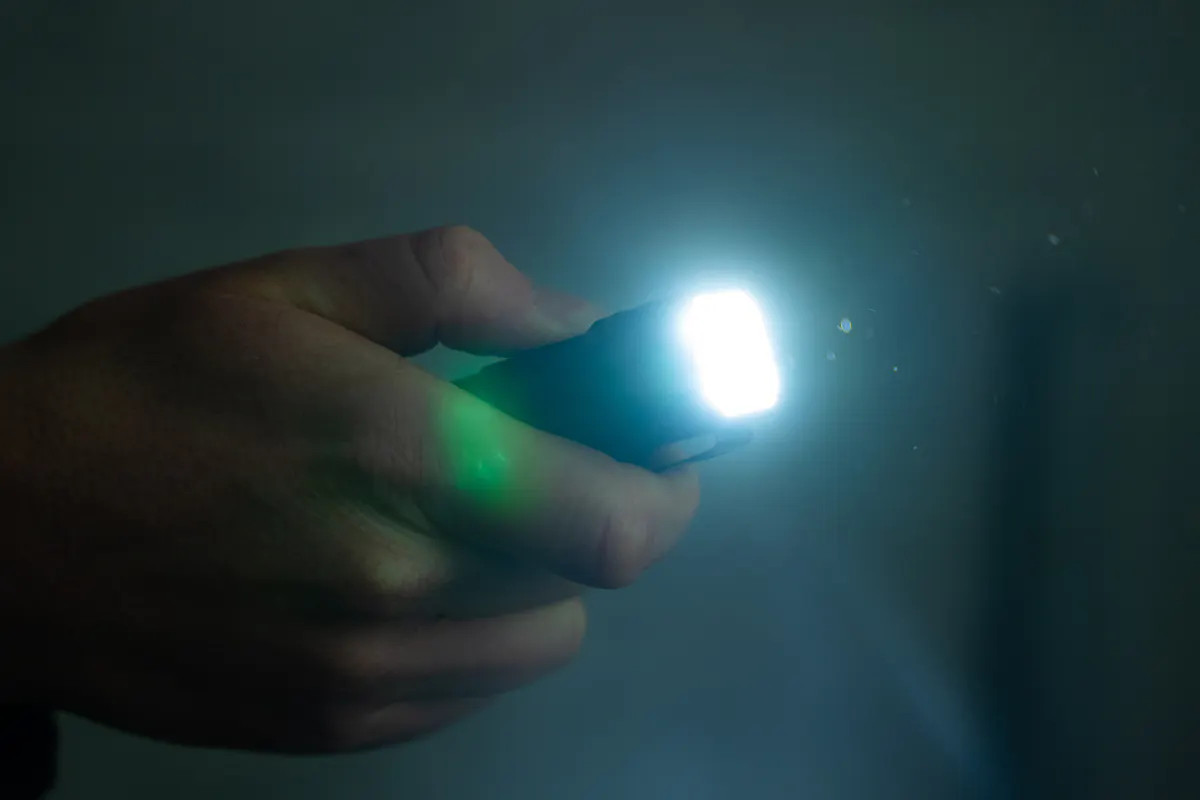
This is a small flashlight with some serious output—much more than what you’d expect from something you can fit in your pocket. But does that power make it a good option for travel? And does it live up to the hype? Let’s find out.
The Rundown
The first thing we noticed about the light is how sturdy it feels. The body is crafted from aluminum alloy with an HA III military-grade hard-anodized finish. In other words, it’s built to take a beating (and we beat it up).
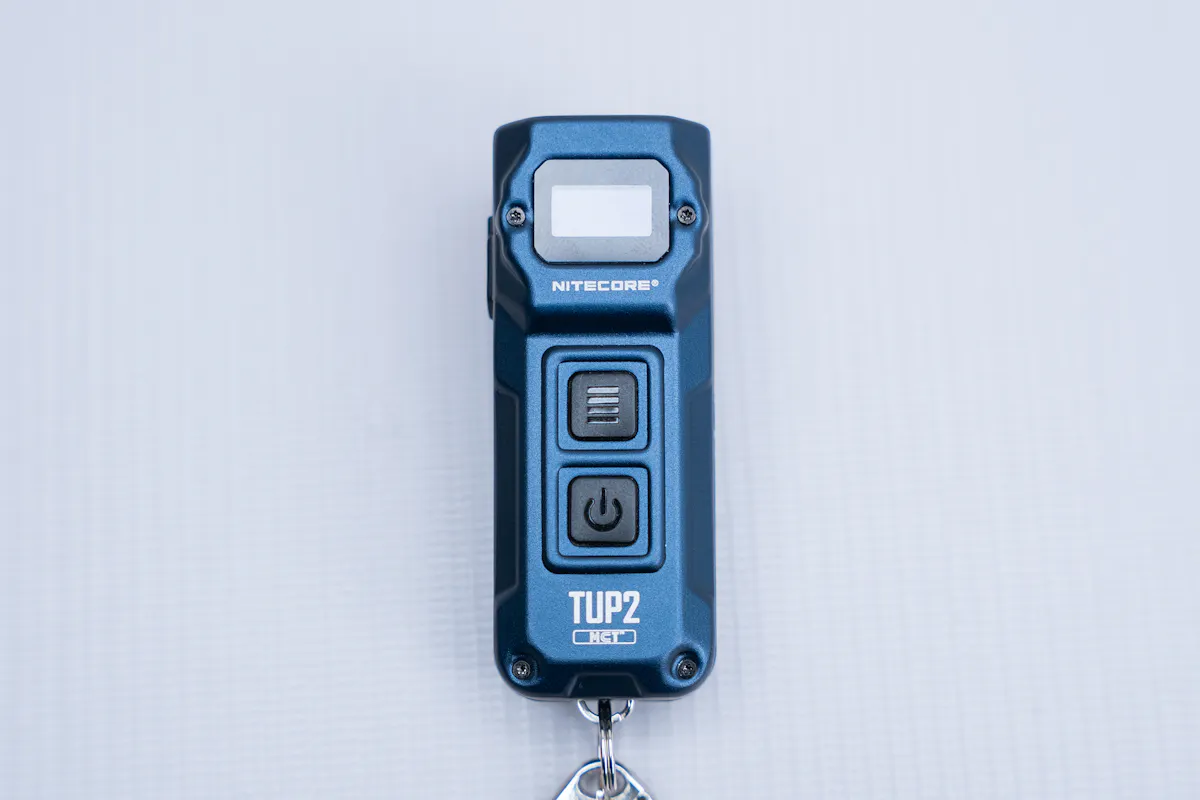
During testing, we used this light while working on renovations in a 1890s home. That meant it got dropped, tossed into toolboxes, bumped against ladders, and generally knocked around more than most travel gear ever will. Despite that, the light still looks pretty close to new. There are a few small marks on the glass screen, but nothing serious (or out of the ordinary).
Because of the aluminum body and silicone or plastic covers around some components, the flashlight has an IP54 rating. That means it’s protected from dust and splashes. It’s also rated for impacts up to two meters. We got it pretty wet during testing and dropped it more than once without any issues. It’s not something you’ll want to submerge in water, but for rain, spills, or everyday accidents, it holds up well.
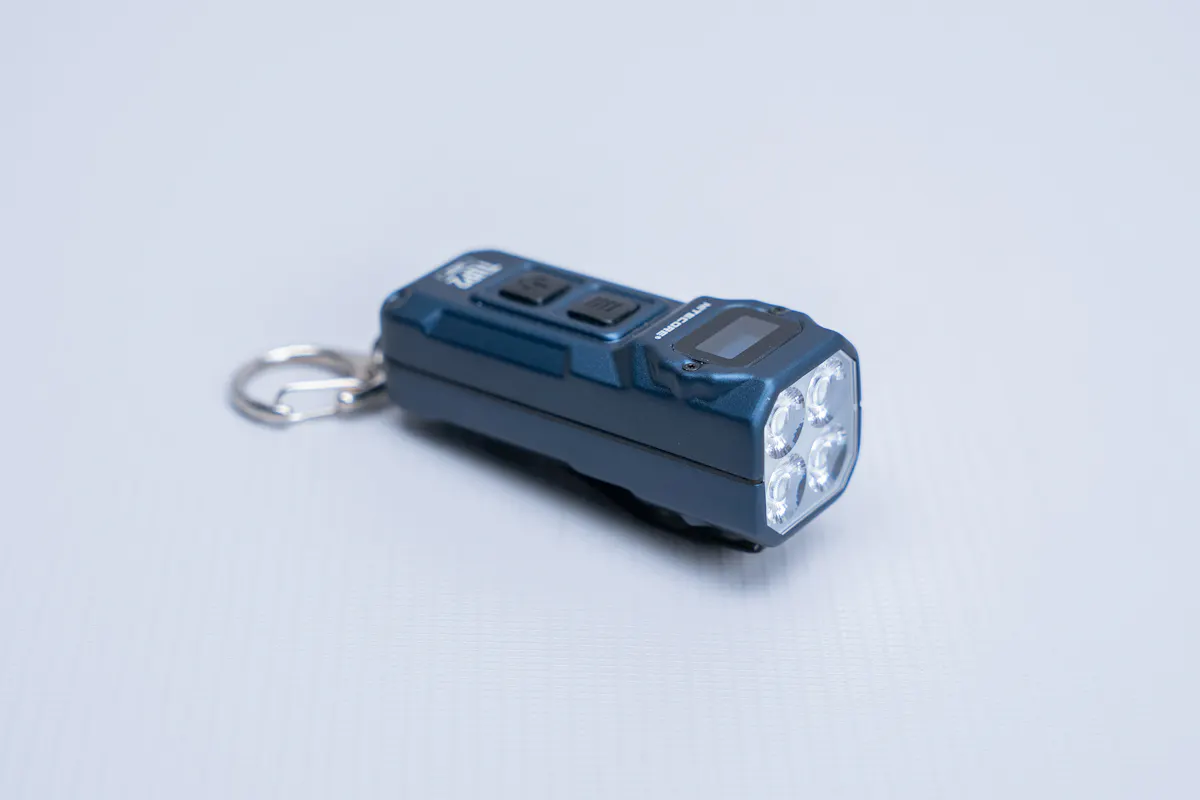
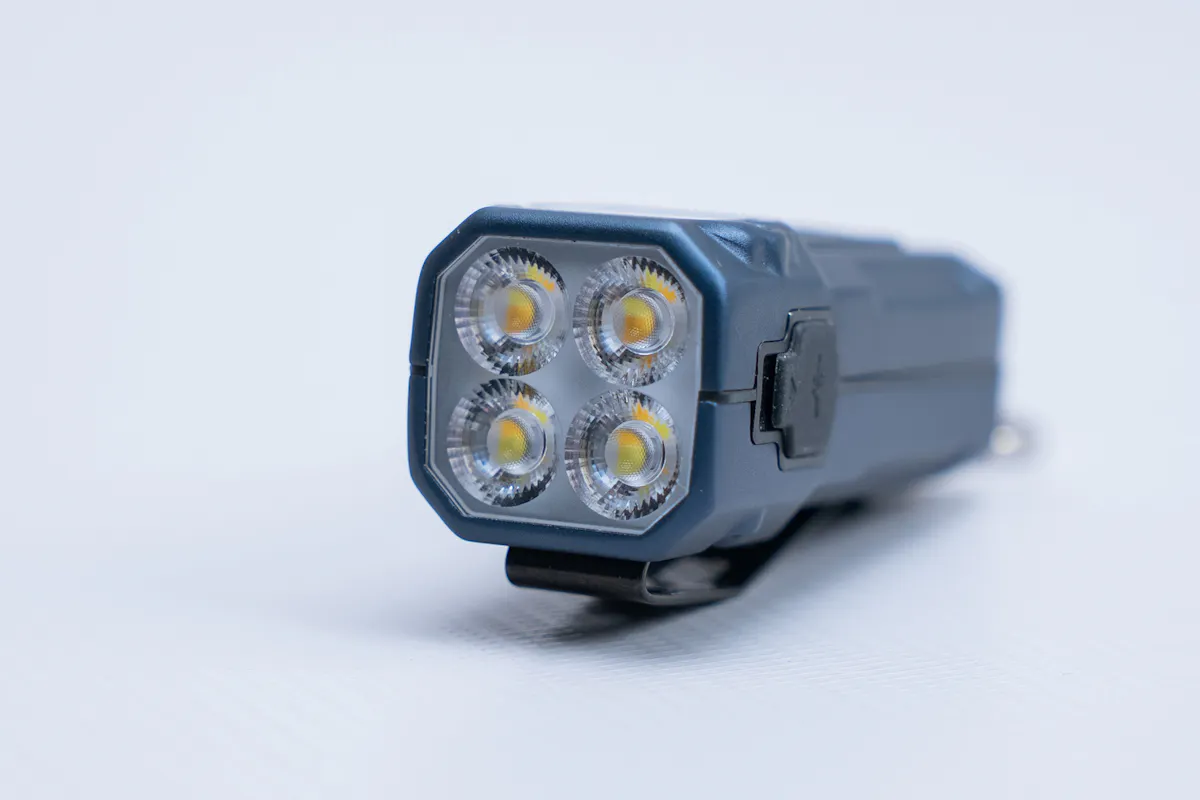
Inside the light are four quad-core MCT (Multiple Color Temperatures) UHE LEDs with a maximum output of 1,200 lumens. If you’re coming from a typical keychain or pocket flashlight, that amount of brightness can feel almost blinding. It’s like driving a 2002 Saturn VUE with fogged headlights and upgrading to a brand-new Mazda CX-30 with LEDs. You were fine before, but it might be hard to go back after you’ve experienced something this powerful. Algernon who?
In practical terms, it’s excellent for working around the house, walking a trail at night, or having around for emergencies. It throws a lot of light for something that fits in your pocket.
The flashlight runs on a built-in 1300 mAh Li-ion battery that lasts up to 190 hours on the lowest setting. Obviously, that’s the most conservative brightness level, but even with the higher settings, we were impressed with the battery life.
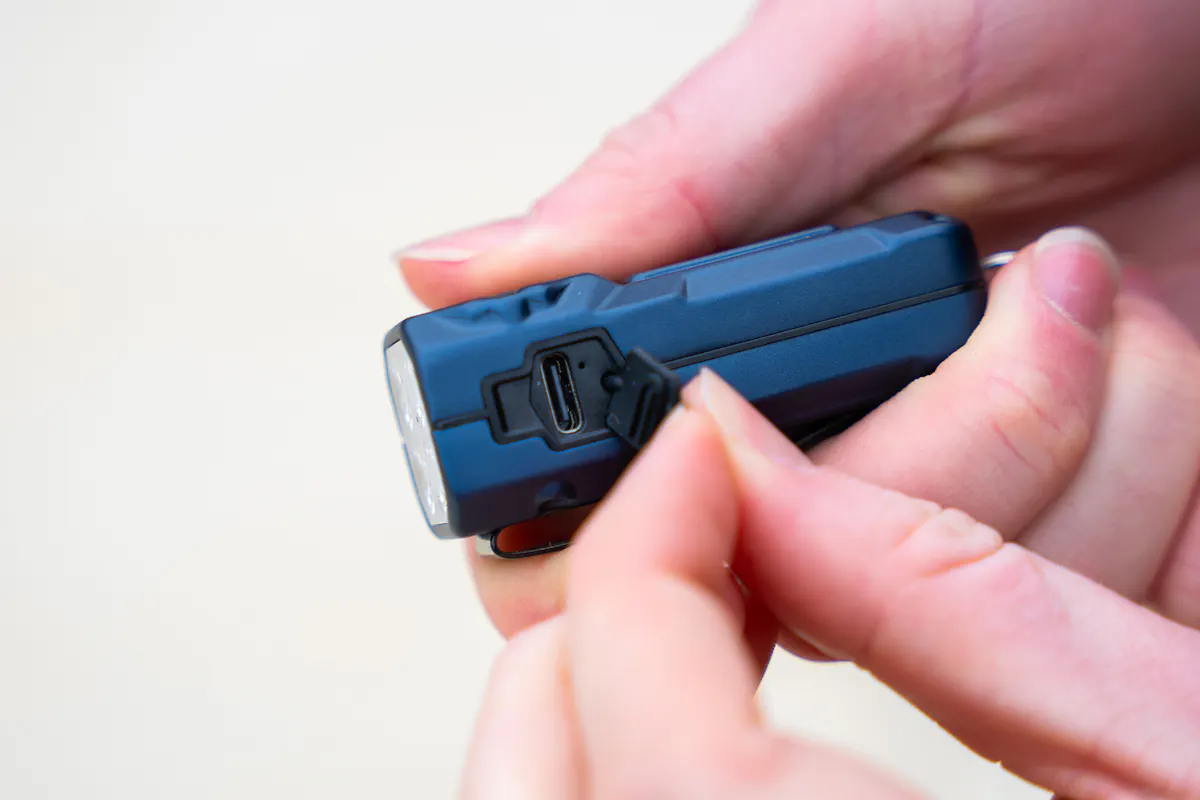
With standard daily use, we were able to go about a week between charges. On days when we were actively working on the house—using the light every 10–15 minutes for quick tasks—it lasted around three days on higher brightness settings. When it finally needs power, it charges via USB-C, which we always like to see.
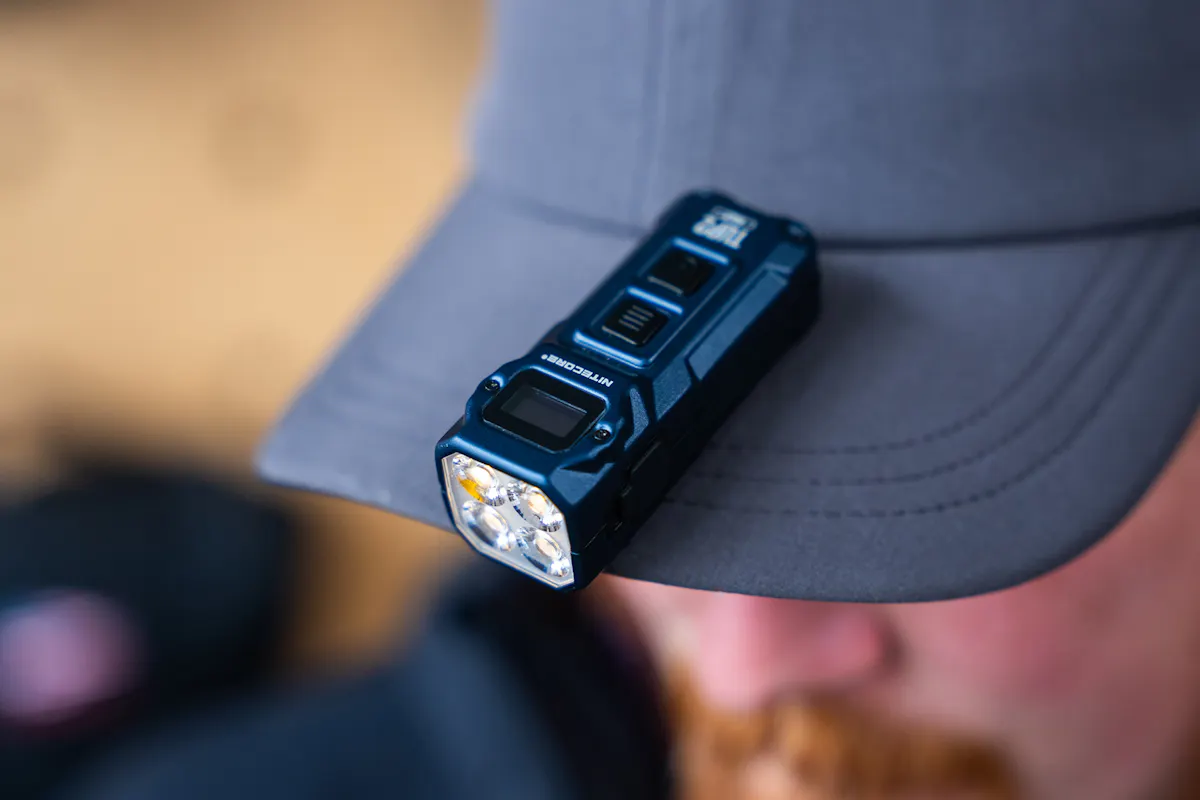
On the back of the light, there’s a sturdy stainless steel clip that lets you attach it to a pocket, bag, or hat. In practice, we most often used the clip on a baseball cap. That setup works surprisingly well, especially for quick nighttime tasks.
Whether we were taking the dog outside for a walk or working on something around the house, having the light on a hat meant the beam went exactly where we were looking. It’s a simple setup, but incredibly useful.
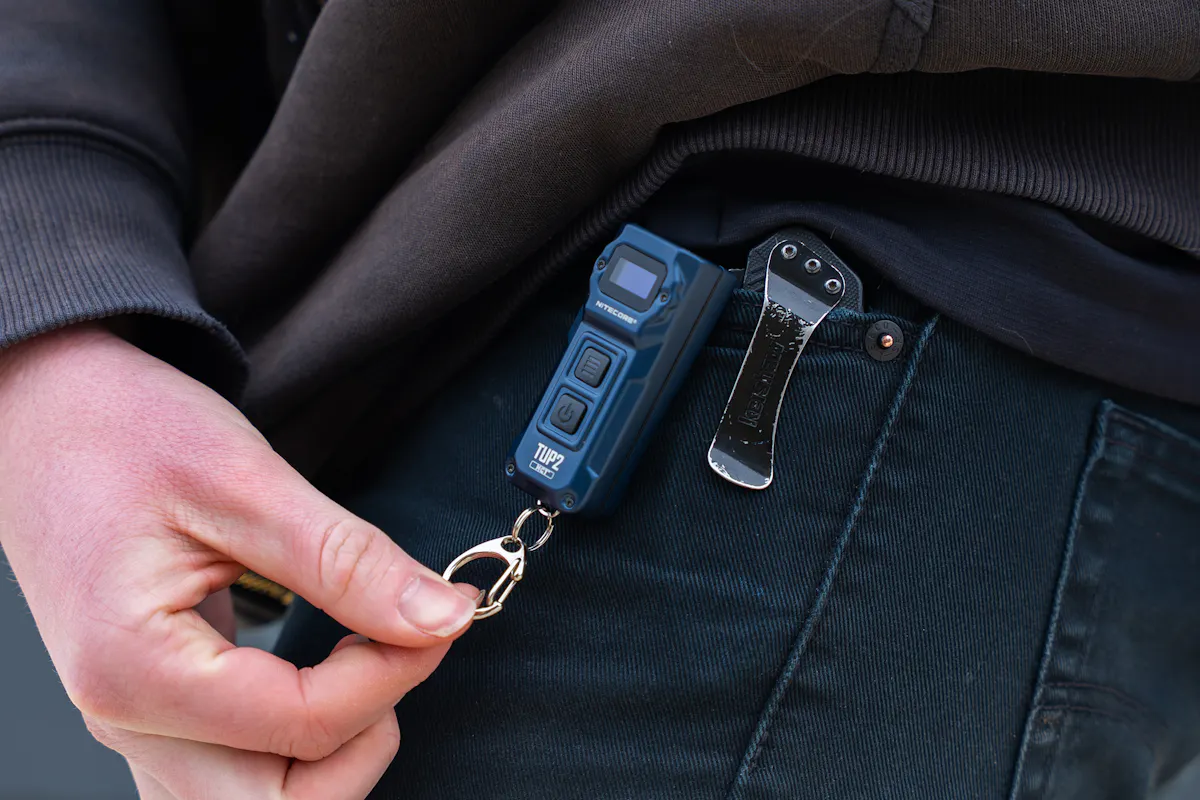
The light also comes with a small keychain attachment. That said, we mostly stuck with the clip. When the keychain ring is attached, it can bounce around a bit—especially if you’re wearing the light on a hat—which gets a little noisy. The light also feels somewhat large for a dedicated keychain flashlight, though you could still connect it to your keys if you really wanted to.
Operating the light is fairly straightforward thanks to its two-button design. There’s a power button and a menu button marked with four small lines.
Press the power button once to turn the light on. It automatically returns to the last brightness level you used, which is handy if you prefer a specific setting. There are five brightness levels to cycle through.
If you need maximum power quickly, you can hold the menu button to activate turbo mode. This pushes the light to its full 1,200-lumen output. You can trigger this whether the light is on or off, and when you release the button, the flashlight returns to its previous state.
One unique feature of this flashlight is its three color temperature settings. You can switch between a warm 3,000K beam, a neutral 4,500K beam, and a cool 6,500K beam. To change between them, hold both the power and menu buttons while the light is on.
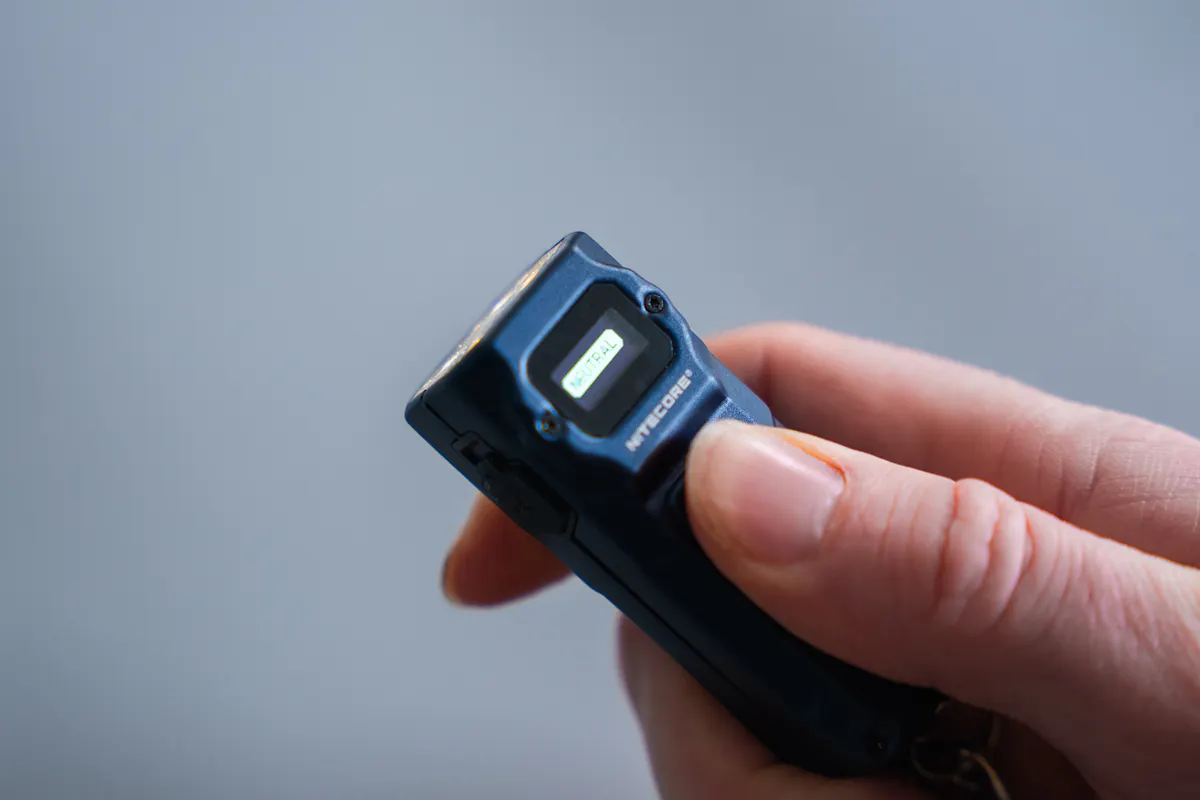
Each color temperature still lets you cycle through the five brightness levels, so you can fine-tune the light for what you’re doing.
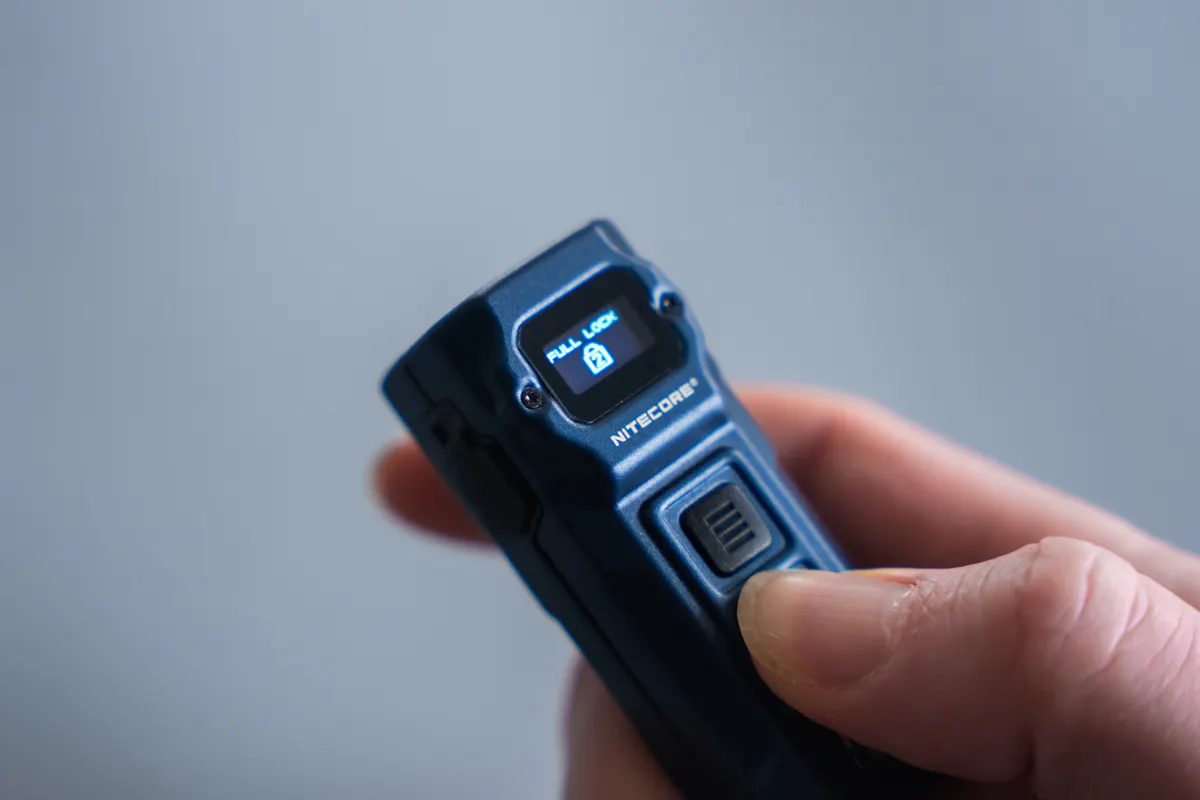
There are also two lock modes designed to prevent the flashlight from turning on accidentally.
Holding the power button for a few seconds activates a semi-lock mode. In this mode, the power button won’t turn the light on, but you can still activate turbo mode by holding the menu button.
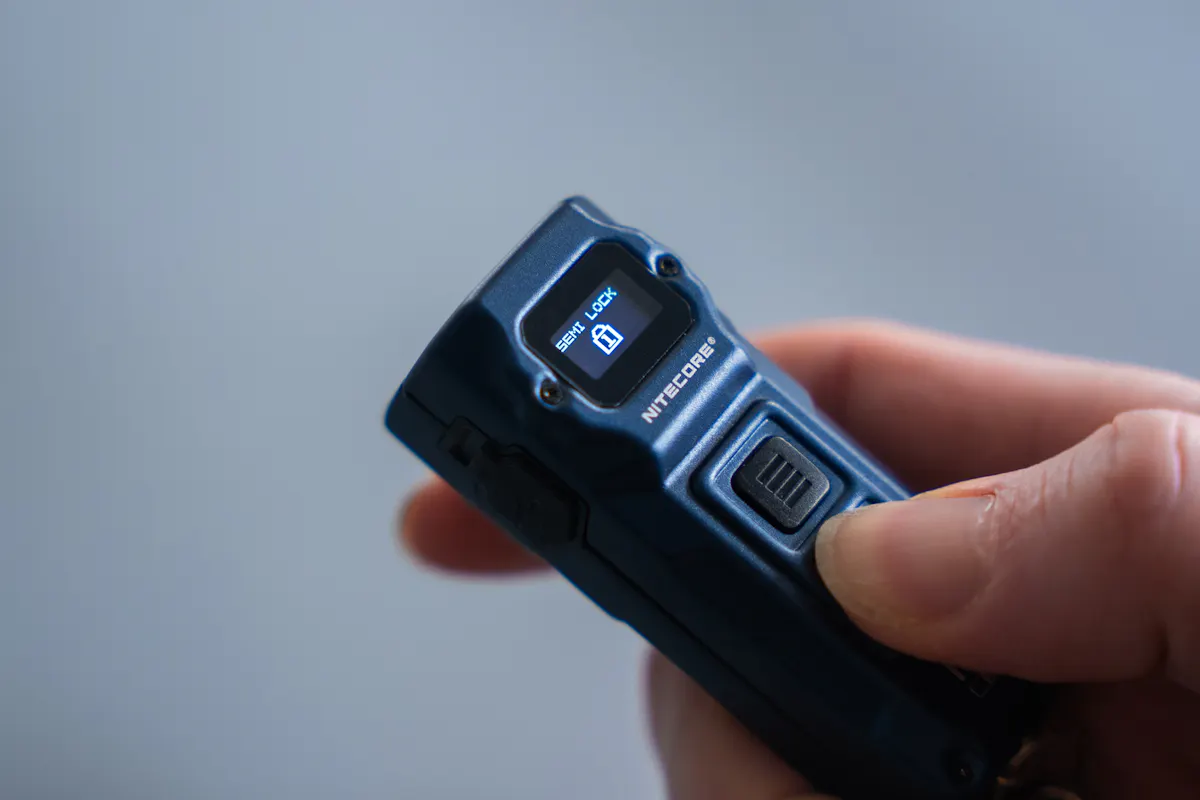
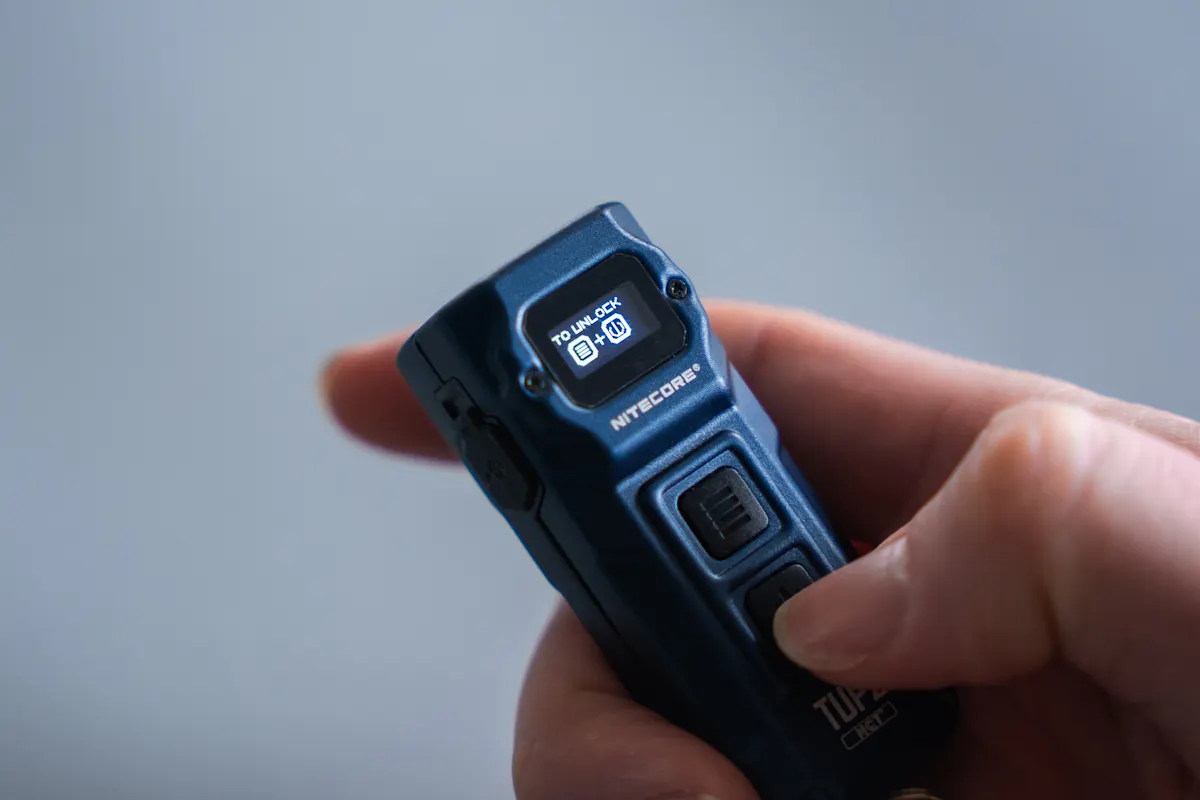
Holding the power button even longer activates full lock mode. When the light is fully locked, none of the buttons do anything. To unlock the light from either mode, hold both buttons for a few seconds. If you’re in semi-lock mode, you can’t reach full lock mode without first going back to regular use mode.
We found the lock modes especially helpful. Early on, the flashlight in our pocket turned on a few times while we were working around the house. That drained the battery faster than we expected and made the pocket it was stored in noticeably warmer. Once we started using the lock mode, that problem disappeared.
Packability
The NITECORE TUP2 is small, but it’s definitely on the larger side for a keychain-style flashlight.
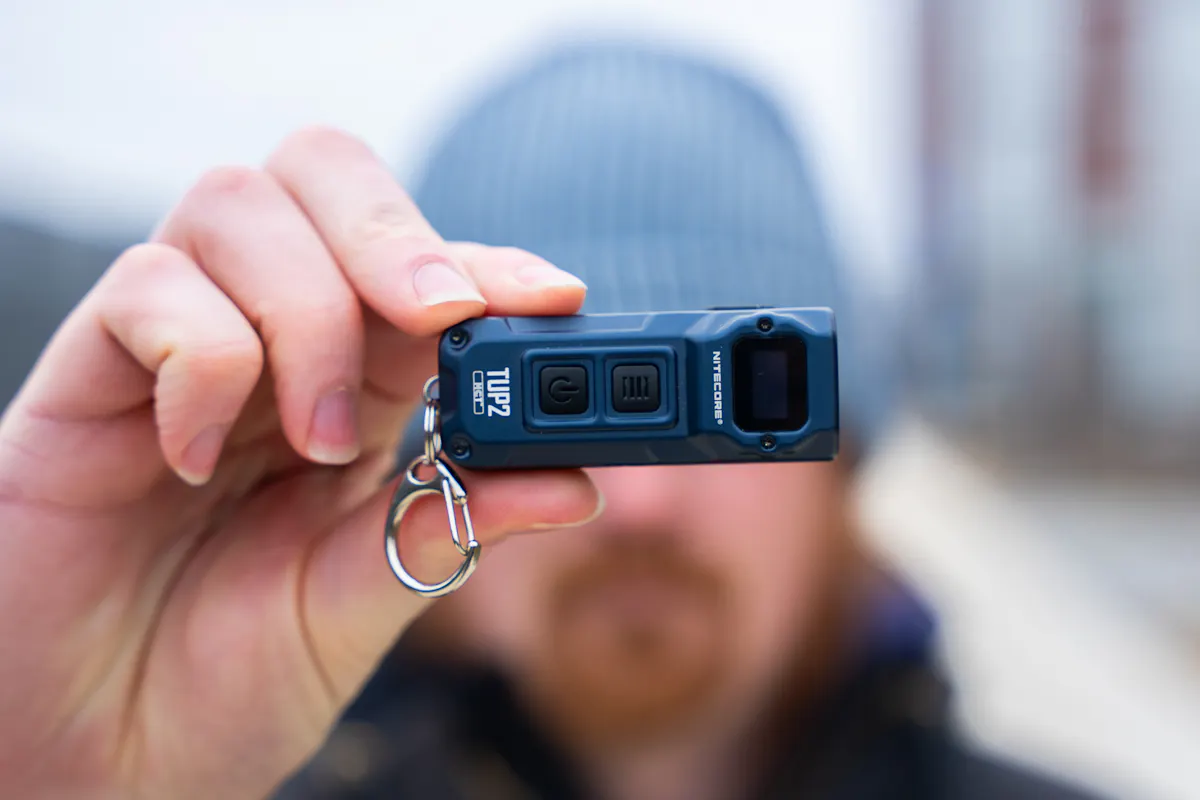
It fits in a pocket without much trouble and doesn’t feel overly heavy when clipped onto a baseball cap. However, when attached to a set of keys, it can feel a bit oversized.
That said, we’re not knocking its size. The amount of power you’re getting from this flashlight makes the slightly larger footprint feel worthwhile.
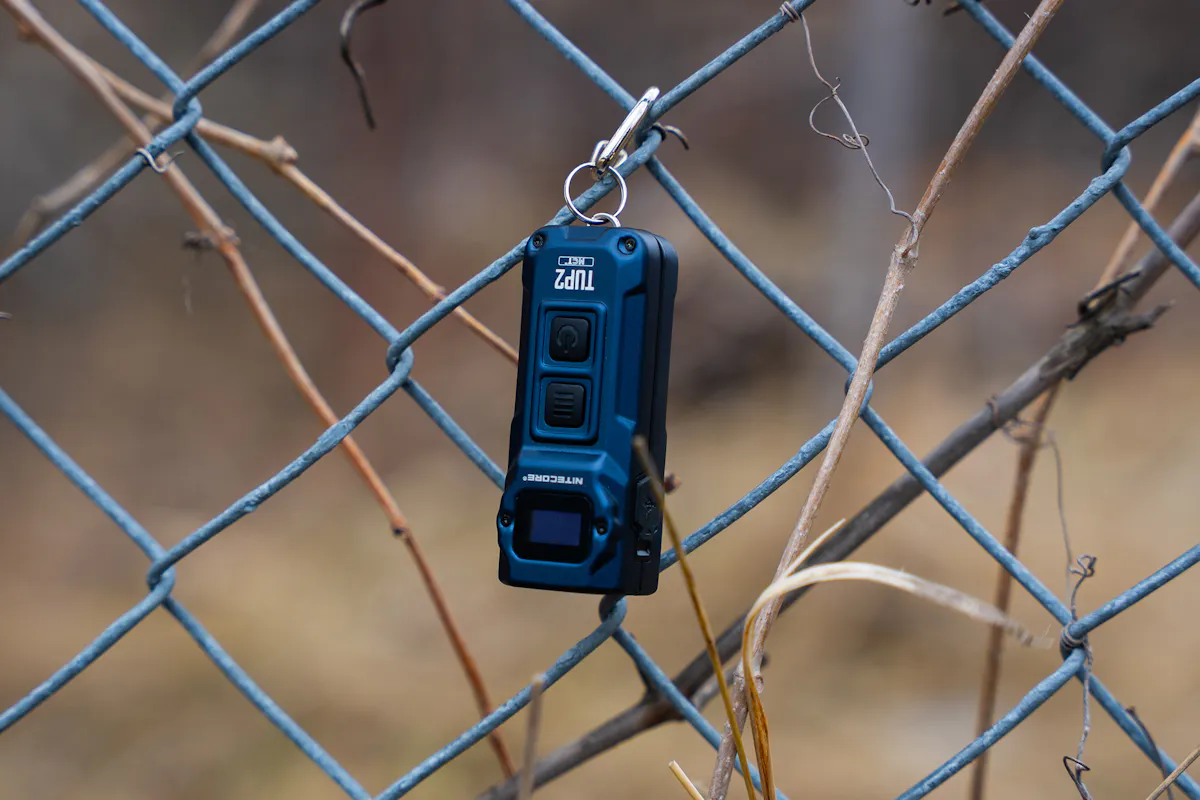
Instead of leaving it permanently on a keychain, we tended to attach it when we knew we might need a flashlight and remove it when we didn’t. It’s more of a “bring it when you expect to use it” type of light rather than something you completely forget about on your keys.
Still, it fits easily into pockets, daypacks, or small slings, so it’s easy to bring along.
Quick Comparison
The flashlight we most often recommend at Pack Hacker is the NITECORE TIKI, so it makes sense to compare the two.
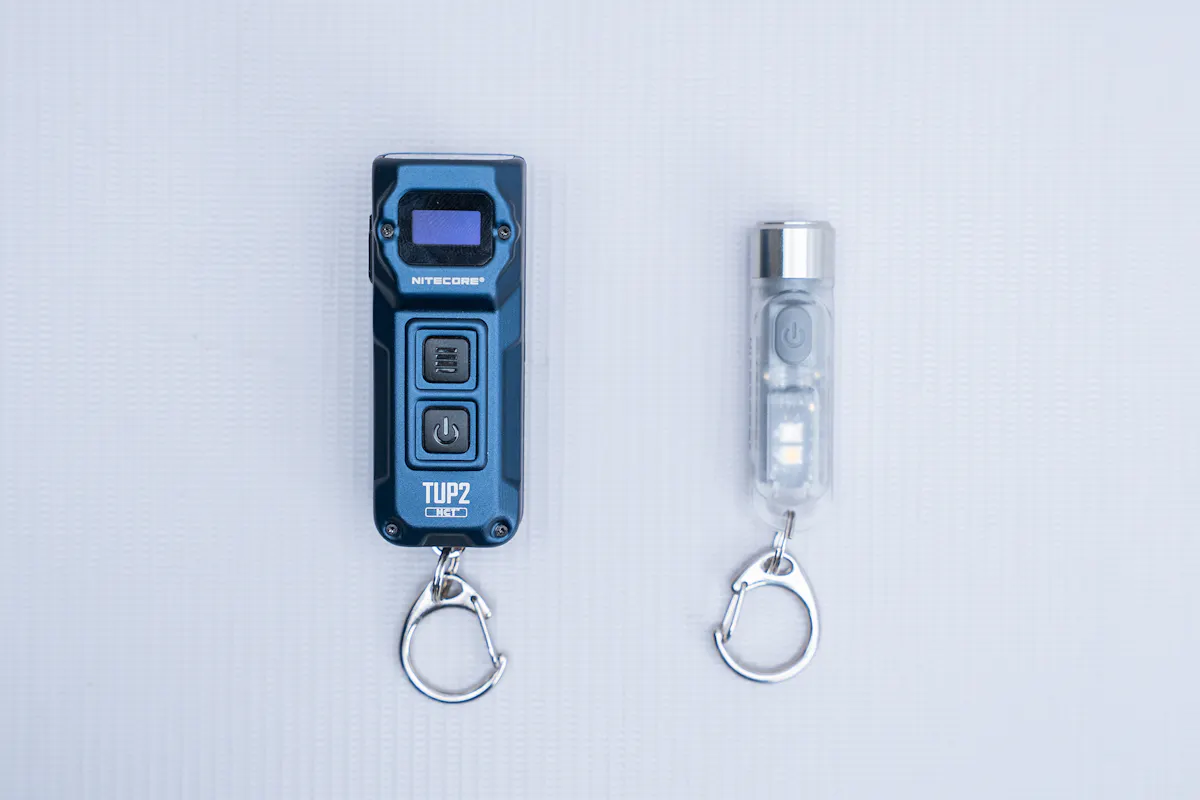
The TUP2 is significantly more powerful, with a maximum output of 1,200 lumens compared to the TIKI’s 300. It also throws light farther, reaching about 125 meters compared to 71 meters on the TIKI.
Battery life is another major difference. The TUP2’s 1,300 mAh battery lasts up to 190 hours, while the TIKI’s 130 mAh battery lasts around 40 hours. The TUP2 also offers three different color temperatures and five brightness levels, whereas the TIKI sticks with a simpler setup.
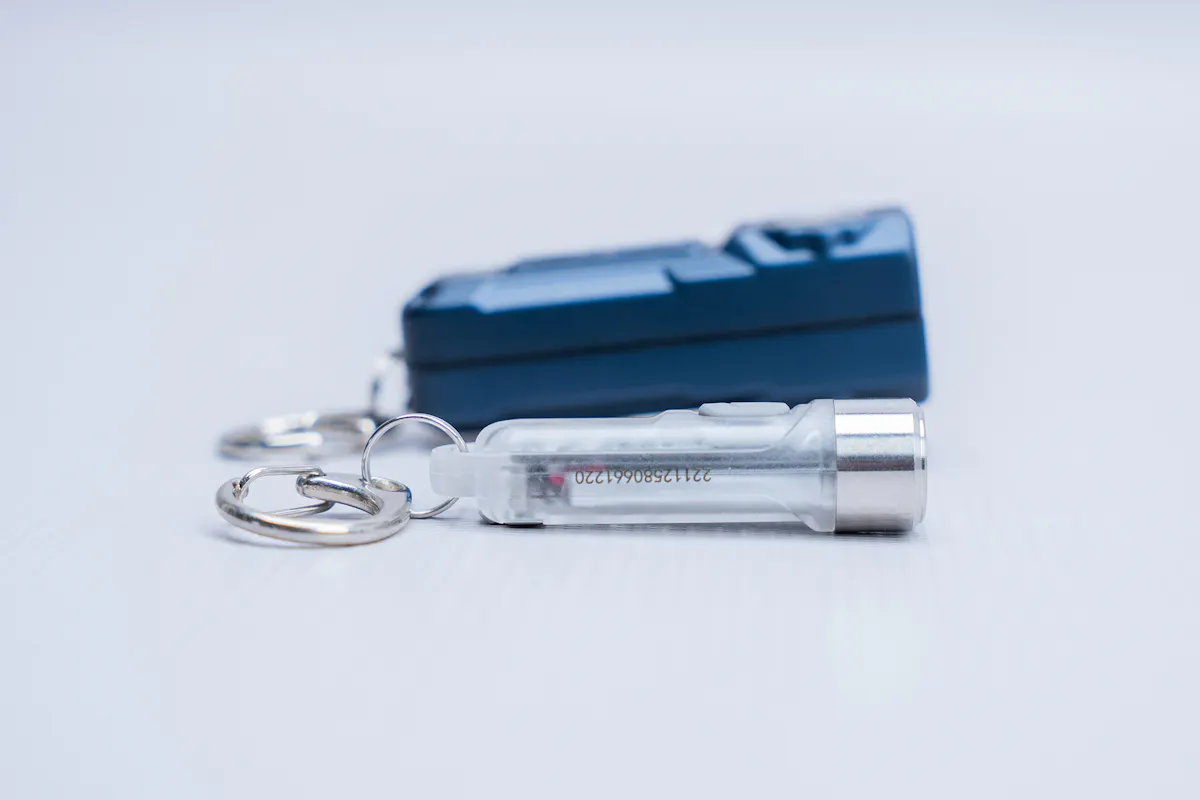
Construction is another area where the TUP2 stands out. It uses an aluminum body that feels extremely durable, while the TIKI relies primarily on plastic.
However, the TIKI still wins in a few categories. It’s much lighter—12 grams compared to 58 grams—and has a stronger IP66 rating than the TUP2’s IP54 rating. It’s also cheaper and has two auxiliary lights, though we rarely use them.
Looking at the specs alone, the TUP2 might seem like the obvious choice. It’s more powerful, lasts longer, offers more lighting modes, and feels more durable.
But the real question is whether you actually need all that power.
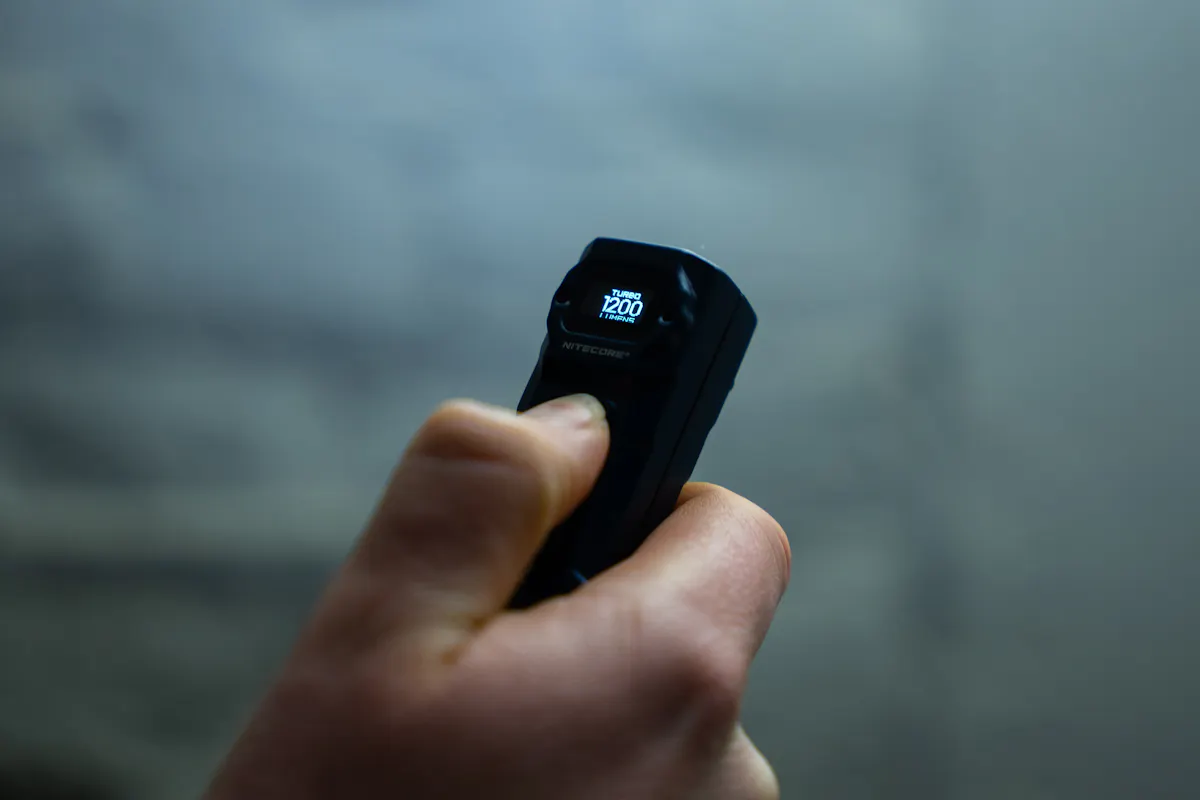
For many travelers, the TIKI provides more than enough light while staying extremely small and lightweight. The TUP2, on the other hand, is a fantastic upgrade for people who want a tougher flashlight with significantly more brightness.
Both are excellent options. The key is figuring out what you actually need from your flashlight—and choosing the one that fits your travel style and budget.
How We Used It
We used this light for a variety of testing purposes, showcasing its versatility.
While working on a 130-year-old house, we clipped it onto a hat so we could get a better look at what was behind the old walls and clear out debris. This worked well in most cases, but if you bumped your head on the ceiling, you could accidentally hit the buttons, changing your setting or turning the light off. Additionally, the clip’s grip only works really well on thicker-brimmed hats. We wore a thinner-brimmed hat to start working, and it would fall off occasionally. With a thicker-brimmed hat, this wasn’t a problem.
When taking the dogs out at night, the thinner-brimmed hat wasn’t a problem, as you aren’t looking down as often. The only downside to this method is that if you come across another walker, it’s hard not to accidentally shine the light in their face as you walk by. We found this method incredibly helpful in the Spring in Michigan, because after snowmelt, there’s a lot of dog poop around, so you can see where you’re stepping without giving up using both hands. On the other hand, when you have to clean up after your dog on a walk, you can actually see it without having to get out your phone light while holding a bag and the dog’s leash.
Despite being a bit large for some pockets, the flashlight’s brightness came in handy a few times. While taking a tour of a historic theater on the west side of Detroit, it was bright enough to illuminate a chandelier hanging in the rafters behind the stage, to the amazement of several other tourists. On the same tour, we used it to inspect a 100-year-old boiler, which, to the bewilderment of many of the guests, fired up while we were inspecting it.
While walking through a former cigar factory, the light enabled the group to traverse the windowless basement without any trouble, as the beam is wide enough for multiple people to utilize its spread. On the same walkthrough, the light’s multiple brightness settings came in handy for identifying an original fireproof door. The high setting we used previously was too bright to make out the words, but one of the lower settings was perfect.
As the weather has gotten warmer and folks are spending more time outside, the light is a fun tool for making wall hand puppets, and it’ll probably get a lot more use for such games when camping season starts. This works because the light is small enough to fit into the palm of your hand (or set on a tree branch), but powerful enough to shine across the campsite.
Usage Timeline
Condition: Excellent
- We’ve beaten the crap out of this thing, and it still looks brand new
- No issues with the USB-C charging port or buttons
- The keychain feels a bit flimsy compared to the light



Get your questions about the NITECORE TUP2 answered from our team and the Pro Community right here on the page. Plus, join discussions with other members about gear, guides, and more.
Join Pack Hacker Pro or, Sign In