Osprey Hikelite 18 Review
The Osprey Hikelite 18 is lightweight yet features a capable harness system, enabling you to save weight while staying comfortable.
Our Verdict
Save time. Get access to brief summaries of our reviews so you can browse and make decisions more efficiently.
Pros
- The harness system is incredibly supportive for a pack of this size and weight
- It has durable and sustainably sourced materials
- There are multiple colorways available, including vibrant options
Cons
- The front side lacks structure, which can make packing the bag difficult
- There’s little organization for segmenting your gear
- The water bladder features aren’t helpful if you don’t plan to use one
Technical Details
-
Capacity
18l
-
Weight (lb)
1.62 lb (0.7 kg)
New Version | 1.544 lb - Old Version
-
Dimensions
20 in x 10.63 in x 9.06 in (50.8 x 27 x 23 cm)
-
Notable Materials
Recycled Nylon, Meets bluesign® Criteria, YKK Zippers, Woojin Hardware
-
Manufacturing Country
Vietnam
-
Warranty Information


Full Review
The Osprey Hikelite 18 feels like a combination of one of their modern hiking packs and one of their beloved lightweight Daylite packs. It has a harness system worth writing home about, so if you’re after a small pack for hiking, cycling, or mini adventures, is this the pack for you? Let’s dive in and find out.
External Components
The body of the bag is crafted from 100% recycled 210D high-tenacity nylon. It’s bluesign® approved, so you know that the supply chain is sustainable. The bag features a DWR coating that doesn’t contain PFAS, making it a more environmentally friendly choice. This is par for the course for Osprey, which we appreciate.
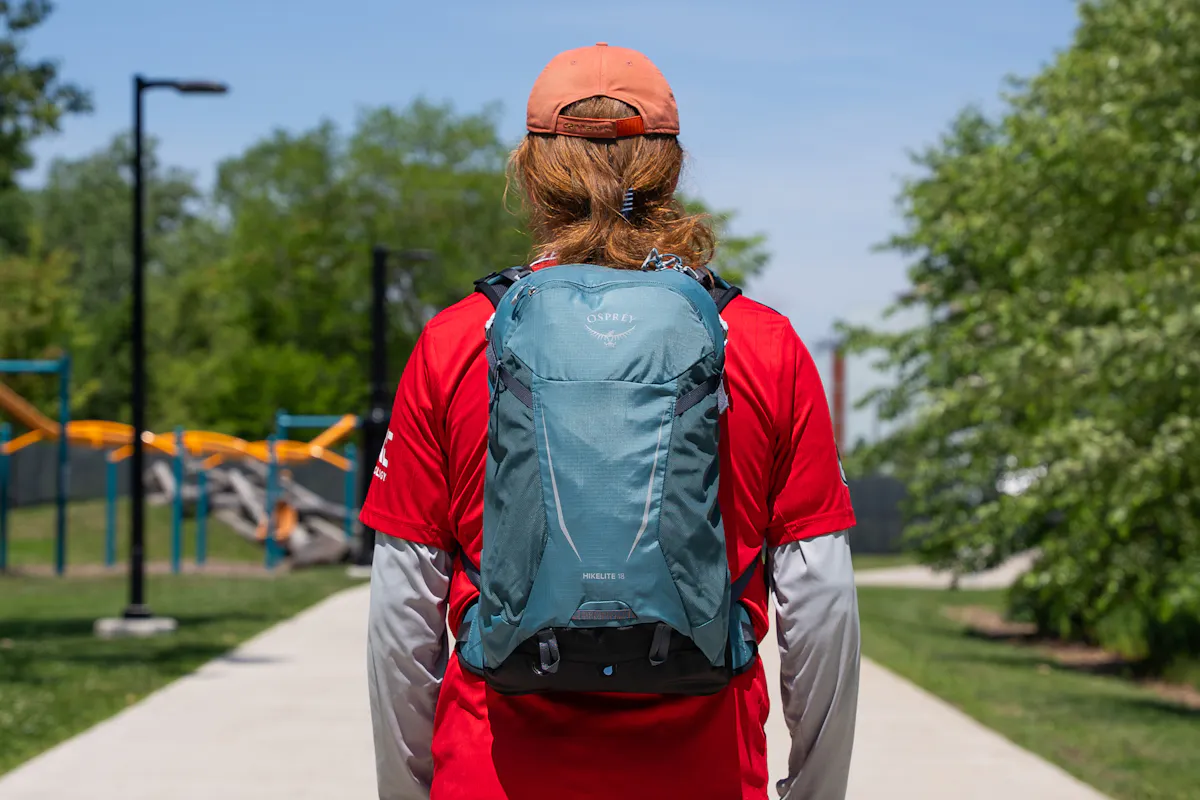
The daypack has a rain cover, which stows inside a dedicated pocket at the bottom of the bag. Osprey redesigned this compartment slightly on the updated model by relocating the zipper, making the rain cover a little easier to access when the weather turns. It still doesn’t take up much room, and there isn’t another obvious use for the pocket, so we kept it there throughout testing. It adds a ton of water resistance to the bag in inclement weather.
The zippers are from YKK and have the classic Osprey loop pull. We dig this because it’s incredibly easy to get your finger inside it to open and close the zipper. They aren’t loud or in the way, either.

The pack now features Woojin hardware throughout, whereas the previous version used a mix of Woojin and ITW components. We’ve had good experiences with Woojin hardware over the years and haven’t encountered any issues during testing. The buckle is snappy, and the adjusters are easy to use.
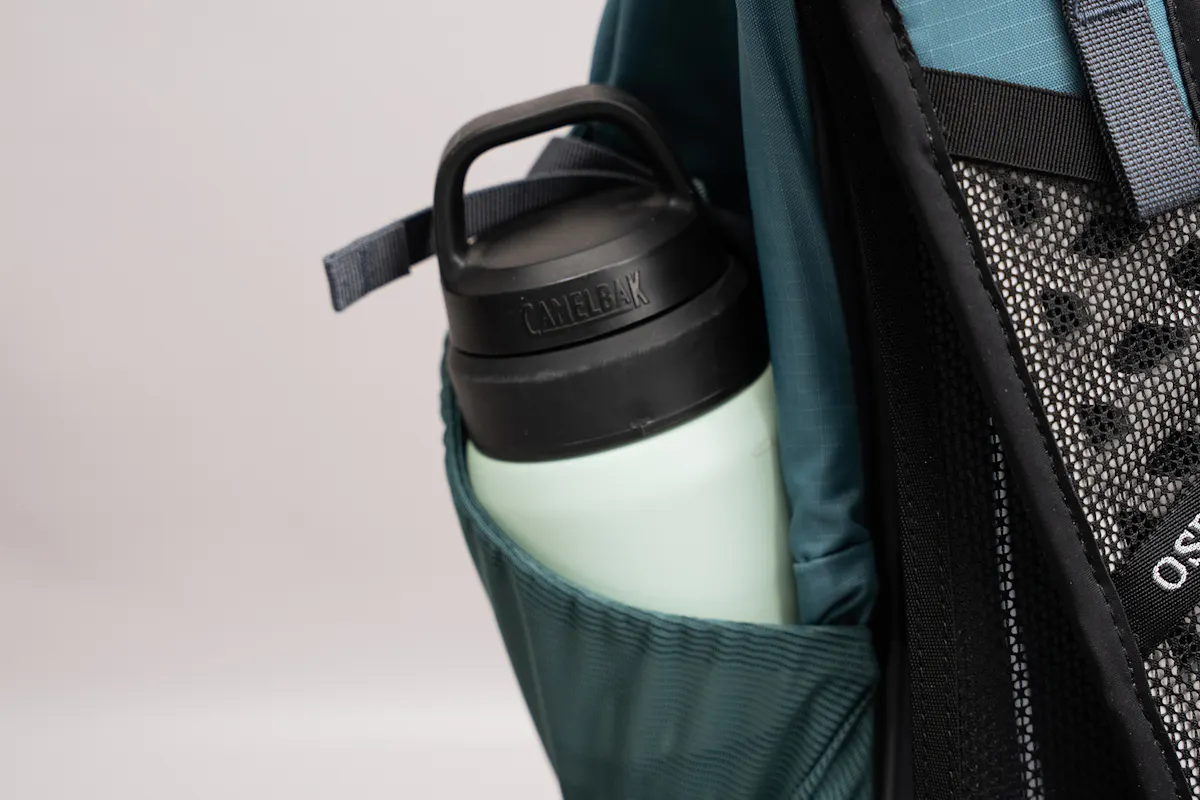
The pack has two water bottle pockets. They’re crafted from a stretchy material, which hasn’t loosened during testing. The updated pockets are a little taller, making it easier to securely carry larger water bottles and bulkier gear like a travel tripod. It’s not a dramatic redesign, but it’s a welcome improvement for anyone who likes to stay hydrated or carry longer items on the outside of the pack.
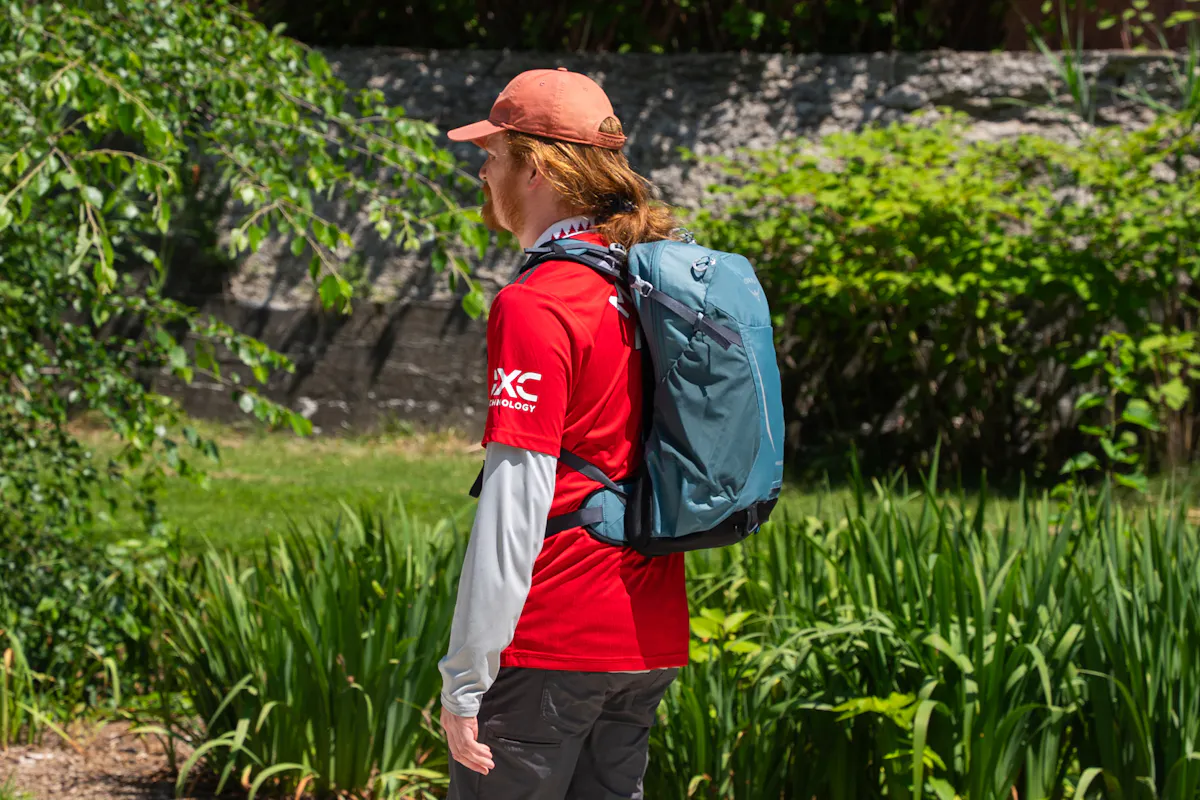
There are two diagonal straps, one on either side of the pack, which help compress the bag or secure larger gear in the water bottle pockets. In addition to helping with taller bottles, we’ve used these to secure a travel tripod. On the updated model, the compression strap buckles are slightly smaller, and the webbing is just a bit thinner. The difference is subtle, though it likely shaves off a little weight without noticeably affecting usability.
You can also use the compression straps to help attach trekking poles. There are two small loops on the bottom of the pack’s front face, which you can loop through the compression straps for safe storage.
The bag’s top handle is super minimalistic and lightweight. It doesn’t have any padding or aeration, and it digs in quickly when carrying the bag. This helps keep the weight of the pack down and ensures the top handle is out of the way if you’re out for a hike. When you need it, you can use it, but it isn’t comfortable in the long term. This is a backpack, though, so you should carry it like one.
A welcome addition to the updated model is a dedicated bike light attachment loop. We’ve used both the previous and current versions of the Hikelite 18 while cycling, so it’s nice to have a proper place to mount a rear light instead of improvising. It’s a small feature, but one that makes the pack even more versatile for commuting and everyday rides.
Fit Notes
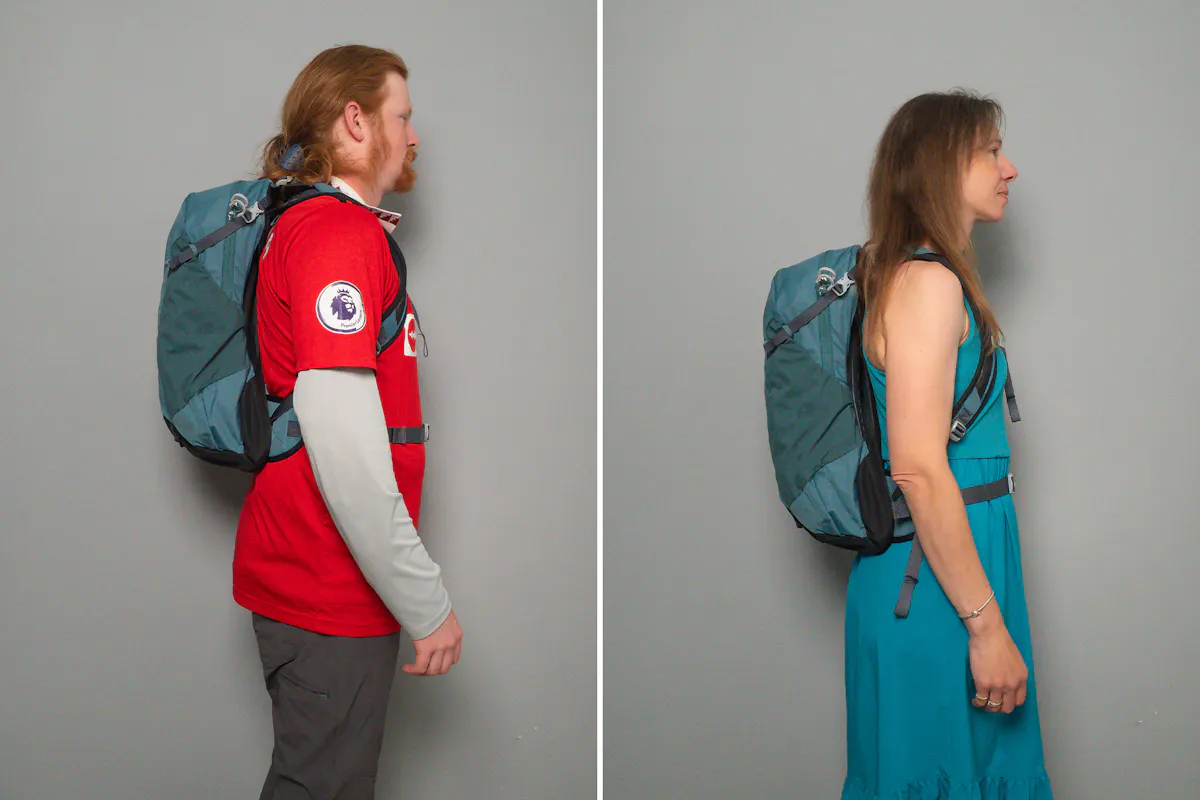
The back panel features Osprey’s AirSpeed™ Suspension, one of our favorite back panel styles. It’s completely suspended, so your back is constantly getting cool air, and it’s taut enough that your back is still supported, too. It doesn’t have padding, but that’s because it doesn’t need to. It’s like a trampoline. The material itself isn’t radically comfortable, but the way it’s suspended makes it comfortable and bouncy. Compared to the previous model, this updated version has just a little more spring to it. Even after a couple of weeks of testing, it still feels slightly poppier, though the difference isn’t especially noticeable.
Two metal beams run vertically behind the back panel. These add structure to the pack and stretch the back panel.
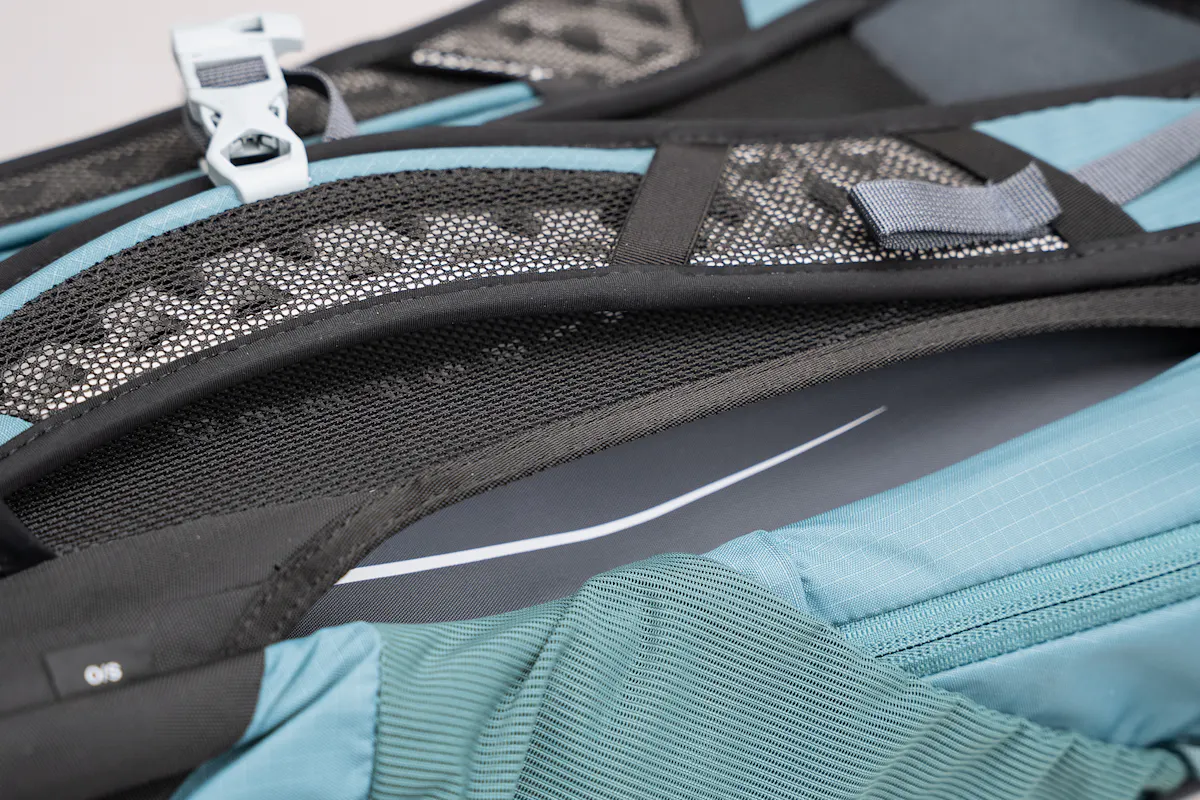
The shoulder straps are well-padded and super aerated to keep things cool. The mesh is extremely fine, and the straps have a slight stretch to them, which we find comfortable, even when the pack is loaded with extra weight.
The pack features load lifters, which help distribute weight evenly. Though the pack only holds 18 liters worth of gear, these are a welcome addition when you’re out for a long day hike.
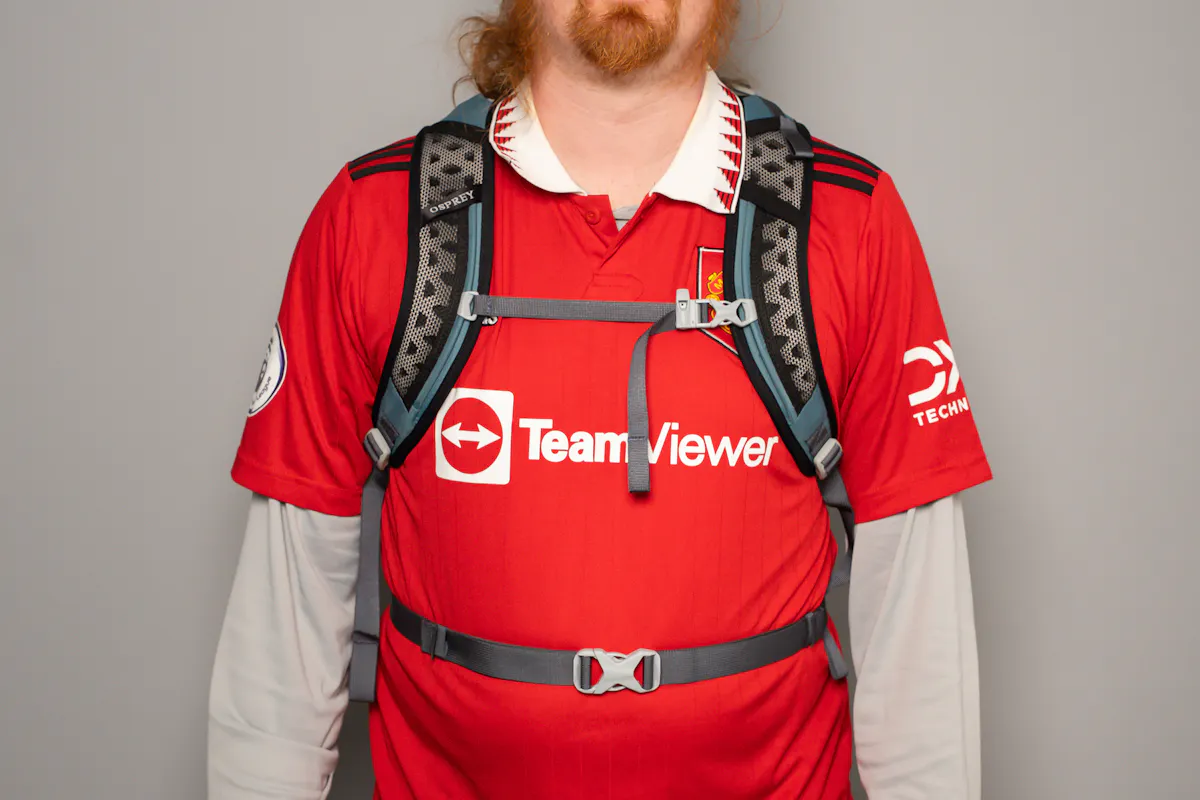
The sternum strap is on a rail, allowing for micro-adjustments. There’s a whistle on the clip, which we appreciate for safety reasons. It’s also fun to play with and a stellar way to wake up your partner or friend after a night out or for a laugh.
The hip belt is super minimalist with no padding or aeration, but, similar to the load lifters, it helps shift weight around and keep you comfortable.
Inside The Pack
The bag’s liner is bluesign® approved 100% recycled nylon with a PFAS-free DWR coating. Similar to the exterior, it is lightweight and sustainably sourced.
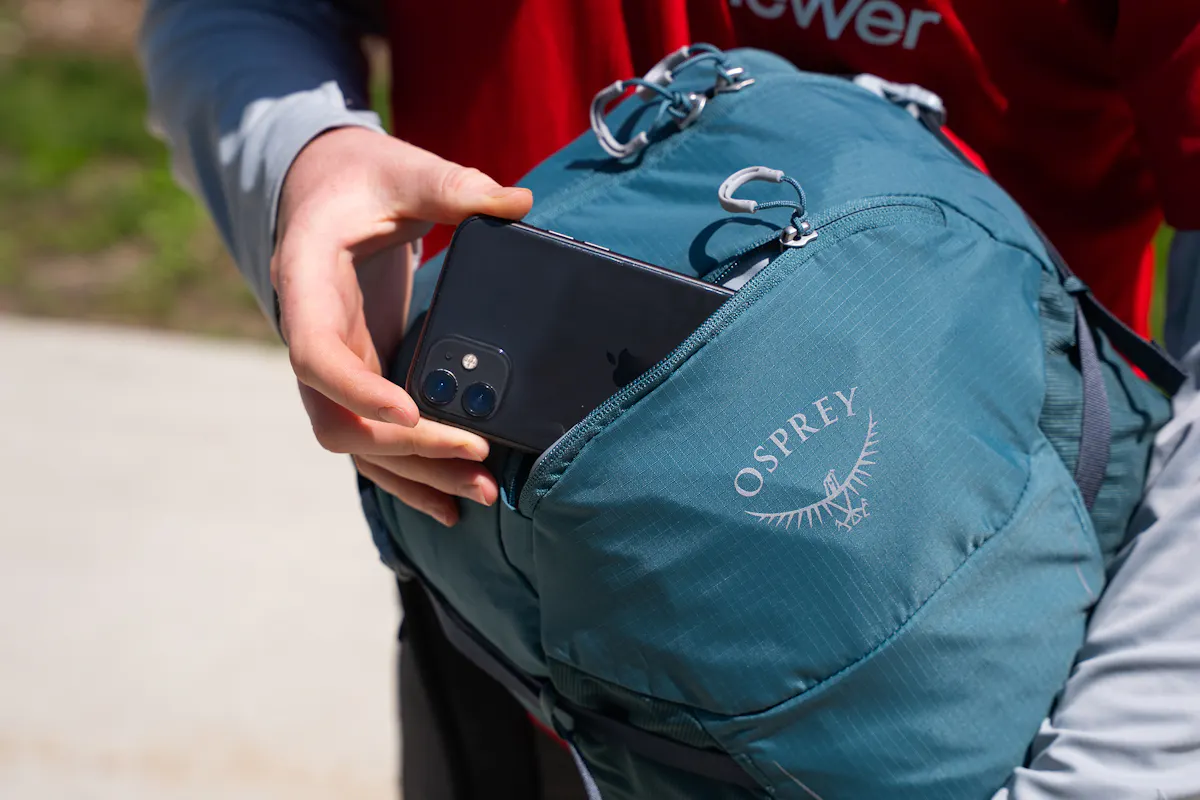
There’s just one secondary compartment. It’s located on the top of the pack’s front face. There’s no organization inside, just a key leash. This pocket works well for sunglasses, snacks, a phone, or a wallet. This pocket doesn’t offer a ton of protection, so be careful what you stow here.
The main compartment has almost no organization, which is both a benefit and a drawback. If you prefer to do all of the segmentation yourself with packing cubes, a tech pouch, and other devices, it’ll work great. If you typically want a bag to do all the organization for you, this might not be the pack for you. We believe a lack of organization makes the bag more versatile, as it can be used for your camera equipment, hiking essentials, or gym clothing. If it were specifically tailored to any of those things, it would be hard to use it for anything else.
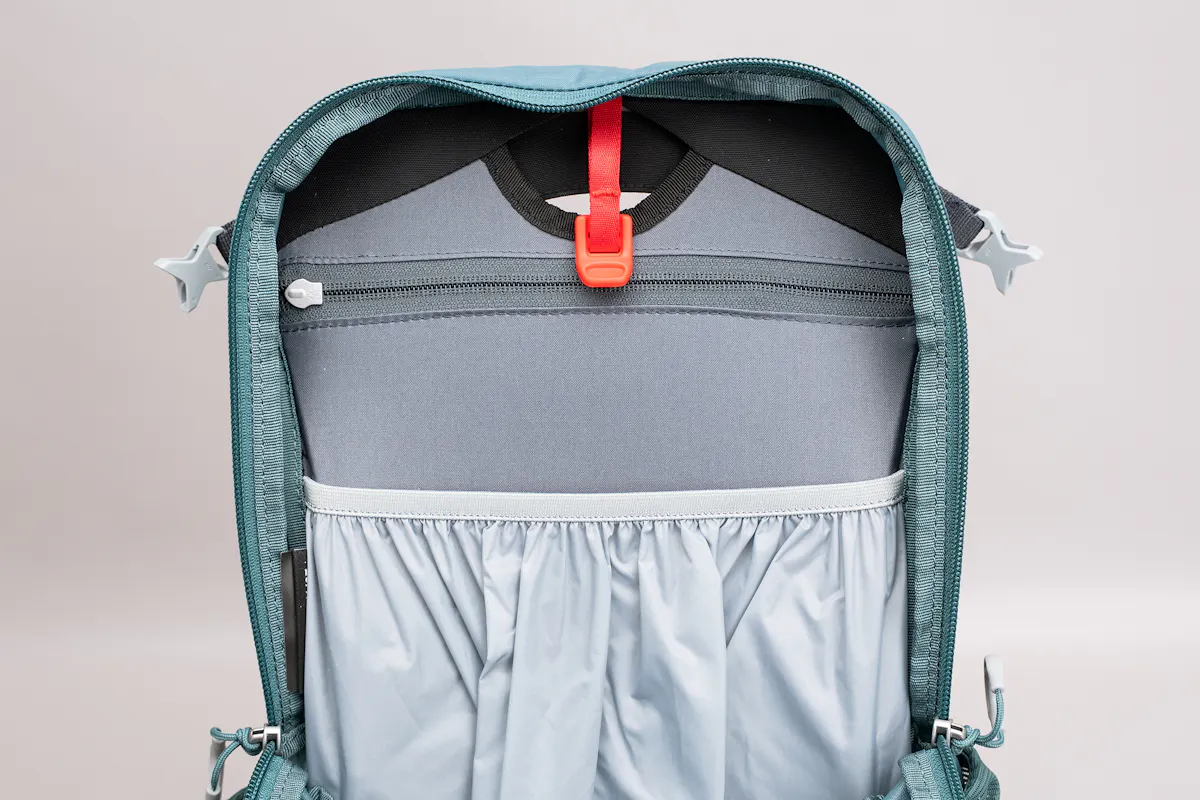
The only organization is a water bladder holster on the back wall. There’s a toggle at the top of the compartment to hold up the hose, and the updated pass-through is now essentially just an opening, making it a little easier to route the hydration hose to either shoulder strap. It doesn’t offer quite as much coverage as the previous design, but in practice, we didn’t run into any issues. If you aren’t using a water bladder, you can stow gear in the elastic-topped pocket.
The rest of the space is open and yours to organize (or not) your gear as you see fit. There are harsh differences between the front and back materials thanks to the harness system. The backside is well-structured thanks to the AirSpeed™ Suspension system. The front has no structure, and the materials are floppy. It reminds us of when you’re taking down your tent and still have the stakes in, but have taken the poles out. Though the materials are similar everywhere, the design (and the ground) keep the backside structured, but the rest of the materials are free to blow in the wind. This can make it challenging to organize the pack at times, but we appreciate its light weight.
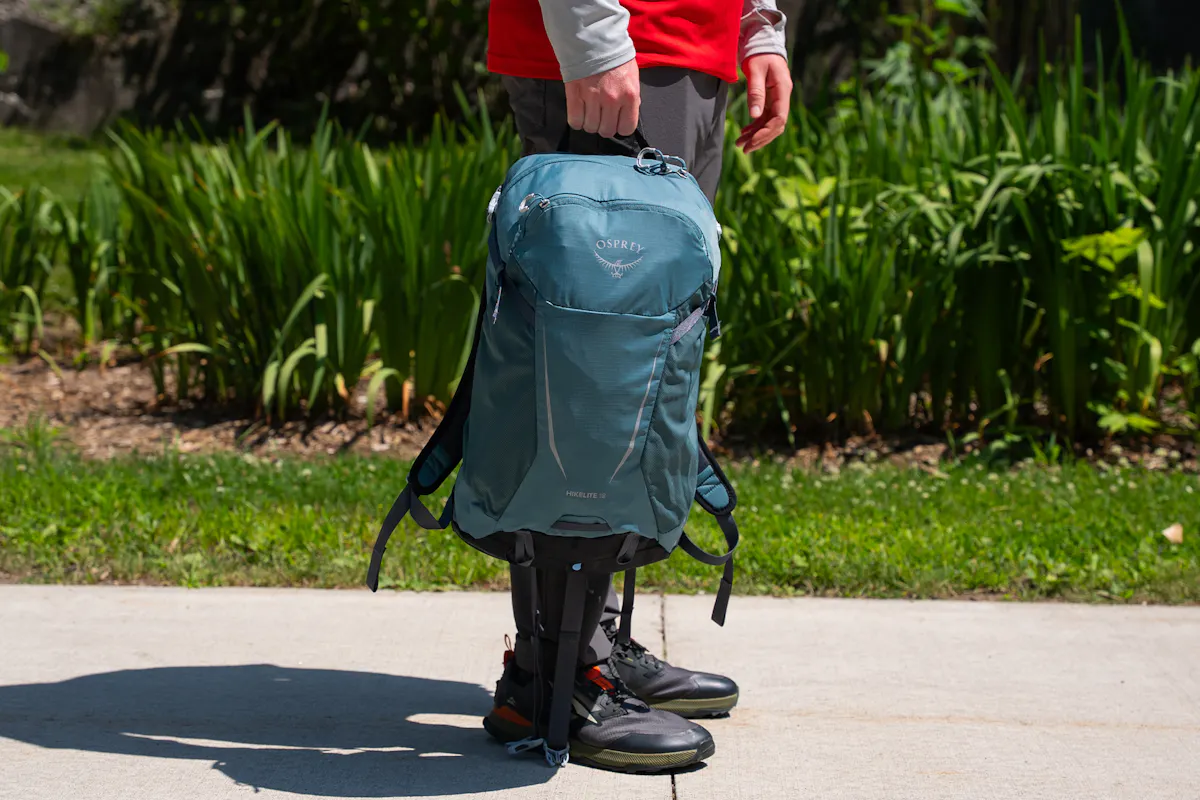
Although we thoroughly enjoyed testing this pack, it may not be suitable for everyone. It’s versatile, lightweight, and very comfortable for its size. It lacks organization and structure, which means it might not be the best choice for you!
Usage Timeline
Condition: Excellent
- The pack has a comprehensive harness system—we’ll put it to the test
- The materials are lightweight but feel durable
- All the hardware is from brands that we recognize
Condition: Excellent
- The pack has proven durable, even considering how lightweight it is
- No issues with the materials or hardware
- The back panel is still taught and bouncy



Get your questions about the Osprey Hikelite 18 answered from our team and the Pro Community right here on the page. Plus, join discussions with other members about gear, guides, and more.
Join Pack Hacker Pro or, Sign In