Osprey Transporter Squffel 44 Review
The Osprey Transporter Squffel 44 is a rugged, flexible duffle-backpack combo with great capacity, but its saggy structure and average comfort limit its appeal.
Our Verdict
Save time. Get access to brief summaries of our reviews so you can browse and make decisions more efficiently.
Pros
- Its durable, weather-resistant materials hold up well in rugged conditions
- It has versatile access, with both duffle-style and clamshell openings
- The large capacity has a flexible, customizable interior layout
Cons
- The lack of structure leads to sagging and uneven carry
- Limited external pockets and somewhat awkward quick-access design
- Carry comfort is average, especially when fully loaded
Technical Details
-
Capacity
44l
-
Weight (lb)
2.58 lb (1.2 kg)
-
Dimensions
21.3 in x 14.2 in x 13.8 in (54.1 x 36.1 x 35.1 cm)
-
Notable Materials
YKK Zippers, Meets bluesign® Criteria
-
Warranty Information
Full Review
The Osprey Transporter Squffel 44 sits in an interesting space between a traditional duffle and a travel backpack, blending features from both while leaning heavily into rugged simplicity. Over the course of our testing, we’ve taken a close look at how it performs as a travel companion, particularly for those who prioritize durability and flexibility over structure and polish. With a 44-liter capacity, this bag is clearly designed for longer trips or gear-heavy outings, but how well it handles that load in real-world use is where things get more nuanced.
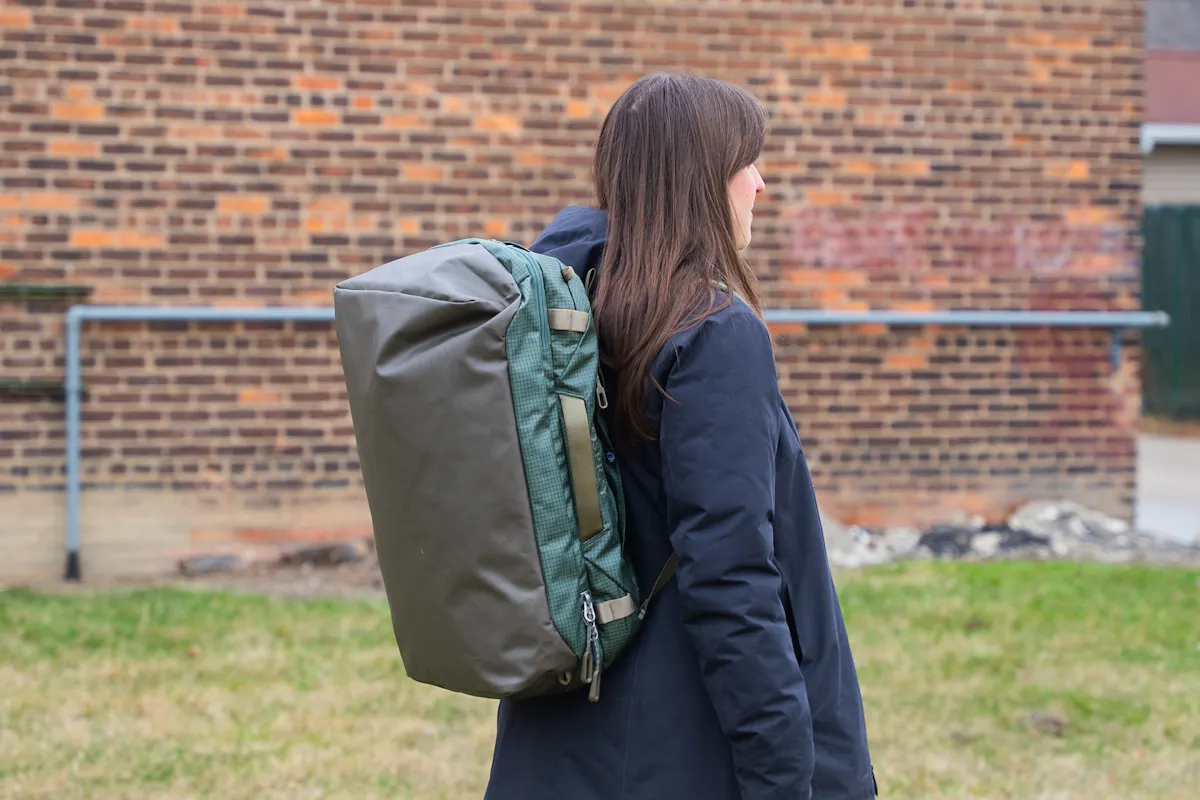
At first glance, the Squffel 44 carries the unmistakable DNA of Osprey’s Transporter line, with its weather-resistant materials and utilitarian aesthetic. However, once you start using it, you quickly realize that this quirkily-named bag is less about refined travel organization and more about offering a tough, adaptable shell that you can load up in multiple ways. That trade-off defines much of the experience—there’s a lot to like here, but also a few compromises that may or may not align with how you travel. It’s the kind of bag that invites you to treat it roughly and not worry too much about babying your gear, which will appeal to certain users right away.
External Components
The exterior of the Osprey Transporter Squffel 44 is built with durability as a clear priority. The bag uses Osprey’s NanoTough fabric, which is made from 100% recycled materials and designed to resist water, abrasions, and general wear. In hand, it has a slick, slightly rubberized feel that sits somewhere between TPU-coated fabrics and more technical laminates like X-Pac. It’s flexible rather than rigid, which contributes to both its strengths and weaknesses. On one hand, it makes the bag easy to compress and adapt to different loads. On the other, it lacks the structure that many travelers rely on to keep things looking tidy and feeling stable.

The bottom panel has a tarp-like quality that adds to its ruggedness. It feels soft and pliable, yet protective enough to handle being set down on rough surfaces. However, the entire bag has that same flexibility, so it doesn’t hold its shape particularly well when partially packed. You’ll notice lumps and unevenness depending on how you distribute your gear, which can affect both aesthetics and carry comfort. This also means that the bag can feel a bit unwieldy when you’re trying to set it upright or slide it into tighter spaces.
Osprey includes multiple grab handles around the bag—on the top, sides, and bottom—making it easy to pick up from virtually any angle. This is especially helpful when you’re pulling it out of overhead compartments, car trunks, or luggage piles. There are also several external loops and attachment points, so you can lash on additional gear if needed. While we don’t always use these features every day while traveling, they reinforce the bag’s identity as a versatile hauler and add to its utility for outdoor or gear-heavy use cases.
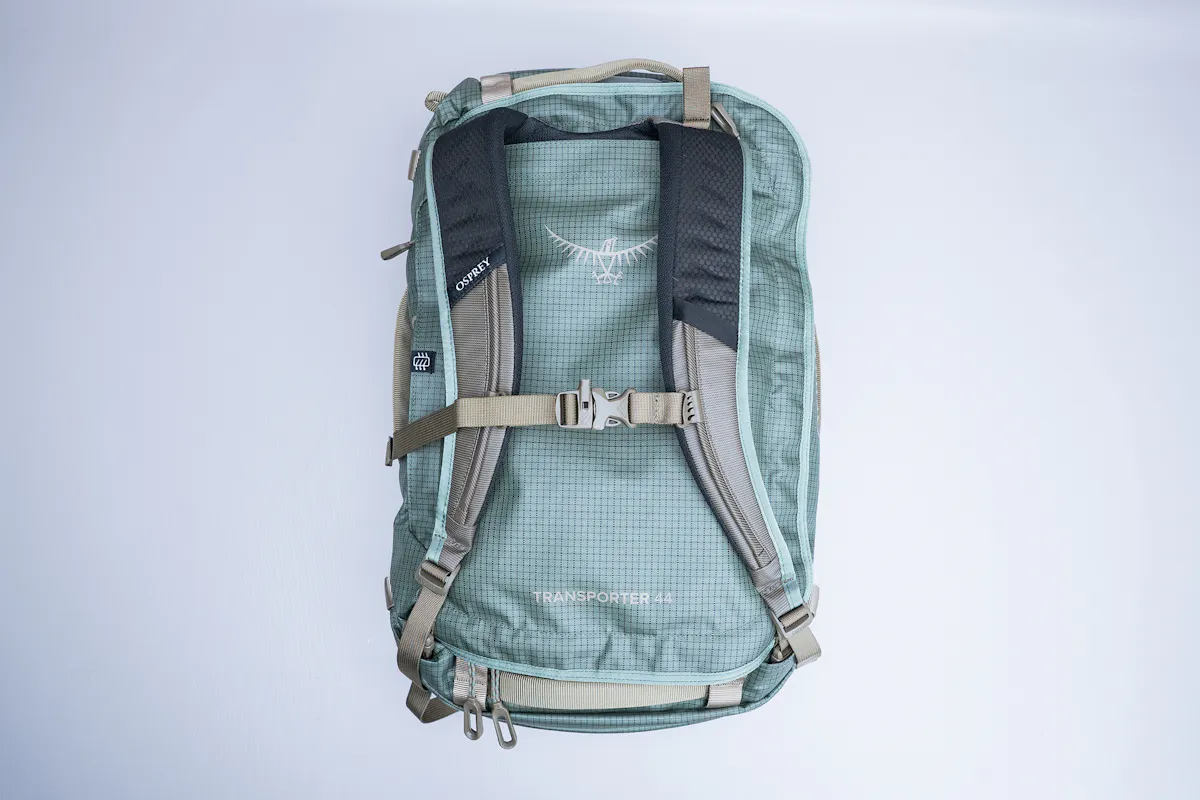
In terms of access, the exterior is relatively minimal. There’s a top quick-access pocket designed for small essentials like your wallet, phone, or earbuds. While it’s useful to have, the zipper design includes a large gusset that can make getting in and out a bit awkward. It’s functional, but not particularly streamlined. There’s also a larger compartment where the shoulder straps are stored, which can double as extra storage space if you’re not using the backpack carry. However, this creates a trade-off—if you fill that space with gear, you’ll need to relocate those items when you want to deploy the straps.
The harness system itself is stowable and fairly straightforward. The shoulder straps are lightly padded and breathable, with a sternum strap that slides along a rail for adjustability. Attaching and detaching them is quick and intuitive, which we appreciate. However, the overall carry experience is heavily influenced by the bag’s lack of structure. Because there’s no rigid back panel, the load tends to sag and pull away from your body. This can create pressure points around the shoulders and upper back, especially when the bag is fully packed.
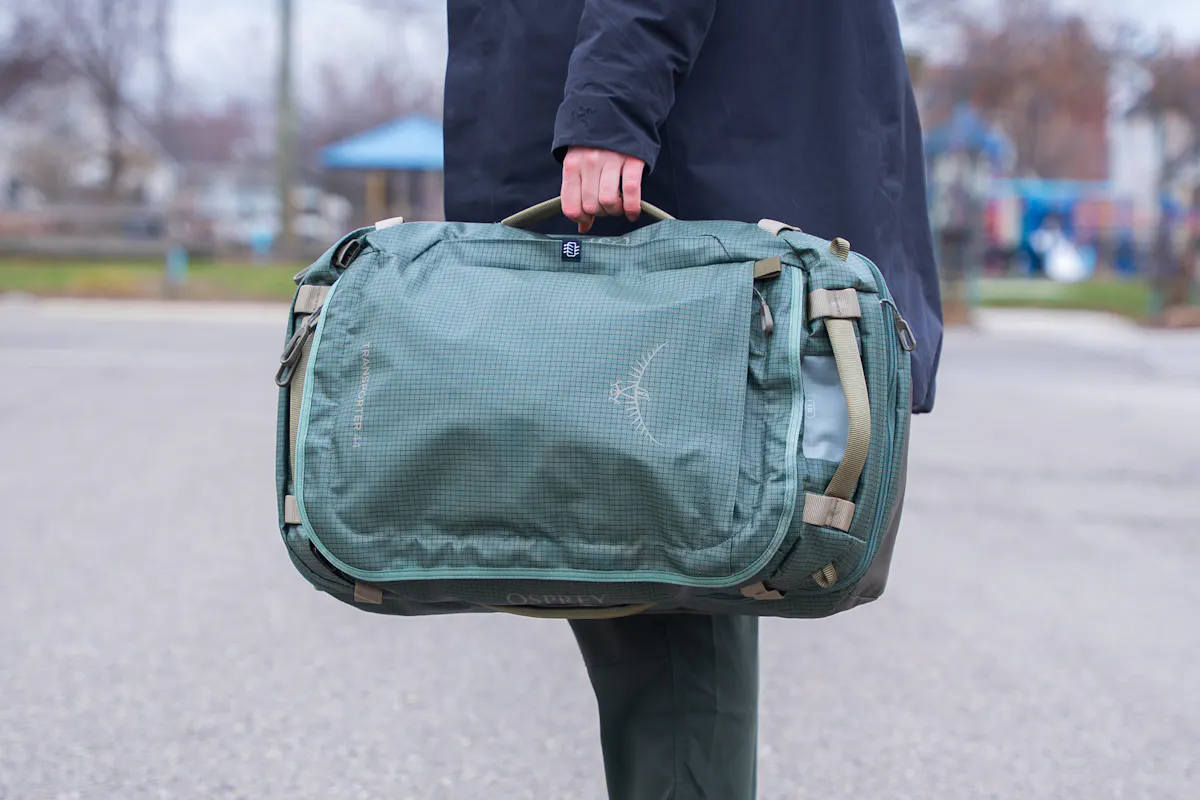
As a duffle, the Squffel 44 is meant to be carried by hand using its grab handles. While this works fine for short distances, it becomes less practical as the weight increases. A fully loaded 44-liter bag is not something most people will want to carry one-handed for extended periods. The backpack straps are clearly intended to mitigate this, but they don’t fully compensate for the bag’s floppy nature. In many ways, the carry experience feels like a compromise between two modes rather than a fully optimized solution for either.
Fit Notes
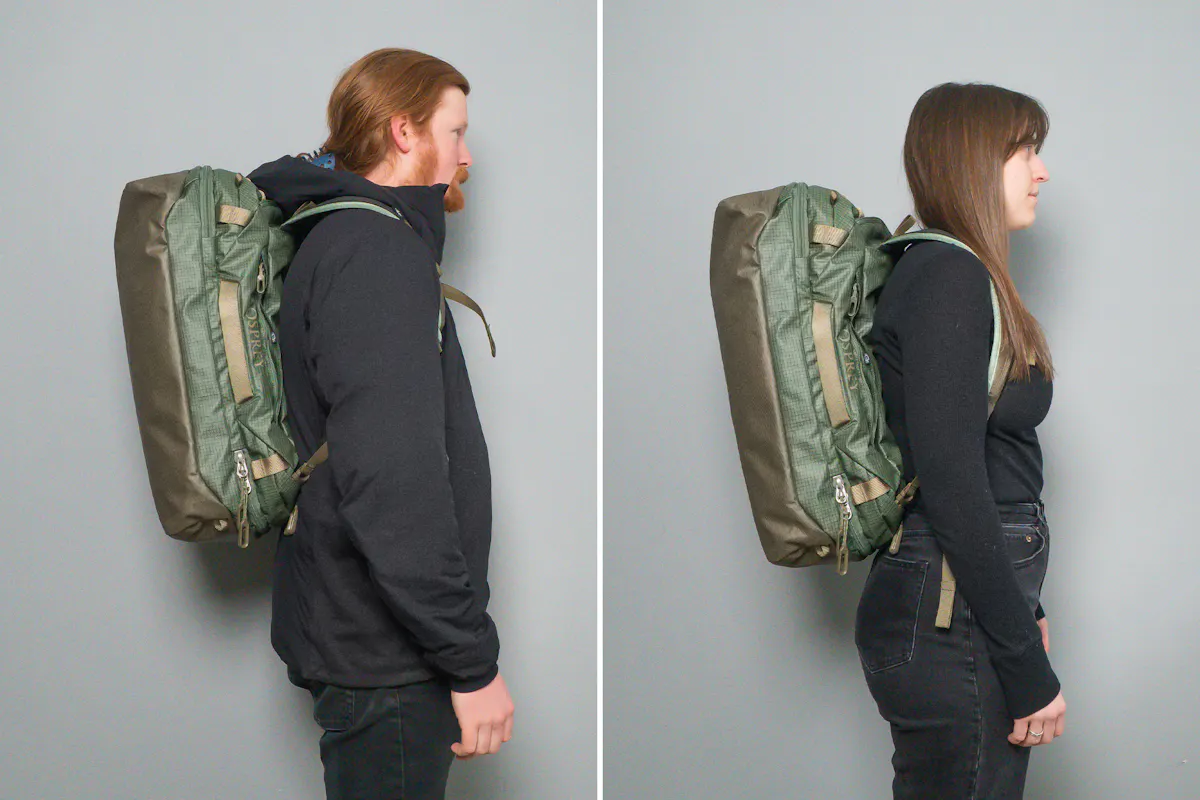
When worn as a backpack, the Osprey Transporter Squffel 44 feels noticeably different from more structured travel packs. The flexible build allows the bag to mold to your body, but that also means the load tends to sag and shift. Instead of sitting upright against your back, it pulls backward, concentrating its weight on your shoulders and creating pressure around the upper back and collarbone area. The sternum strap helps stabilize things slightly, though it can’t fully compensate for the lack of structure.
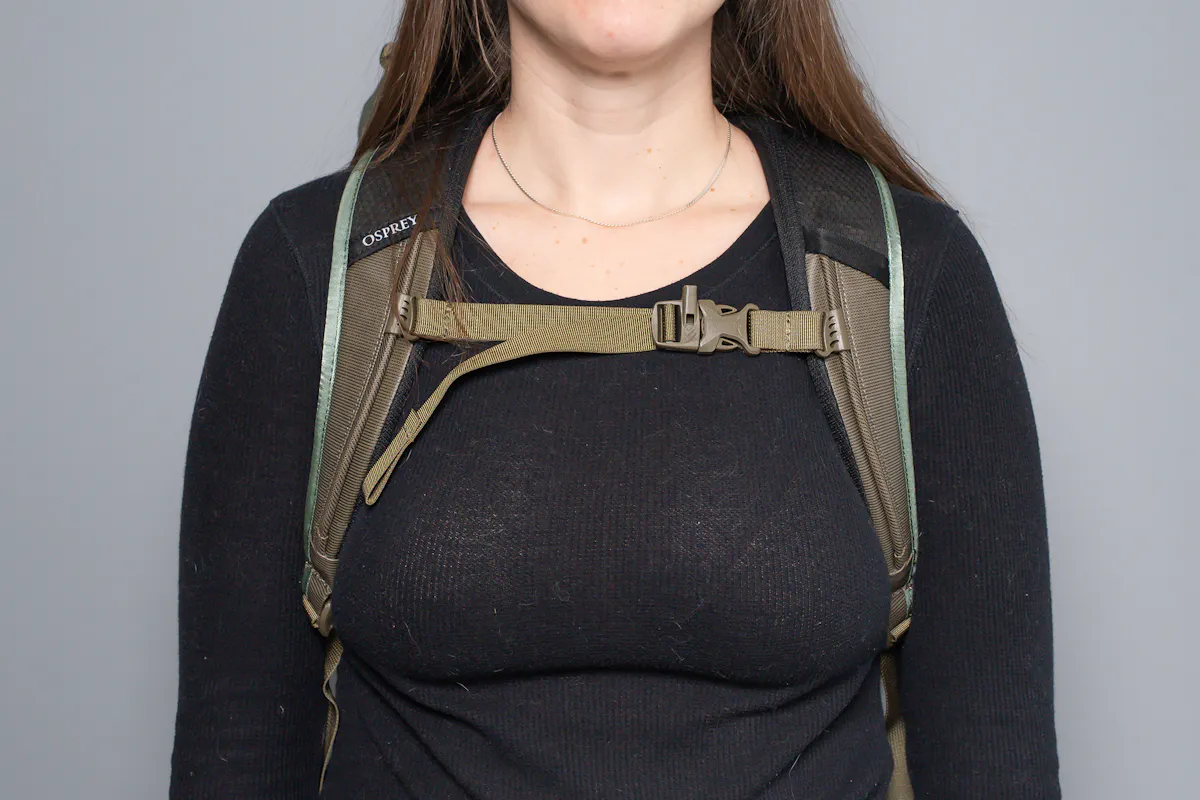
In terms of sizing and overall feel, the bag looks and carries large, especially on smaller frames. Its soft construction prevents it from maintaining a clean silhouette, even when packed out, resulting in a slouchy, sometimes bulky appearance. While the shoulder straps themselves are adequately padded and breathable, the overall carry is better suited to short distances than to extended wear, where the lack of support becomes more noticeable. If you’re frequently moving through airports or city streets on foot, this is something you’ll likely feel over time.
Inside The Duffle
One of the Squffel’s standout features is its dual-access design, which allows you to enter the main compartment through a traditional duffle-style opening or a full clamshell configuration. This flexibility makes it easier to adapt the bag to different travel scenarios and packing preferences, which is something we always appreciate in hybrid-style travel bags.
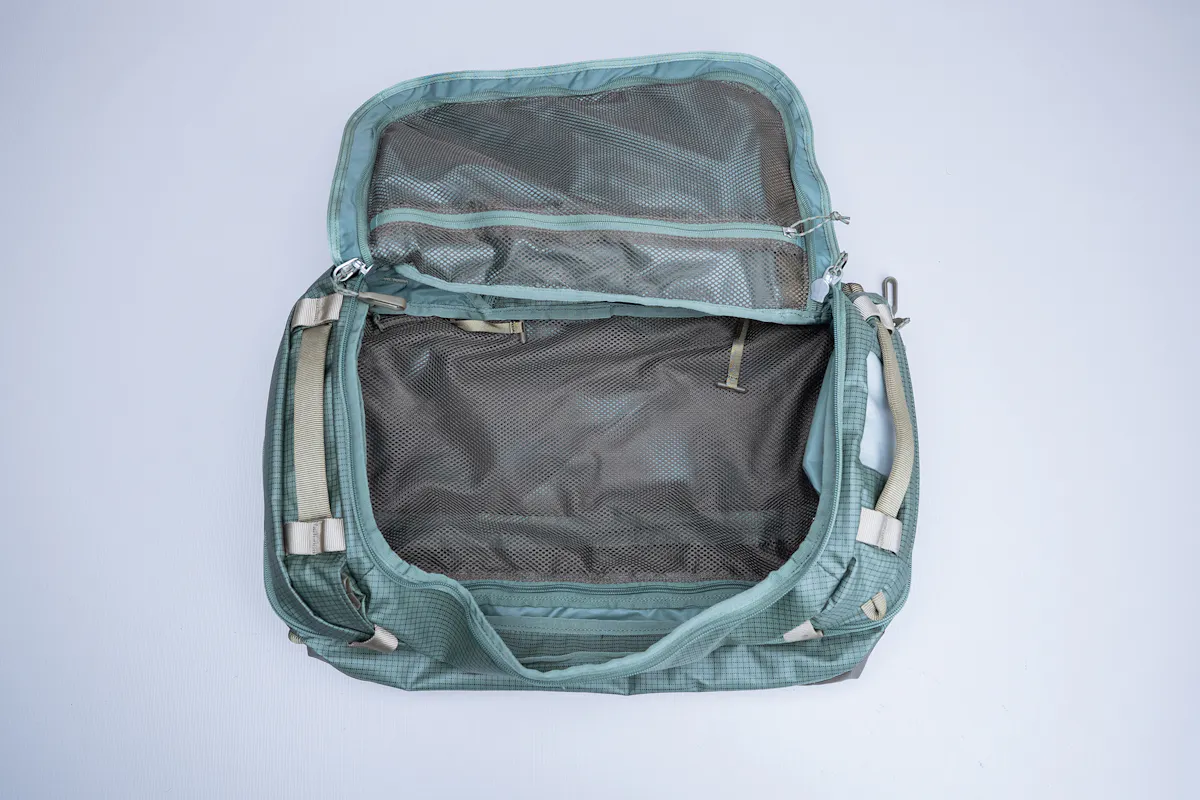
The duffle-style opening is particularly useful when you need quick access to your gear without fully unpacking. It’s ideal for situations like airport security, where you might need to grab a toiletry kit or other essentials on the fly. The clamshell opening, on the other hand, provides a complete view of the interior, making it easier to organize and access everything at once. This duality gives the bag a practical edge, especially when transitioning between transit and destination.
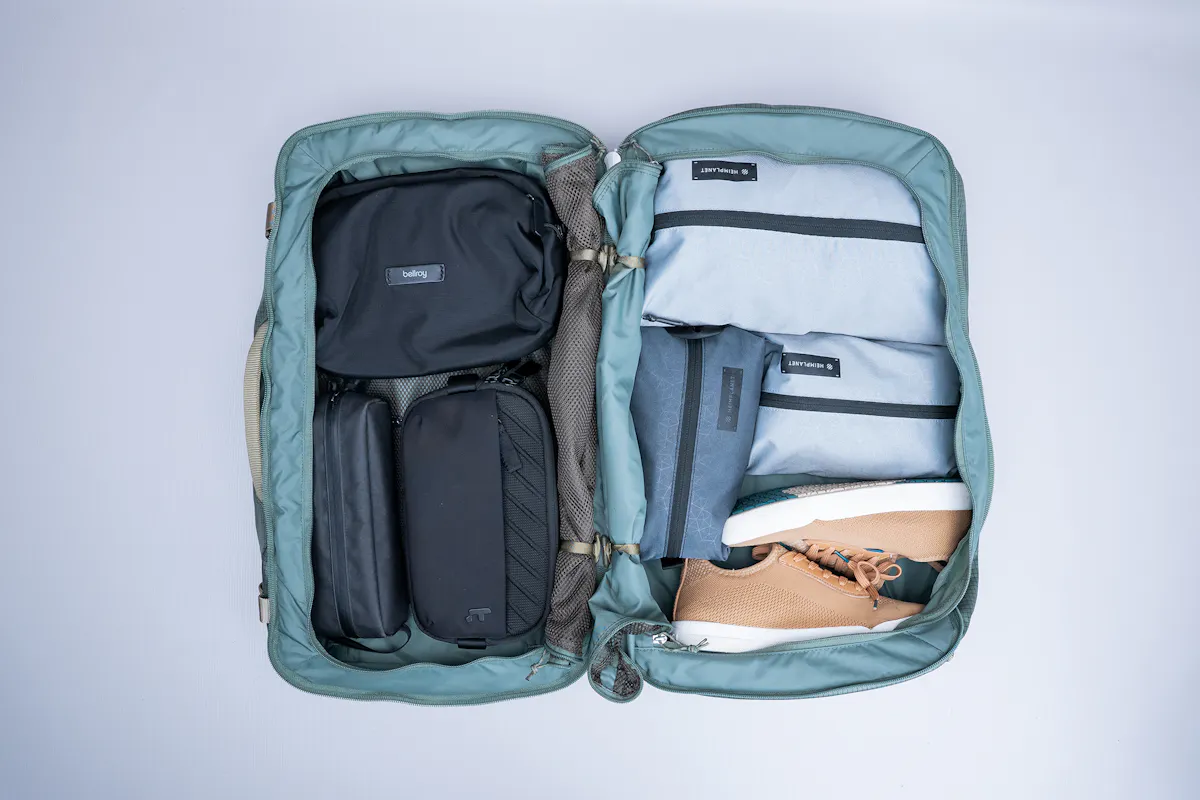
Inside, the main compartment is essentially a large bucket space, which offers plenty of room for packing cubes, clothing, and other travel essentials. During testing, we were able to fit around two weeks’ worth of gear, including multiple packing cubes, a tech pouch, and even a pair of shoes. The lack of internal structure means you have a lot of freedom in how you pack, but it also requires a bit more effort to keep things organized. Without cubes or pouches, items can shift around more than we’d like.
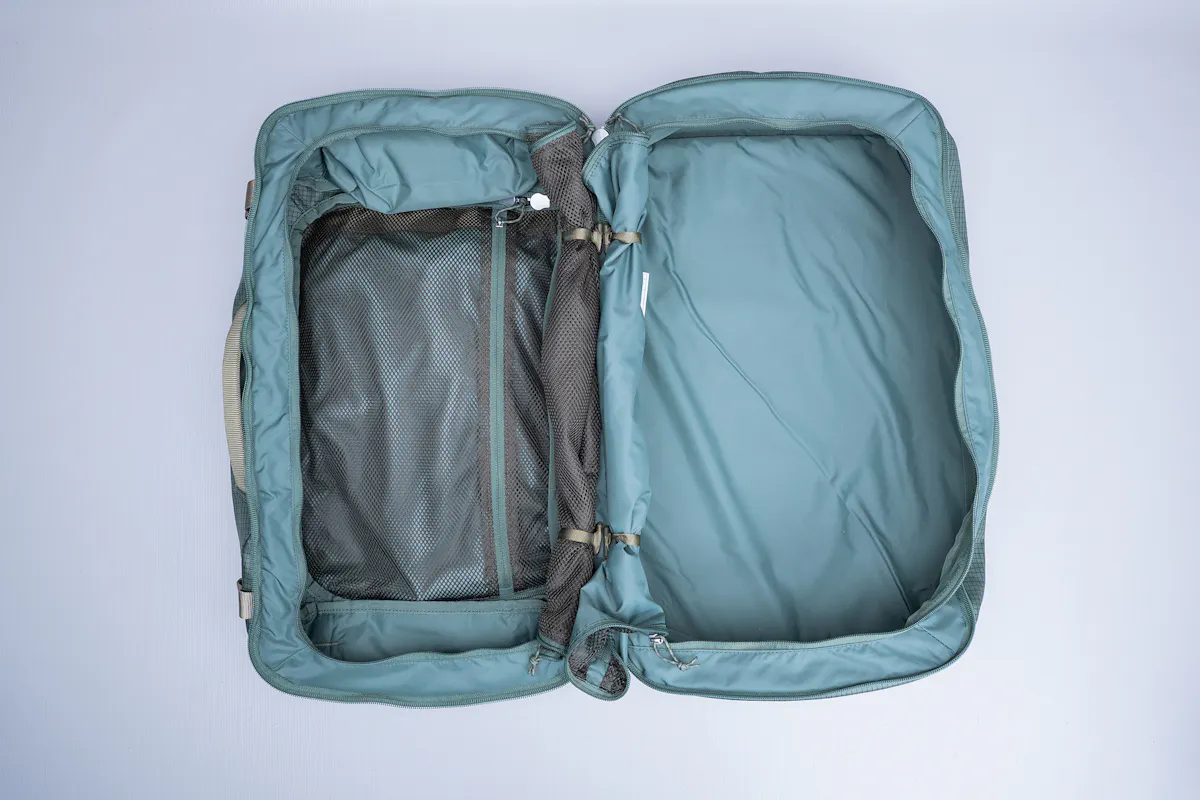
There are several zippered mesh panels and dividers that you can use to separate items. You can roll them away and secure them with hooks, effectively converting the interior into a single large compartment. This modular approach adds a layer of customization that we appreciate, especially for users who prefer different packing styles depending on the trip. It also helps bridge the gap between a traditional duffle and a more compartmentalized travel backpack.
The lid of the bag includes additional zippered pockets, which are useful for smaller items or things you want to keep separate from the main load. However, like many flat pockets, they’re most effective when used for items that don’t take up much space, such as socks, undergarments, or documents. Overall, the interior design prioritizes capacity and flexibility over built-in organization, making it a strong choice for those who already rely on packing systems to manage their gear.
Usage Timeline





Get your questions about the Osprey Transporter Squffel 44 answered from our team and the Pro Community right here on the page. Plus, join discussions with other members about gear, guides, and more.
Join Pack Hacker Pro or, Sign In