Peak Design Outdoor Sling 4L Review
The Peak Design Outdoor Sling 4L is small enough to be comfortable and big enough to hold your daily essentials, making it our favorite of the three sizes.
Our Verdict
Save time. Get access to brief summaries of our reviews so you can browse and make decisions more efficiently.
Pros
- The materials are lightweight but retain durability and water resistance
- It’s a solid size in between the smaller and larger models
- The harness system is capable without weighing you down
Cons
- The fabric doesn’t have much structure, which can lead to sagging
- There isn’t wholesale internal organization, which may deter some travelers
- Removing the strap isn’t very easy to do
Technical Details
-
Capacity
4l
-
Weight (lb)
0.41 lb (0.2 kg)
-
Dimensions
12.2 in x 6.89 in x 1.97 in (31 x 17.5 x 5 cm)
-
Notable Materials
Ripstop Nylon, Meets bluesign® Criteria, Recycled Materials, Unbranded Zippers, Woojin Hardware
-
Manufacturing Country
Indonesia
-
Warranty Information
Full Review
Get up to 10% off Peak Design • Join Pack Hacker Pro
After releasing the two and seven-liter Outdoor Slings, Peak Design is back with a four-liter version to meet (nearly) in the middle, creating a sling that works well for everyday carry, travel, and every stop in between. We’re curious about what features of the smaller and larger slings have carried over and how well they work on this hybrid model. Let’s dive in and find out!
External Components
The primary fabric is Terra Shell 210D ripstop nylon, which is 100% recycled, bluesign® approved, and has a PFAS-free PU coating. That’s a load of technical jargon; however, it all plays an important role. The recycled materials ensure you’re purchasing a bag that’s better for the environment, the bluesign® approval means that it’s well-sourced, and the PU coating without PFAS ensures water resistance that doesn’t come at the expense of offloading more chemicals into the environment. On top of that, it performs incredibly well, offering durability and a sleek look.

The zippers aren’t from a brand we recognize, which typically worries us, as the zipper is one of the most essential pieces of your gear. Still, we’ve seen these identical zippers on other bags from Peak Design, including the other Outdoor models, and they’ve held up well in testing.
The plastic hardware is from Woojin, one of the best brands in the business. It’s easy to use and snappy to open and close, making for a positive overall experience when adjusting and securing the sling.
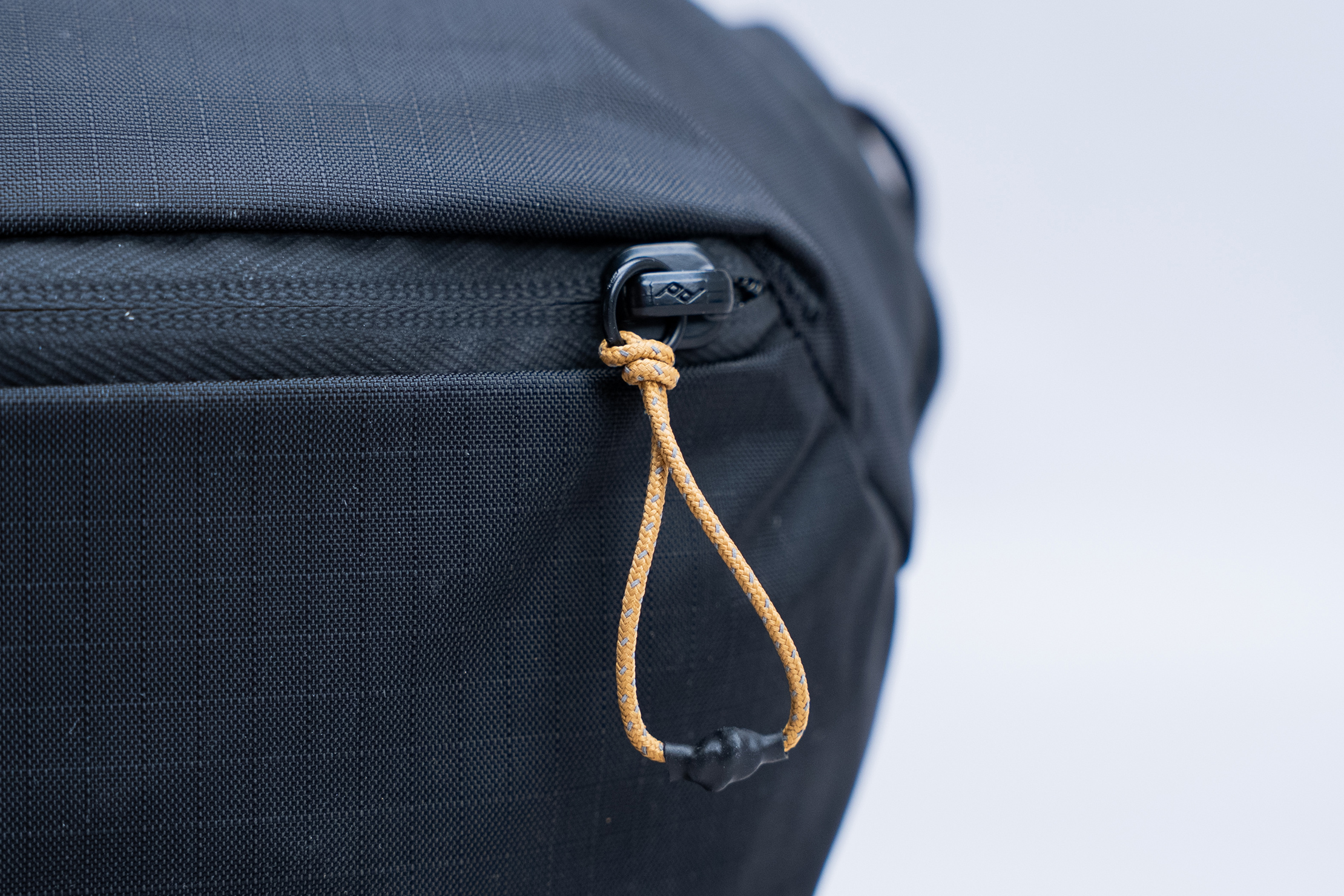
On top of the pack, there’s a minimalist top handle that doesn’t get in your way when you aren’t using it and offers a way to carry it without using the removable strap. It works well if you’re using the sling as a pouch or going across the hall without putting it on.

You can use two attachment loops on the bottom of the sling to add gear to the exterior and attach the stabilizer strap (we’ll get there). We appreciate that they’re out of the way if you aren’t using them.
Fit Notes
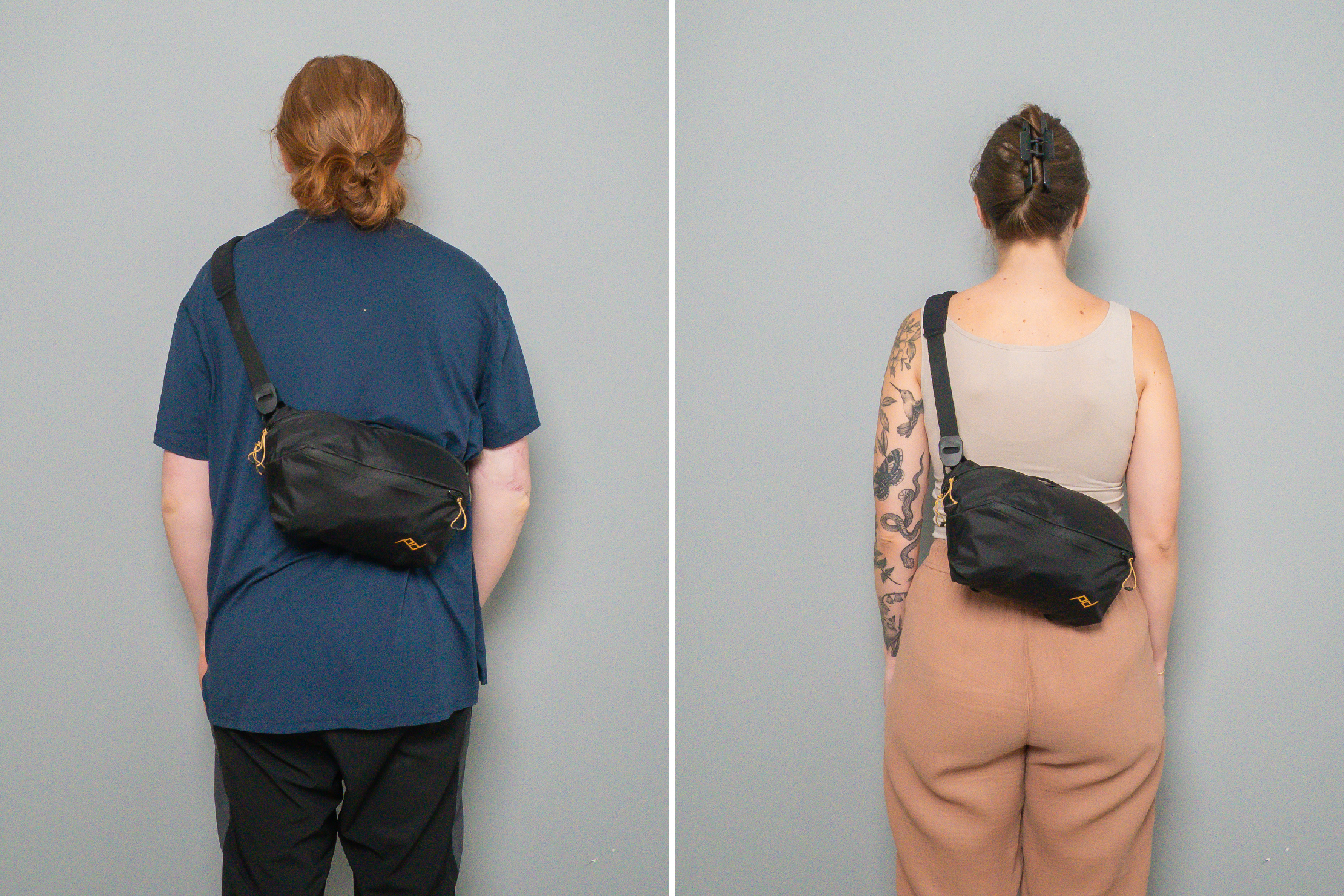
The back panel doesn’t have much padding, though it feels adequate for the sling’s size and weight. While it lacks cushion, it’s well-aerated with mesh and holes that promote airflow. It breathes well and is comfortable, even when you’re active while wearing it. The back panel doesn’t have a ton of structure, which makes packing smart essential so you don’t get poked by the gear you stow inside the sling.
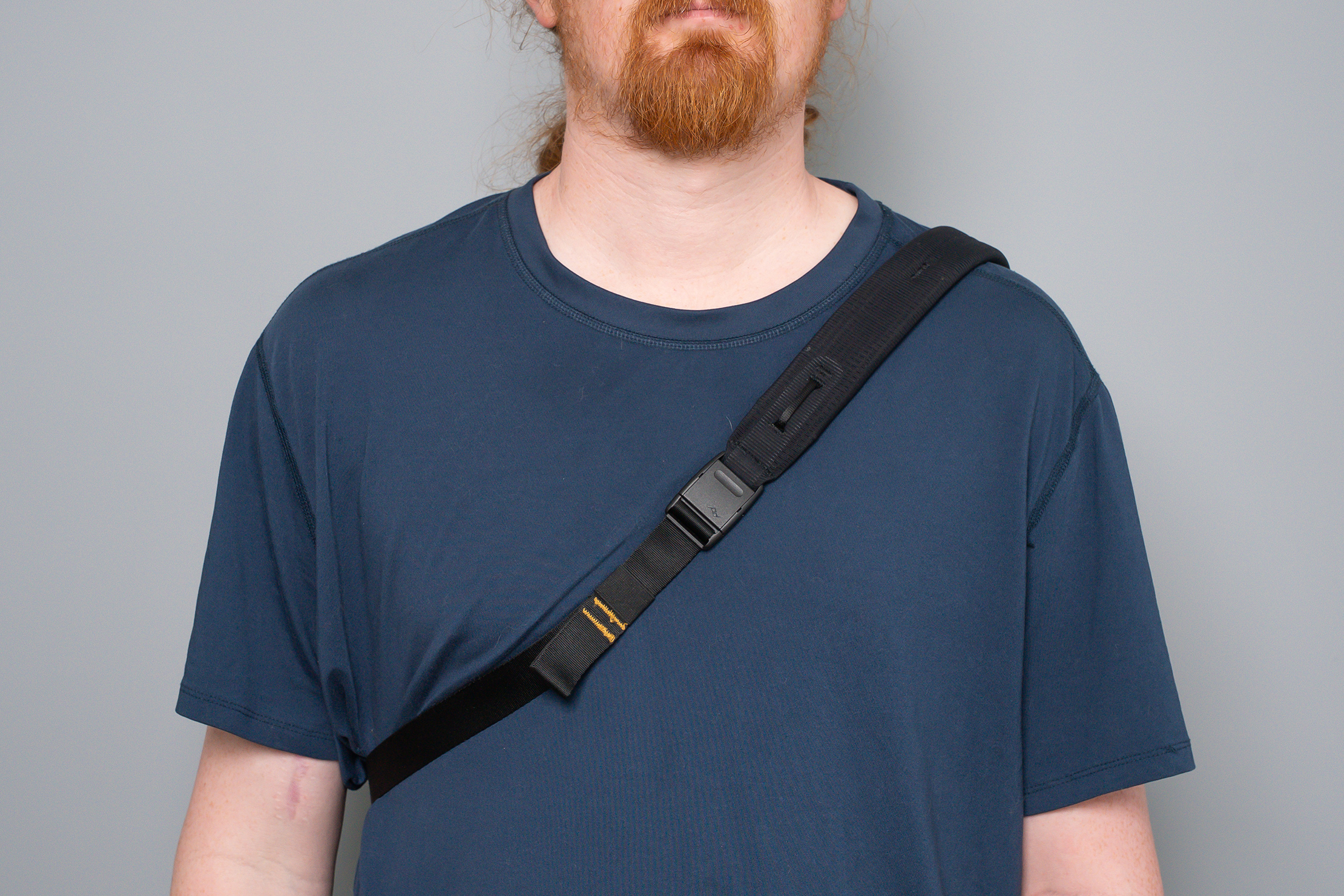
The strap isn’t very wide but has a long padded section, which adds to the comfort of the carry. It’s long enough to cover your entire shoulder, though you may have to adjust it to make it work if you transition between front and back carry frequently. You can stow excess straps behind the back panel, which makes things look cleaner and ensures there’s less strap flapping in the wind, which we dig.
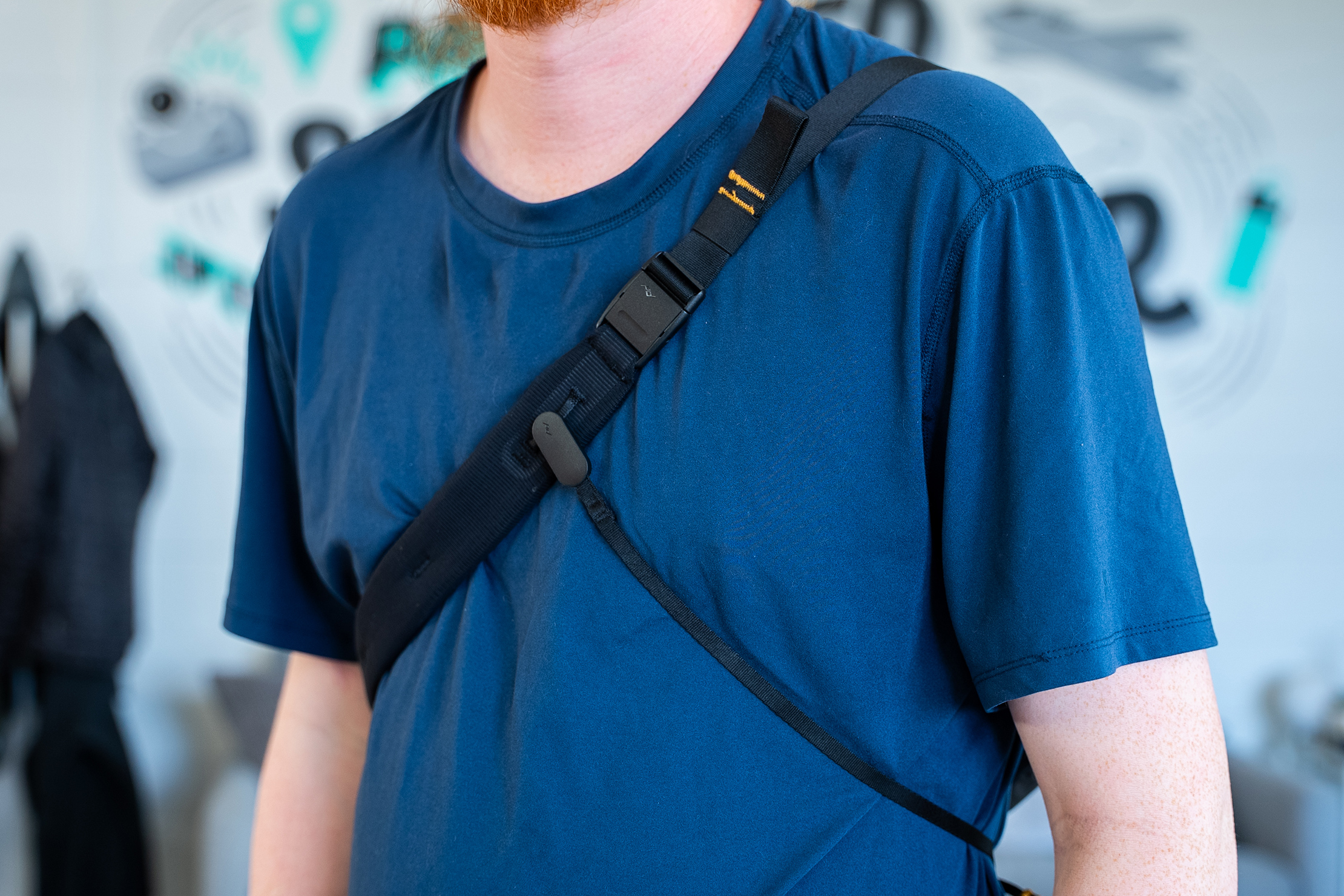
If you prefer more stability, you can attach a stabilizer strap. It attaches to the sling’s bottom loops and a small loop on the shoulder strap. This ensures that the sling doesn’t move around much, which is handy if you’re wearing it loosely or using it while doing something active, like cycling or jogging.
The buckles aren’t the standard ones you’re used to, though they’re easy to use and adjust. The adjustors clamp down on the strap so it won’t come loose, ensuring that the length of the strap doesn’t constantly shift. It takes some getting used to, but we like the system.
You can remove the strap entirely, turning the sling into a makeshift bag or tech pouch, which is unique. This also allows you to add any strap you wish or to replace it if it breaks.
Inside The Sling
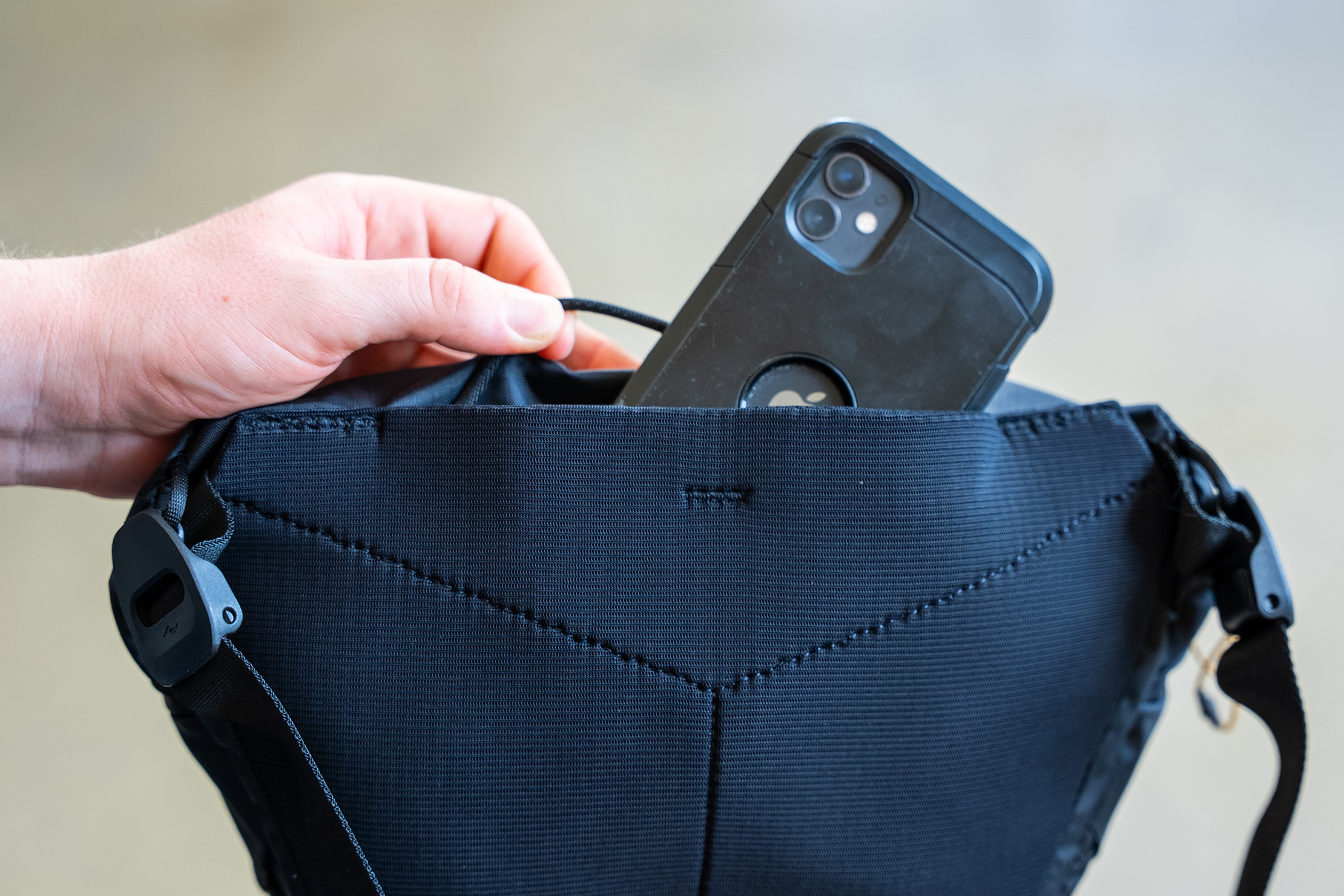
There’s a small hidden pocket behind the back panel that works well for flat items, like a phone. Whatever you store here becomes the back panel, so keep that in mind when choosing what to place here.
The pack’s front pocket lacks organization but is a valuable storage area for your phone, wallet, sunglasses, or snacks. A key leash is attached here to keep your keys safe. The leash is stretchy, so you can use it to open a door lock if the lock isn’t in an odd position.
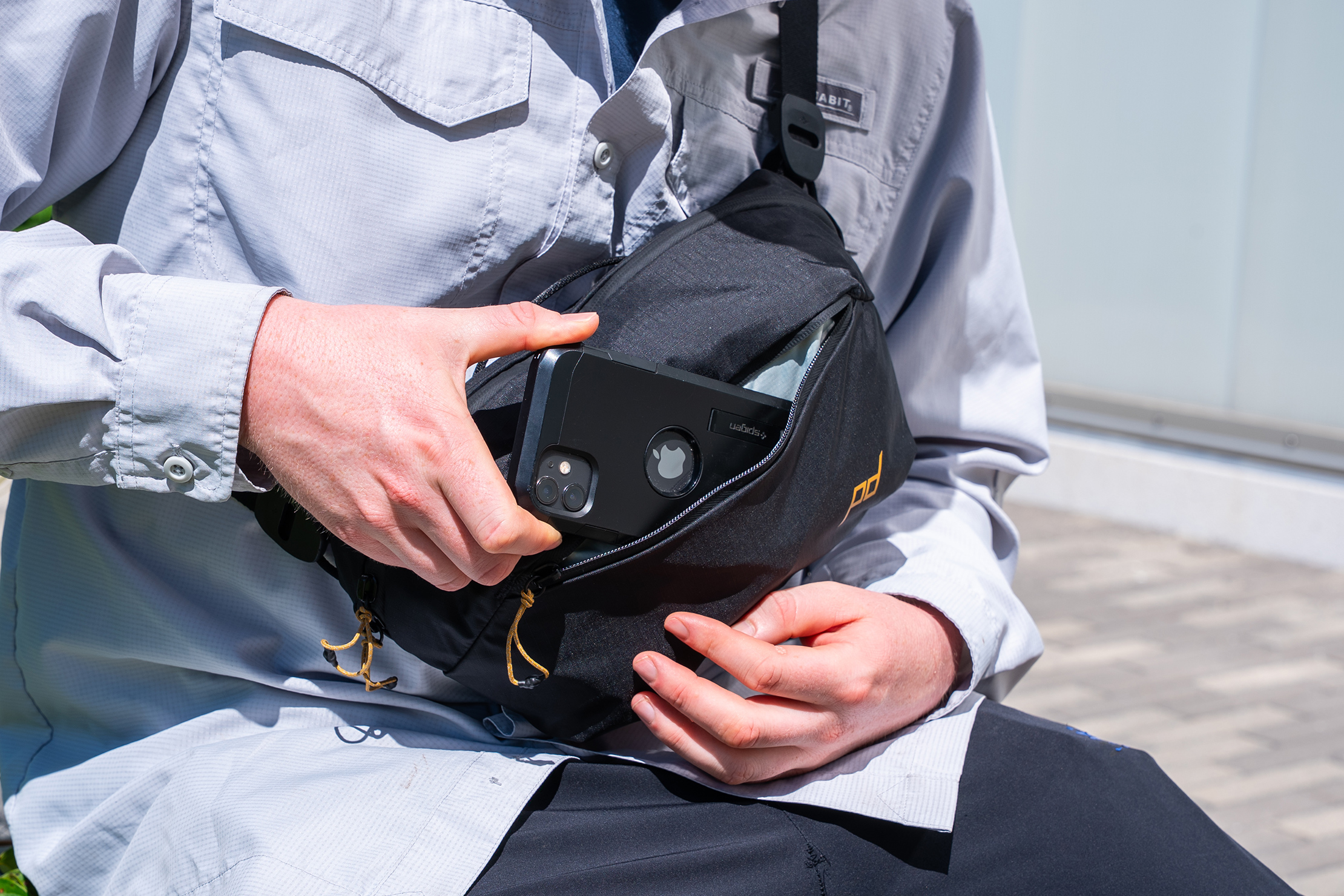
If you completely fill the main compartment, getting gear into the secondary pocket is more challenging. While the two areas don’t necessarily share space, the barrier between them isn’t structured, so it’ll flex outward or inward when pushed.
The main compartment has some organization but is dominated by a large, open area. We could fit a Nintendo Switch, large over-ear headphones, or two paperback books inside without issue.
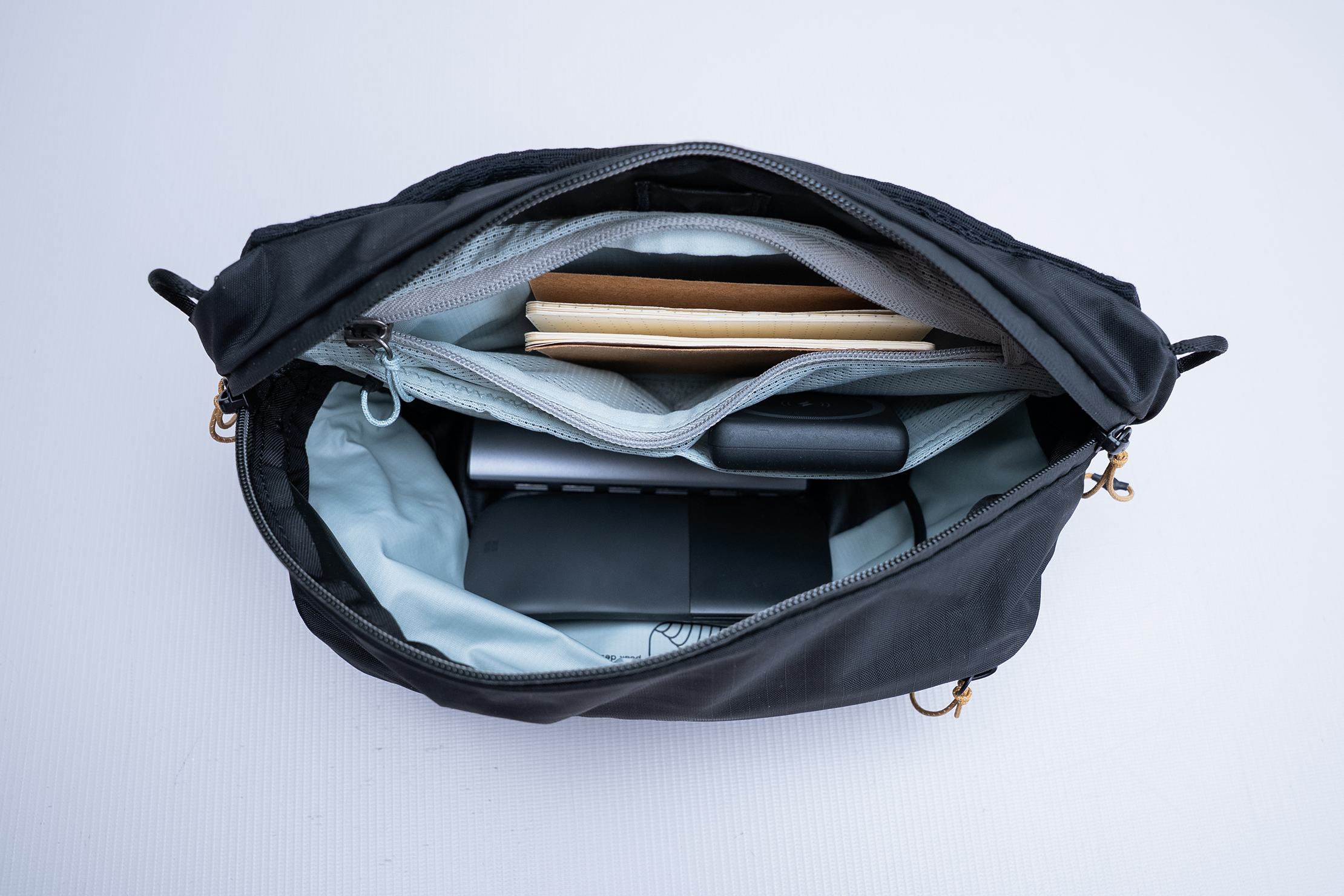
On the back wall are two mesh pockets without a top closure and a larger zippered pocket. The former works well for stowing your wallet, keys, or a similarly sized small item. The zippered pocket is large enough for your passport or other medium-sized items.
It’s essential to pack smart here, especially in the zippered pocket. As mentioned, the back panel isn’t very densely padded, so packing awkward-sized items here can make the carry uncomfortable.
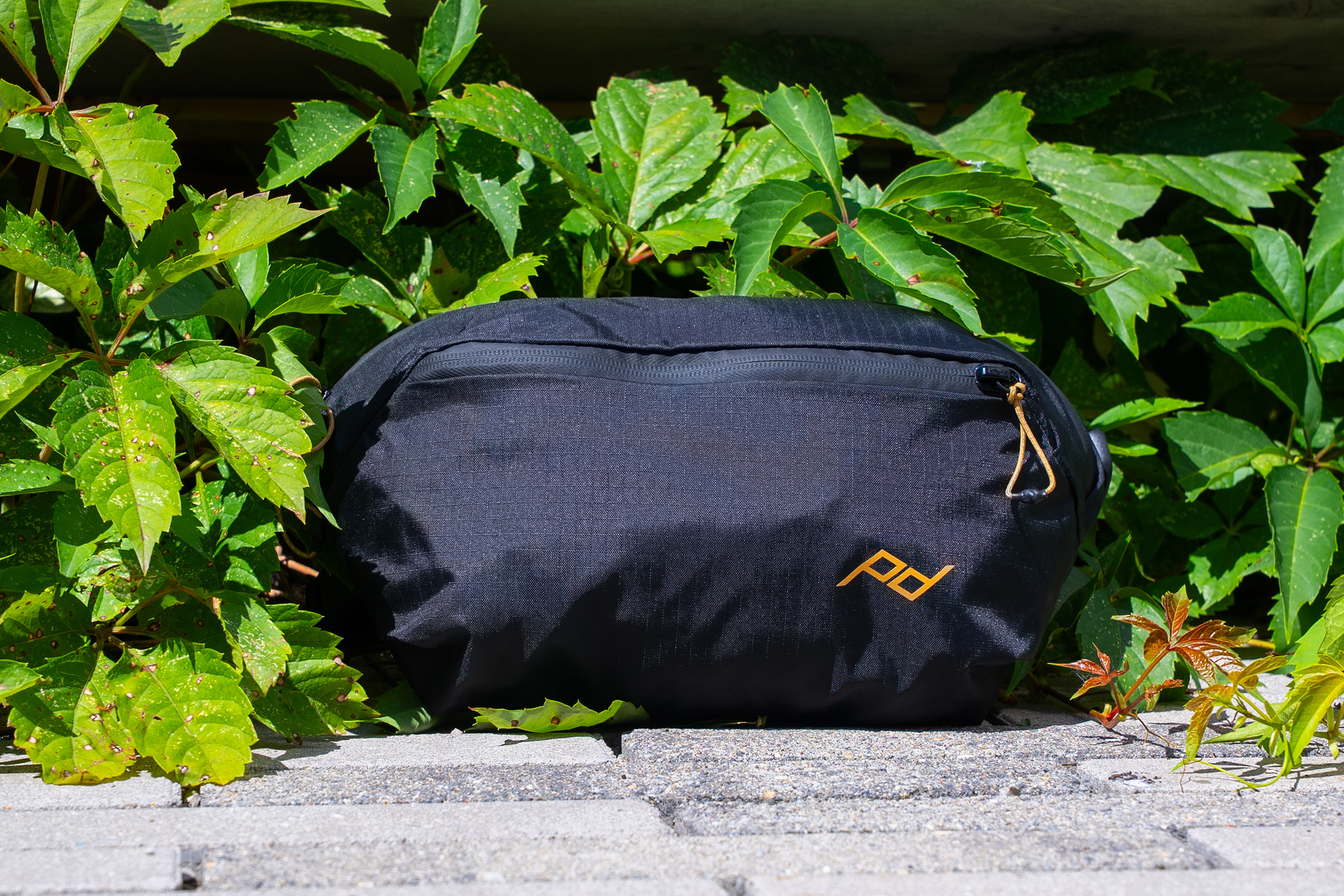
After testing both the two-liter and seven-liter iterations of this sling, we find that this is the most usable of the bunch. The two-liter version is an excellent tiny sling for just a couple of extras you normally would toss in your pockets, and the seven-liter model is a solid solution for travel photographers. The four-liter version is a solid middle ground, offering a comfortable, well-sized sling that allows you to carry the daily essentials and a few specialty items.
Usage Timeline
Condition: Excellent
- The materials have held up well, even in rugged conditions while hiking and cycling
- No issues with the zippers or hardware
- The strap is comfortable, which we dig




Get your questions about the Peak Design Outdoor Sling 4L answered from our team and the Pro Community right here on the page. Plus, join discussions with other members about gear, guides, and more.
Join Pack Hacker Pro or, Sign In