Tropicfeel Shell ProLite Review
The Tropicfeel Shell ProLite has many options for add-ons and expansion. It's ultralight, too, though it can look disheveled without proper compression.
Our Verdict
Save time. Get access to brief summaries of our reviews so you can browse and make decisions more efficiently.
Pros
- It works well as a daypack and a travel backpack
- You can access the main compartment through the rolltop or clamshell zipper
- The harness system is comfortable even when the bag is full
Cons
- The extra material hangs and bulges if you don't tuck it properly when compressed
- You can't remove the hip belt when you're carrying less
- The material is slightly see-through with lighter colorways
Technical Details
-
Capacity
20l
expandable to 40 liters (50 liters with accessories)
-
Weight (lb)
1.98 lb (0.9 kg)
-
Dimensions
19.7 in x 11.8 in x 9.06 in (50 x 30 x 23 cm)
-
Notable Materials
Recycled Nylon, DWR Coating, YKK Zippers, Woojin Hardware
-
Manufacturing Country
Vietnam
-
Laptop Compartment Size
16"
-
Warranty Information
Full Review
If you’re in the market for not just one bag travel but one bag ownership, you might appreciate a travel backpack with the flexibility to grow from 20L to 40L, and beyond, especially when it weighs less than a pound (1.98 lbs, or 0.9 kg, to be exact). However, flexibility sometimes comes at a cost, so we wanted to see how the Tropicfeel Shell ProLite stacked up when testing it for daily use and travel.
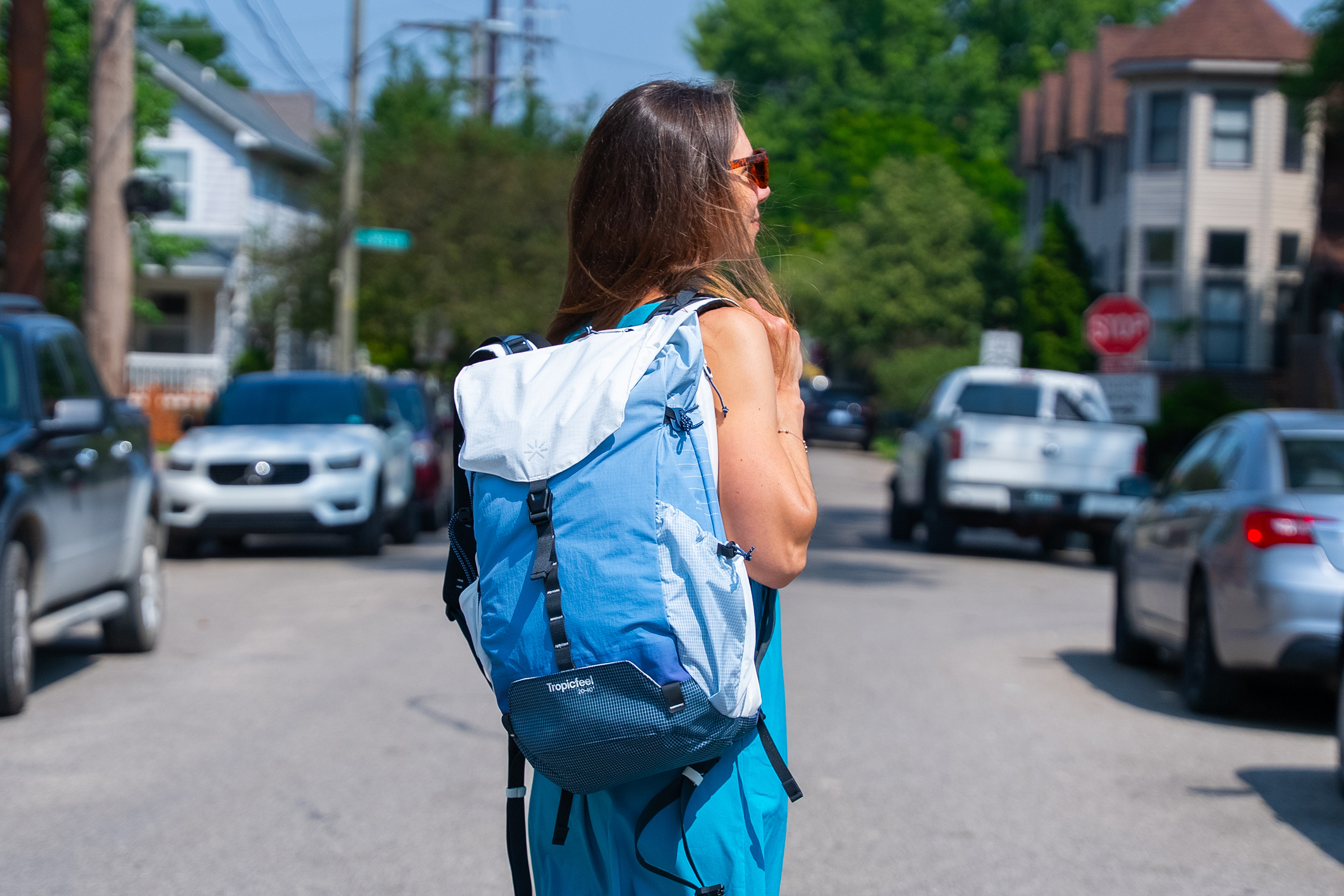
Does it work better for one than the other? Does it excel at both, or is it merely ho-hum without all the added accessories sold separately? It’s time to find out.
External Components
To make a travel backpack this lightweight, Tropicfeel uses recycled Taslan ripstop with a coating for water resistance—that’s recycled nylon for those of us not in the bag manufacturing business. Still, the bag’s manufacturing process has a lower environmental impact, with a 35% savings of CO2 and 41% savings of water compared to conventional products. The material is a bit crunchy, yet it compresses easily (albeit not quietly).
We’ve got the blue and white colorway, but there is also a greenish tan option. Both have portions of the bag with lighter or white fabrics, and we just want to let you know: you can see shapes and shadows of your gear through those spaces. It’s mostly the large top pocket on our colorway, but if you were stowing something more personal inside, you’ll have to tuck it into another pouch if you don’t want everyone to know. It’s a pretty, airy look, we just don’t love the transparency.
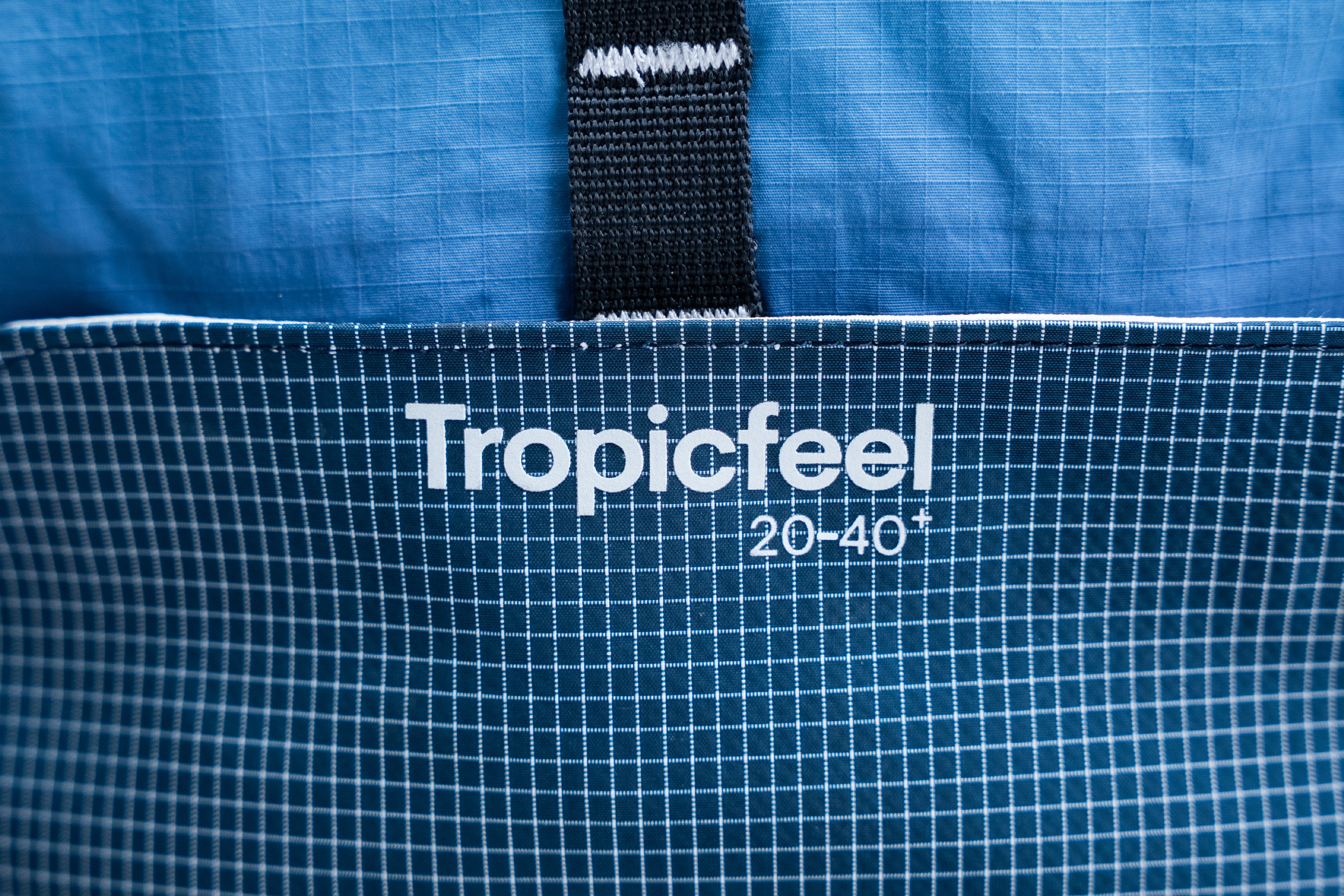
Centered at the bottom of that white flap is the Tropicfeel logo. There’s also the brand name on the kangaroo flap, along with the numbers 20-40, presumably so you remember how big the bag can get. Plus, there is a nifty feature for those who like to track their trips on the right side of the bag. Instead of investing in patches everywhere you go, there are lines where you can write the destination and date of each trip the bag takes with you. There are only eight lines, though, so you may have to decide what trips you want to note. One would hope the bag lasts for more than eight trips.
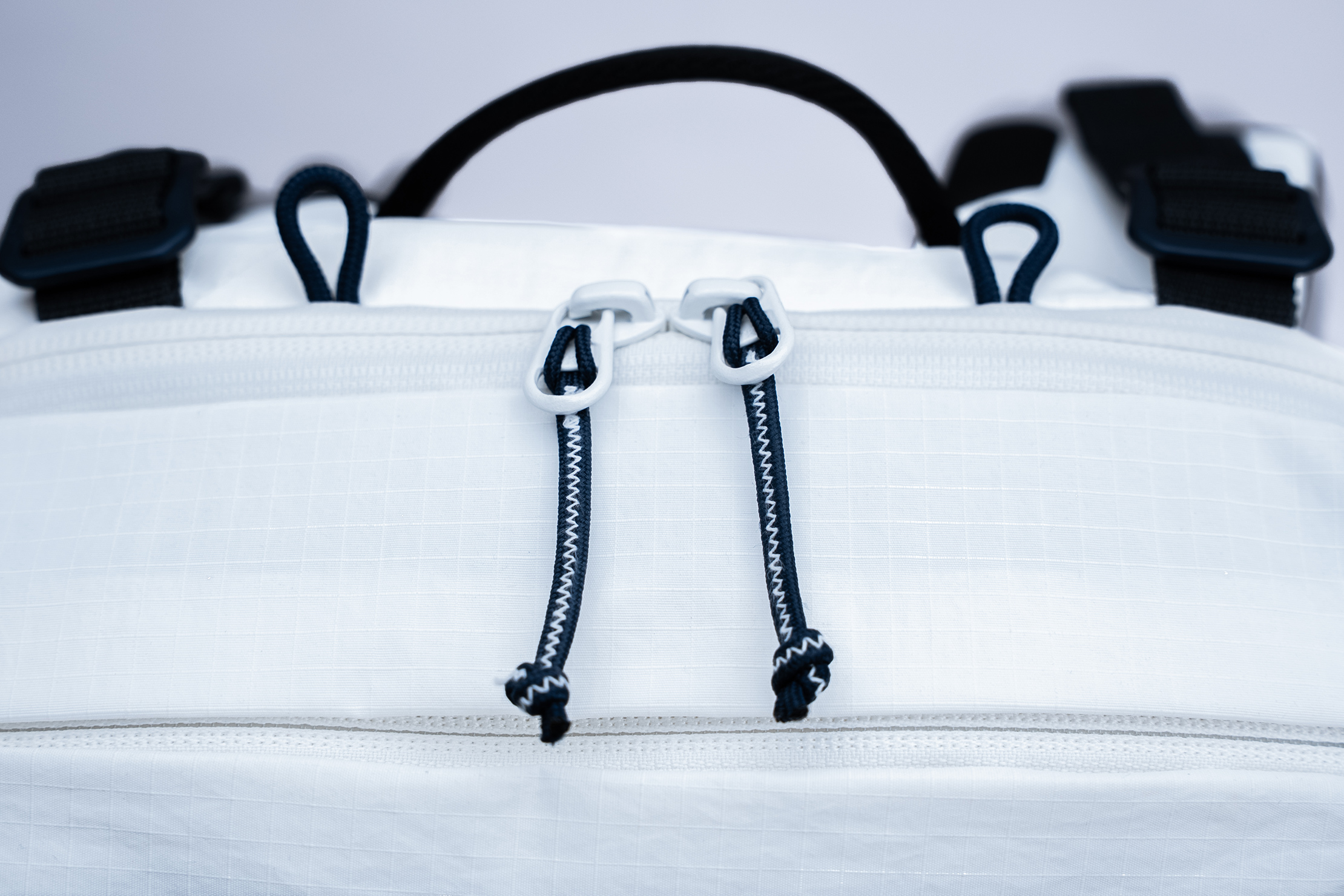
Tropicfeel has used YKK zippers throughout the bag. They’re nearly all reverse-coil models for water resistance, but they lack PU coating for additional weather protection. You can order a rainfly separately if you plan to take the Shell ProLite hiking to a backcountry campout, but it’s not included. The zippers all have cords running through the metal pulls to make them easy to grasp and we never had any issues opening and closing them.
There are no issues with the Woojin Hardware throughout the bag, either. Adjusters work well and stay in place, buckles are easy to open and close, and the toggles hold tight to bungee cords. There are two different types of bungee cords on either side of the bag, and loosening them allows the bag to expand to 40L, while cinching them tight gets it back down to 20L.
The bungee on the left side of the bag is what you might expect. It criss-crosses the side of the bag and cinches it in completely or loosens it evenly up and down the bag. The one on the right is different. It’s a stretchy cord on a hook above the trip list. There is a small webbing loop it hooks into on the front of the bag, and that’s what holds it tight. There’s also a bungee encircling the top of the bottle pocket on this side, whereas the bungee on the other side criss-crosses over the top of that bottle pocket. This might be for style or it might be because the pocket under the criss-cross is entirely made of stretchy mesh, whereas the one on the right is the same nylon as the rest of the bag; albeit with a pattern printed on it.
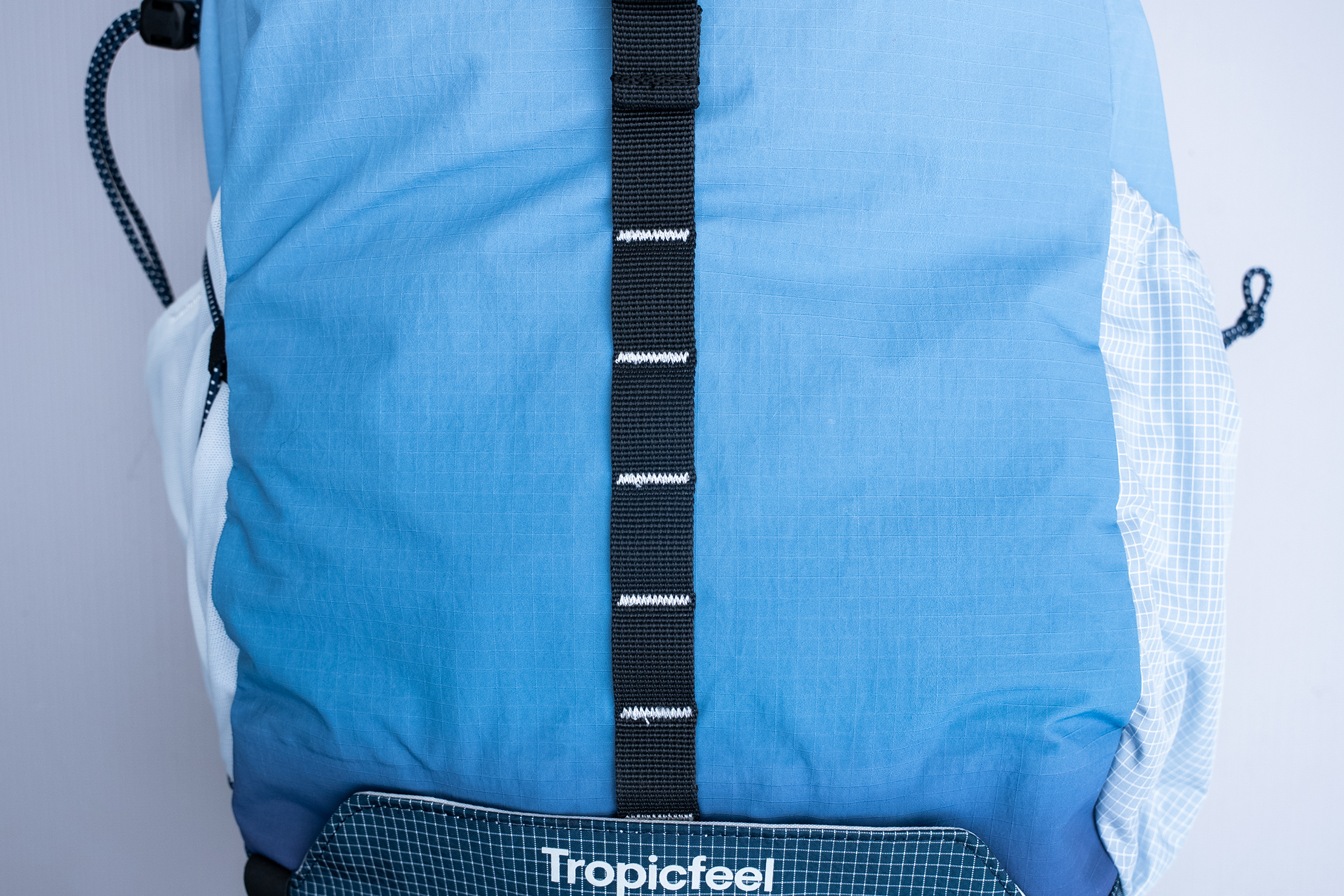
A daisy chain of attachment points runs down the front of the bag. It is where you buckle the top flap down and how you connect Tropicfeel accessories to the bag. We’ll get to what you can add on below, but they attach by pulling down the bottom magnetic flap (the one that says “Tropicfeel 20-40”) and releasing a bungee cord with a hook in the middle. Run the cord through the straps on the back of the accessories and then place the hook through one of the loops on the front of the bag. Presto! You now have a front pocket or compartment that stays firmly in place on the bag’s front throughout your day. Stay with us; more surprises are hiding underneath that pocket, on the bottom of the bag. We’ll discuss that down below.
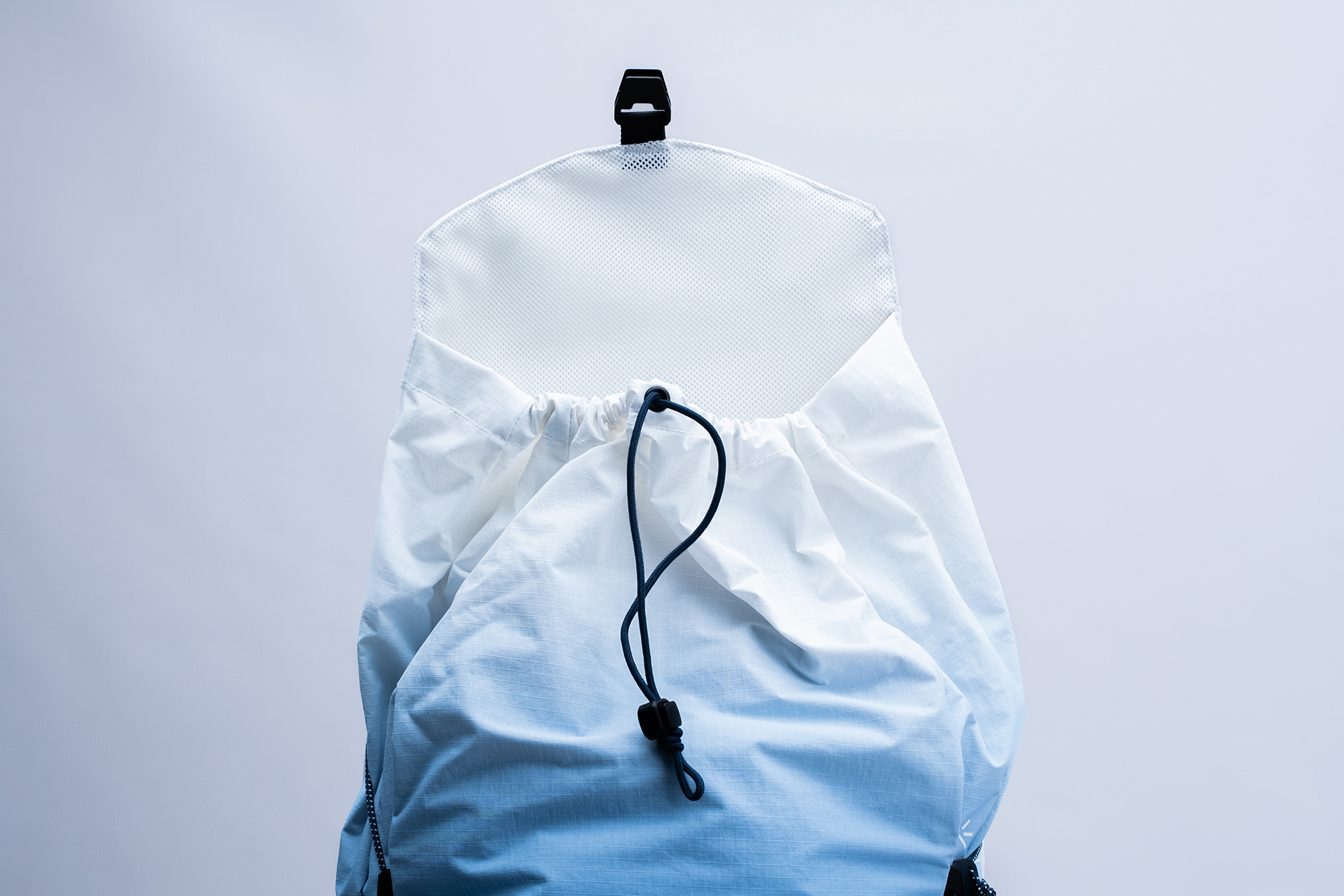
If you unbuckle the flap, you’ll find the second entrance to the main compartment. You can access it through a clamshell zipper or via the cinch top stowed underneath the flap. We used the zipper more often because it seemed easier than unclipping the buckle each time, but both methods work well.
Atop the back panel is a rather anemic carry handle. It’s no more than a glorified rope loop between the shoulder straps. Luckily, the harness system is much better, and that’s how you should carry the bag nearly all the time. The top handle is good for hanging the bag on a hook, and that’s about it. Even pulling it out of the car every day, we reach for the shoulder straps, even though our primary tester has pretty small hands that fit through the loop.
There are also two much smaller loops for connecting additional accessories.
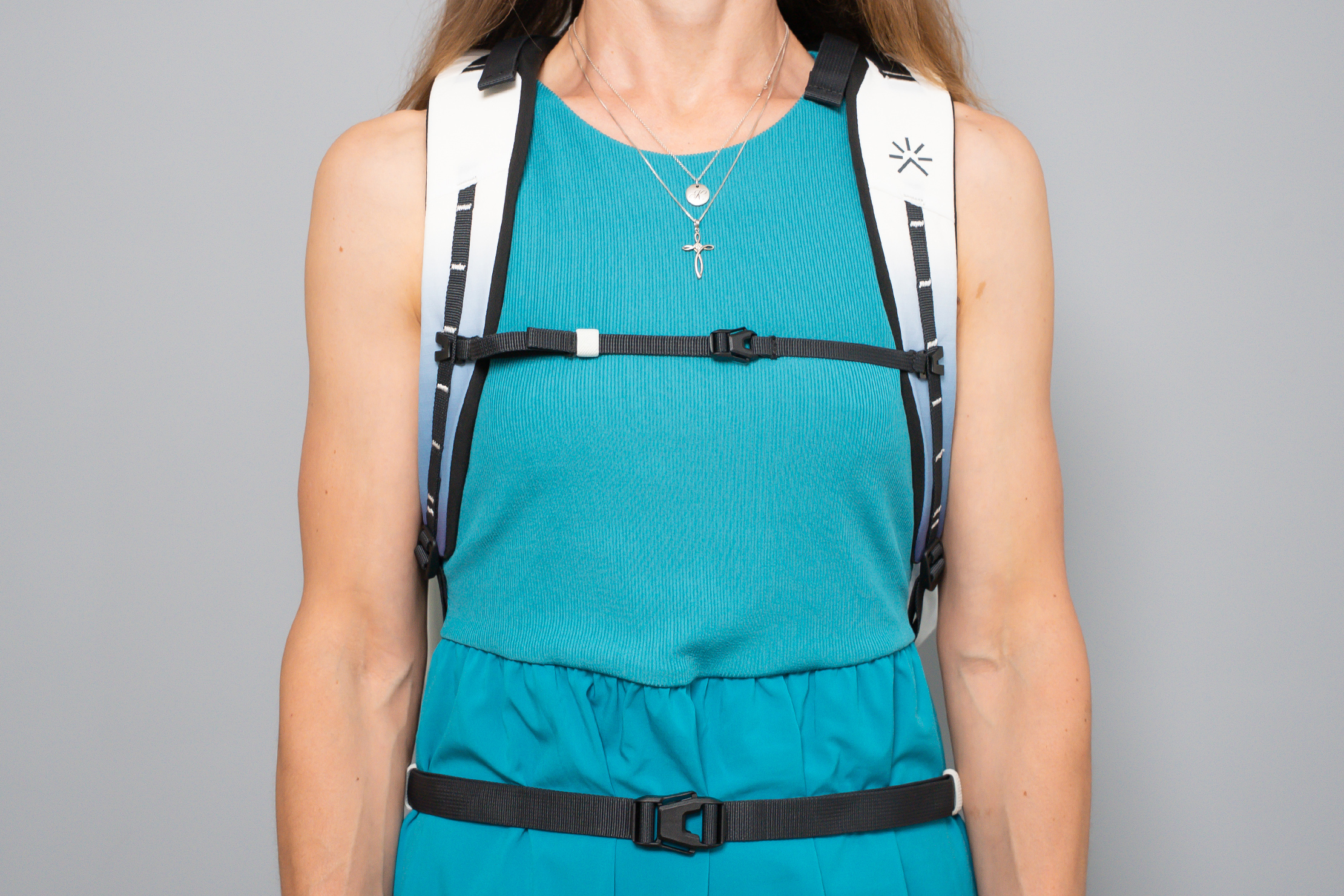
In contrast to the carry handle, the harness system is quite robust. The shoulder straps are comfortably padded and lined with micromesh for breathability. There is a thin sternum strap that clicks into daisy chains of loops on either side and is removable if you don’t want to use it. However, there is also a thin hip belt that extends from padded wings that you cannot remove, which is disappointing since we didn’t find a need for it when using the ProLite in its compressed, 20L form. Instead, they just dangle down by your sides. Luckily, there are built-in elastic strap-keepers on the hip belt, sternum strap, and shoulder straps to keep some extra material in check.
We might not have needed the extra support because there are load lifters atop the shoulder straps, which work well to lift the bag higher on your back when you need it and make it more comfortable to carry.
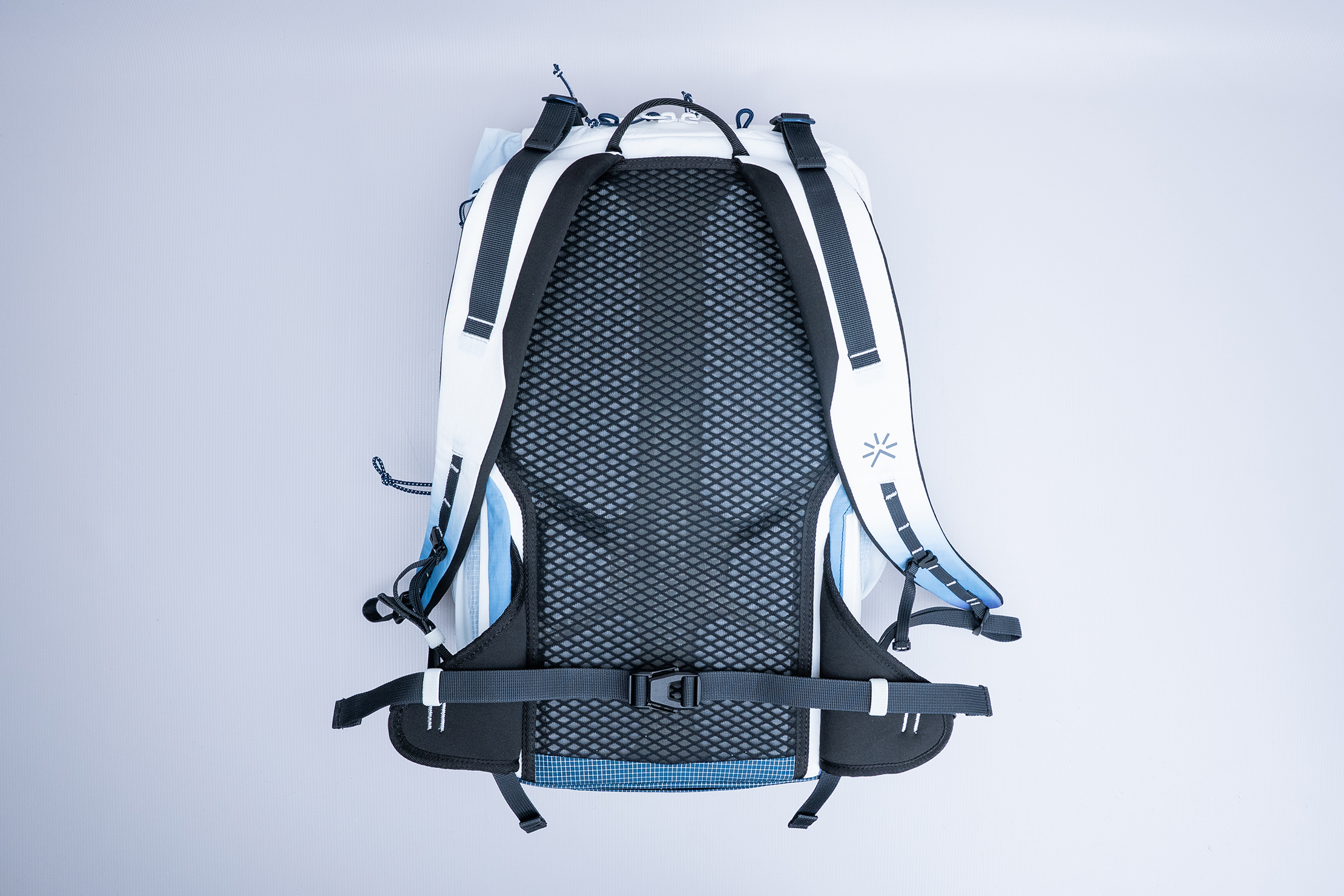
The back panel features portions of padding with an air channel between them. The entire panel is covered with a breathable mesh, which works well, even in the thick of summer.
Fit Notes
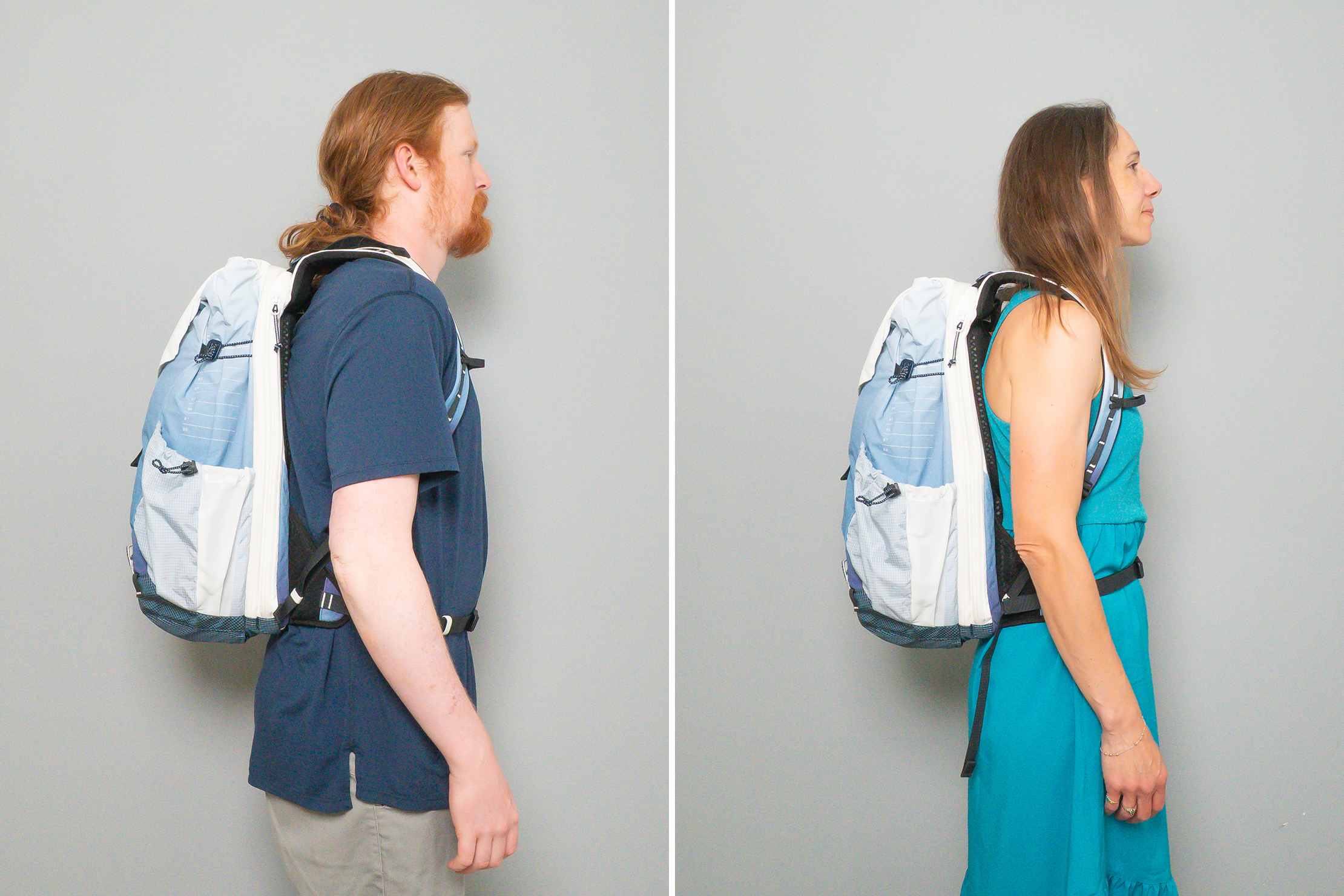
The entire setup is quite comfortable to carry. We don’t need to use the sternum strap or hip belt when the bag is compressed, but the extra support is there when you need it. That said, the hip belt hits very low on users with shorter torsos, so it doesn’t provide much support at all. Taller users don’t have this issue.
The Tropicfeel Shell ProLite looks best when fully packed because there are fewer straps and extra fabric hanging around. However, as long as you tuck the material into the bag when you’re not using it, it doesn’t look bad compressed, either. It’s definitely casual but fits well for hiking, camping, and other outdoor adventures.
Inside The Pack
Tropicfeel says the Shell ProLite is “more than a backpack, an ecosystem,” which is a nice way of saying that it has modular features you can add on for an additional cost. We’ve used Tropicfeel accessories before, and we like the added benefit they bring, but we’re testing the Shell ProLite as a standalone bag to see if it has merit on its own.
However, if you’re wondering what you could add to cart along with the backpack, we’ll fill you in on a few of your options. To keep your grooming gear close at hand, you can check out the SEE Toiletry Bag ProLite. If you want a hanging way to organize your clothing without packing cubes inside your bag, there’s the Tropicfeel Wardrobe, and if you need to make your already large backpack even bigger, you can add on the SEE Front Cube for additional storage.
The toiletry bag and the front cube attach to the front of the bag, which is why Tropicfeel says it’s expandable to 50L from 40L. The wardrobe slides inside to help you organize your clothing on the go.
However, outside of the main compartment, the bag also has many organizational features, so you might not feel the need to add any extras.
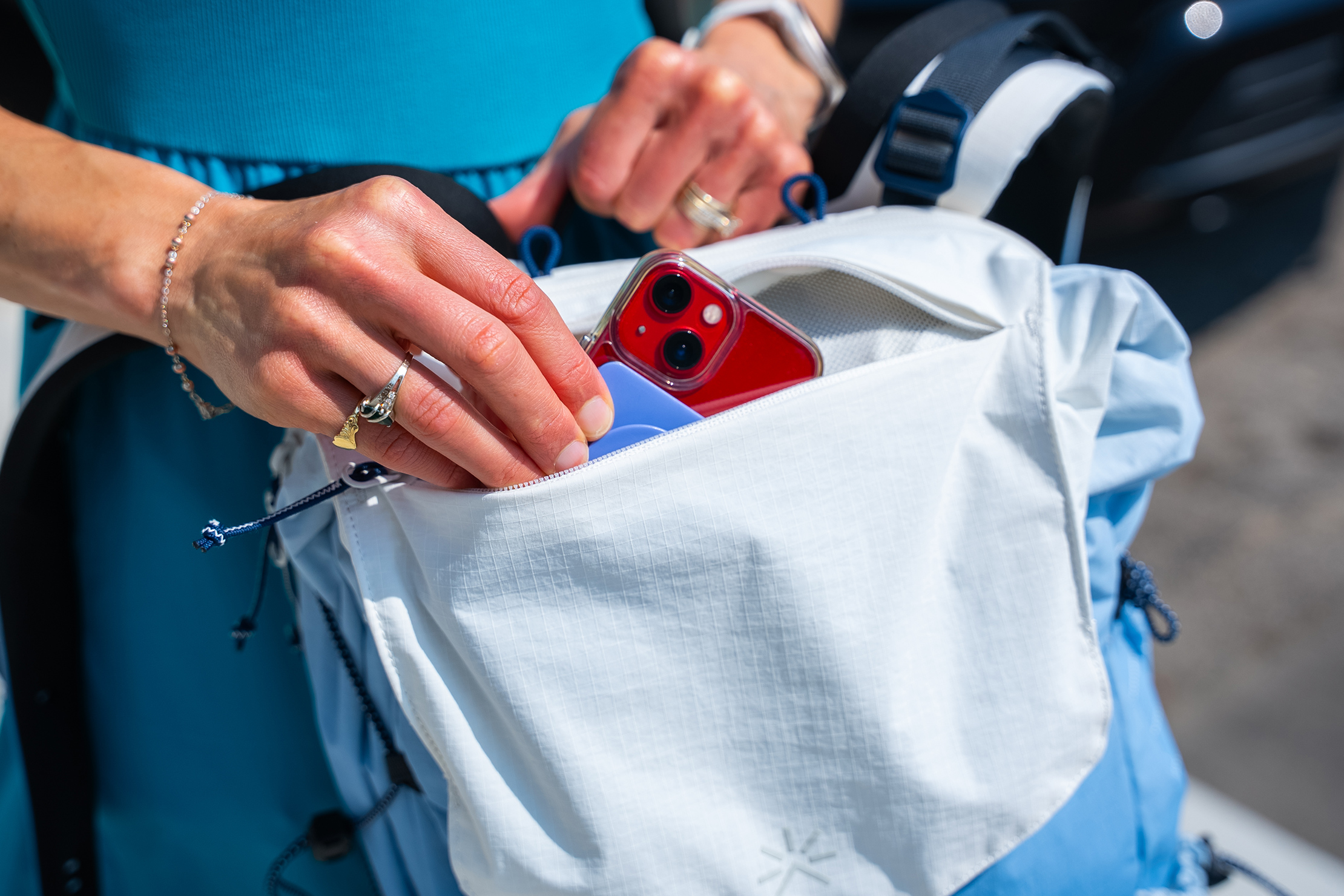
The top flap includes a large quick-access pocket. This is where you’ll see your gear potentially showing through, especially if you toss a small red pouch inside like we did. There’s plenty of space inside this pocket for your phone, wallet, keys, and more, though it can drag down the top of the bag if you pack a lot inside here and not much in the main compartment.
The water bottle pockets we discussed earlier are on either side of the bag. They’re large enough to hold big bottles but can compress down when using a skinnier one.
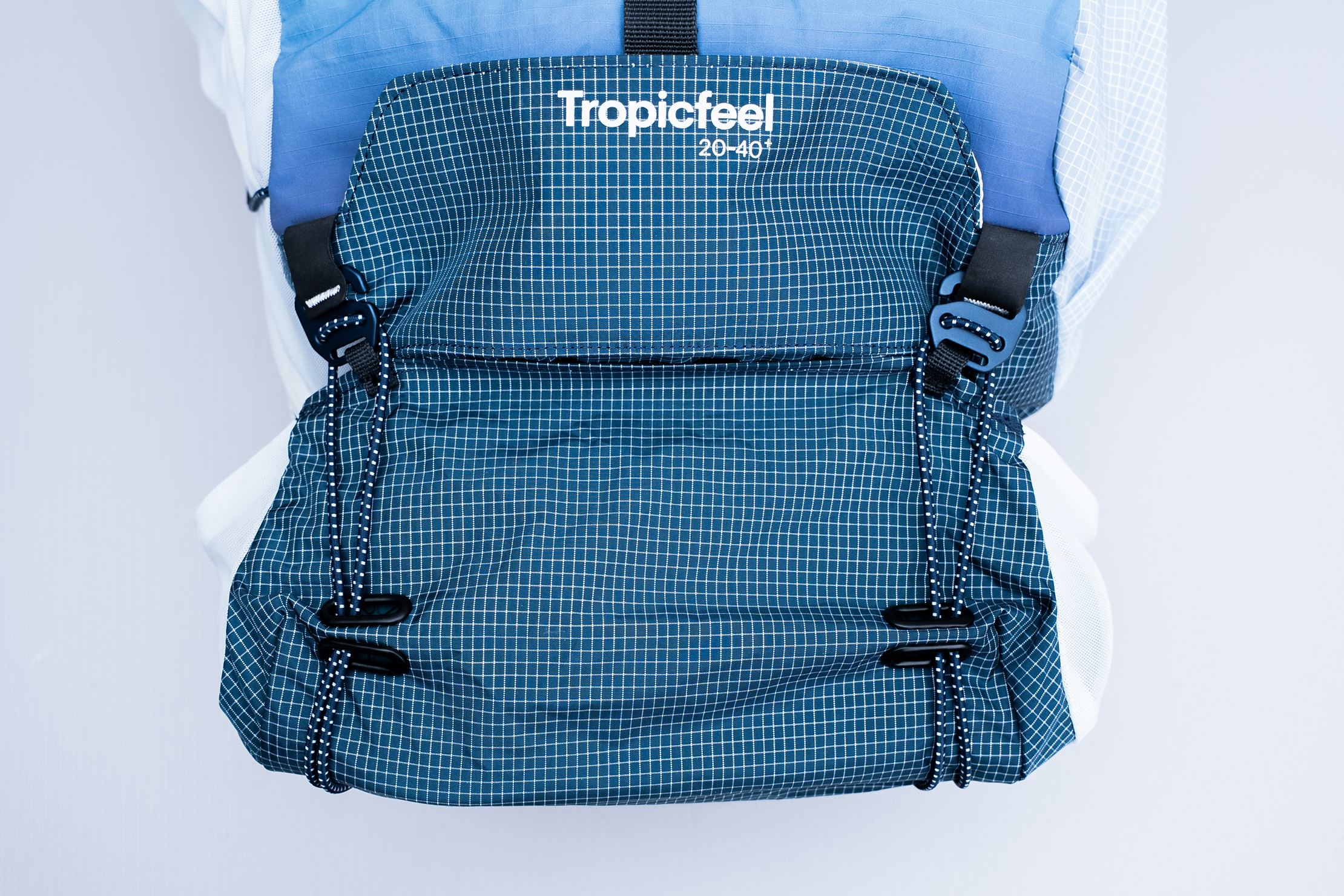
If you flip to the bottom of the bag, you’ll find a snap near the back panel. Open it to find the kangaroo pouch where you can tuck travel shoes or anything else you want to carry outside of the bag. The inside of this area has a water-resistant coating and the sides are breathable mesh, so your footwear can air out without soaking through to wet your back as you carry them.
After you tuck your shoes or sandals inside, connect the bungee hook to the Hypalon-like loops on the front of the magnetic flap and then tighten the bungees, holding them in place with the toggles on the back. You can tighten the cords from the portion that runs underneath the shoe pouch to the hook and back of the bag, and it takes a bit of finesse to determine the best way to cinch up this section. Regardless of how you do it, your shoes won’t go anywhere, but you may see them peaking out of the sides or front more or less, depending on their size and how much you cinch the bungees. It’s definitely a useful option when you’re taking the bag on a trip or to the beach, and it completely tucks away when you aren’t using it.
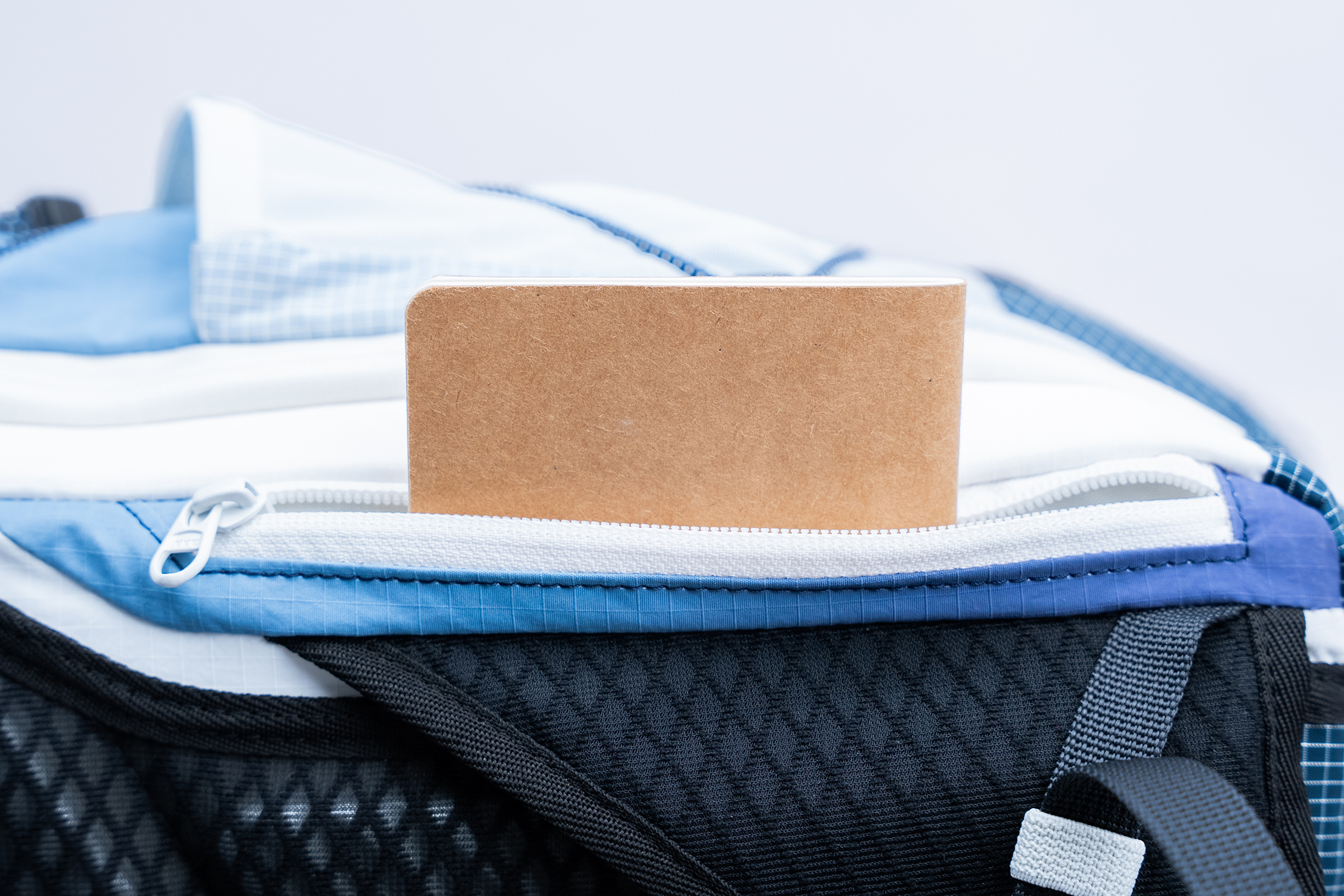
Next up is a pocket on the bottom right side of the back panel. It spans the entire width of the bag’s rear, giving you space to tuck your passport, extra cash, and anything else you want to keep secure. The zipper is fairly hidden, and the pocket will rest against your back as you carry the bag, so anything inside will be safer there than elsewhere. Just don’t put anything too bulky back here, like an extra battery bank or wall charger, as you’ll feel it through the back panel padding, or it will press into your laptop.

That’s because the laptop compartment opens with a vertical zipper on the opposite side of the back panel, and the back side of this compartment is adjacent to that pocket with just a thin, fleece-lined material between the two. There’s only a lining separating the laptop compartment from the main area, too, so you’ll want to take care not to shove anything too pokey back there to save your laptop. A 16-inch device fits inside here, and the space swallows up a smaller laptop. There’s no false bottom to protect your computer from drops, either, so you may want to use a protective laptop sleeve for additional protection if you have a smaller laptop and can fit it inside.
Now, onto the main compartment, which is accessible via the clamshell-style zipper ringing the back panel or through the cinch top under the flap, as we mentioned earlier. Our primary tester found it easiest to use the zipper in nearly every instance, especially since you can get just as wide of an opening that way as through the top. Just be sure that whatever you’re tossing inside actually goes inside; you can see the opening for the cinch top near the top of the bag and, if you don’t unzip it much, you could conceivably toss something through that hole and right back out of the bag.
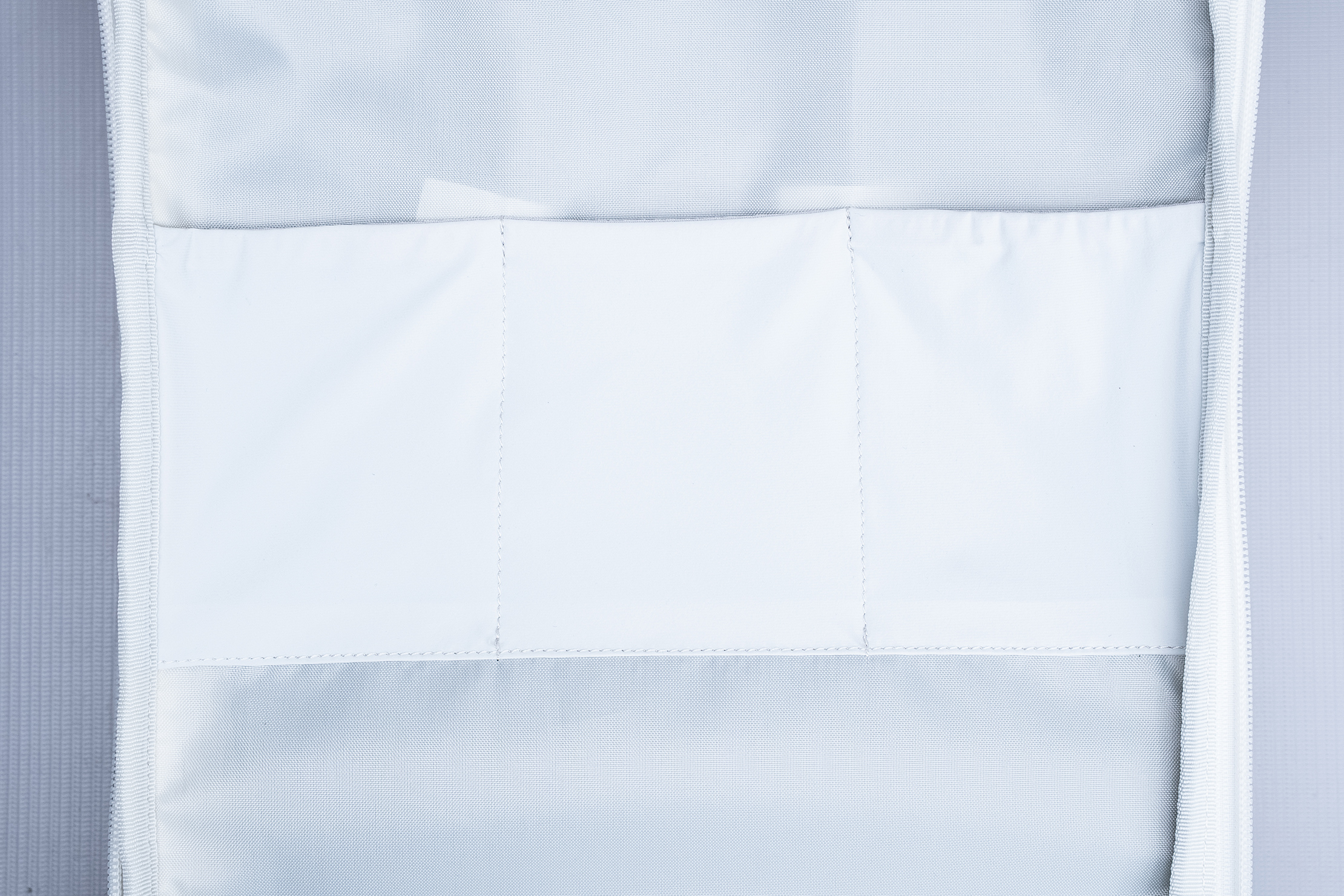
The main compartment doesn’t actually have much organization at all. There are three stretchy pockets along the middle of the back panel, and that’s it. You can slide a glasses case, a travel mouse, or something else small in here; they lie flat if you don’t use them.
The rest of the space is open to fill with packing cubes, kits, pouches, and anything else you want to put inside. Whether you have it compressed or open, there’s a lot of space to fill, especially at the bottom. When everything is compressed from the outside, there’s a lot of fabric folded inside near the top of the bag, but it doesn’t take up that much room since the material is so thin.
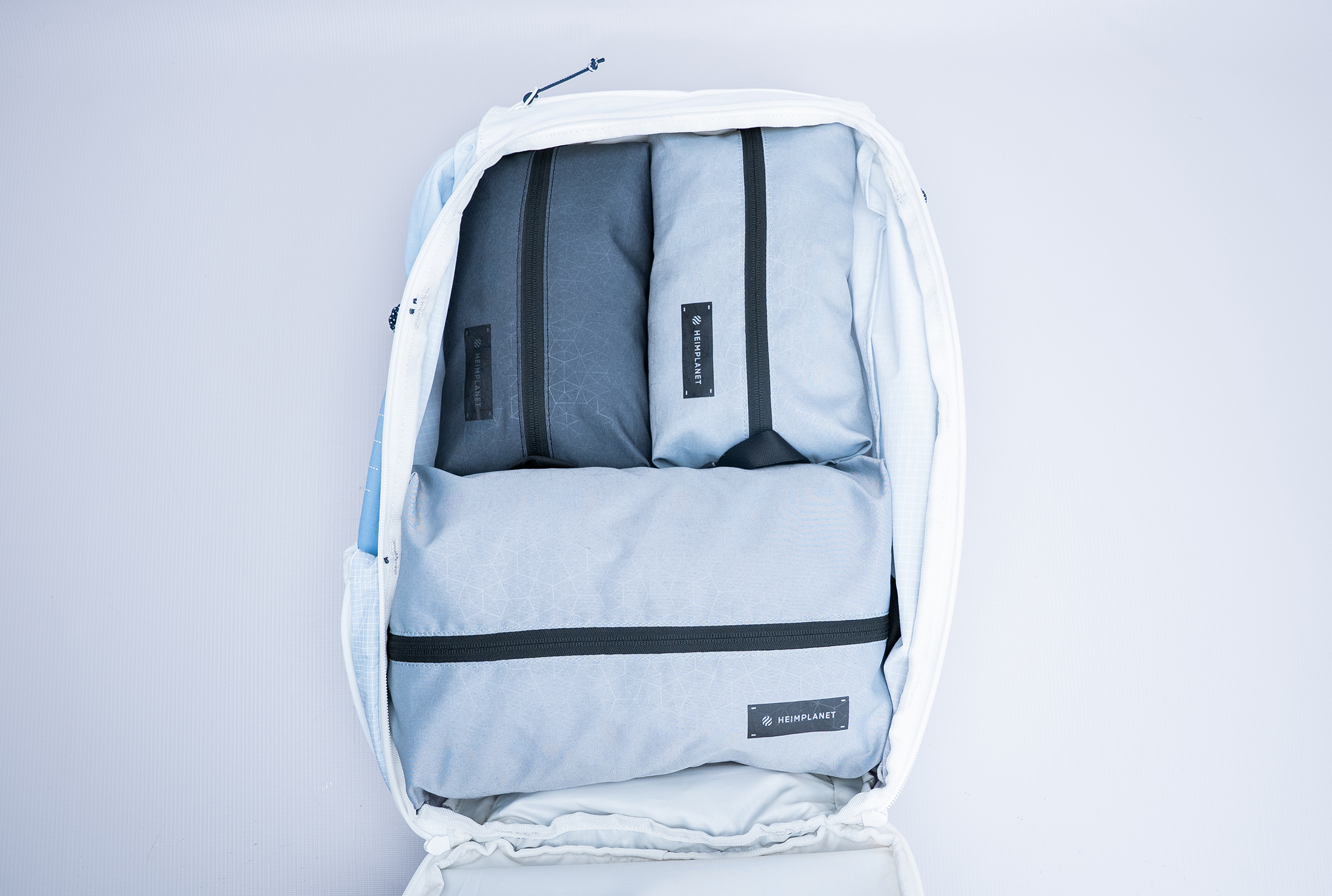
Unlike some other Tropicfeel bags, the Shell ProLite is definitely usable without additional accessories, and we feel like it expands to have enough space to use your own internal organization if you already own pouches and cubes you like. Despite the lightweight materials, it doesn’t seem that floppy or saggy thanks to all the bungee cords, but we can see that changing over time as the elastic cords inevitably get stretched out. Is it right for you? Well, it might be if you like the outdoorsy vibe, lightweight materials, and adaptability of the add-ons. If you want more structure and less flexibility, it might not.
Usage Timeline
Condition: Excellent
- We wish you could remove or adjust the height of the hip belt
- It’s nice to have extra space when you need it
- It’s very long



Get your questions about the Tropicfeel Shell ProLite answered from our team and the Pro Community right here on the page. Plus, join discussions with other members about gear, guides, and more.
Join Pack Hacker Pro or, Sign In