Tropicfeel Shelter Backpack Review
The Tropicfeel Shelter Backpack seamlessly transitions from 30 to 66 liters, though the pack isn’t as versatile without the extra paid accessories.
Our Verdict
Save time. Get access to brief summaries of our reviews so you can browse and make decisions more efficiently.
Pros
- The recycled materials are durable and look sleek
- The back panel is comfortable and breathable regardless of the bag’s size
- We’ve had no issues with the hardware in testing
Cons
- Without add-on features, the pack is less functional
- The materials are durable, but they’re prone to sagging
- The harness system is comfortable but becomes less so at higher capacities
Technical Details
-
Capacity
30l
expandable to 54L
-
Weight (lb)
3.858 lb (1.7 kg)
-
Dimensions
19.7 in x 10.6 in x 8.66 in (50 x 26.9 x 22 cm)
-
Notable Materials
Recycled Polyester, Polyester, Nylon, YKK Zippers, Woojin Hardware
-
Manufacturing Country
Vietnam
-
Laptop Compartment Size
15"
-
Warranty Information
Full Review
The Tropicfeel Shelter Backpack has a few tricks up its sleeve. Expanding from 30 to 66 liters is impressive; however, we’re curious how much of that space is easy to use (and access) and if you have to make any additional purchases to make the system worthwhile without the extras. Let’s dive in and find out!
External Components
This pack uses recycled polyester, polyester, and nylon. The fabric is lightweight, durable, and sleek. It has performed well in testing, though it’s just water resistant, not waterproof. The materials lack structure, which can make the pack look saggy. Still, the materials have held up well in testing.
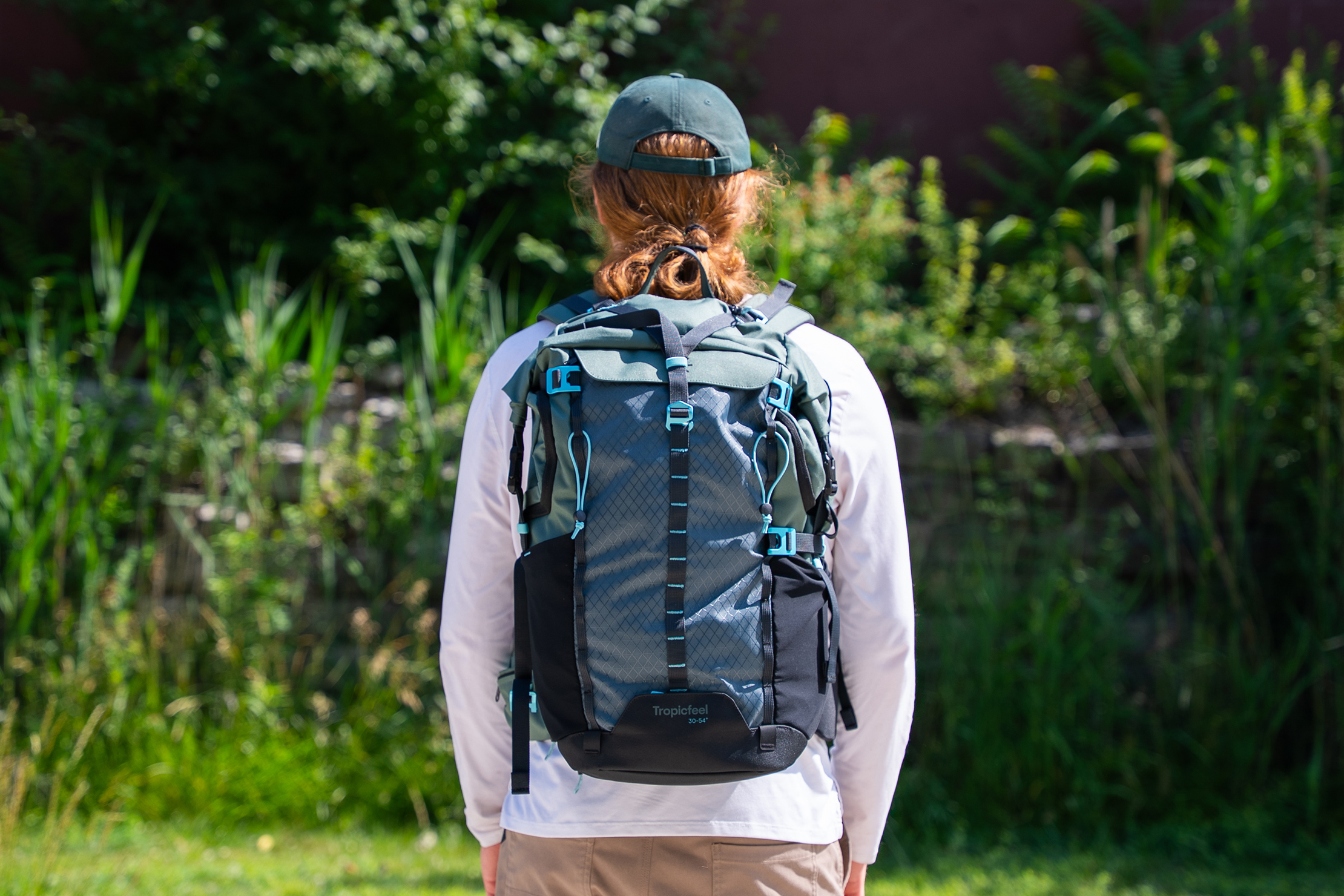
The pack includes a cocoon rain cover, which makes the pack much less susceptible to inclement weather. Additionally, you can completely cover the pack with the cover, which is handy for flying. Instead of using one of the plastic covers you throw away after every use, this one can be used repeatedly.
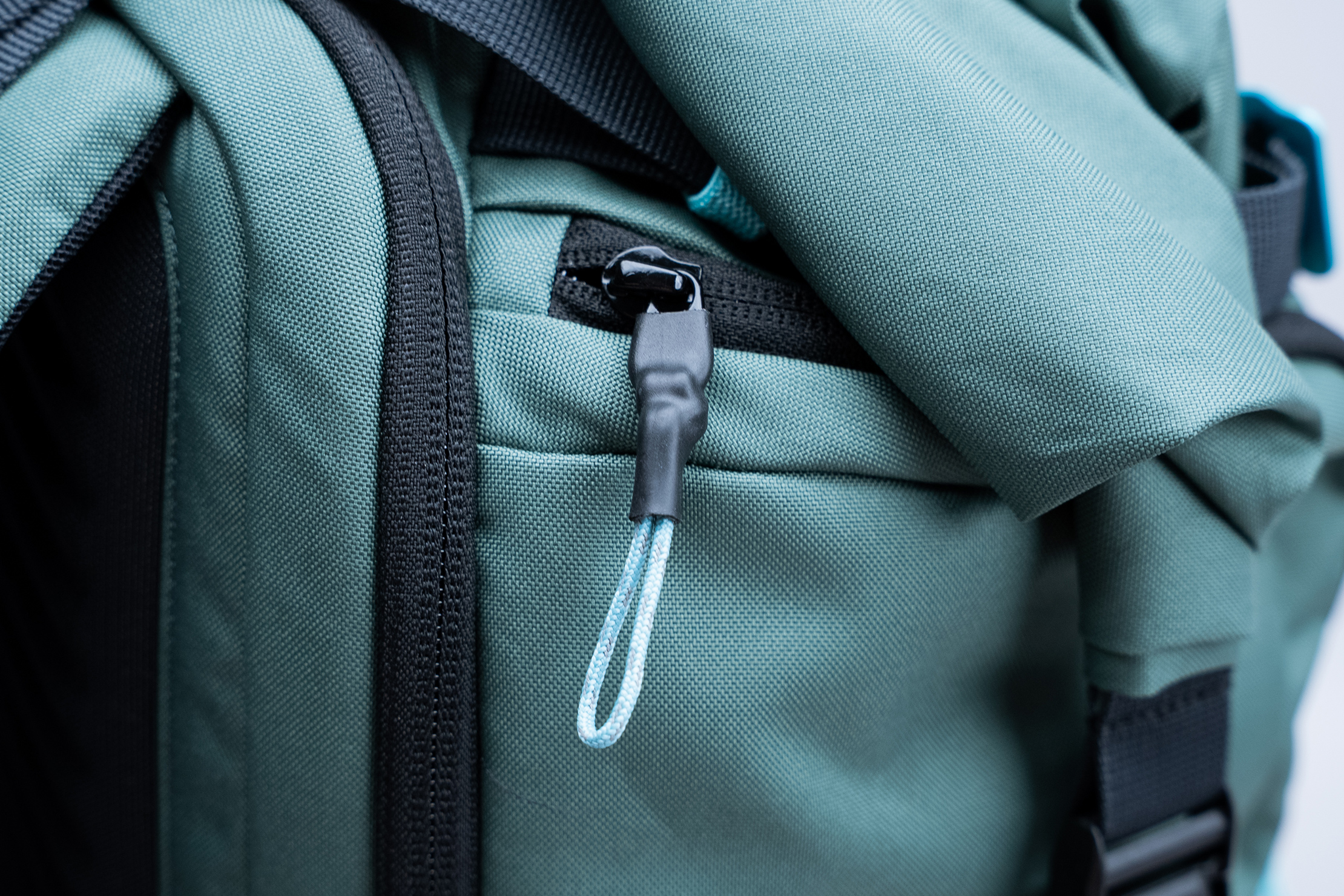
The zippers are from YKK, which is a good sign. They’re the best zipper brand in the business, showing attention to detail from Tropicfeel. The pulls are simple and easy to use, and the heat-shrunk plastic minimizes noise. The plastic hardware is from Woojin, another excellent brand known for durability, and we’ve had no issues with it, either.
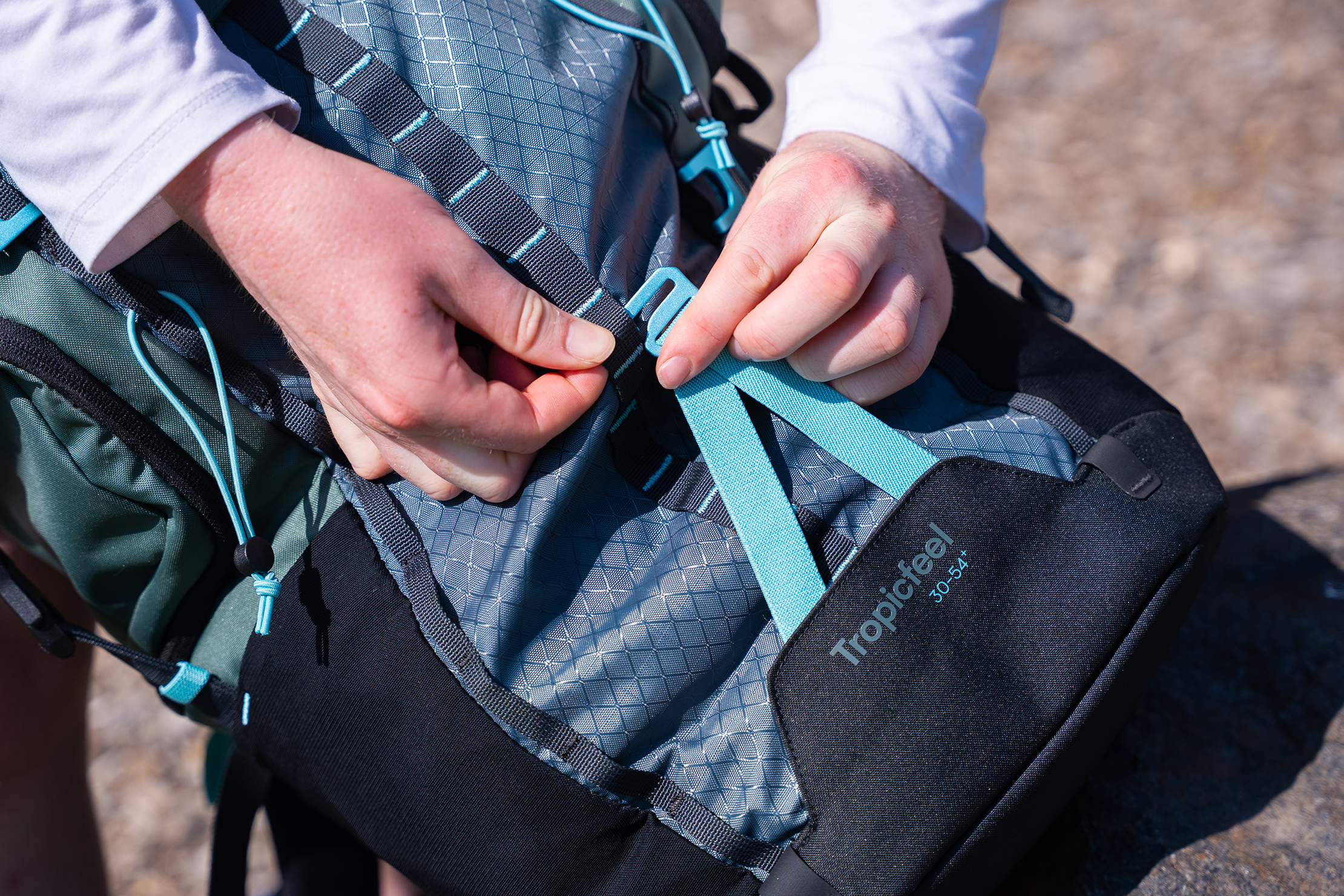
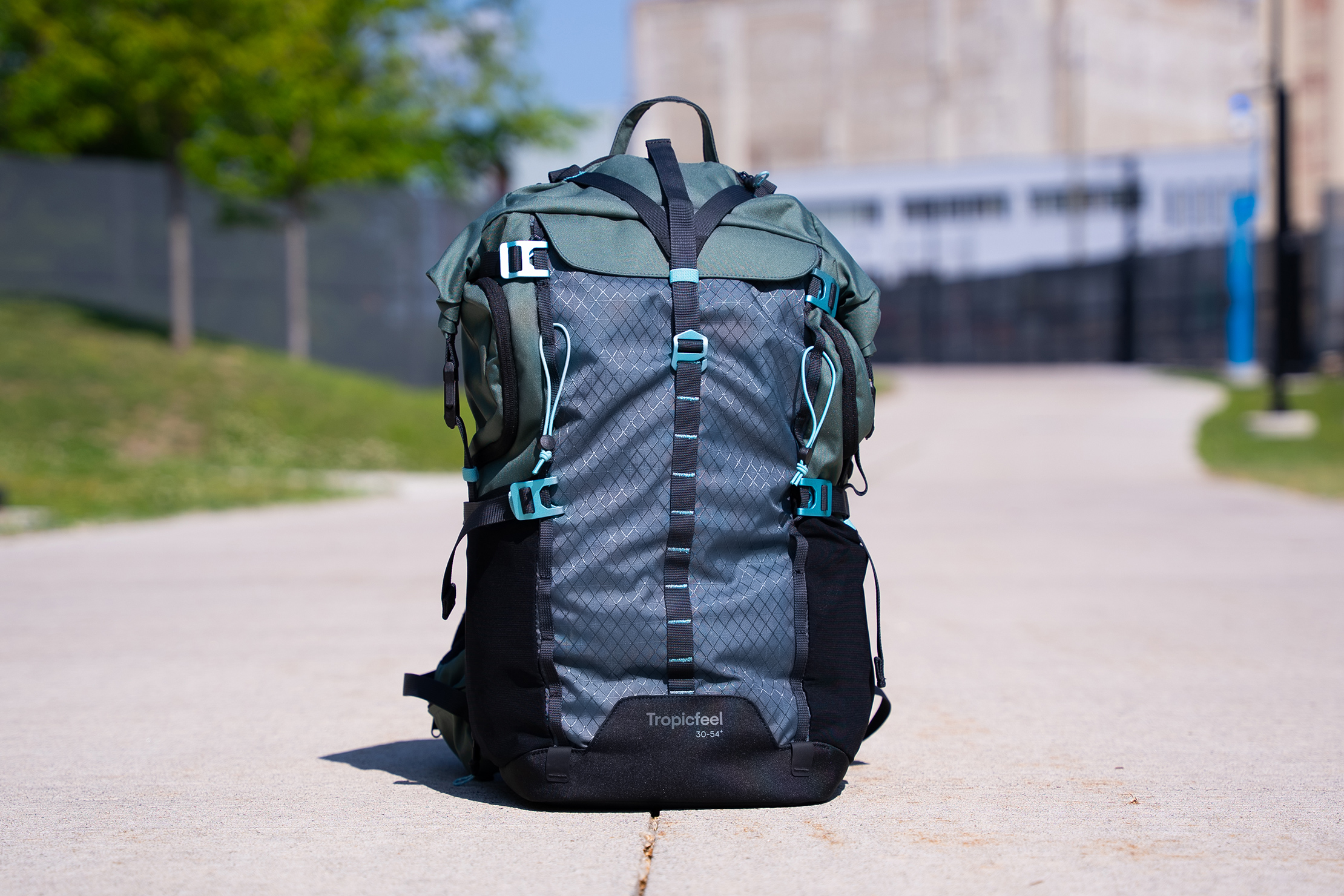
There are four compression straps, two on either side of the pack. These are handy for cinching the bag down to make it smaller and can tackle the sagginess we mentioned earlier. The front attachment point isn’t set—there are multiple places you can attach it, making it easier to place gear on the side of the pack for extra storage.
There’s a daisy chain down the middle of the pack’s front face, which you can use to attach various gear, such as a carabiner or a Bluetooth speaker.
The pack has dual water bottle pockets crafted from stretchy mesh, enabling you to stow large bottles. A 32-ounce Nalgene works here, and you can stow other accessories like a travel tripod. The more packed the pack is, the harder it is to stow large items, though we could still fit a big bottle here, even when the bag is fully packed.
There’s a top handle on the pack’s top near the back side that lacks padding or aeration. It stays out of your way when you aren’t using it and works well as a quick option for moving the pack from point A to point B.
Fit Notes
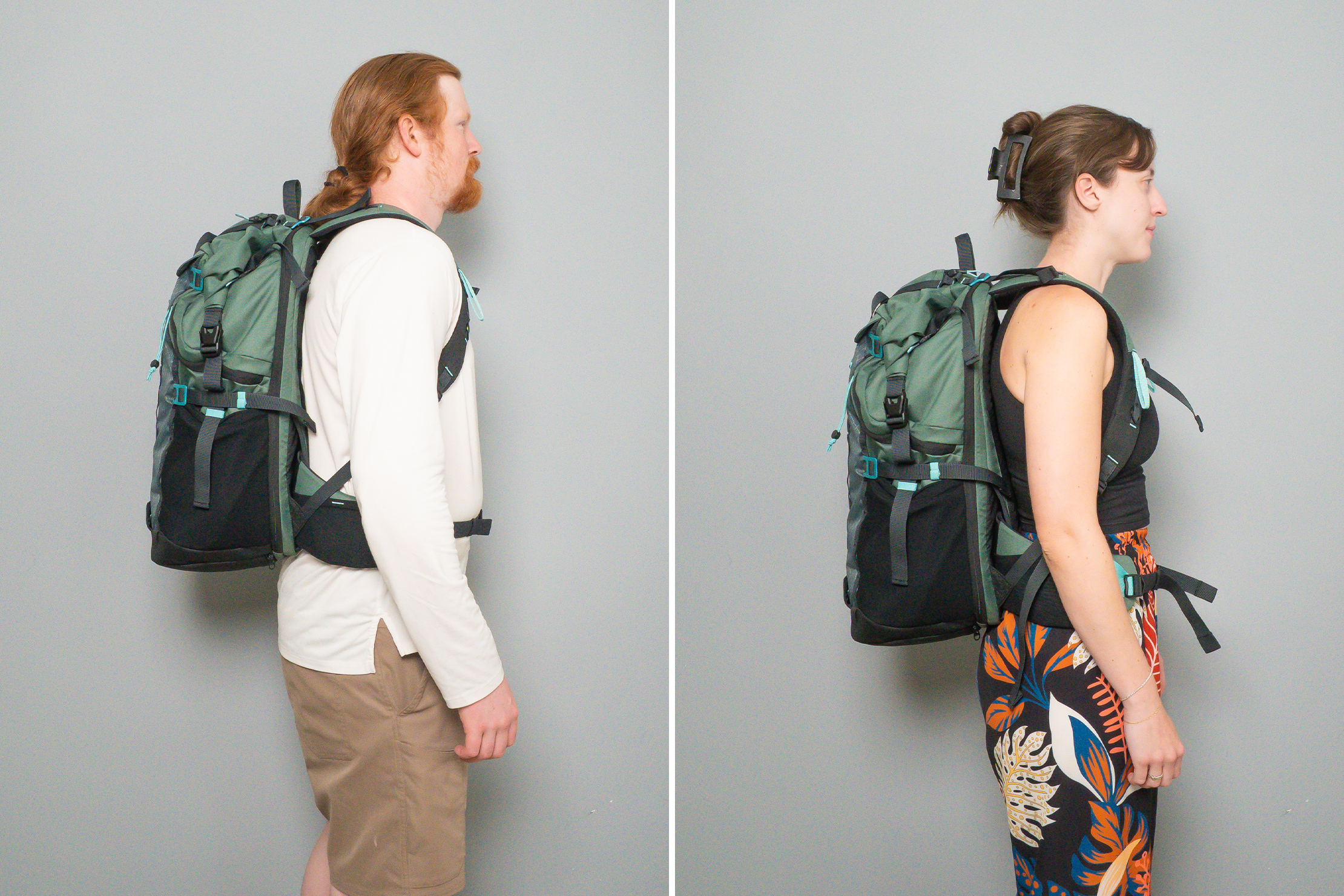
The back panel has dense padding ribbed to promote airflow and add long-term comfort, though some users may prefer something with more padding. This design is more comfortable and breathable in the long run, but your mileage may vary.
Generally, we call thick, soft foam glamor padding because it implies it’ll keep you comfortable. However, we often find dense, molded padding is a better option if you wear a bag for an extended period, especially in warm weather.
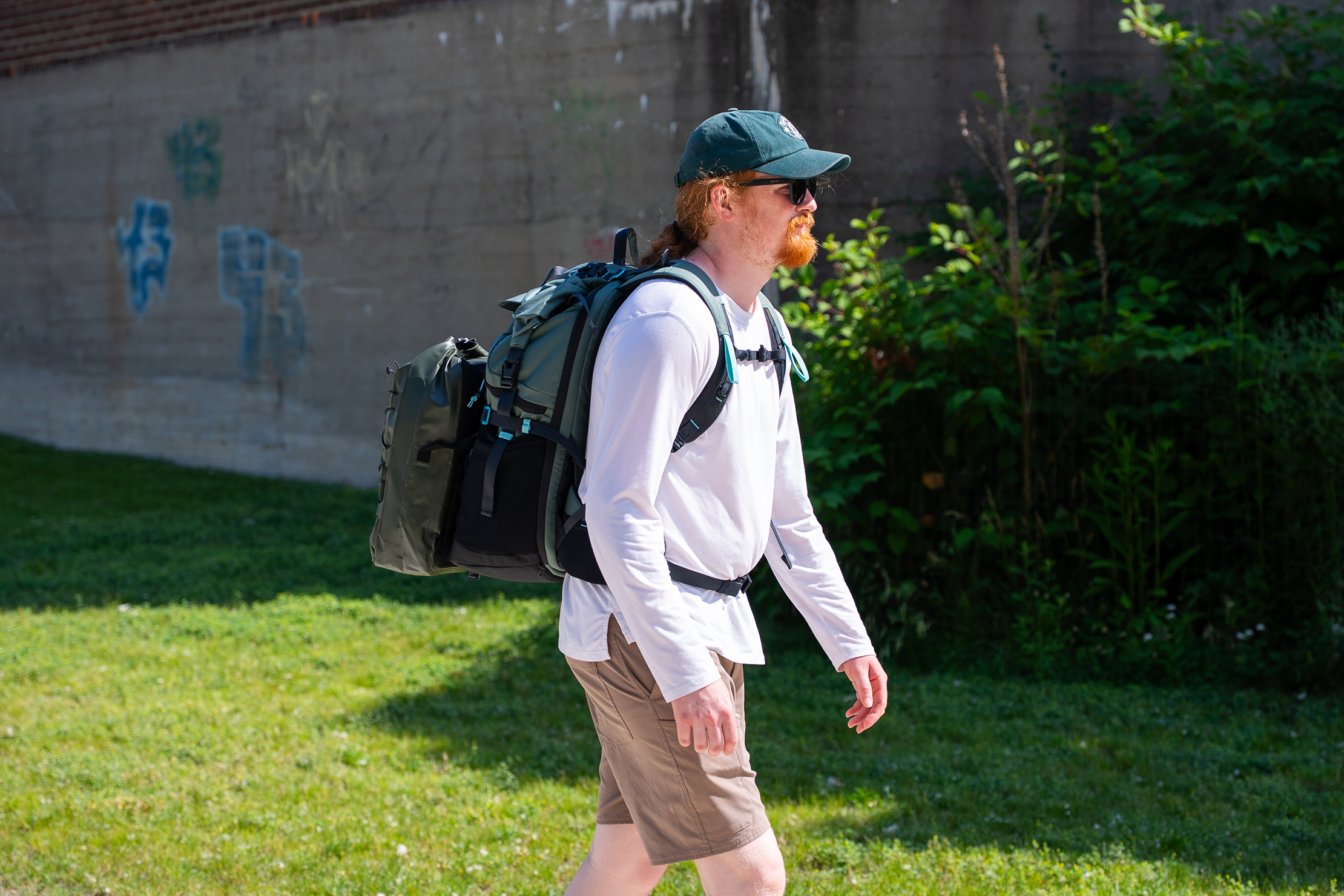
The shoulder straps have similar dense padding, load lifters to move weight around, and a sternum strap to keep things tethered and organized. We feel that these straps perform well for most loadouts; however, when you max out this bag at 66 liters, they feel like they’re digging in slightly. The pack is still wearable; it’s just not the most comfortable at that level.
The hip belt is removable and adds comfort, especially at the higher end of the capacity scale. If you’re going on a trip and are leaving with a light bag and plan to return with an overloaded pack, we recommend stowing the hip belt inside the bag on the way there and engaging it as the pack gets heavier to add comfort. It feels overkill at 30 liters but is a welcome addition when you get closer to 45 liters.
The hip belt has two small pockets, one crafted from mesh without a top closure and one with a zippered pocket. These pockets are well-suited for snacks, keys, change for public transit, or other small accessories.
As mentioned, this pack handles well at lower capacities but loses comfort when you max it out. Considering you can convert this daypack into a massive travel backpack, that’s to be expected, and the pack is still usable at that level.
Inside The Pack
Before diving into the various compartments, let’s discuss expanding this pack from 30 to 66 liters.
This pack has a main compartment that you can access in two ways—from a rolltop closure on the top and a zippered clamshell opening on the back. The rolltop closure has additional material that enables you to stuff more gear inside it, adding 18 liters of storage between the folds necessary to keep it closed and the top of the main compartment. This is a challenging way to organize the entire main compartment; however, if you’ve already organized the bag and are adding extra gear on top, this works very well. It’s a full arm extension from the top of the unfurled rolltop to the bottom of the pack, which makes accessing gear challenging, but it works well for a sleeping bag, rain jacket, or other larger gear you can stack easily.
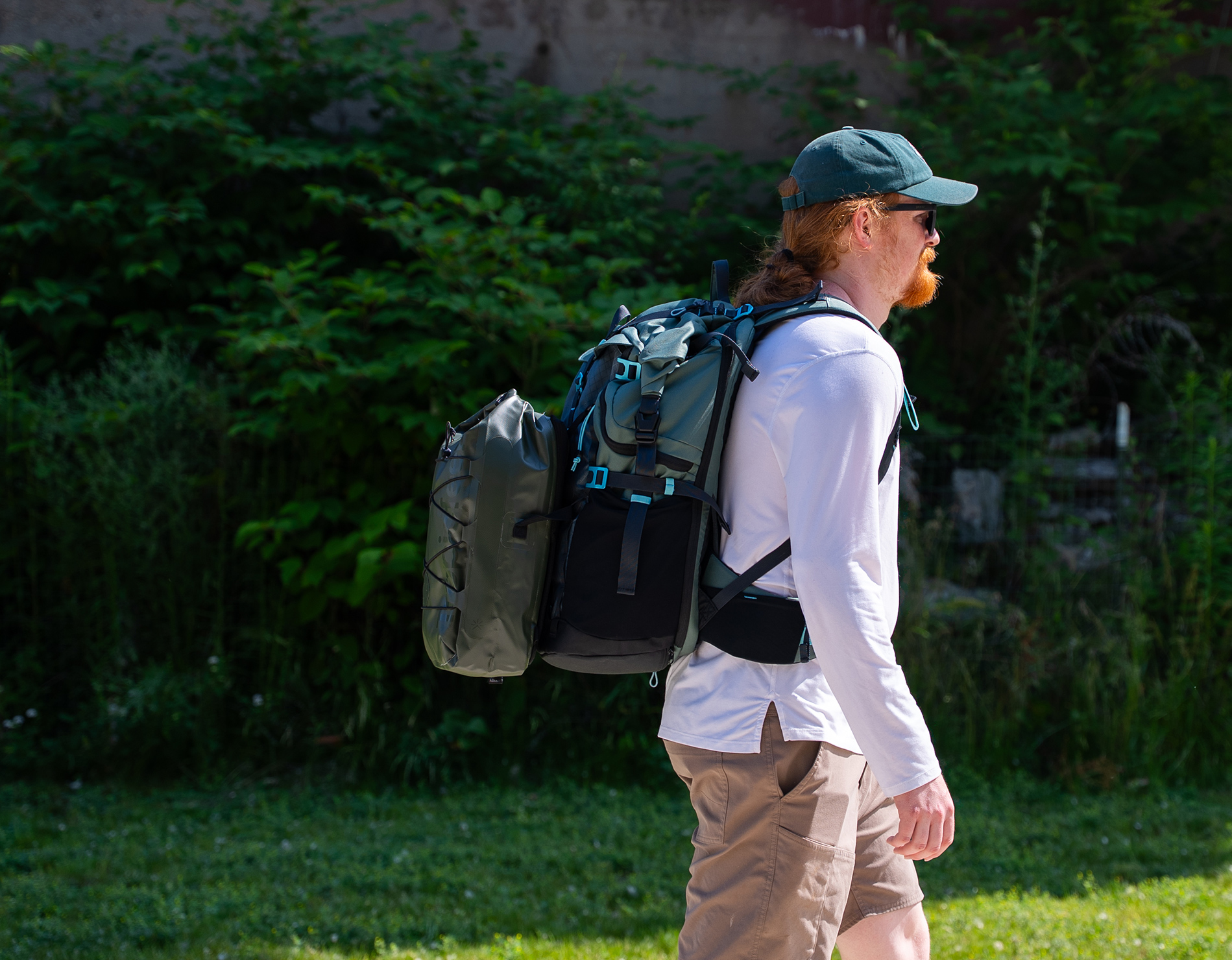
The bottom of the pack features a kangaroo pocket, which folds out and attaches with two clips. It’s ideal for stowing wet gear, is quick to engage or put away, and adds six liters of space. It works for shoes, too!
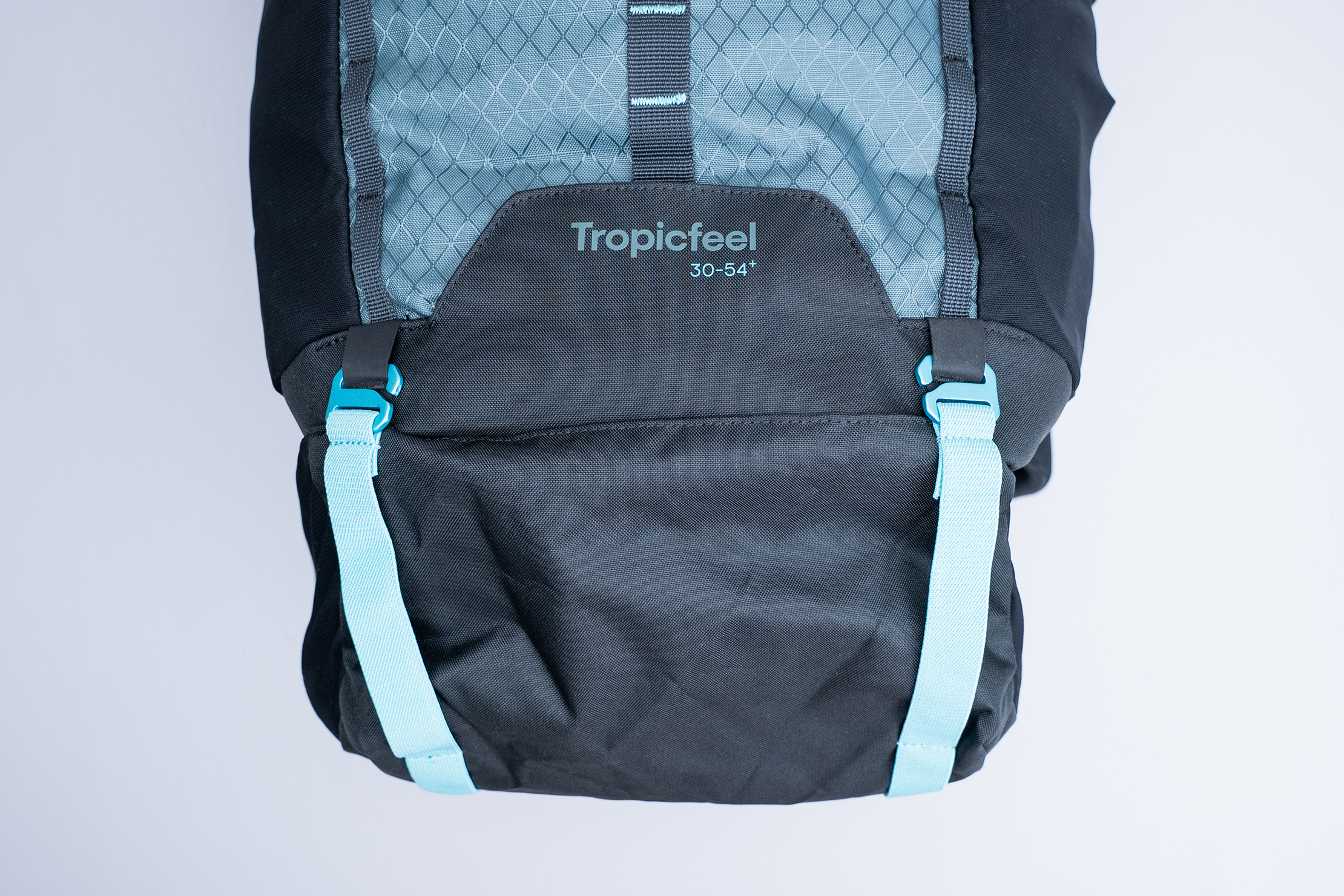
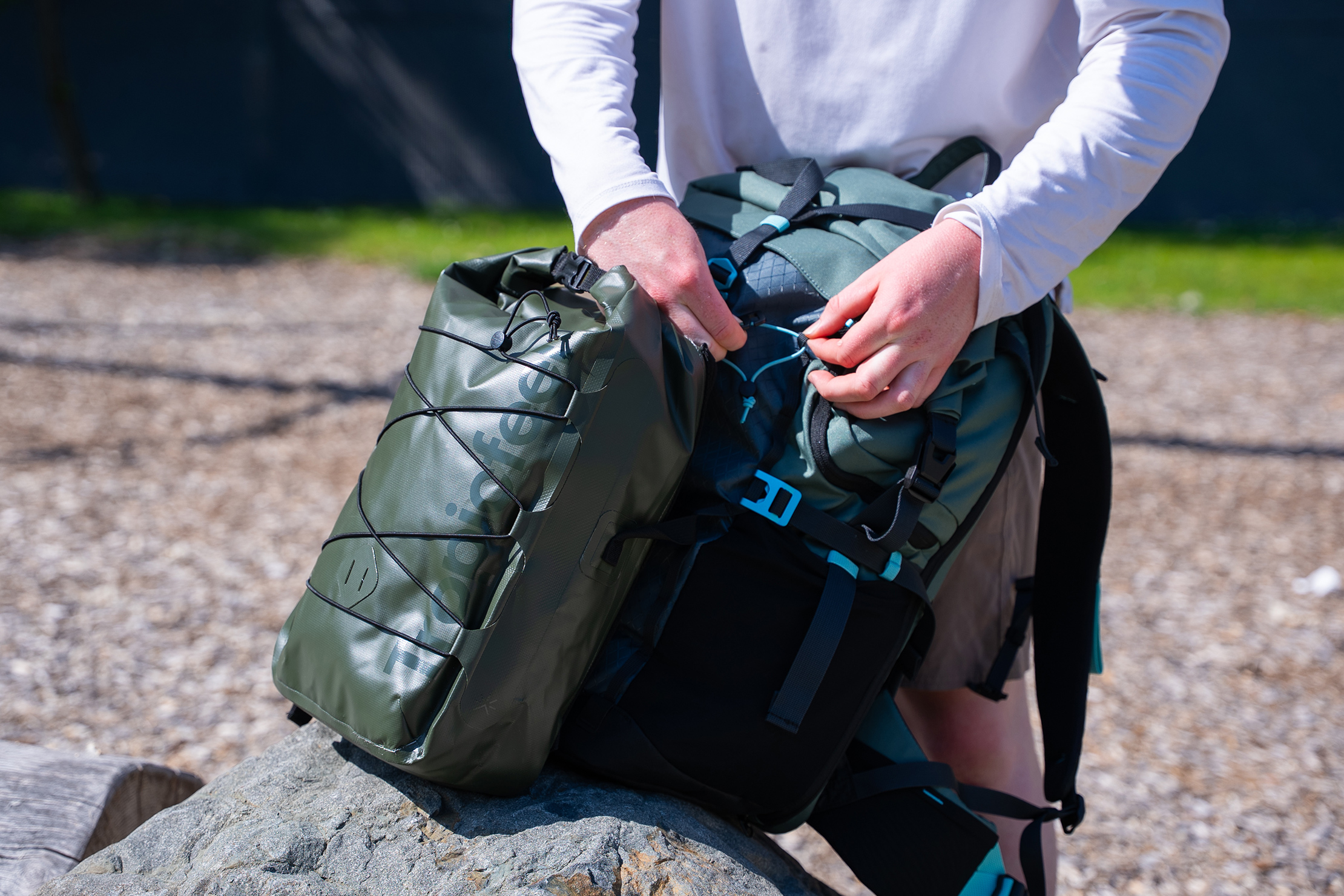
The newest feature from Tropicfeel is the Waterproof Daypack, which is highly water resistant and attaches to the front face of the pack. It’s 12 liters and can easily be removed from the bag for day trips or wandering around town. It’s significantly smaller than the 30-liter minimum capacity of the bag, making it very useful for trips that don’t require as much gear. The pack doesn’t come with this daypack stock, so you must add it when purchasing the bag. This is the case for other systems we’ve tested, like the Osprey Farpoint and Fairview, which also have a daypack that mounts onto the front of the bag.
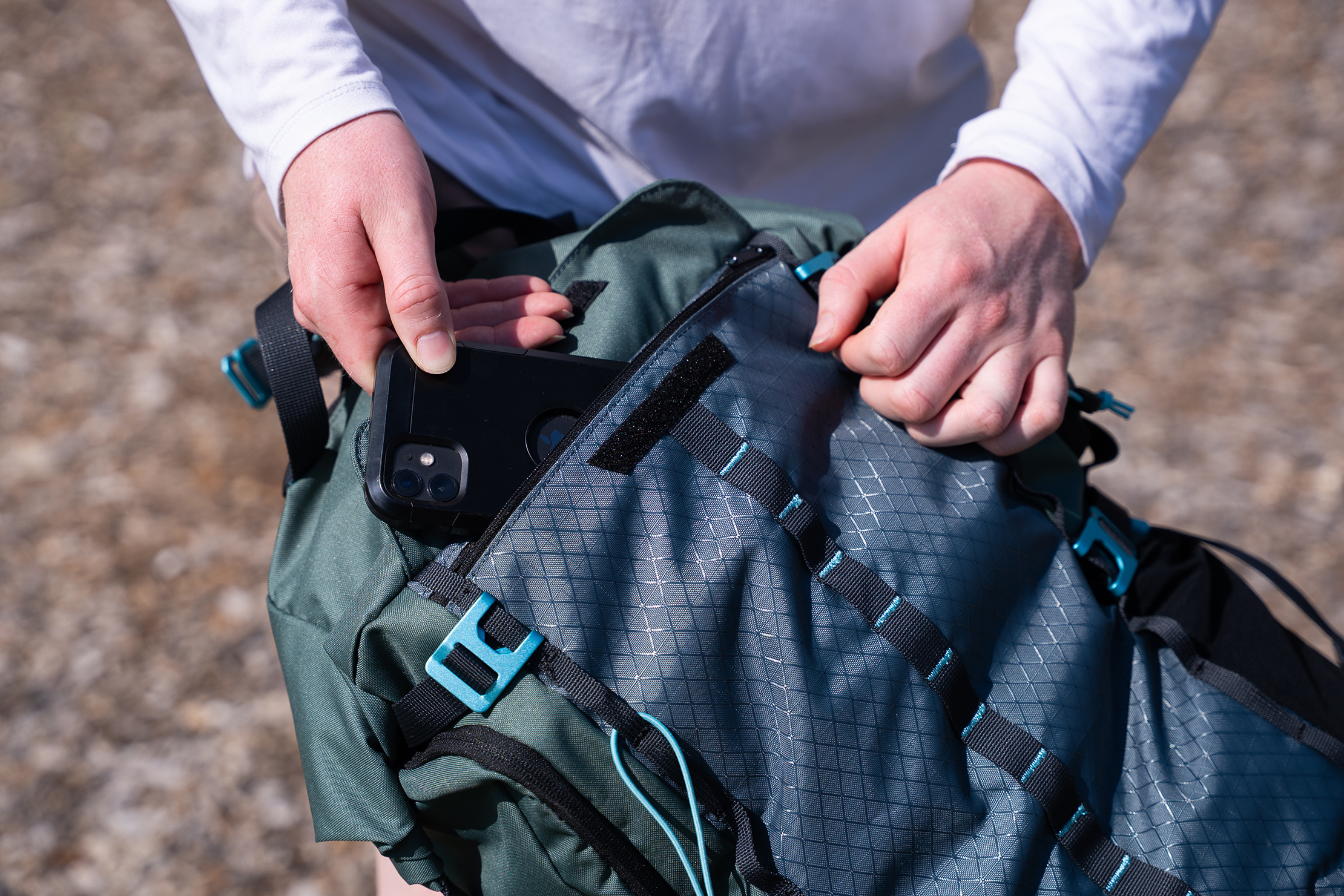
The Shelter Backpack’s front pocket is large and has a hook-and-loop flap covering the zipper. It is a solid spot to stow quick-access gear, such as sunglasses, a notepad, a phone, or a wallet.
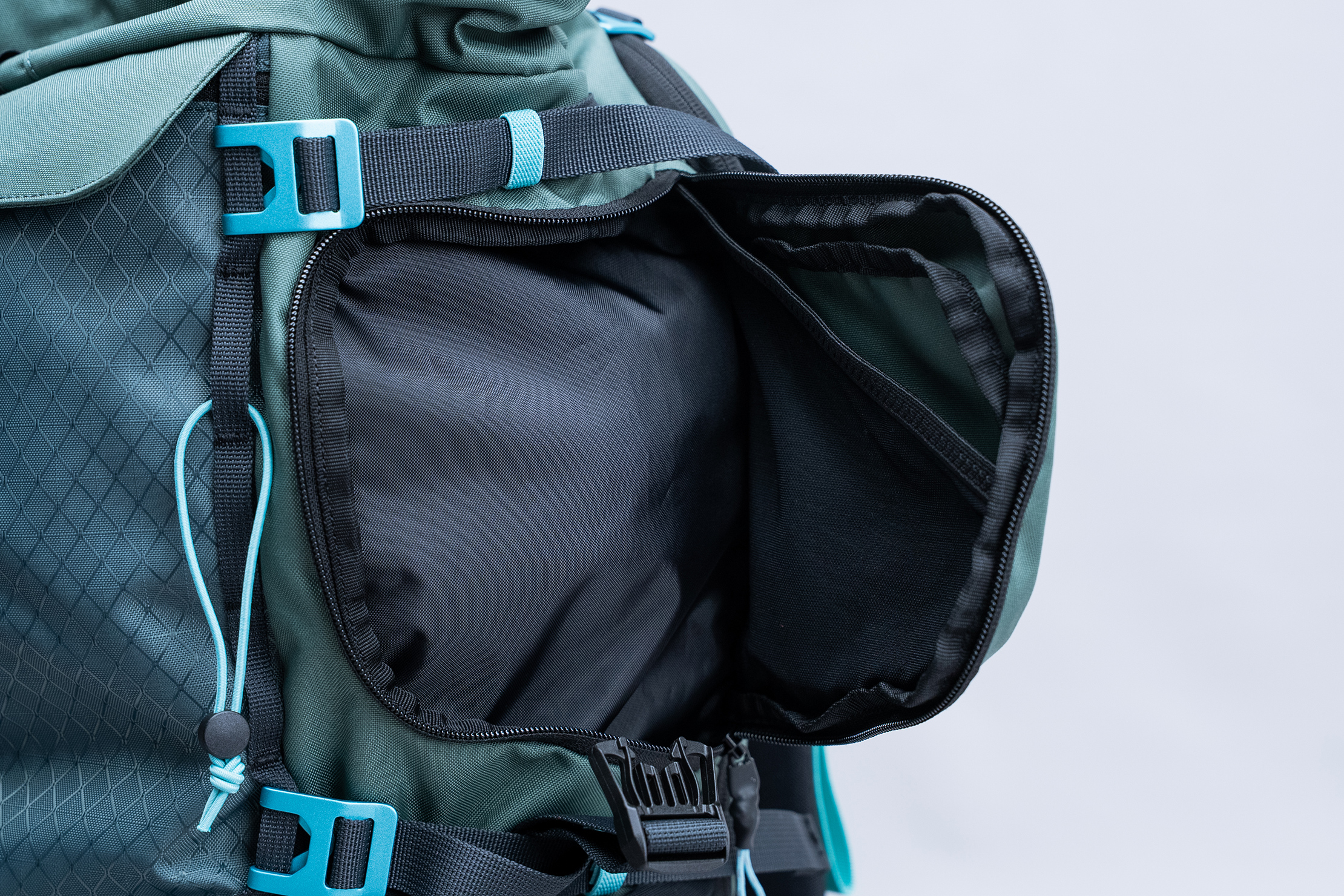
There are symmetrical pockets on the pack’s upper left and right-hand sides, including mesh pockets inside. This is a solid place to stow smaller items you want fairly quick access to. Of all the pockets on the pack, we used this one at least. They’re awkward in sizing and weren’t as useful as the other larger or better-placed pockets. If you have Tropicfeel’s Roll-Up Toiletry Bag, it fits inside this pocket, which may be a selling point for some users.
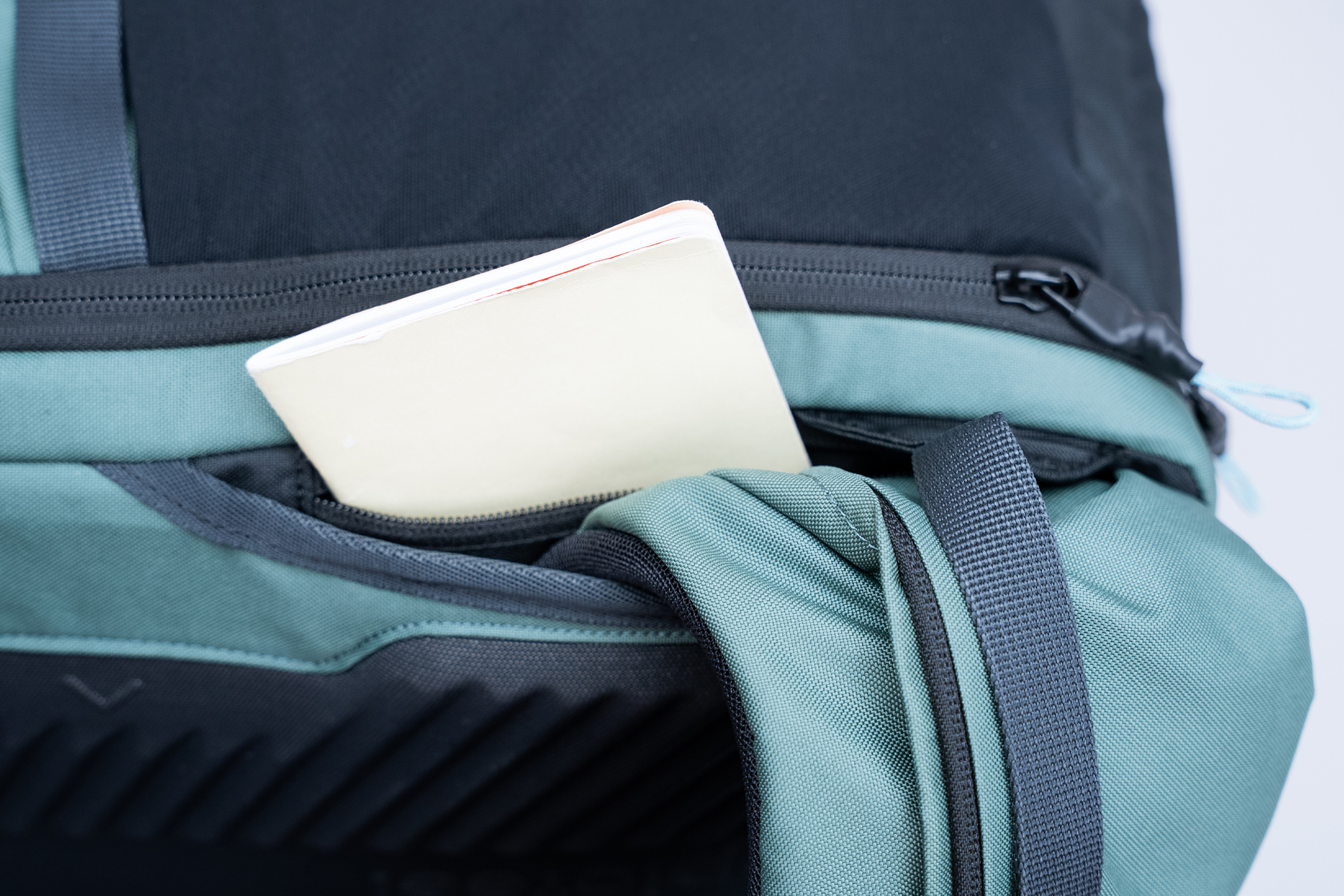
There’s a hidden pocket on the left side of the pack behind the back panel near the hip belt. This works well for your passport or other travel documents, as it’s hidden and pressed up against your body in use.
As mentioned, you can access the main compartment in two ways. The rolltop is ineffective for organizational purposes, so we used the clamshell opening around the back panel most of the time, which has some issues, too.
The zipper for this compartment runs underneath the load lifters, so you have to unattach them to open it every time. If you’re using this as a travel backpack, that isn’t a huge issue, as you probably won’t be in and out of the pack all the time. However, if you’re using this as a day bag once you’ve arrived at your destination, this might get annoying.
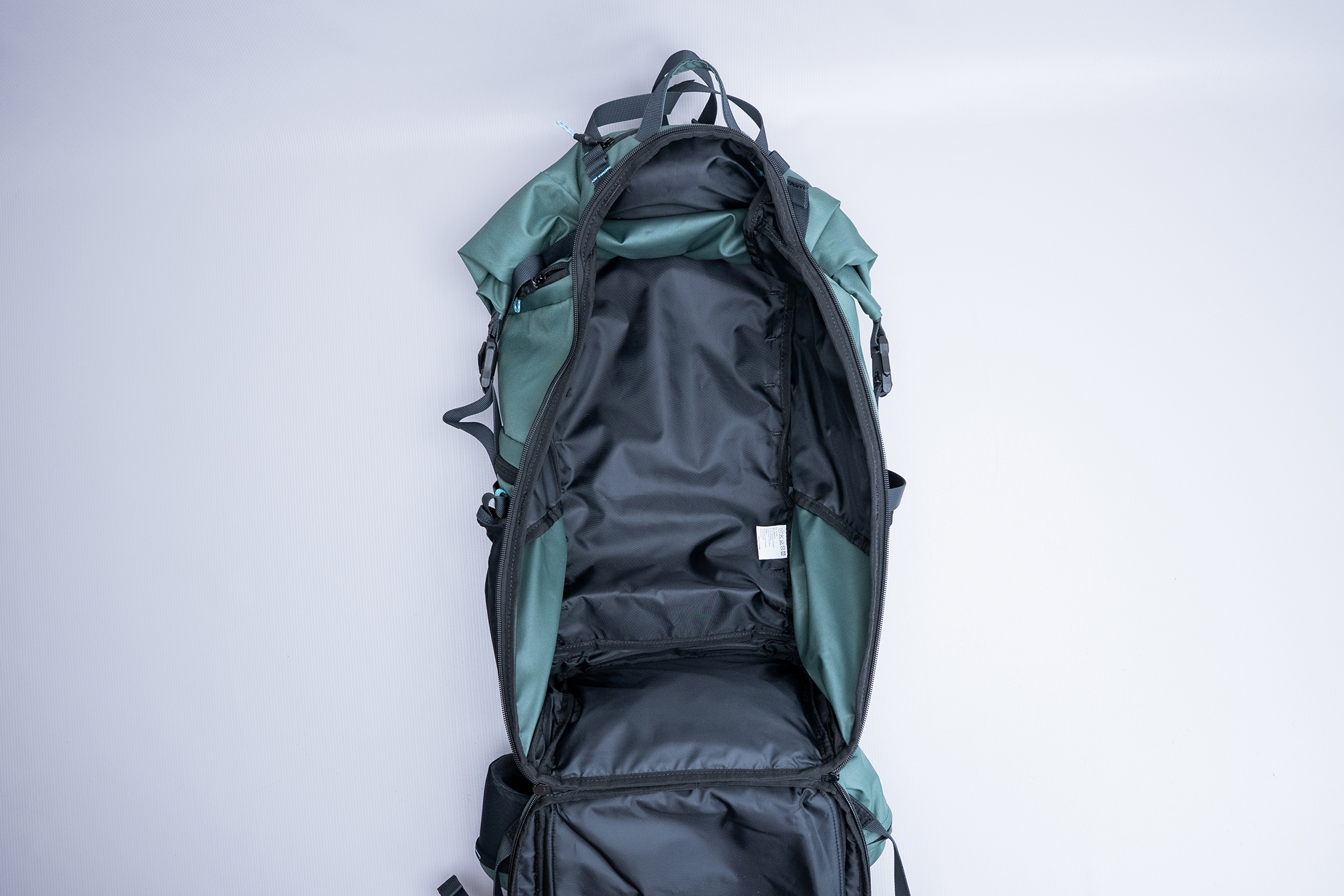
The zippered access reminds us of a camera backpack, as most have a similar opening around the back panel. It works well but takes longer than other packs we’ve tested.
The back of the main compartment, or opening flap, has a laptop sleeve, which works well for stowing your computer. It’s not raised, but the padding on the bottom portion protects your device from drops. Additionally, you can stow a hydration bladder here, and there’s a small pass-through for routing the hose through the pack.
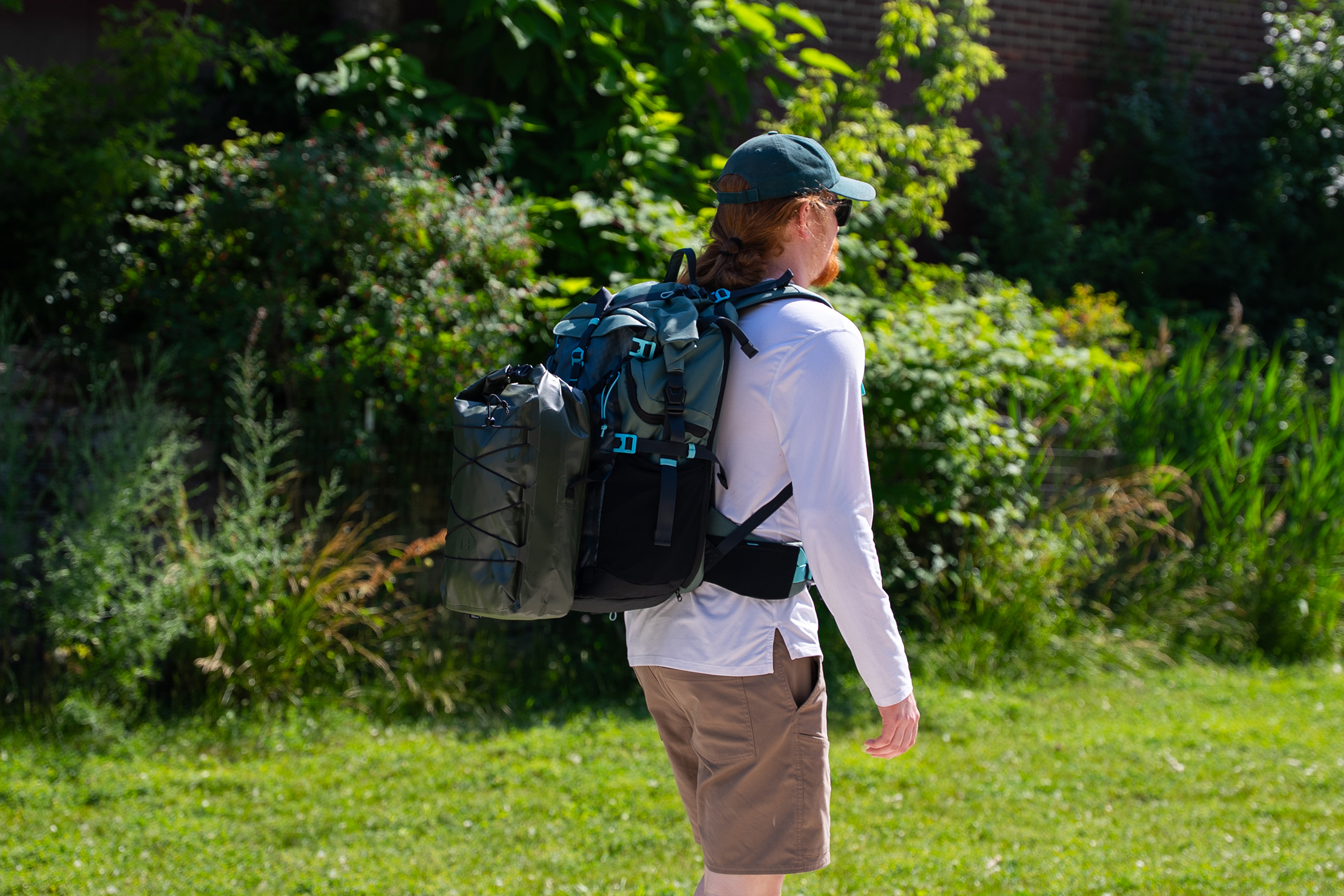
The main compartment is massive, and using it without Tropicfeel’s organizers is tough, even if you’re using packing cubes and other segmentation devices. The fabric lacks structure, so the vast size of the Tropicfeel Wardrobe and Sealed Laundry Bag adds density to the pack. If you’re using smaller packing cubes, there’s more shifting, and the pack isn’t as sturdy as if you have larger items like those from Tropicfeel.
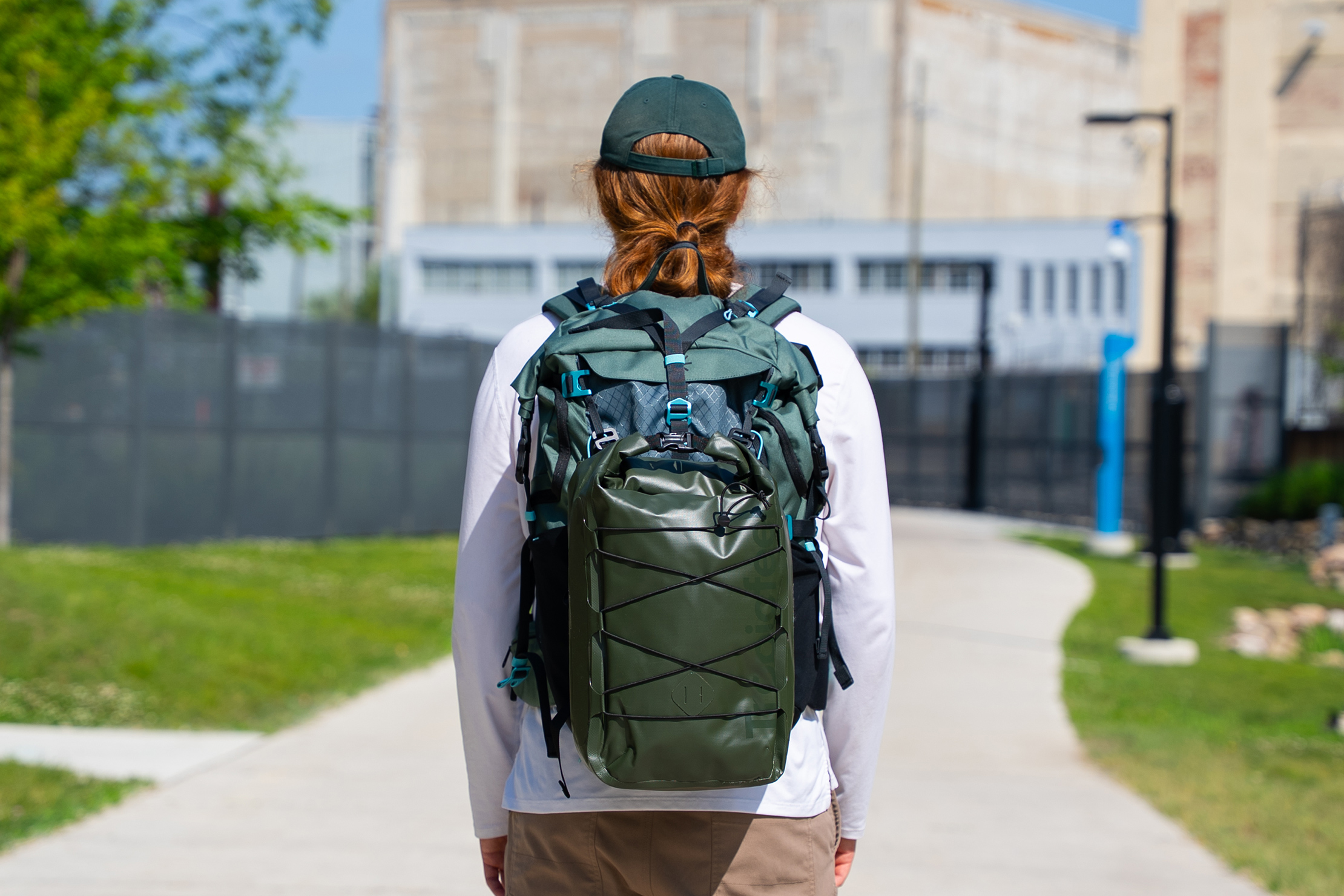
Overall, organizing the Tropicfeel Shelter Backpack works well if you have the brand’s accessories, but it feels lackluster if you don’t. It’s designed to work with those products, so we can’t fault it for working better with them, but we wouldn’t recommend it without using at least some of the extras from Tropicfeel!
Usage Timeline
Condition: Excellent
- The materials and hardware have held up well—they still look brand new
- We’ve had no issues with any of the elastic or compression straps
- It can be challenging to use the pack without extras, but we’ve managed




Get your questions about the Tropicfeel Shelter Backpack answered from our team and the Pro Community right here on the page. Plus, join discussions with other members about gear, guides, and more.
Join Pack Hacker Pro or, Sign In