Anker Nano Power Bank (10K 45W Built-In Retractable USB-C Cable) Review
Anker Nano Power Bank 10K packs fast charging, a retractable cable, and multiple ports into a sturdy but chunky build that’s handy on long travel days.
Our Verdict
Save time. Get access to brief summaries of our reviews so you can browse and make decisions more efficiently.
Pros
- The retractable built-in USB-C cable is remarkably long, with six length adjustments
- High output (up to 45W) can handle phones, tablets, and accessories
- Pass-through charging lets the bank and devices charge simultaneously
Cons
- Thicker design makes it less packable than slim 10K alternatives
- It loses major functionality if the built-in cable breaks
- The white finish shows smudges and wear more easily
Technical Details
-
Weight (lb)
0.51 lb (0.2 kg)
-
Dimensions
3.21 in x 1.99 in x 1.42 in (8.2 x 5.1 x 3.6 cm)
-
Notable Materials
Polymer
-
Warranty Information


Full Review
A reliable power bank can make the difference between capturing memories all day and rationing the last 20% of a phone battery like your last dollar. The Anker Nano Power Bank 10K is part of the brand’s “Nano” line, a series built to shrink everyday charging gear into more travel-ready packages.
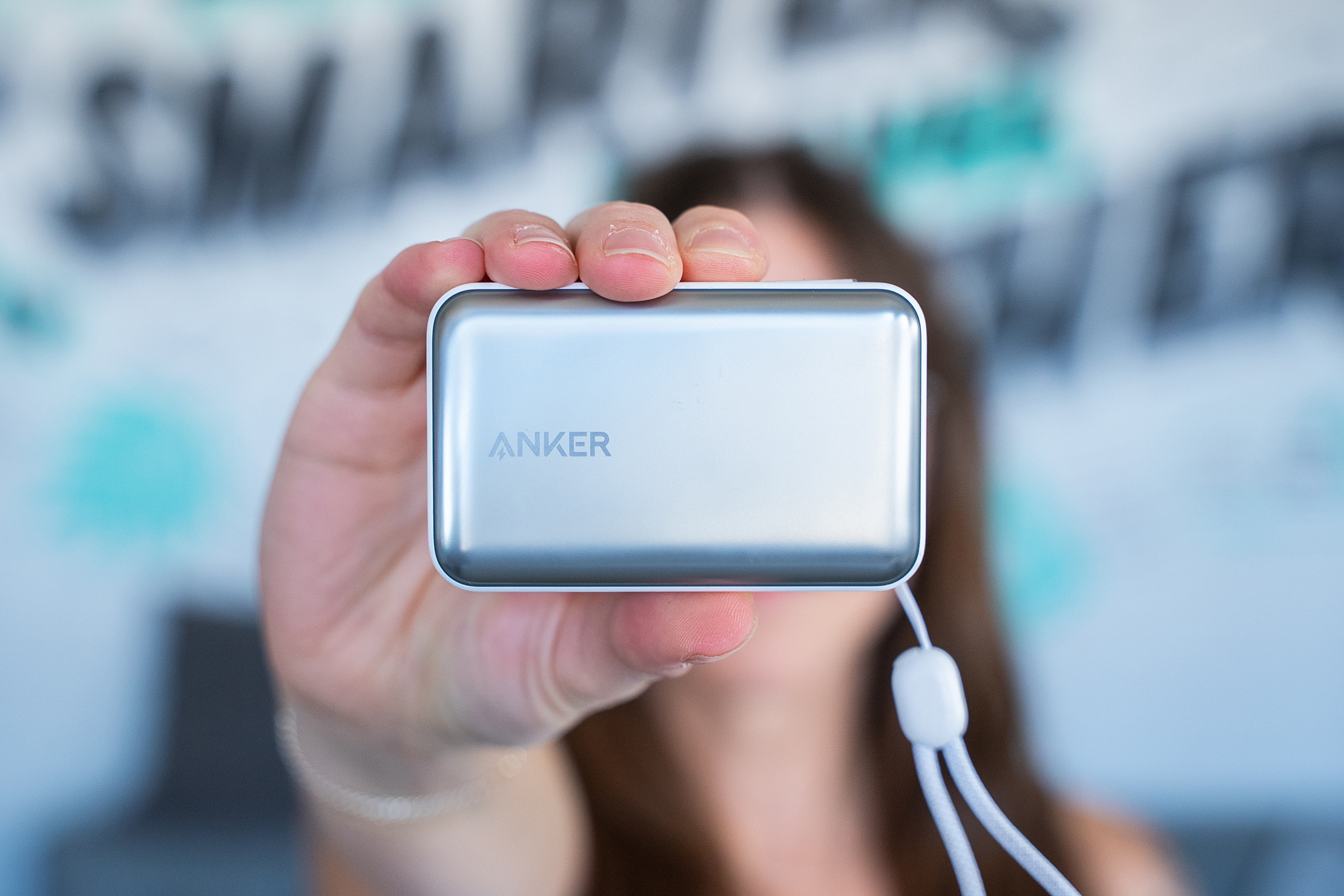
On paper, the power bank is “about the size of two AirPods cases stacked together.” In reality, while it has a small footprint, the added depth makes it chunkier than other 10K banks. Still, with fast charging, a retractable built-in USB-C cable, and an informative digital display, it offers a versatile mix of features in a compact but thick form factor.
The Rundown
The construction feels sturdy, with a hard plastic shell that resists scuffs and scratches. A small carry loop is attached, allowing it to dangle during use, though most travelers will find it easier—and safer—to keep both phone and bank together in a pocket or pouch rather than letting them swing.
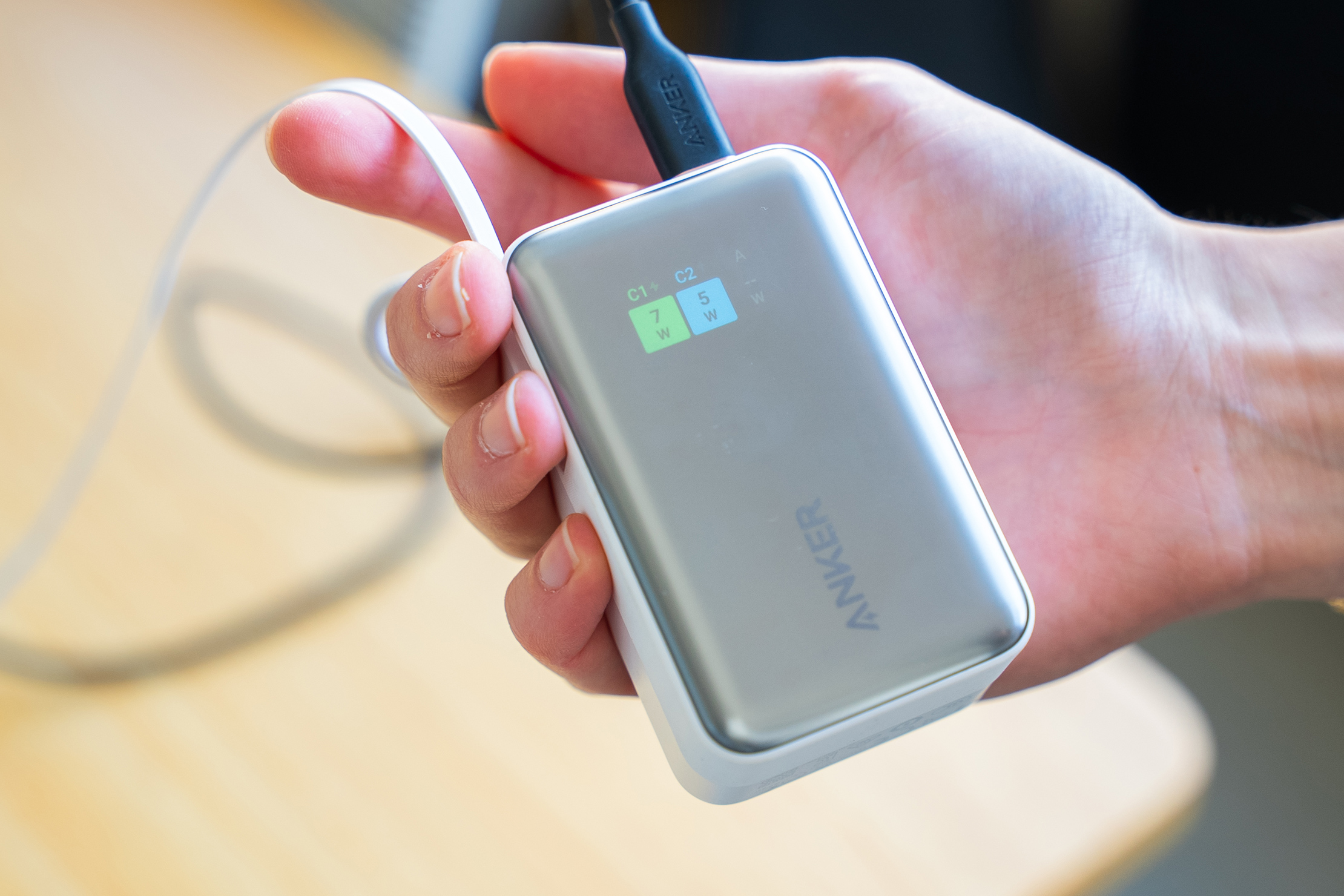
The retractable cable is the defining feature. At 2.3 feet (70 cm), it is significantly longer than most built-in alternatives and locks at six different lengths, each roughly four inches apart. Deployment is simple, and the cable retracts neatly back into the body when not in use. The design allows for flexibility when charging across a desk, in bed, or in a cramped airport lounge. Side note, we prefer this fully retracting cable design versus the ones where the cable itself doubles as a handle; that’s just asking for trouble down the line, in our opinion.
The cable is flat and thinner than the thicker braided Anker cables you can buy separately. While that makes it less confidence-inspiring, the flush housing protects it when stored, reducing wear. However, it’s also the one potential failure point: if the cable breaks, you’ll lose a major part of the bank’s functionality. Thankfully, two additional ports (USB-C and USB-A) mean you’re not completely out of luck.

Charging performance is where the Nano shines. When using one port, both the built-in USB-C cable and the USB-C port support up to 45W, which is enough to fast charge most modern smartphones and even push a decent charge into larger devices like tablets. Meanwhile, the USB-A port maxes out at 22.5W. Real-world results reflect this: the iPhone 16 Pro charged from zero to 50% in 27 minutes, the iPhone 15 Pro in 26 minutes, the iPad Pro (M4) in 46 minutes, and the Samsung S24+ in 25 minutes when plugged into USB-C.
Performance dips when using multiple ports. Two-port charging splits the load, with USB-C output dropping to 15W and USB-A falling to 7.5W. With all three ports active, each one is capped at 7.5W. This is still fine for smaller accessories like wireless earbuds, but far less efficient for smartphones or tablets.
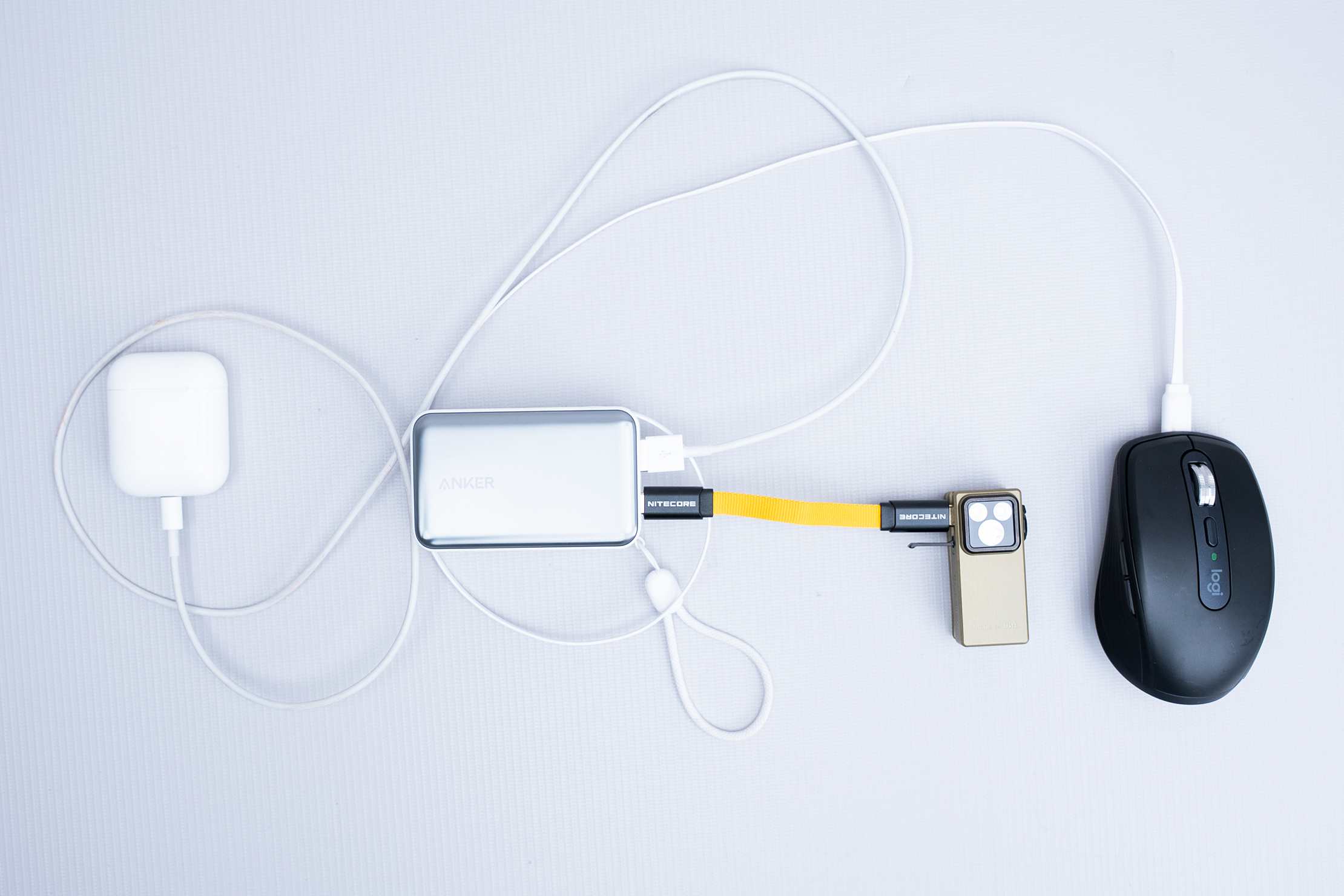
Pass-through charging is another strong point. Both USB-C ports are input/output, while the USB-A is output-only. This means you can recharge the bank while charging other devices at the same time. Most nights during our trip, we used the built-in cable to plug the power bank into a travel adapter and connected a smartphone through the USB-C port. Between the retractable 2.3-foot cable and our extra 3-foot cord, we had nearly 6 feet of reach, which was perfect for using a phone in bed without sacrificing overnight charging.
The display and controls are straightforward but very effective. A single button powers the device on and off and cycles through display modes. The screen shows the remaining power percentage, which ports are active (C1 for the built-in cable, C2 for the USB-C port, and A for the USB-A), and the wattage output for connected devices. It also monitors battery health and temperature. The temperature never climbed beyond the darker green zone during testing, even during long charging sessions on hot days. When the power bank itself is charging, the display shows how long until it reaches full capacity, making it easy to plan quick top-ups before heading out.
Packability
Despite the “Nano” name, this bank is not the most space-efficient for its given capacity. Its compact footprint makes it shorter and narrower than many 10,000 mAh power bank competitors, but the thickness adds noticeable bulk. The extra depth can feel awkward in slim organizers or packed tech pouches.
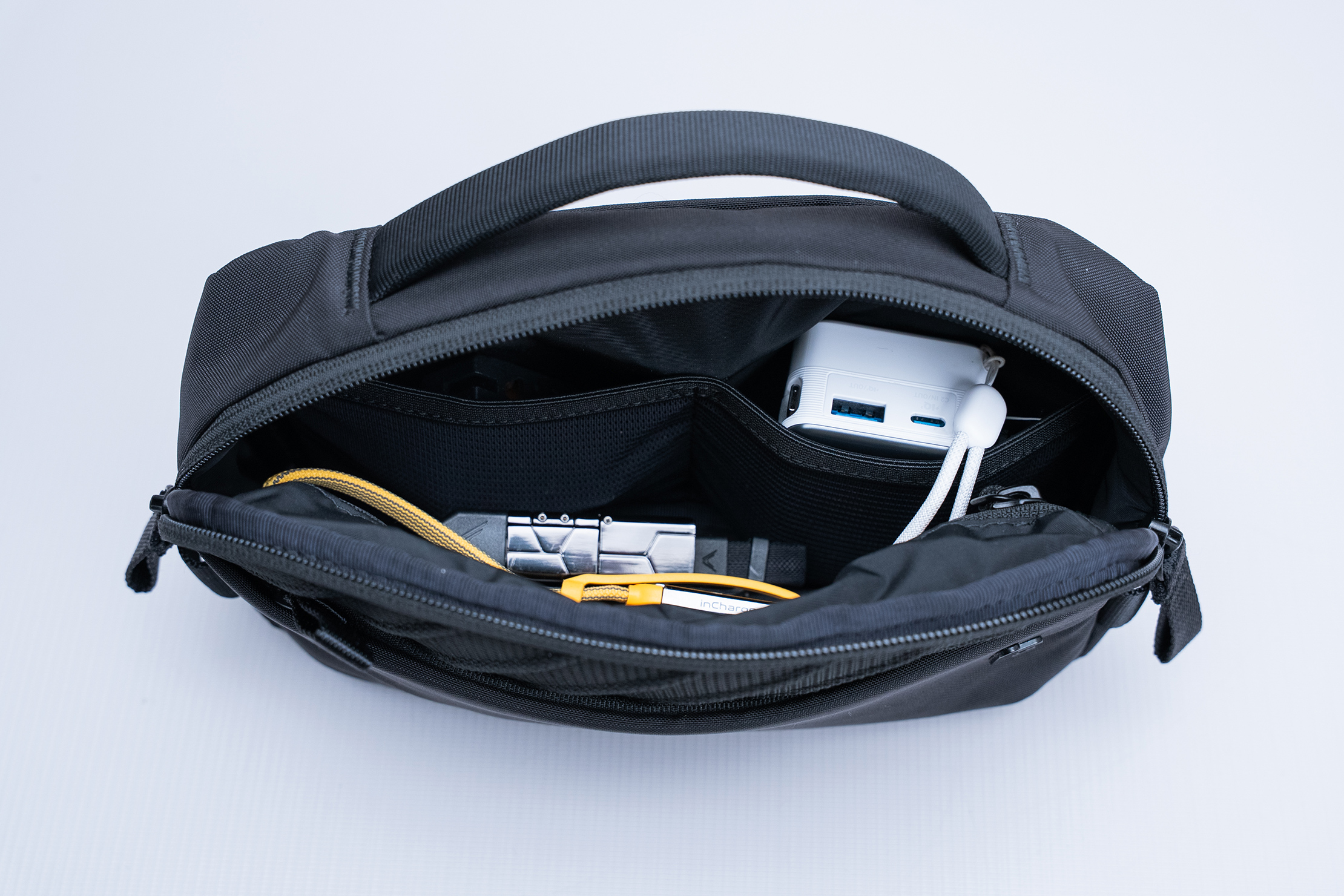
The payoff is in usability. The longer retractable cable, robust display, and higher wattage output give the Nano a level of flexibility that slimmer power banks don’t match. For those who prioritize sleekness above all, slimmer banks such as the NITECORE NB10000 and its derivatives (there are like a million of them) are better suited. For those who value versatility, the Nano provides more functionality in exchange for some extra bulk.
Quick Comparison
The NITECORE NB10000 Gen 3 Ultra-Slim is the most packable of the bunch, with an ultra-thin form factor that’s comfortable to hold and easy to slip into organizers. It features two USB-C ports that both support input and output, maxing out at 22.5W, and also supports pass-through charging. However, it lacks a built-in cable and doesn’t match the Nano’s higher wattage ceiling.
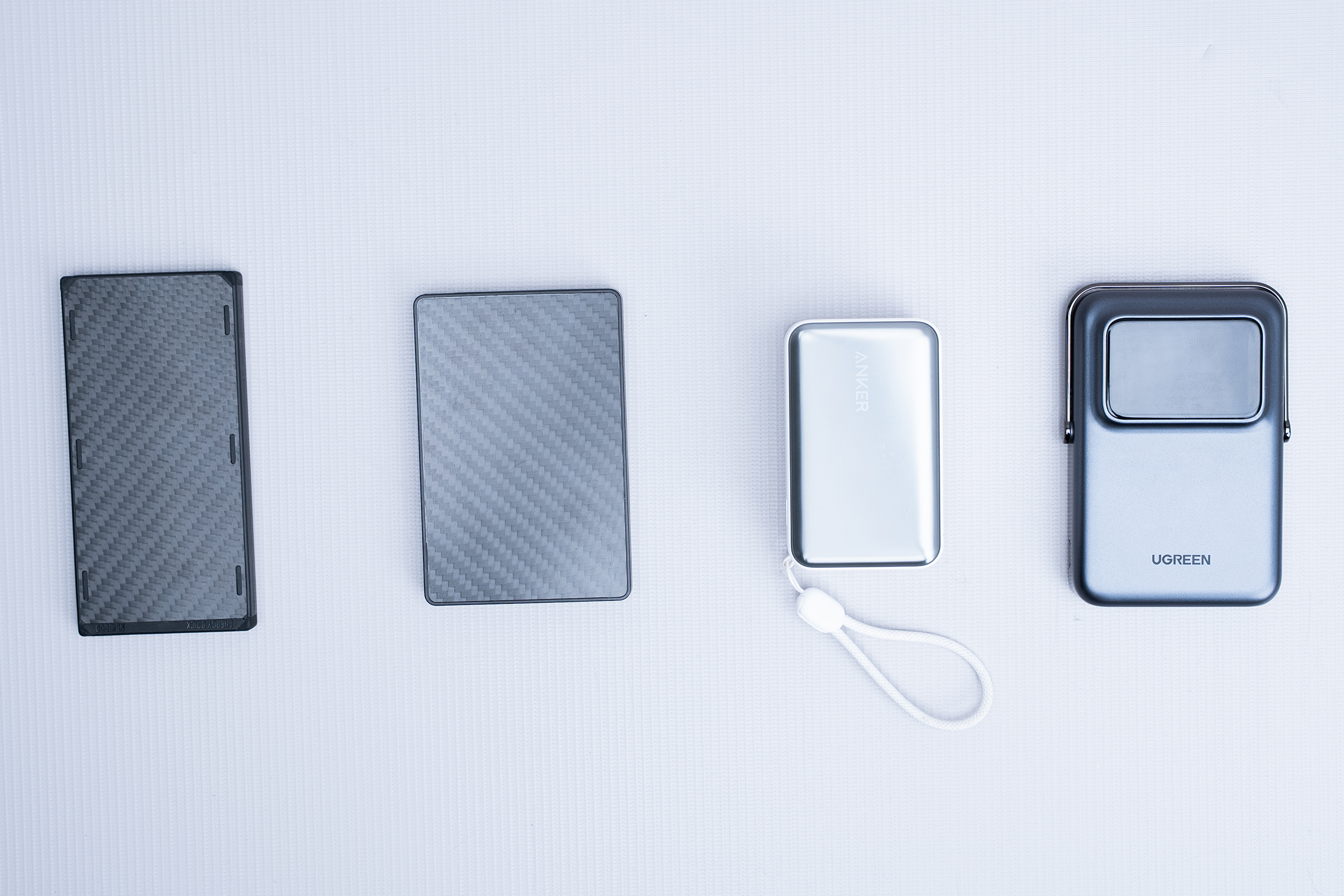
The NITRECORE Pocket 10000 also includes a built-in cable, though it’s short and non-retractable. While that design reduces the risk of cable failure, it’s less versatile in use. It pairs that cable with a single USB-C port that supports input up to 18W and output up to 22.5W. It is still more packable than the Anker Nano, but has fewer ports and less power flexibility overall.
Ugreen’s Uno Magnetic Wireless Power Bank (10,000mAh) takes a different approach, focusing on MagSafe capability for iPhones. Wireless charging caps at 7.5W, slower than most wired solutions, though it previously supported 15W before discontinuing that version. Wired charging reaches 20W, and the screen is minimal, showing only the percentage and charging status. It’s convenient if you want a cable-free experience, but it sacrifices speed and versatility.
Compared to these, the Anker Nano Power Bank 10K is the thickest and least packable option, yet it provides the longest built-in cable, the most detailed display, and the highest output at 45W. It offers strong charging flexibility and durability, but you’ll have to accept the extra bulk to get it.
Usage Timeline
Condition: Excellent
- Only a few blemishes on the edges of the battery bank after 2.5 weeks in Tanzania
- Built-in cable seems like it’ll hold up well over time
- Design is compact but still bulky due to its depth




Get your questions about the Anker Nano Power Bank (10K 45W Built-In Retractable USB-C Cable) answered from our team and the Pro Community right here on the page. Plus, join discussions with other members about gear, guides, and more.
Join Pack Hacker Pro or, Sign In