Peak Design Everyday Slim Wallet Review
The Peak Design Everyday Slim Wallet delivers compact size, tough build, and a sleek profile, but its limited capacity and finicky access may not suit everyone.
Our Verdict
Save time. Get access to brief summaries of our reviews so you can browse and make decisions more efficiently.
Pros
- It is extremely slim and compact, making it easy to carry in any pocket
- It has durable materials, with solid construction and RFID protection
- The wallet maintains its structure well, even with fewer cards
Cons
- Card access can be inconvenient, especially when retrieving specific cards
- Stash pocket design causes cash to shift or come out with cards
- The limited capacity makes it less suitable for users who carry more than essentials
Technical Details
-
Weight (oz)
0.7 oz (19.8 g)
-
Dimensions
2.44 in x 4.13 in x 0.16 in (6.2 x 10.5 x 0.4 cm)
-
Notable Materials
Ultra-High-Molecular-Weight Polyethylene (UHMWPE)
-
Warranty Information
Buying Options


Full Review
Get up to 10% off Peak Design • Join Pack Hacker Pro
The Peak Design Everyday Slim Wallet is built for a very specific user: someone who wants to carry as little as possible without sacrificing durability or thoughtful design. Over the course of our testing, it became clear that this isn’t trying to be a do-it-all wallet. Instead, it leans hard into minimalism, stripping away excess features in favor of a streamlined, ultra-compact experience that practically disappears in your pocket.
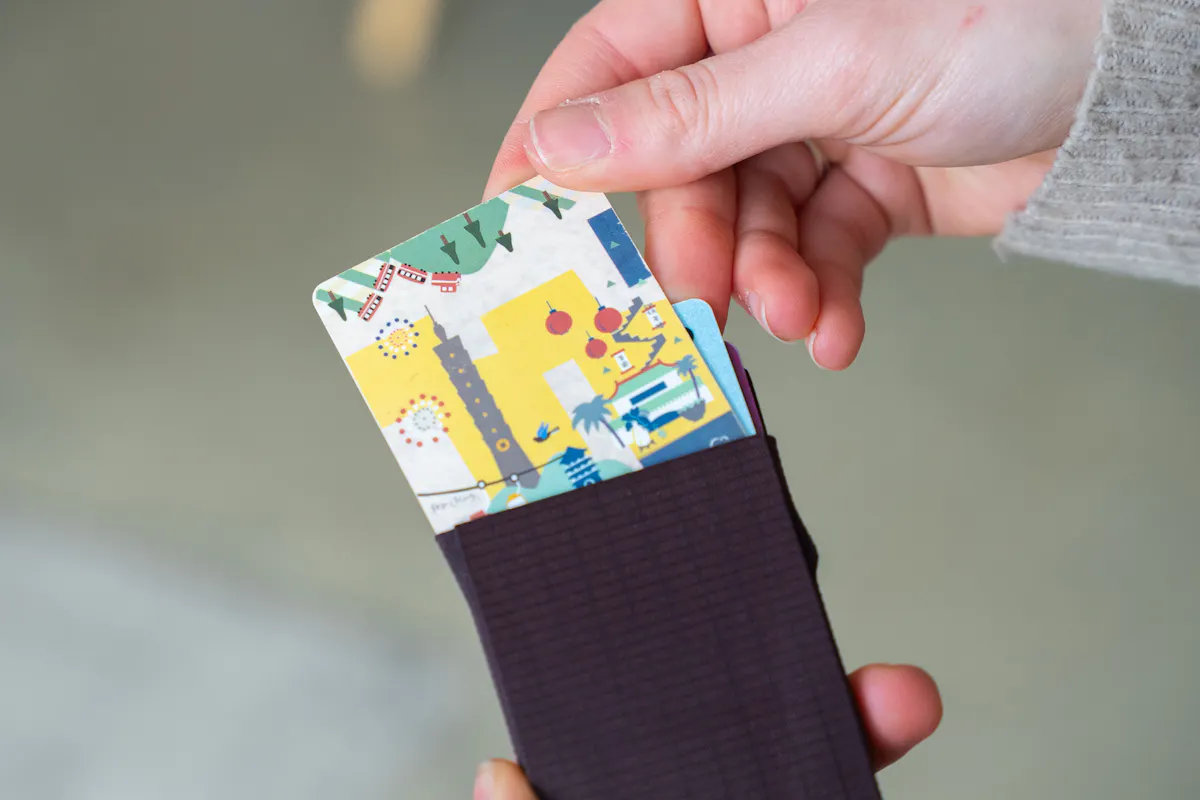
That focused approach is both its biggest strength and its most noticeable limitation. If your everyday carry consists of a handful of cards and maybe a bill or two, this wallet feels purpose-built. But if you tend to push capacity—even slightly—you’ll start to notice where the design begins to push back. After a couple of weeks of hands-on use, we’ve gotten a solid feel for where it excels, where it struggles, and who it’s really for.
The Rundown
At its core, the Peak Design Everyday Slim Wallet is all about simplicity. The layout is straightforward: one main card compartment with a pull-tab mechanism and a secondary stash pocket for cash or small extras. The materials play a big role here, with a TerraShell outer fabric paired with a stretchy inner lining that allows the wallet to expand just enough to accommodate your essentials without losing its shape.
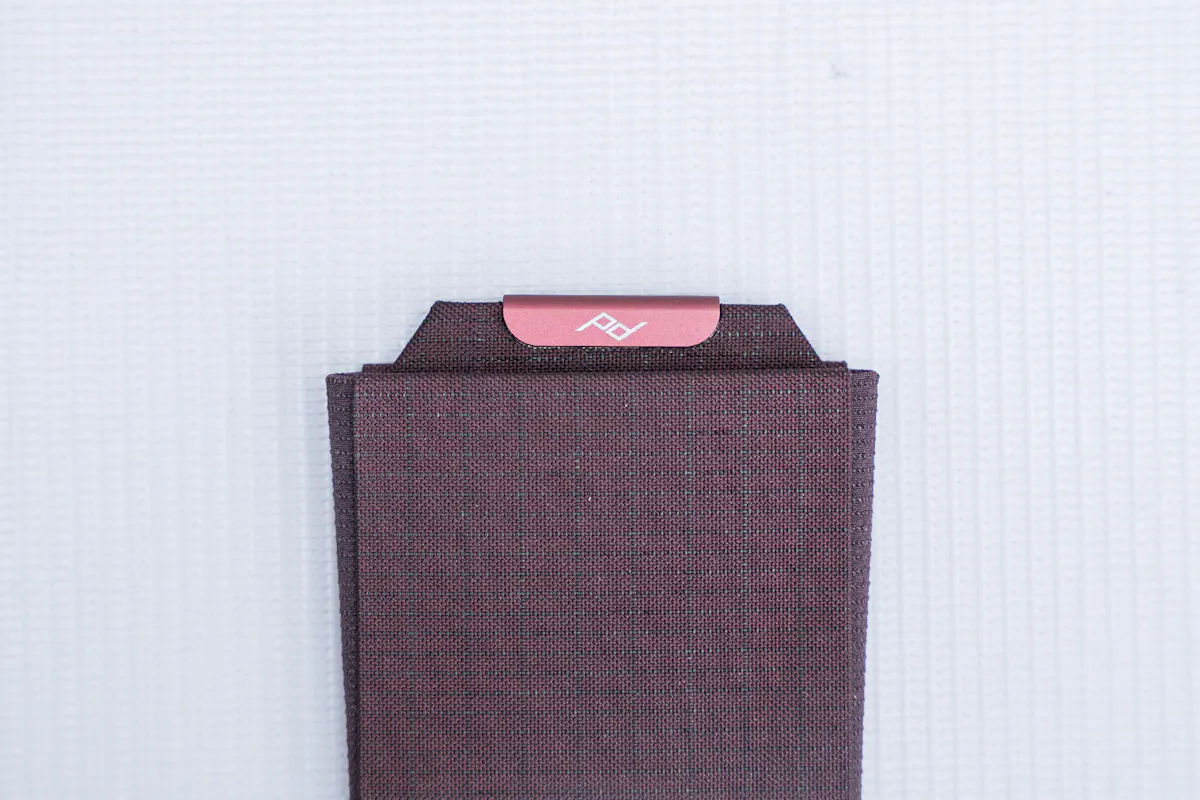
The card storage system is centered around that pull tab, which lifts your cards for easier access. In practice, this works well—up to a point. If the card you need is right at the top, you can grab it quickly and move on. However, if it’s buried in the stack, you’ll likely end up pulling out multiple cards to find what you’re looking for. It’s not a dealbreaker, but it does slow things down compared to wallets with more direct card access.
Capacity is another area where expectations need to be managed. Peak Design suggests that seven cards is the sweet spot, and we’d agree. You can technically squeeze in a couple more if you avoid using the stash pocket, but doing so makes access noticeably more awkward. On the flip side, carrying fewer cards—three to five—creates a much smoother experience, both in terms of usability and overall feel.
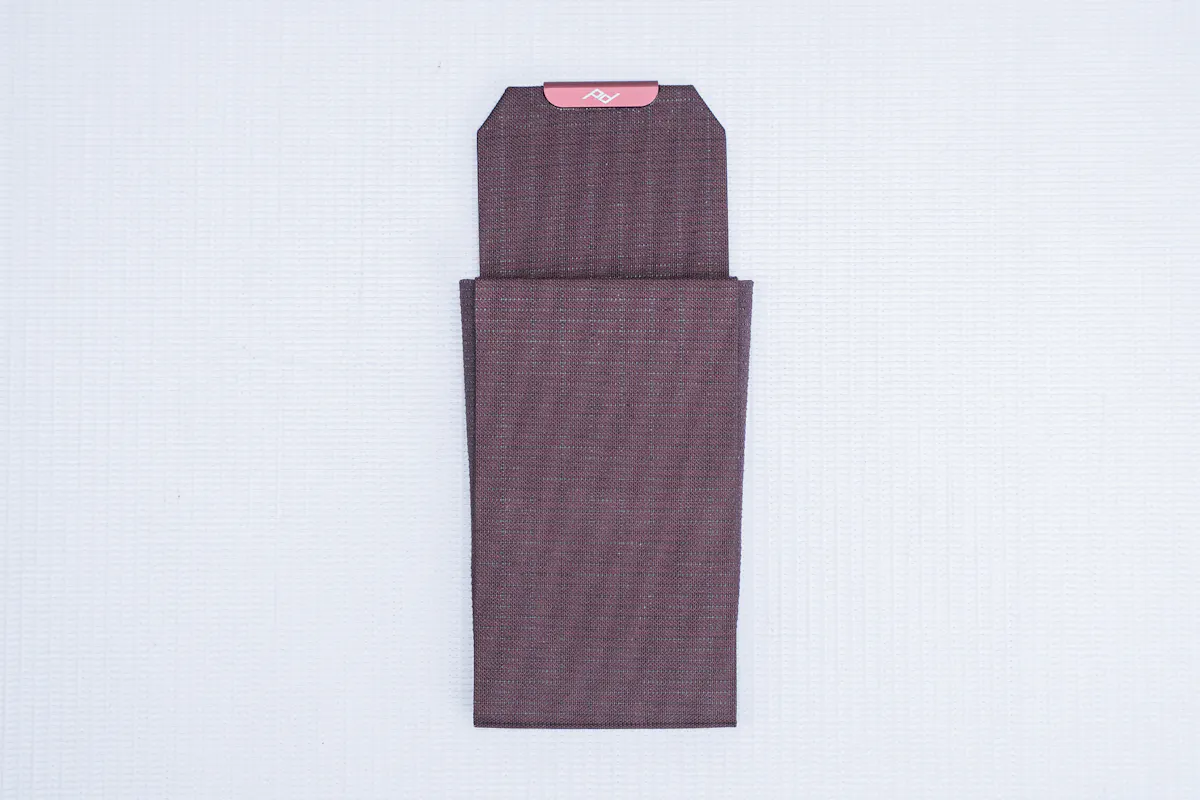
The stash pocket is where things get a bit more nuanced. It’s designed to hold folded cash or small items, but it doesn’t operate independently from the main compartment. That means when you pull the tab to access your cards, whatever is in the stash pocket tends to come along for the ride. If you’re carrying multiple bills, this can quickly become messy, with cash crumpling or shifting in ways that require readjustment.
We found that the wallet performs best when you keep cash to an absolute minimum—ideally just one or two folded bills. Anything beyond that starts to feel like you’re working against the design rather than with it. There’s also a slight learning curve with the pull tab itself. If it gets pushed too far down—especially when the wallet is packed tightly—it can be a bit tricky to grab again, adding another small layer of friction.
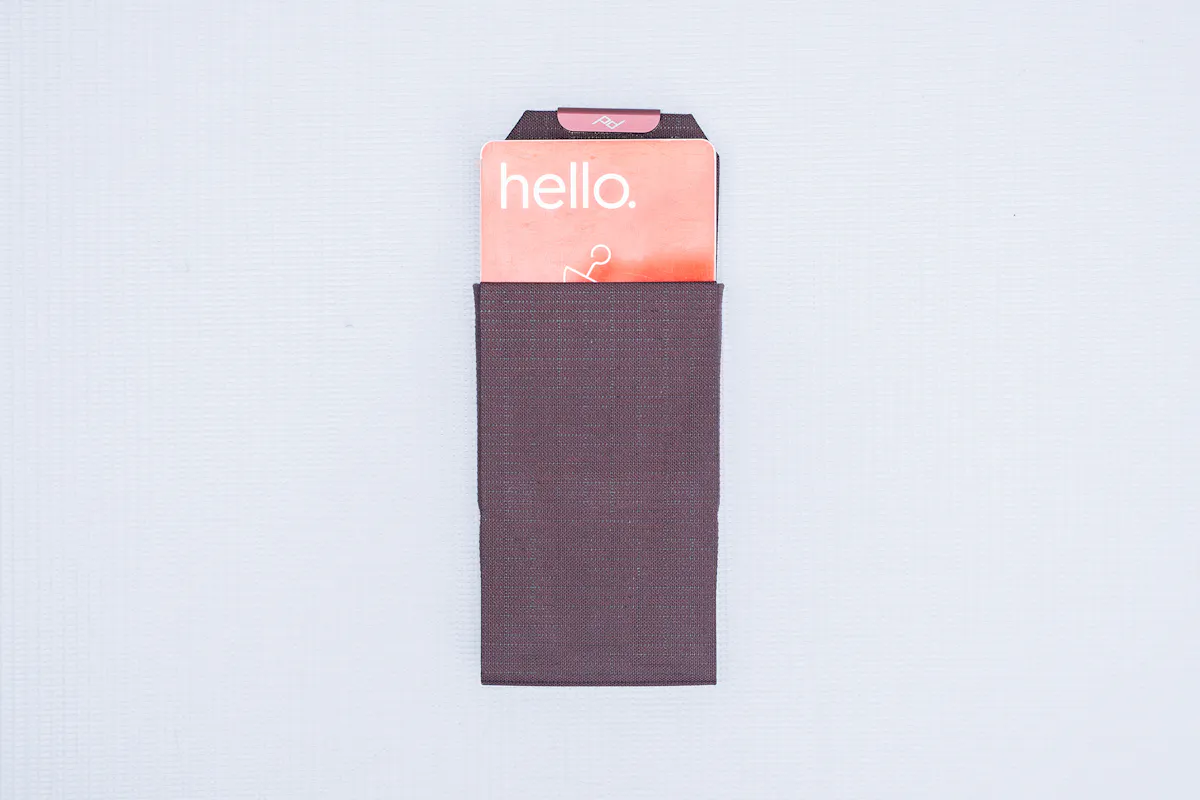
On the durability front, though, there’s very little to complain about. The TerraShell Ultra 210D exterior and 70D inner fabrics feel robust and well-constructed, with a ripstop thread pattern that adds extra resilience. There’s also built-in RFID protection, a nice touch for those who prioritize that level of security. Over our testing period, we didn’t notice any significant stretching beyond the initial break-in phase, and that early softening actually made the wallet easier to use.
Overall, the functionality depends heavily on how closely your carry aligns with the wallet’s intended use. Stick to a consistent set of cards and minimal cash, and it works smoothly. Start pushing beyond that, and the experience becomes more finicky.
Packability
When it comes to packability, this wallet truly shines. The Peak Design Everyday Slim Wallet is about as compact as it gets while still being functional. It’s essentially the footprint of a standard card with just a bit of added thickness for structure and durability. That small size makes a noticeable difference in everyday use, especially if you’re strapped for space in your sling.
It’s almost invisible in a front pocket. Even in slimmer pants, the wallet doesn’t create an obvious outline or uncomfortable pressure point. It sits flat and stays out of the way, which is exactly what you want from something designed for minimal carry. Back pocket carry is equally unobtrusive, though you’ll still want to be mindful of sitting on it for long periods, as you would with any wallet.
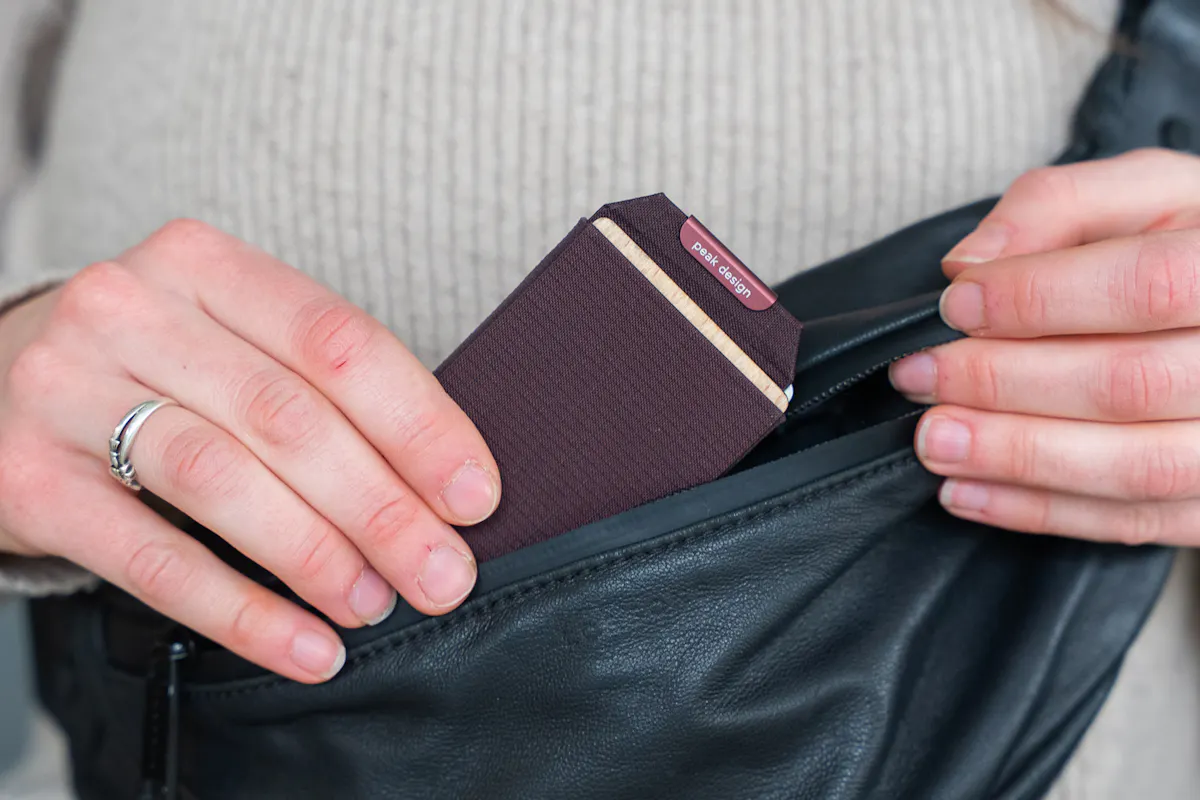
What stands out most is how well it maintains that slim profile over time. Thanks to the structured materials, it doesn’t puff up or lose its shape as you add or remove items—at least within its intended capacity. That consistency is key for a wallet like this, where the entire value proposition revolves around staying compact.
It’s also worth noting that the wallet isn’t compatible with Peak Design’s SlimLink system, which some users might be expecting if they’re already invested in the brand’s ecosystem. That said, the tradeoff is a cleaner, more streamlined design that prioritizes pocket carry over modularity.
Quick Comparison
When we compare the Peak Design Everyday Slim Wallet to other minimalist wallets, one of the closest parallels is the NOMATIC Wallet. Both aim to deliver a slim profile with quick-access card storage and a small area for cash. However, the way they achieve that goal differs in some important ways.
The NOMATIC Wallet leans heavily on elastic materials, which gives it more flexibility in terms of capacity. You can carry a wider range of card counts without immediately running into usability issues. It also separates cash more effectively, allowing you to access cards without disturbing whatever you’ve stored in the cash pocket. That added convenience can make a big difference in day-to-day use.
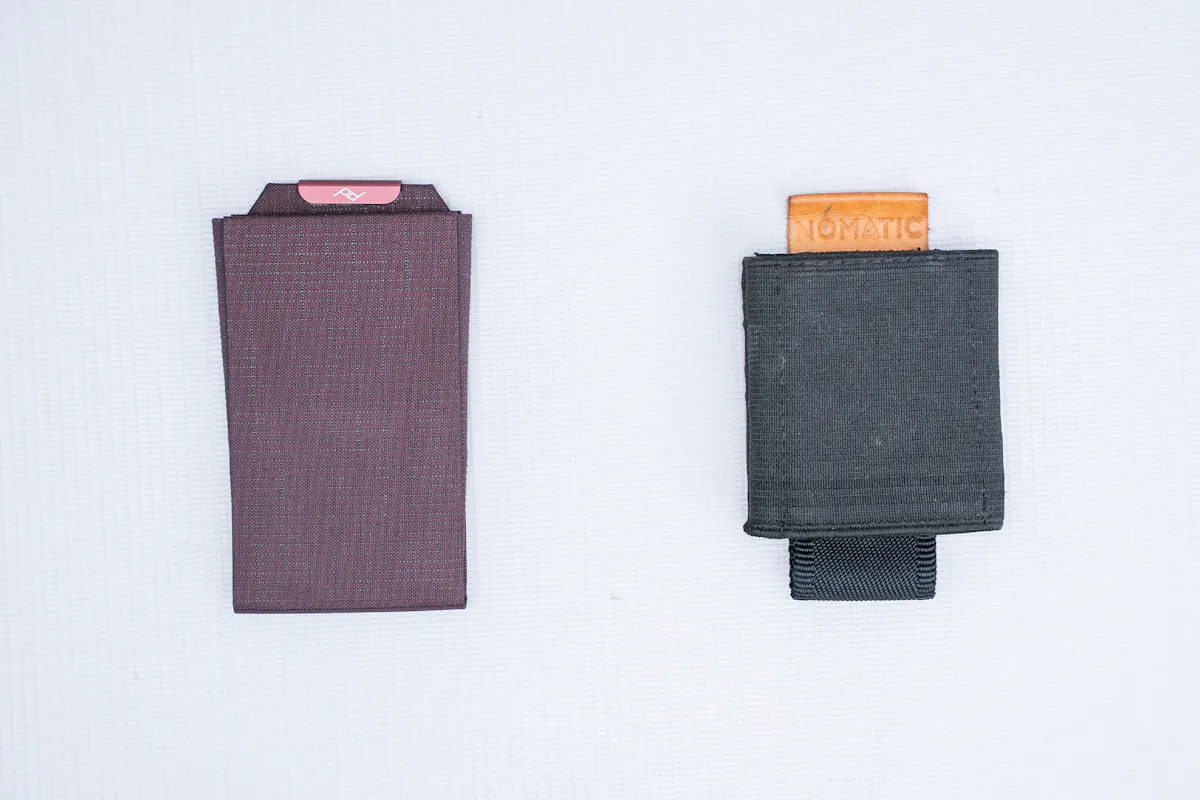
On the other hand, that same elasticity can become a downside over time. As the material stretches, the wallet can lose its grip on smaller loads, making cards more likely to slip out if you’re only carrying a few. In contrast, the Peak Design Everyday Slim Wallet feels more structured and secure, especially with fewer cards. It holds its shape better and keeps everything in place, even as you scale down your carry.
Ultimately, the choice between the two comes down to priorities. If you want flexibility and slightly easier access, the NOMATIC Wallet has the edge. But if you value structure, durability, and a consistently slim profile, the Peak Design option stands out.
Usage Timeline
Condition: Excellent
- Ultra slim design
- Feels durable like other Peak Design wallets
- We like the colorway options available
Condition: Excellent
- No signs of wear or stretching
- Easy to grab cards



Get your questions about the Peak Design Everyday Slim Wallet answered from our team and the Pro Community right here on the page. Plus, join discussions with other members about gear, guides, and more.
Join Pack Hacker Pro or, Sign In