Peak Design Outdoor Backpack 18L Review
Peak Design’s Outdoor Backpack 18L packs outdoor-ready features into a compact, zippered design more ideal for daily use than its larger rolltop siblings.
Our Verdict
Save time. Get access to brief summaries of our reviews so you can browse and make decisions more efficiently.
Pros
- Twin sternum straps and a generally well-designed harness system keep everything comfy
- Has lots of provisions for externally mounting gear
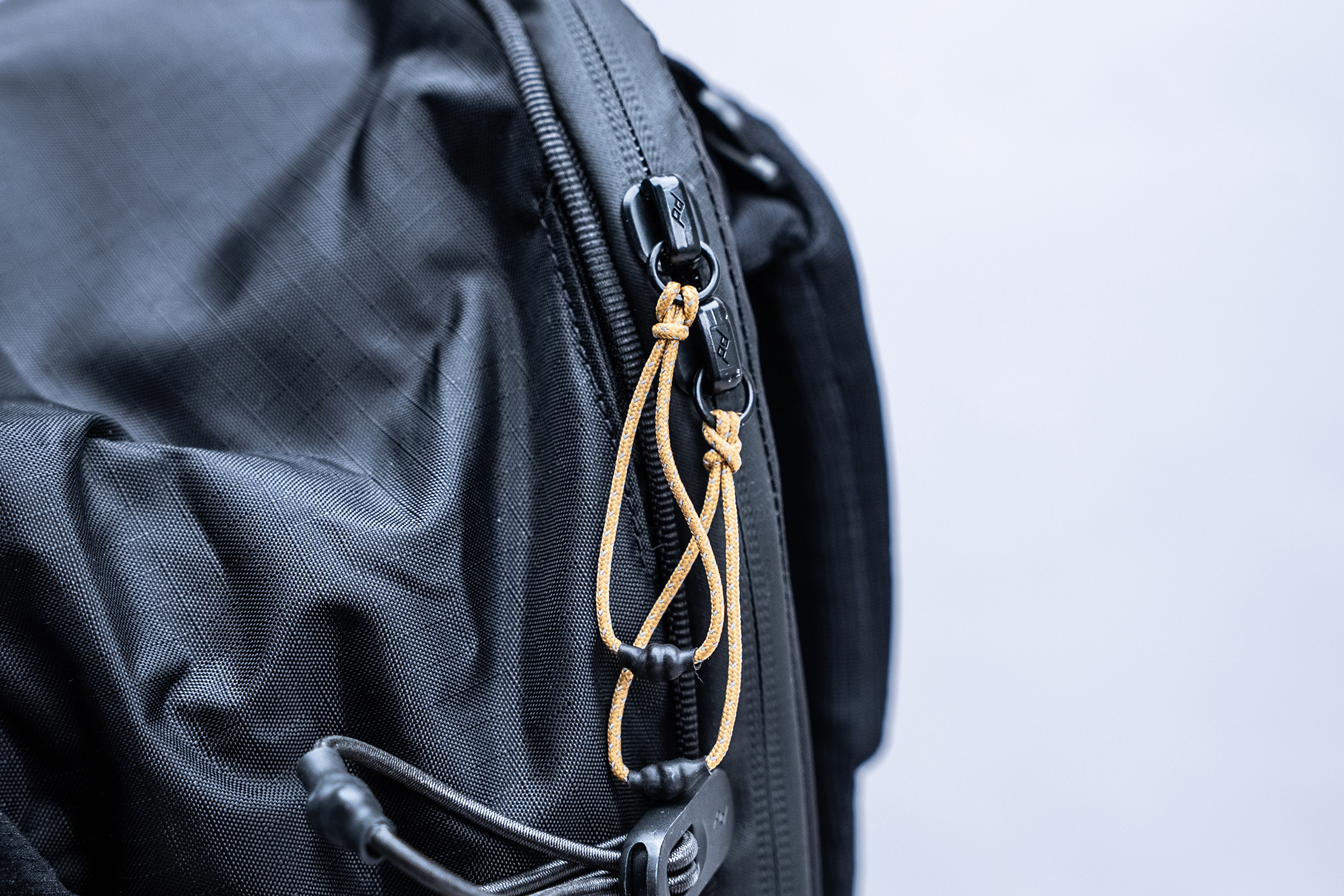
- Really digging the stretchy key leash; it's very convenient for reaching locks and knobs
Cons
- Maximum functionality requires you to buy into optional accessories
- Bottom side collapses when you flip over the back panel to open the bag
- Routing a hydration bladder's tube is very challenging
Technical Details
-
Capacity
18l
-
Weight (lb)
2.1 lb (1 kg)
-
Dimensions
18.74 in x 10.83 in x 6.1 in (47.6 x 27.5 x 15.5 cm)
-
Notable Materials
Ripstop Nylon, Polyurethane (PU), Nylon, Meets bluesign® Criteria, Zoom Zippers, Duraflex Hardware
-
Laptop Compartment Size
13"
-
Warranty Information
Full Review
Get up to 10% off Peak Design • Join Pack Hacker Pro
When it comes to functional daypacks that balance outdoor durability with everyday practicality, Peak Design’s Outdoor Backpack Zip 18L takes a lot of the features we like about its bigger siblings and squishes them into a more daily-able size. Lightweight fabrics, a roomy interior, a comfortable harness system, and even the stretchy key leash are all here to be appreciated.
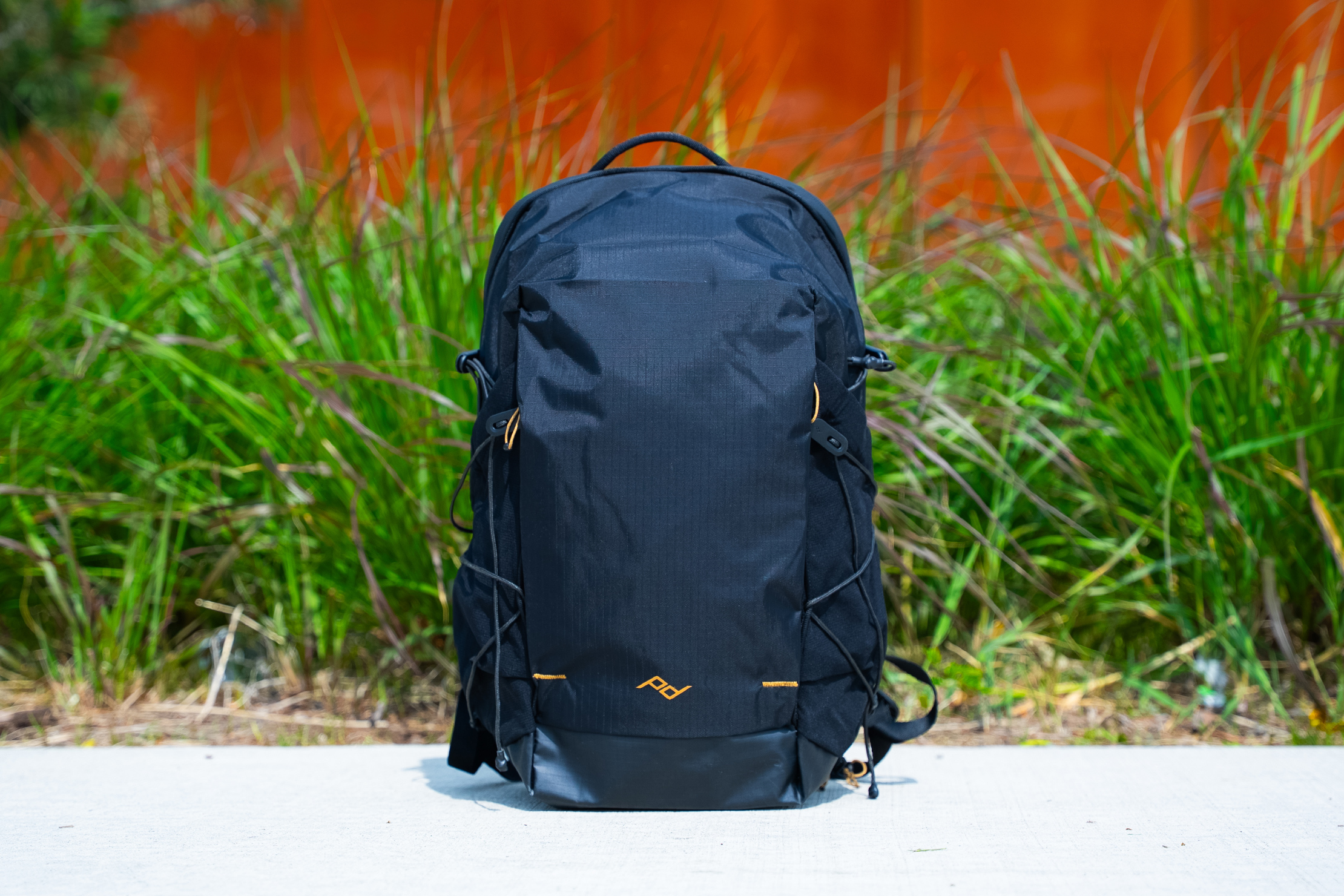
Then again, the cord-riddled exterior also gets carried over. Deal-breaker? Or can the pros outweigh the cons in this bag’s case? Let’s find out.
External Components
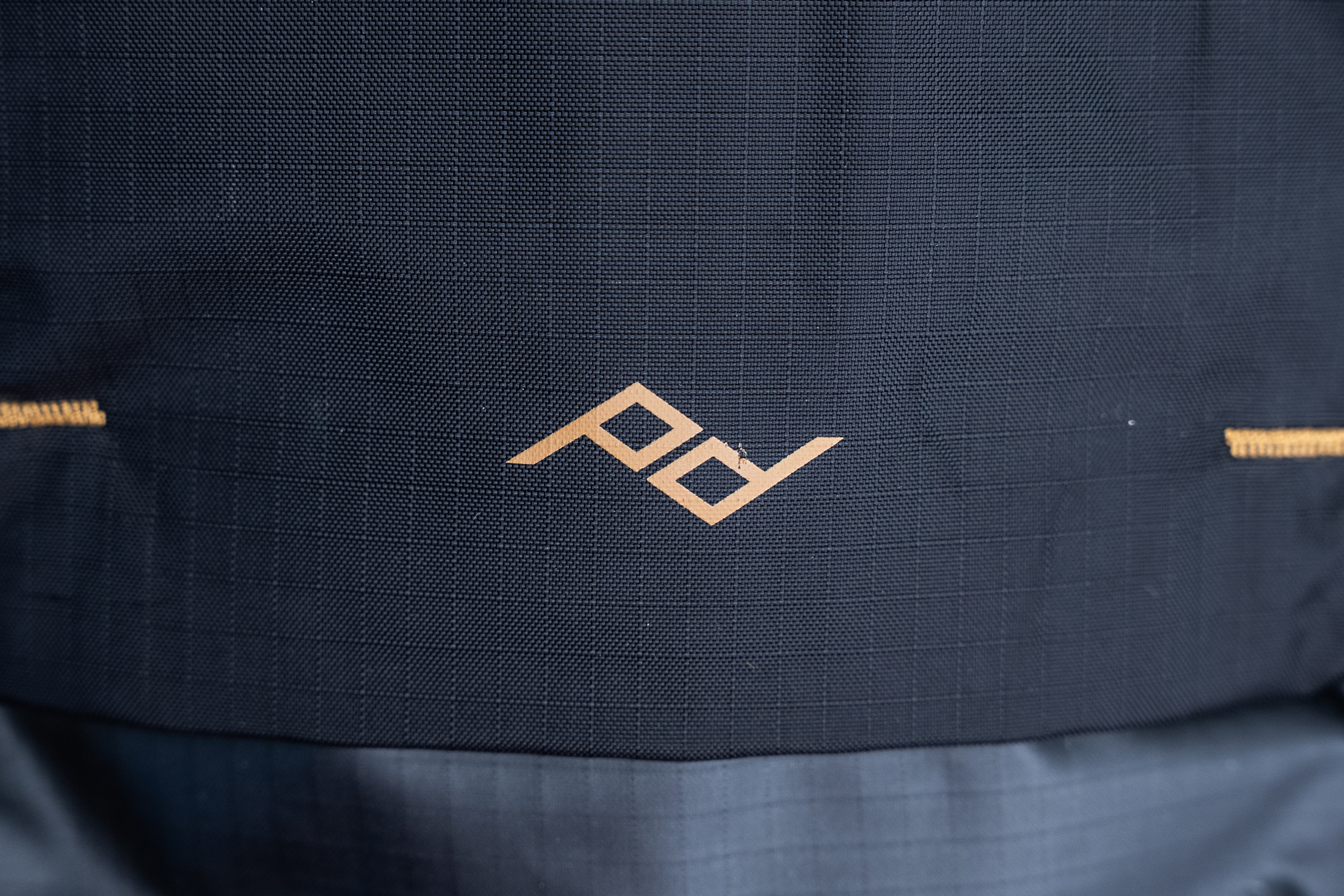
The outer fabric is Peak Design’s Ultralight Terra Shell, which is a 210-denier ripstop fabric, as evidenced by the subtle grid pattern. Ripstop is a relatively thin and lightweight fabric that trades in the robustness you get from making a fabric thick, instead relying on that grid to act as reinforcement. It’s not the most abrasion-resistant material, but it is sufficiently tough if you’re doing anything less than throwing the pack over a cliff or dragging it behind your truck. If nothing else, its PFAS-free water-repellent treatment is quite effective at making sure splashes don’t soak as soon as they hit the fabric.
Overall, the build quality is very solid, which comes as no surprise, as Peak Design has been making bags for years, slowly iterating on existing designs of other bags, such as their Everyday and Travel backpacks. With that experience comes some familiar touches, such as nylon mesh, aluminum hardware, and Zoom zippers. Ultra-high molecular weight polyethylene, or UHMWPE, stands out as a concession to the bag’s outdoor purpose, being utilized in the cords, mesh, and zipper elements to make them as strong as possible.
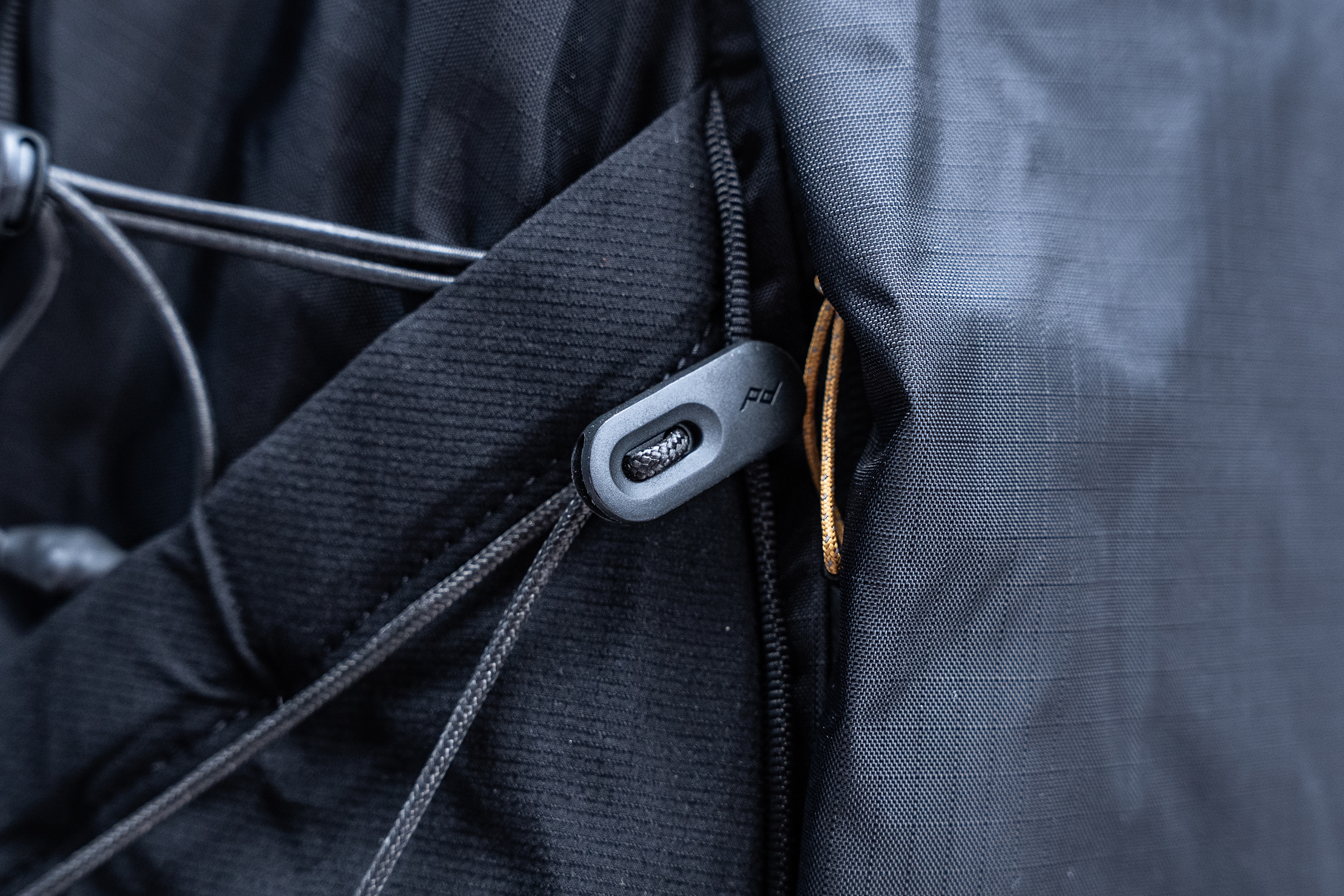
Each side of the bag has two sets of removable cords, comprised of a short one near the top and another lower one pre-routed in an S-pattern. We generally don’t like this much cord on the outside of our bag, even for ones we’d take outdoors. It’s a bit too tangle-prone for our liking. That said, all four cords are removable, so we can’t really complain either. But for those interested in using them, they are absolutely great to have if you need to secure gear such as mobile tripods and hiking poles. Or maybe you just want a more secure fit for the left-side mesh water bottle pocket, in which case, cinching the cord there will absolutely get you there.
Also worth noting is that the cords attach to a permanent rail stitched along the bag’s sides, even going over the top parallel to the main compartment’s opening. This rail alone gives you a ton of options if you want to hang various small accessories on the bag or if you want to put even more cords (which Peak Design is more than happy to sell you) for attaching bulkier gear.
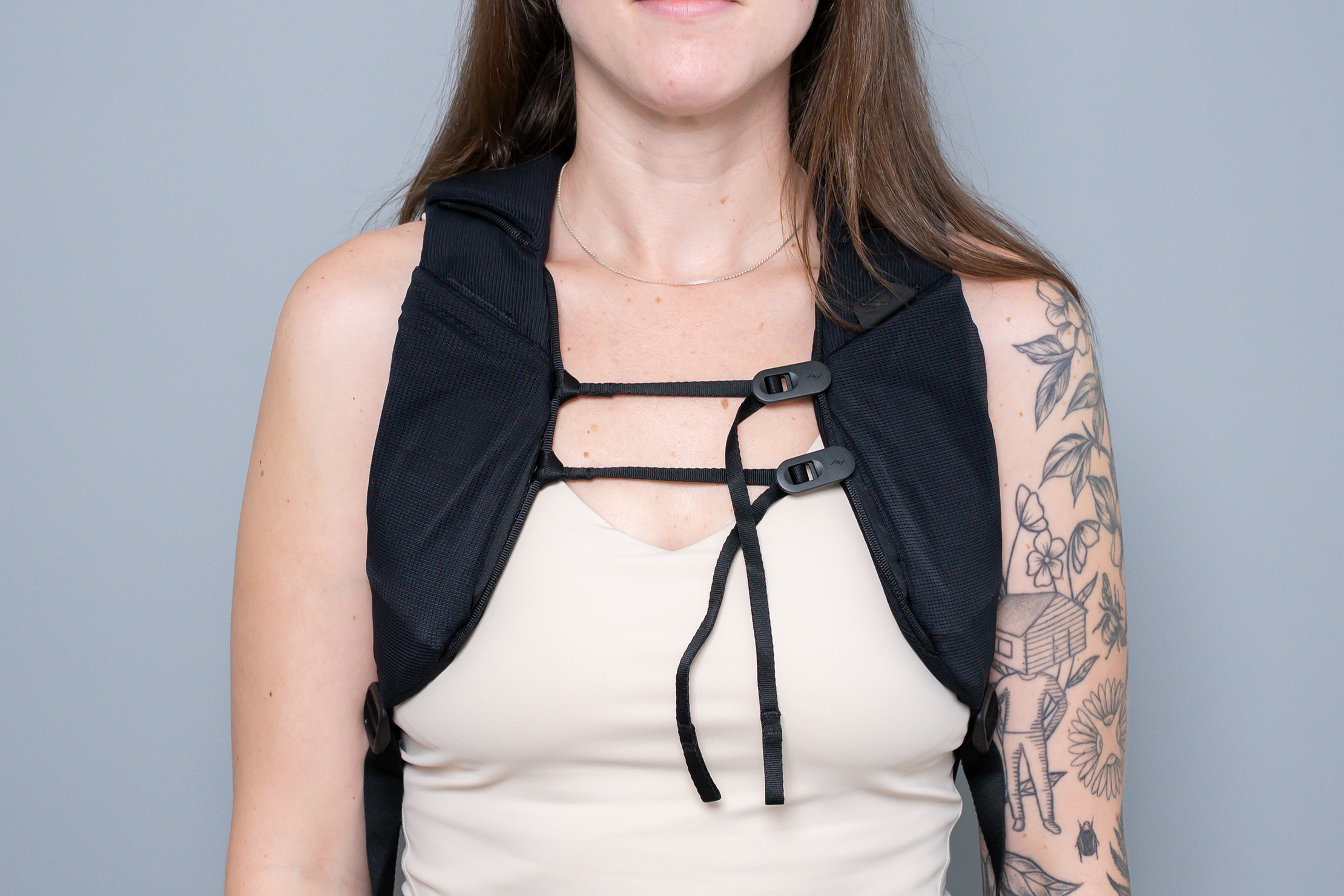
The harness system is quite loaded with features despite the straps’ seemingly minimal looks. Yes, the padding isn’t that thick, but they’ve curved the shape and made the lower section wide for better weight distribution and to accommodate the features they wanted to implement. Chief among these features are twin sternum straps. This setup is fairly unique on its own, and we thought we’d hate it just because having two straps seems too complicated for an 18-liter backpack. However, they’re fairly easy to clip on, and without them, the bag’s weight is a lot more noticeable.
Apart from the sternum straps, the shoulder straps also have hidden attachment points for Peak Design’s Capture Clip accessory. They don’t come included, but we have checked them out. To keep it short, they’re small mounts designed for point-and-shoot cameras (think mirrorless ones) that you can put on your backpack’s shoulder straps, making it very easy for you to draw your camera and capture the moment.
The shoulder straps themselves are also quite cleverly designed. You can stow them away by detaching the top ends and tucking the straps into the back panel from the sides. Alternatively, you can also detach the straps entirely since they’re mounted on rivets at the bottom ends. Either way, it’s a feature that comes in handy when you’re traveling and trying to prevent your gear from getting tangled with other stuff. Admittedly, Peak Design’s implementation is a bit more tedious than other brands’ methods for tucking away shoulder straps. However, having both options to tuck and detach are impressive features to have for such a small backpack; these are features we only really see on bigger travel backpacks.
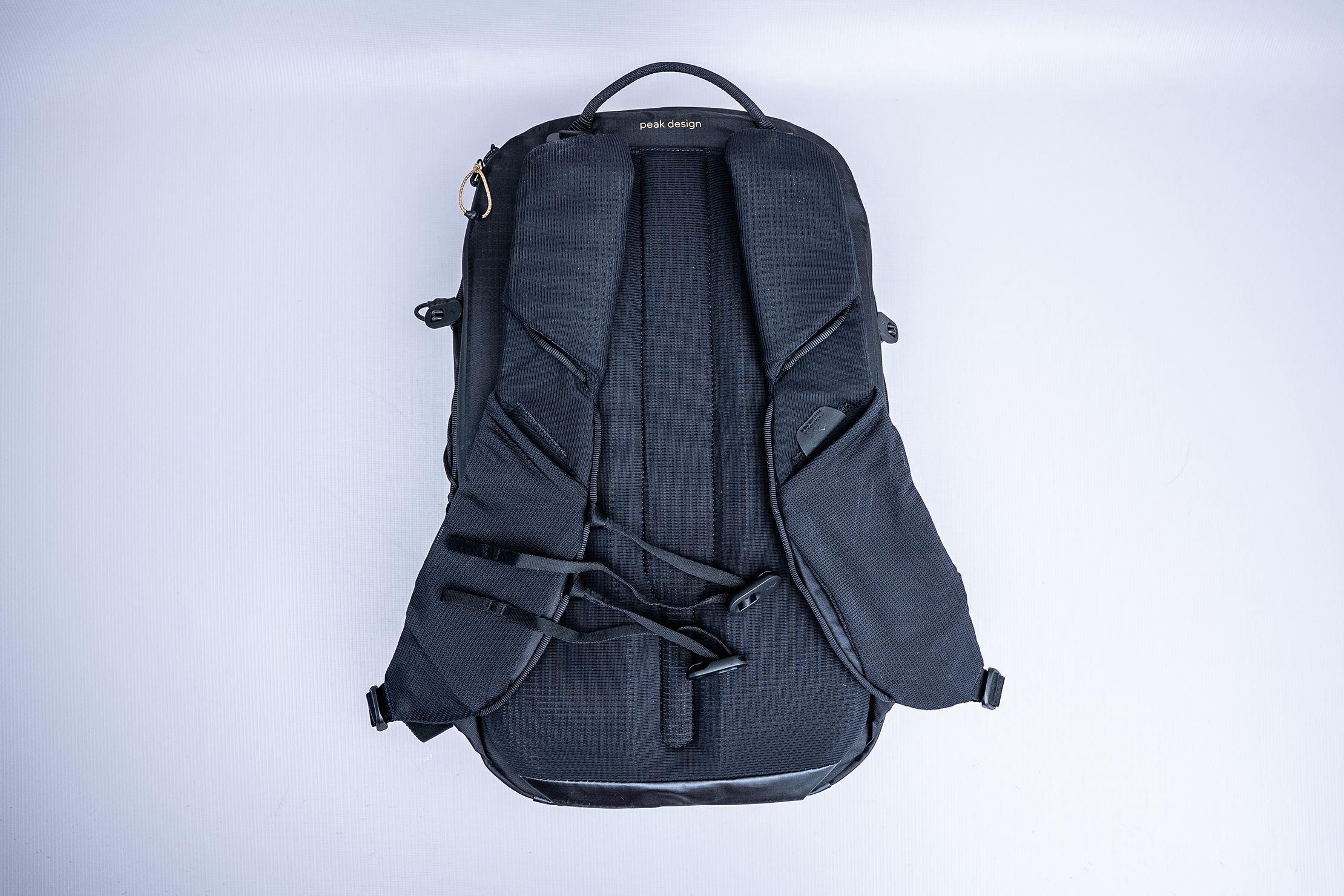
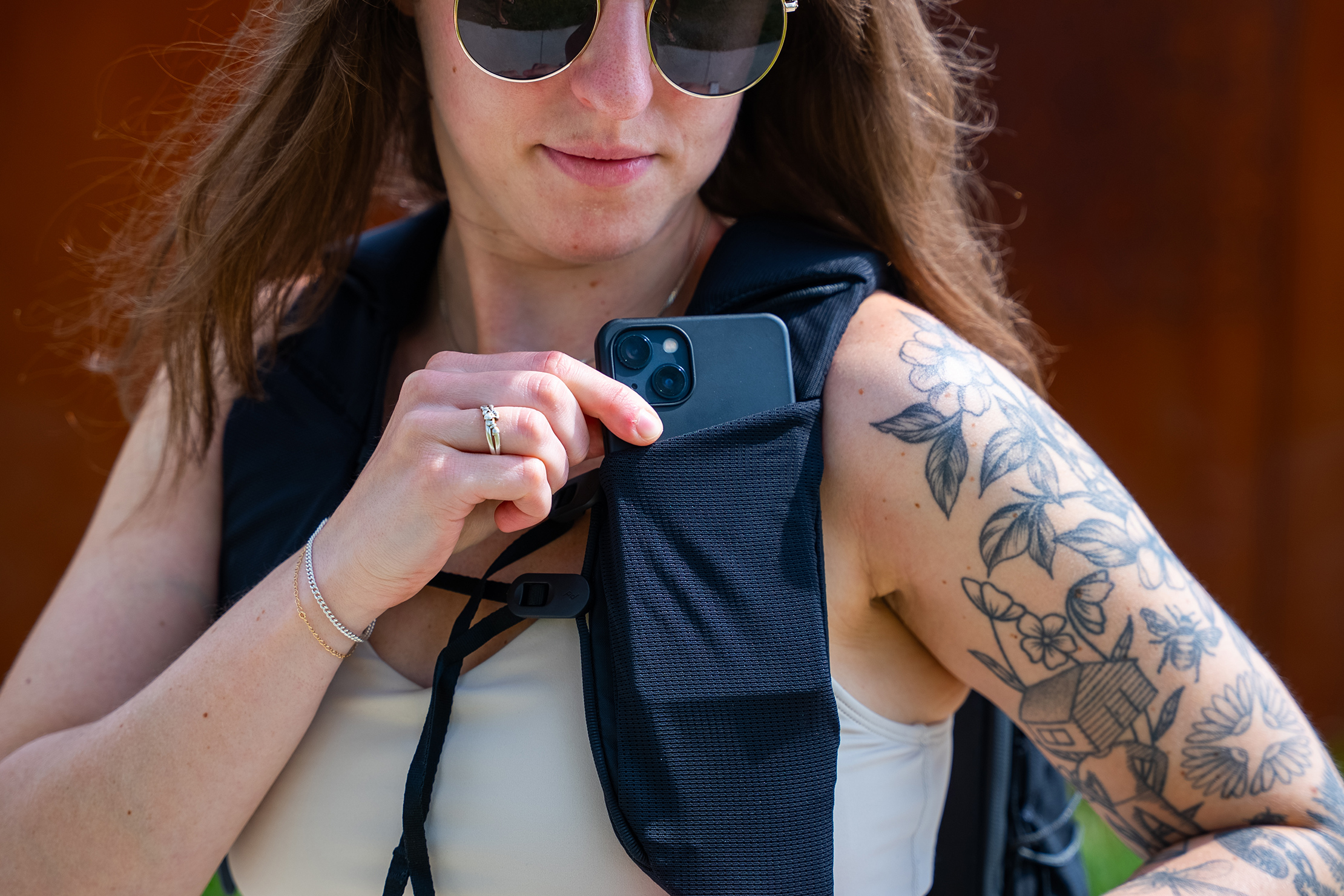
There are also pockets on each of the shoulder straps. They’re top-loading stretchy mesh type of pockets, ideal for quickly storing a smartphone or tools you might need while walking around. Mind you, they lack any type of closure, but they are quite deep, so anything you put inside them should remain secure, just not sheltered from the elements.
Lastly, this 18-liter backpack is, interestingly, compatible with a removable padded hip belt. We don’t really find this necessary, even for outdoor use, since the bag’s modest size just doesn’t need that much support. The shoulder straps and sternum straps are already more than enough to keep you comfy in most cases. That said, if using a sternum strap (let alone two) drives you up the wall, then a padded hip belt like this is a decent—albeit separately sold—alternative. Using the hip belt also nets you two more Capture Clip mounting points and stretchy mesh pockets—just a thought, in case you’re actually tempted to splurge on one.
Fit Notes
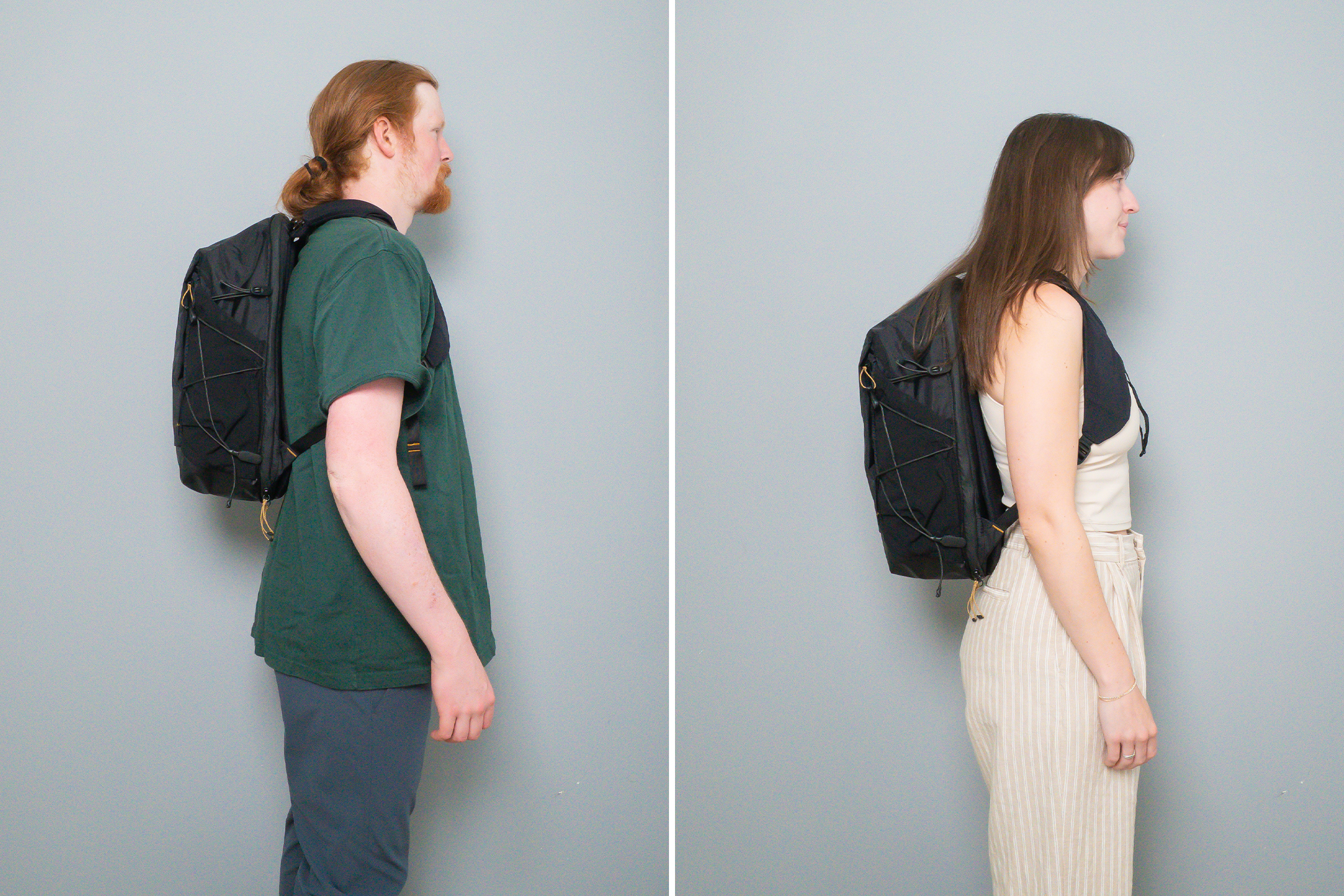
Wearing and carrying the Outdoor Backpack Zip 18L is a mostly positive experience. Firstly, the size feels ideal as a daypack, and it stays relatively flush to your back, so a lot of that bulk feels very tameable. The strap system is a bit complicated if you’re looking for more of a grab-and-go experience, and it especially feels that way once you realize how much weight the twin sternum straps can shift forward. In our opinion, using them is a must if you want to remain comfortable throughout the day, as the pack can still get quite heavy once you start loading and mounting gear all over it.
The back panel’s padding can feel a bit stiff after a while. However, that’s not necessarily a bad thing, as it keeps some separation between your back and the central air channel, as well as making sure the material itself remains passable for air to move around. For what it’s worth, the Pack Hacker crew found the fit and comfort agreeable, which isn’t something we can’t say for a lot of the backpacks we test.
Inside The Backpack
The only real quick-grab pockets—ones that are sealed, anyway—are the twin side-facing ones at the front. The amount of space each of them has can largely depend on how packed out the main compartment is. We’re testing with the camera cube Peak Design intended for use with this bag, so what we’re showing you here is the worst-case scenario. With it, packing can feel somewhat limited to everyday carry items, such as a set of keys, a wallet, a set of AirPods, and a smartphone in both pockets. It’s sufficient for everyday use, but those looking to fit a packable jacket or a roll of gloves may find a tighter squeeze or outright impossibility.
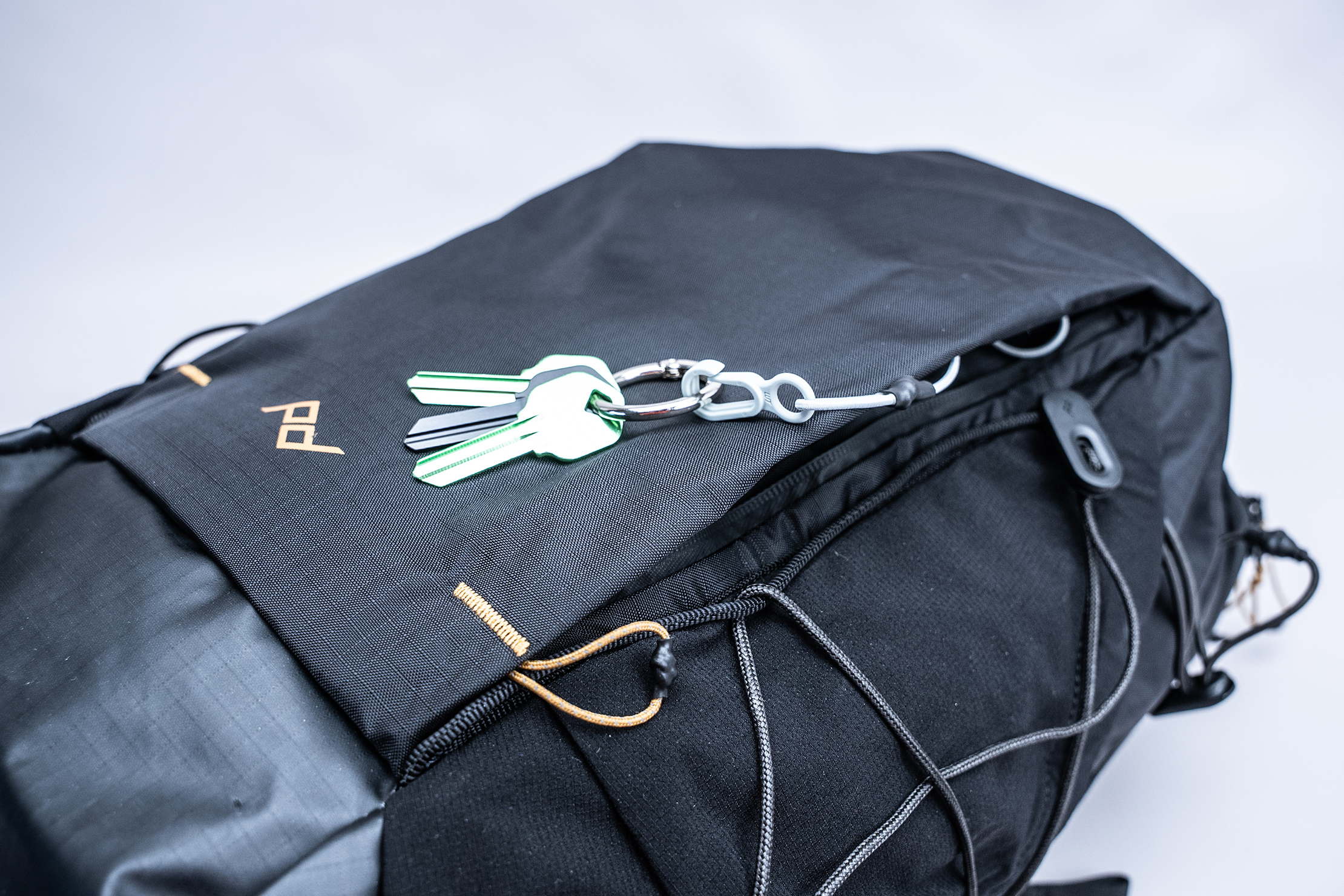
Also worth noting is how the pockets overlap, meaning they can start to clash once you’ve packed them full. That said, we prefer having them deep and overlapping versus shallow and meeting in the middle. Plus, this basically gives you flexibility if you want to use only one of them to maximize space. Just remember which one you’ve chosen when the time comes to swing the bag around and you need to grab whatever it is you put inside the pocket.
One of the key features we really liked on Peak Design’s Outdoor lineup is the stretchy key leash. Out of the box, the one on the Outdoor Backpack Zip 18L is attached to the right front pocket, but there is an attachment point in the left pocket if you prefer to have it there. Either way you choose, you’ll find the leash’s stretchiness really helpful when you’re trying to unlock doors and awkwardly placed locks. If nothing else, this is a feature we want to see on more bags.
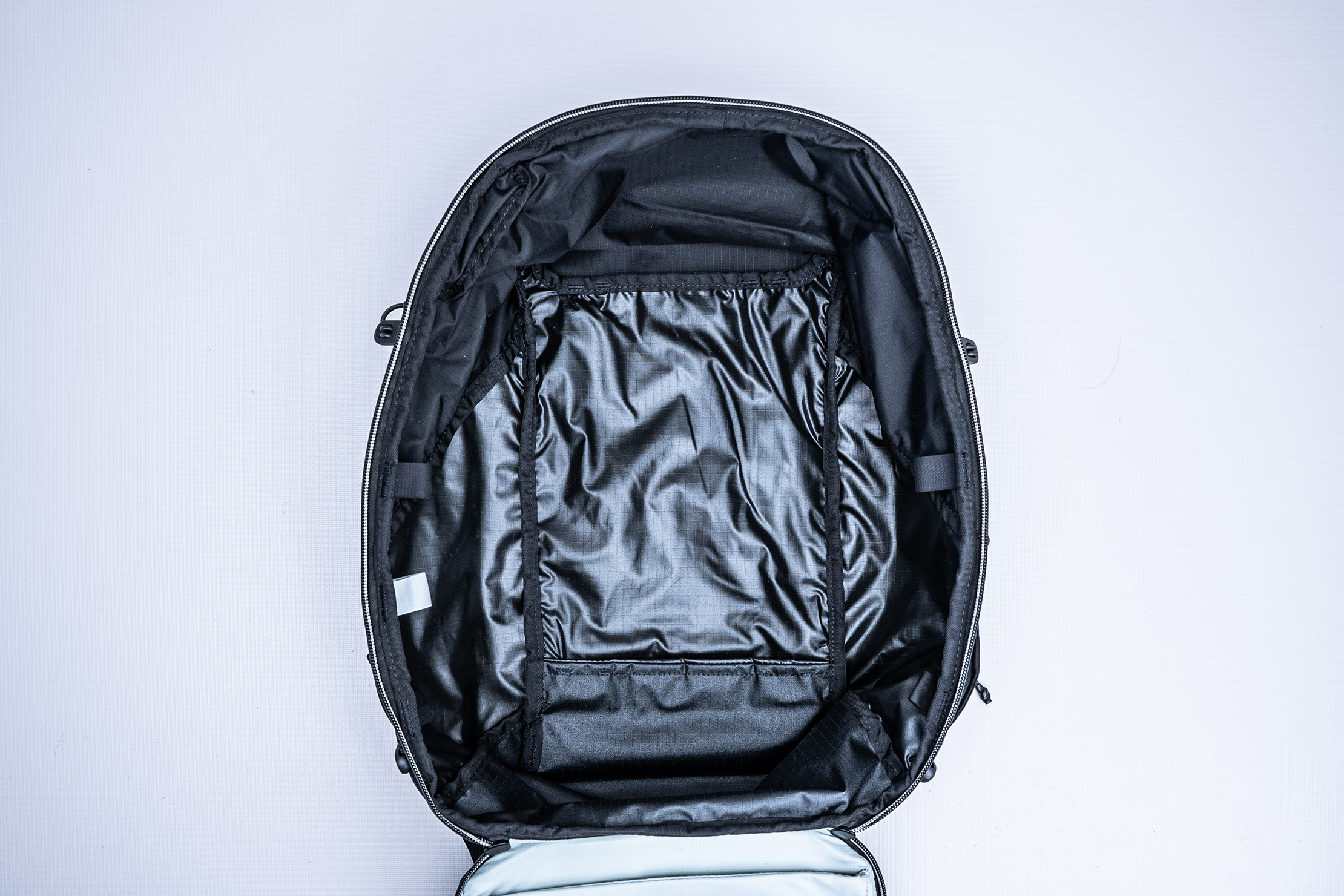
Unlike some of the other Peak Design Outdoor backpacks, this one doesn’t have a drawstring cinched opening and instead uses a more conventional twin zipper design. That said, some inconvenience is still to be expected when you try to open it. Namely, if you decide to leave the various cords attached, it’s pretty easy to mistake them for the cord-like zipper pulls. It’s not an issue when you’re consciously paying attention when opening the main compartment. But during the other times when you’re blindly trying to reach for something, that’s when mistakes happen.
The main compartment opens like a clamshell, with the back panel folding out and leaving the front side to act as a bucket-style space. It’s mostly barren, and that’s probably because Peak Design designed it to accommodate their Camera Cube V2, specifically the Smedium (actual name), alongside an X-Small cube. This configuration is specific to the Outdoor Backpack Zip 18L, whereas the others in the lineup will need a different combo. That said, we’re not going to evaluate this bag with the cubes factored in since they’re not included, though we do have a review of the XL in case you’re curious about the details.
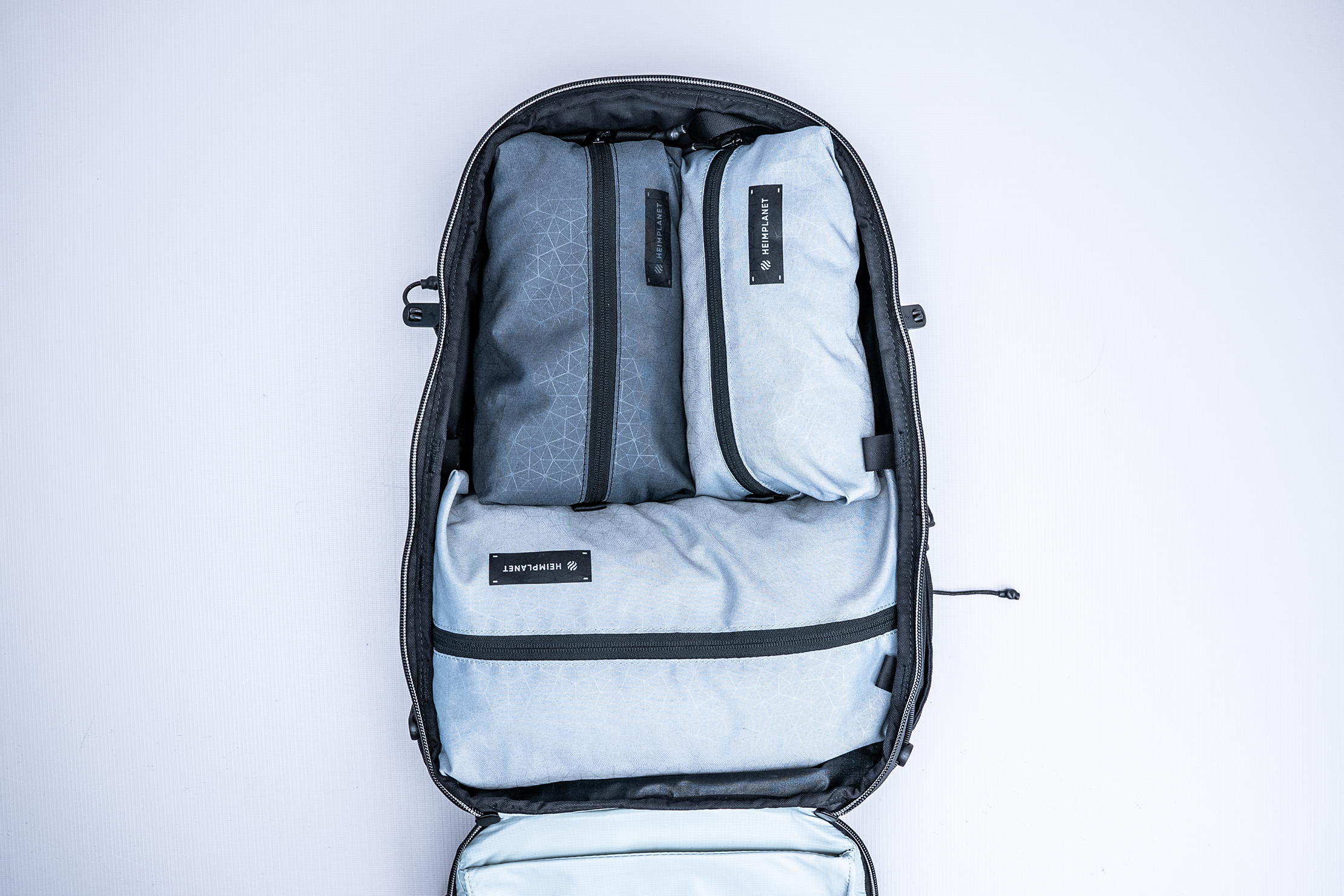
Fear not, as even without the cubes, you’re still left with basically the full 18 liters of volume to play with. You can use your own packing cubes, tech kits, and other means of organizing gear, or you can freestyle if you don’t mind things getting a little messy. All in all, you can fit a weekend’s worth of clothing if you want to use this as a quick vacation bag. That said, packing can be a little tricky because the bottom, where the back panel hinges, doesn’t have any structure. Consequently, that part always collapses, so you have to keep it propped up as you’re placing your gear inside. Additionally, some of the space can be taken up when you occupy the water bottle pocket, and the same is true in reverse; it just depends on which one gets packed first.
On the front side is the built-in laptop sleeve, which also doubles as storage for a hydration sleeve. The former can fit up to a 13-inch MacBook Pro, which is pretty sweet if you like to do your editing in the field. Fortunately, there is a good amount of separation between the sleeve’s bottom end and the compartment’s floor to protect it from impacts.
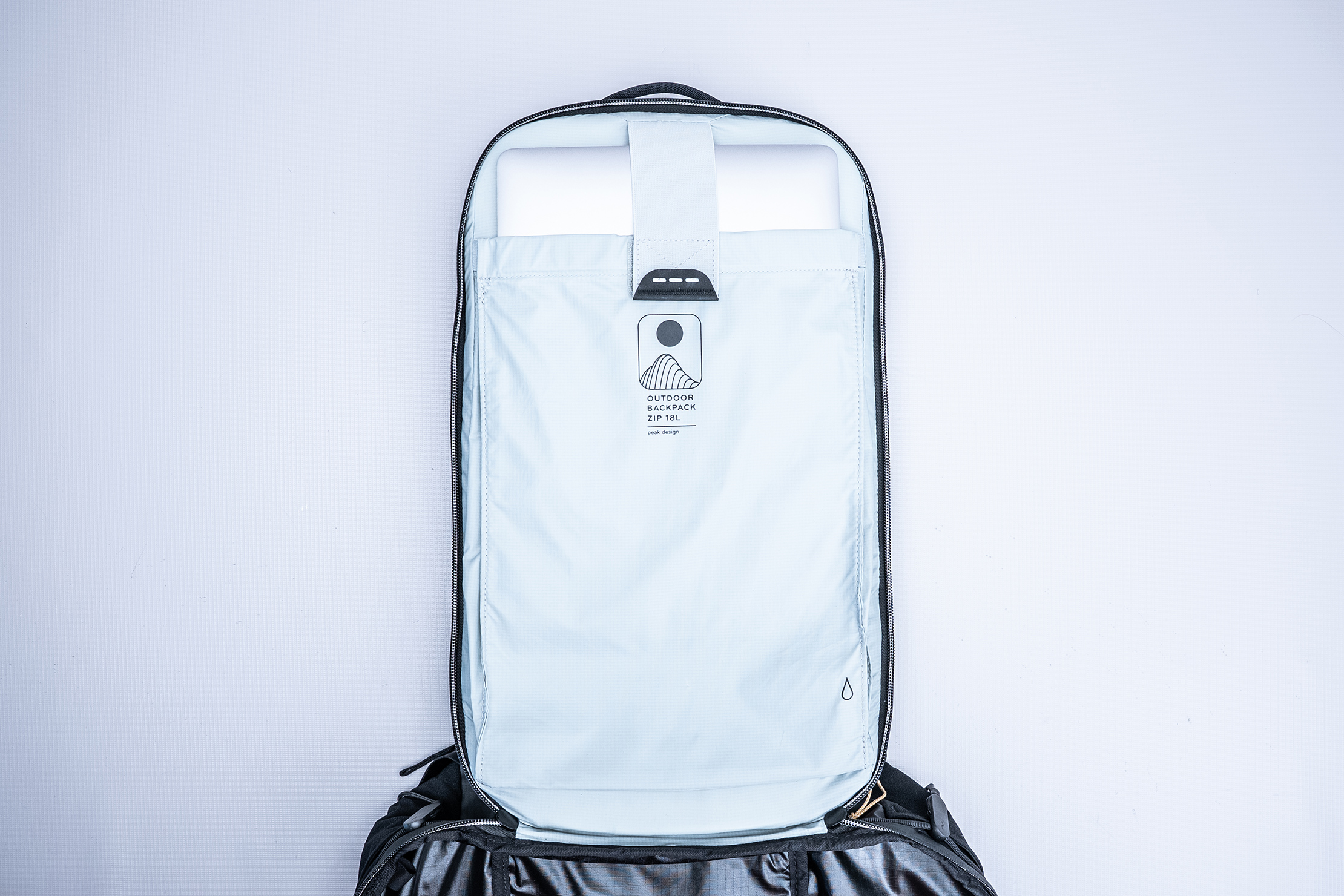
However, if you’re planning to fit a hydration bladder, take note that the sleeve’s tube pass-through is located at the bottom. We’re not quite sure why Peak Design placed it down there, as this means you’ll have to route it back to the top in order to reach the shoulder straps, which do have routing loops. Moreover, there’s also no pass-through leading outside the main compartment, so you’ll have to position the zippers accordingly instead.
Usage Timeline
Condition: Excellent
- Material has developed a few scratches, but it’s still in great shape
- Access to this bag is much easier than the rolltop design of its larger siblings
- Can be hard to load with gear because the back panel pulls down the lightweight sides




Get your questions about the Peak Design Outdoor Backpack 18L answered from our team and the Pro Community right here on the page. Plus, join discussions with other members about gear, guides, and more.
Join Pack Hacker Pro or, Sign In