Peak Design Roller Lite Carry On Plus Review
The Peak Design Roller Lite Carry On Plus is expandable and repairable, with a clever bungee system, though its premium price may give some travelers pause.
Our Verdict
Save time. Get access to brief summaries of our reviews so you can browse and make decisions more efficiently.
Pros
- The replaceable wheels, handles, and trolley components support long-term repairability
- A flat carbon fiber trolley handle reduces wasted interior space
- Customizable bungee system accommodates different packing configurations
Cons
- Its dimensions may exceed stricter airline carry-on limits once expanded
- The interior organization feels more conventional than on the Roller Carry On Pro
- Premium pricing is harder to justify against similarly capable alternatives
Technical Details
-
Capacity
43l
expands to 50L
-
Weight (lb)
7.3 lb (3.3 kg)
-
Dimensions
22.5 in x 15 in x 9 in (57.2 x 38.1 x 22.9 cm)
11 in (28 cm) depth when expanded
-
Notable Materials
Polycarbonate, Felt, Carbon Fiber
-
Manufacturing Country
Vietnam
-
Warranty Information
Full Review
Get up to 10% off Peak Design • Join Pack Hacker Pro
Peak Design has a reputation for making travel gear that feels thoughtfully designed, and the Peak Design Roller Lite Carry On Plus brings some of that attention to detail to traditional rolling luggage. We tested a pre-production sample for a week, checking out everything from its hard-shell construction to interior organization. While it looks fairly familiar at first glance, a few features help it stand out, including a flat carbon-fiber trolley handle, replaceable components, and a customizable bungee system for keeping gear in place.
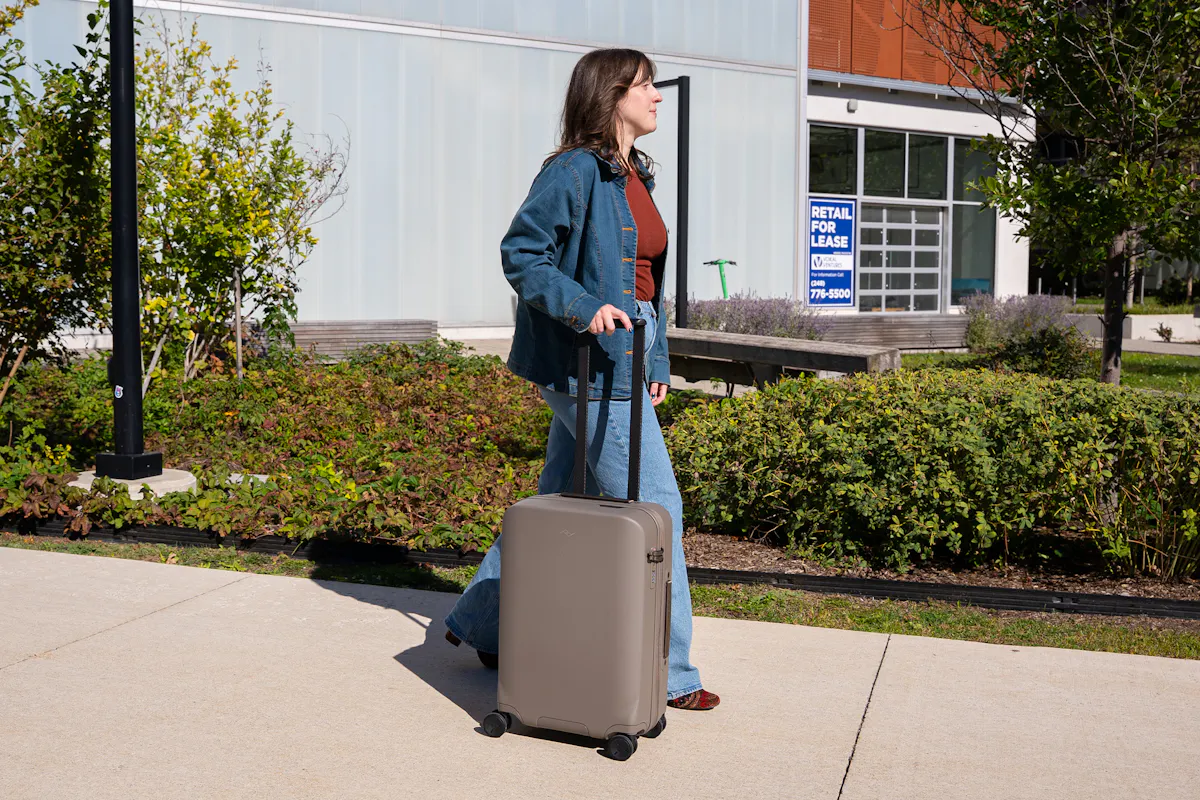
The Roller Lite Carry On Plus offers 43 liters of capacity, which expands to 50 liters when you need extra room. At a little over 7 pounds, it also lands within the typical weight range for hard-shell carry-ons of this size. However, this isn’t quite the revolutionary piece of luggage we might expect from Peak Design. Much of its organization feels conventional, and its dimensions could be an issue with stricter airlines. Still, if you’re looking for a premium suitcase with a few clever touches and a focus on long-term repairability, there’s plenty to appreciate.
External Components
The Roller Lite Carry On Plus has a polycarbonate hard shell, a common choice for rolling luggage that gives the suitcase a rigid, flexible structure. Its exterior has a sleek, understated appearance without much additional detailing. We like that clean look, though it doesn’t do much to distinguish the bag from other hard-shell carry-ons on the market.
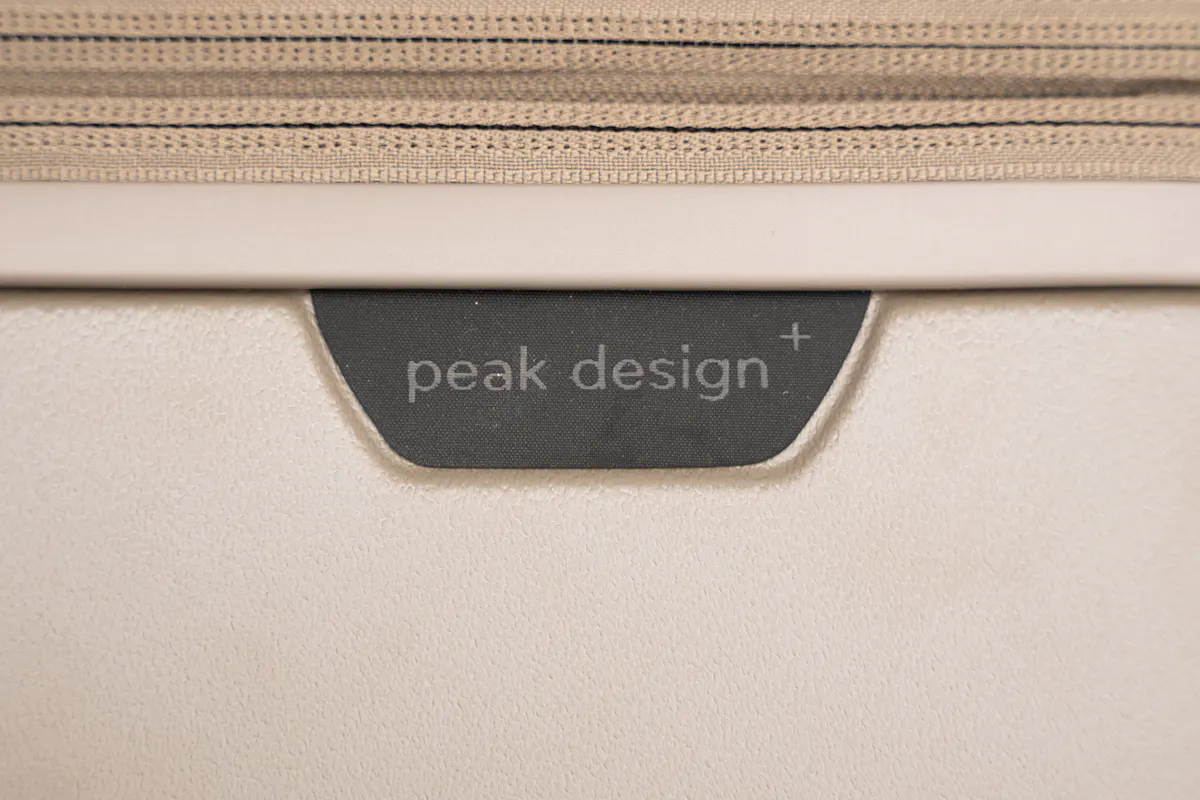
During testing, we noticed a few scuffs on the surface. Some were easy to rub away, while others were more noticeable. That’s not necessarily a dealbreaker, since luggage tends to pick up marks as it travels, particularly when it’s handled roughly or checked at the airport. We’d rather see a suitcase that holds up to regular use than worry about keeping its exterior pristine.
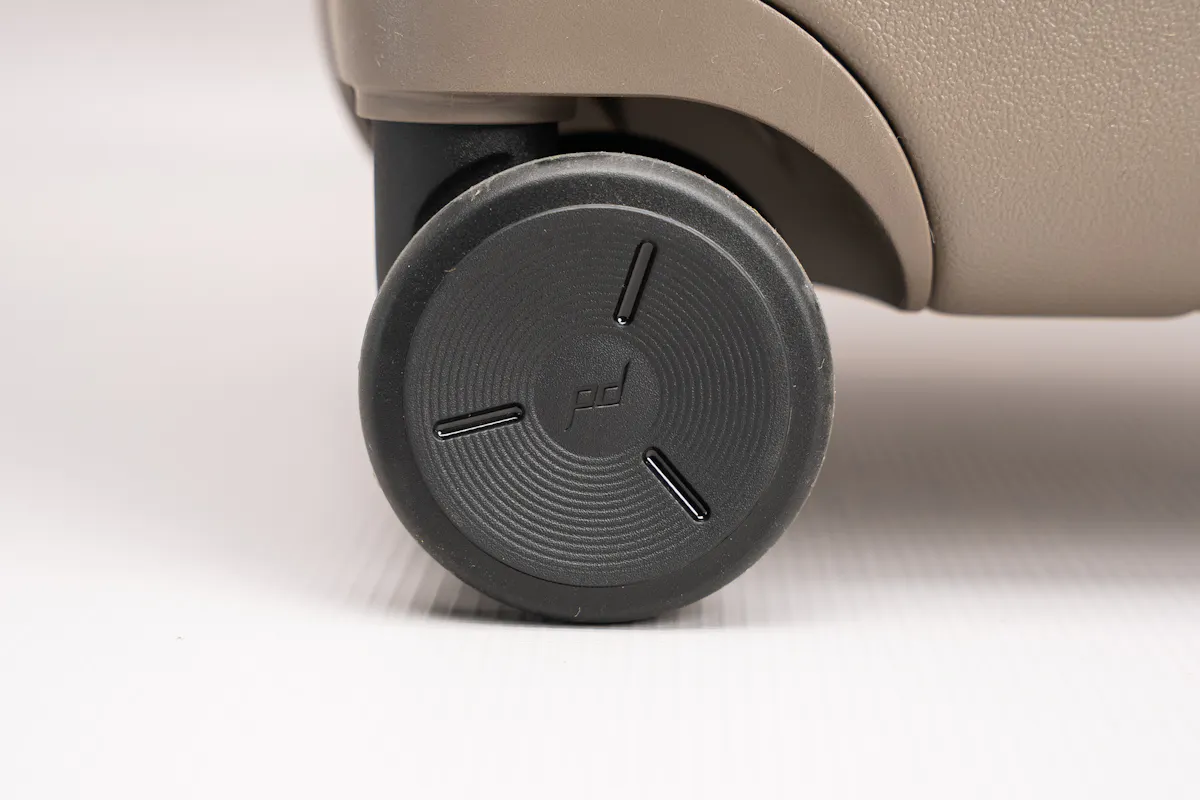
One detail we appreciate is Peak Design’s approach to replaceable parts. The wheels and casters can be removed and replaced, and the side and top carry handles are also accessible for repairs. The trolley handle is replaceable, too. This is a practical design choice that could help extend the suitcase’s usable life instead of forcing you to replace the entire thing when one component wears out or breaks. Here’s hoping first-party replacement parts remain available for the foreseeable future.
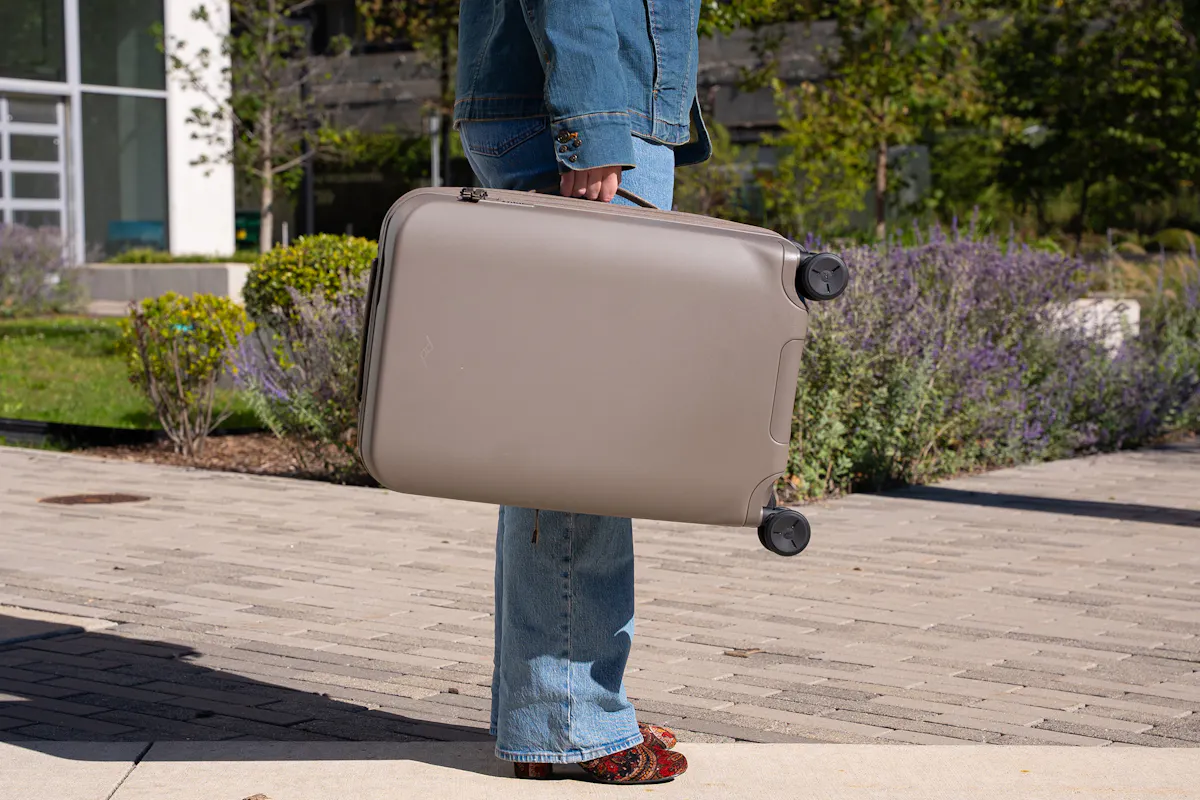
The carry handles have a smooth nylon covering with padding underneath. There’s enough cushioning to make grabbing and lifting the suitcase comfortable, whether we’re loading it into a car trunk or lifting it into an overhead bin. They’re not particularly flashy, but they do the job well.
The trolley handle is arguably the most distinctive exterior feature. Rather than using the rounded aluminum tubing commonly found on rolling luggage, Peak Design uses a flat carbon fiber design. This gives the handle a slimmer profile where it extends into the suitcase, leaving more room for your belongings. We’ll get into how that benefits packing later, but it’s a clever way to make better use of the available interior space.
The handle has two height adjustments. There’s not a dramatic difference between them, but both felt adequate. We also found the wheels smooth and easy to maneuver, with the suitcase feeling suitably premium as it rolled along. Overall, the exterior is well executed, even if most of its appeal comes from construction details rather than a long list of unusual features.
The expansion zipper is another useful addition. In its standard configuration, the suitcase offers 43 liters of capacity. Unzipping the expansion section increases that to 50 liters, giving you an extra 7 liters to bring home souvenirs or squeeze in a few more items. It’s a straightforward feature, but one that can make a difference when packing for a longer trip.
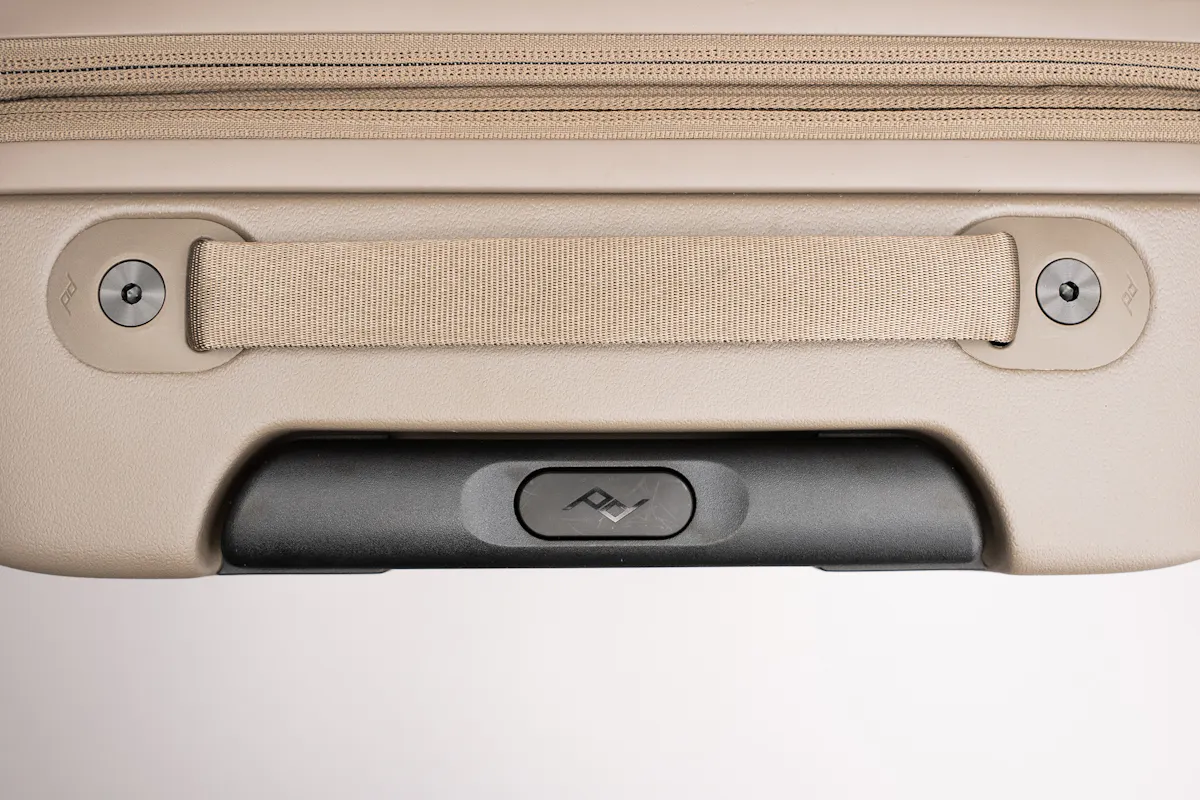
That extra capacity comes with a caveat, though: carry-on compliance. The Roller Lite Carry On Plus is slightly larger than Delta’s stated carry-on dimensions of 22 × 14 × 9 inches (55.9 × 35.6 × 22.9 cm), measuring approximately half an inch too tall and an inch too wide. It may still pass with more permissive airlines, but we’d recommend checking with your specific carrier before heading to the airport. Travelers who regularly fly with stricter carriers may want to consider a smaller option.
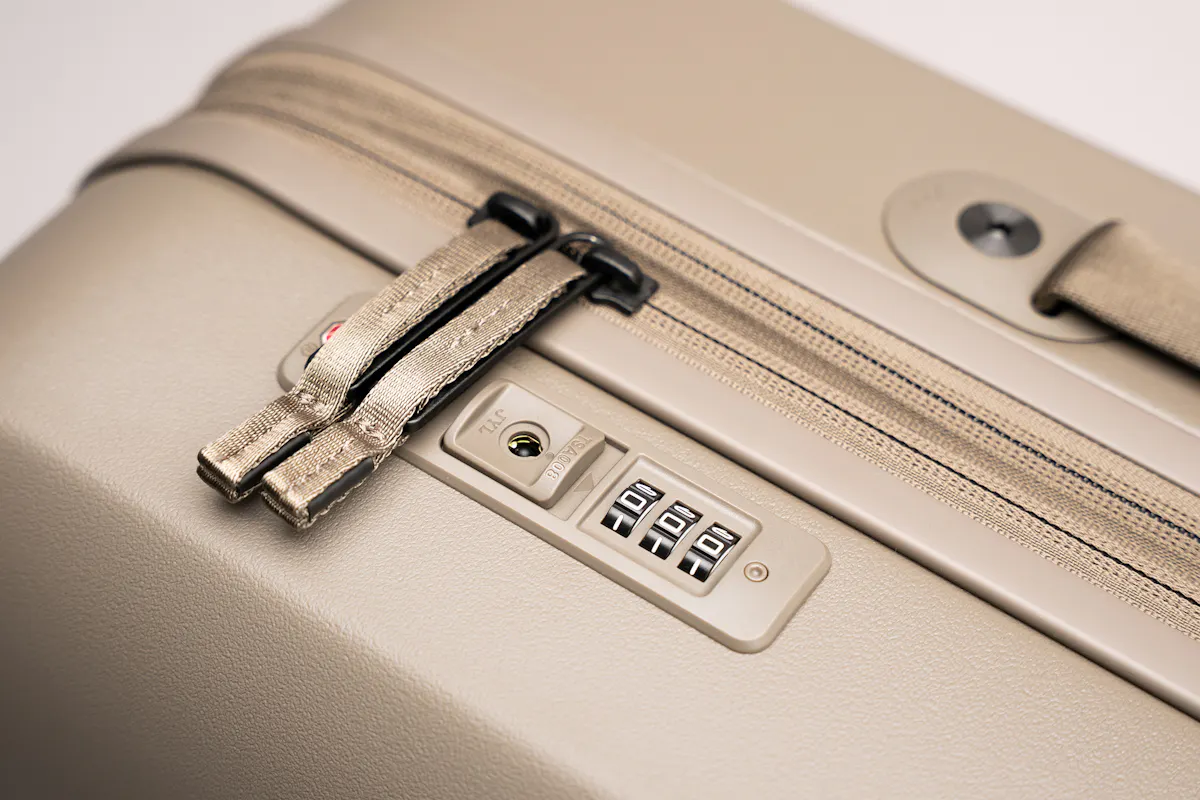
The zipper pulls feature metal hardware with nylon fabric accents. The fabric adds a little visual interest, although it’s not an essential feature. A TSA-approved lock secures the main compartment, using a familiar design found on plenty of rolling suitcases. Taken together, these details make for a capable exterior, but the replaceable components and flat trolley handle are the features that give this suitcase its strongest identity.
Inside The Carry On Luggage
Opening the Roller Lite Carry On Plus reveals a fairly familiar two-sided layout. One side has two zippered compartments for smaller belongings, while the other opens into a larger bucket-style packing area. The organization is functional rather than groundbreaking, especially compared to the more elaborate setup found in Peak Design’s Roller Carry On Pro. Still, we can see this layout working well for travelers who prefer using packing cubes over lots of built-in pockets.
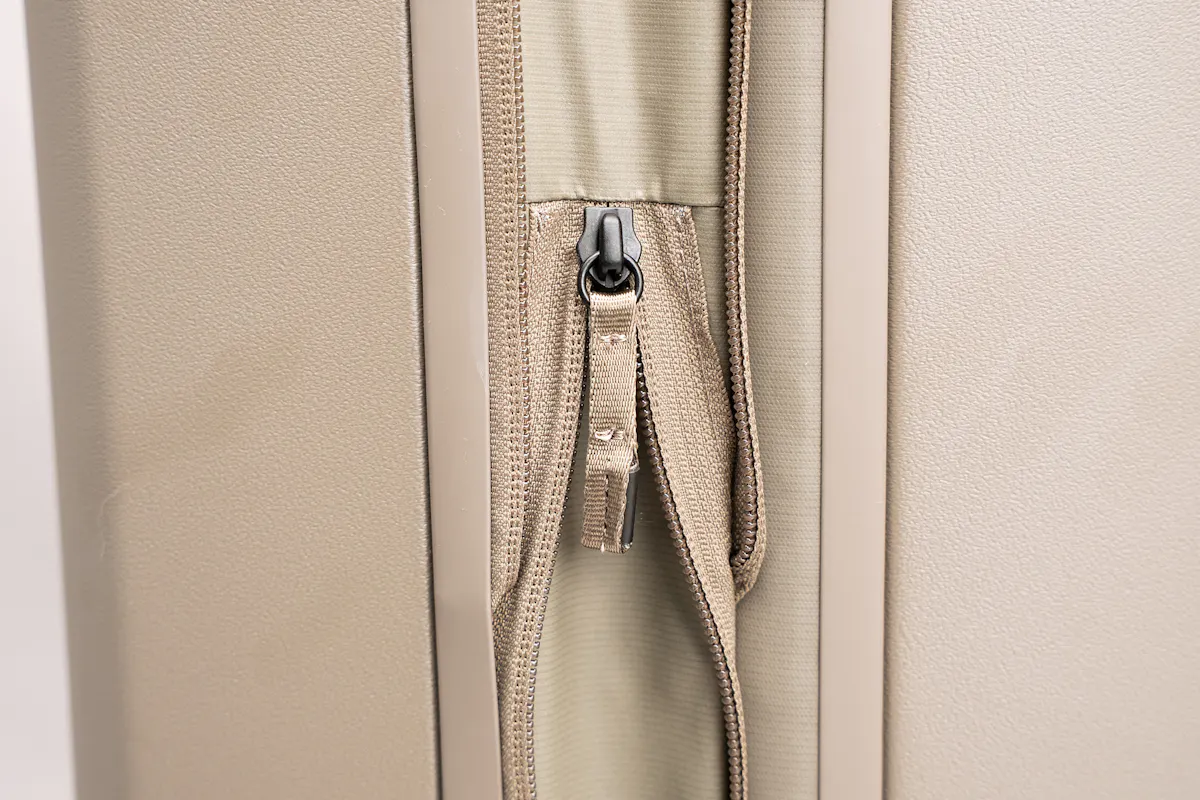
The two zippered pockets are useful for separating smaller items. We can stash a hat in one and socks, underwear, or tech accessories in the other, keeping them away from the rest of our clothing. Each pocket has its own depth, but whatever we pack underneath affects how much room remains available. We can fill them up to a point, though overstuffing the main compartment will limit their usefulness.
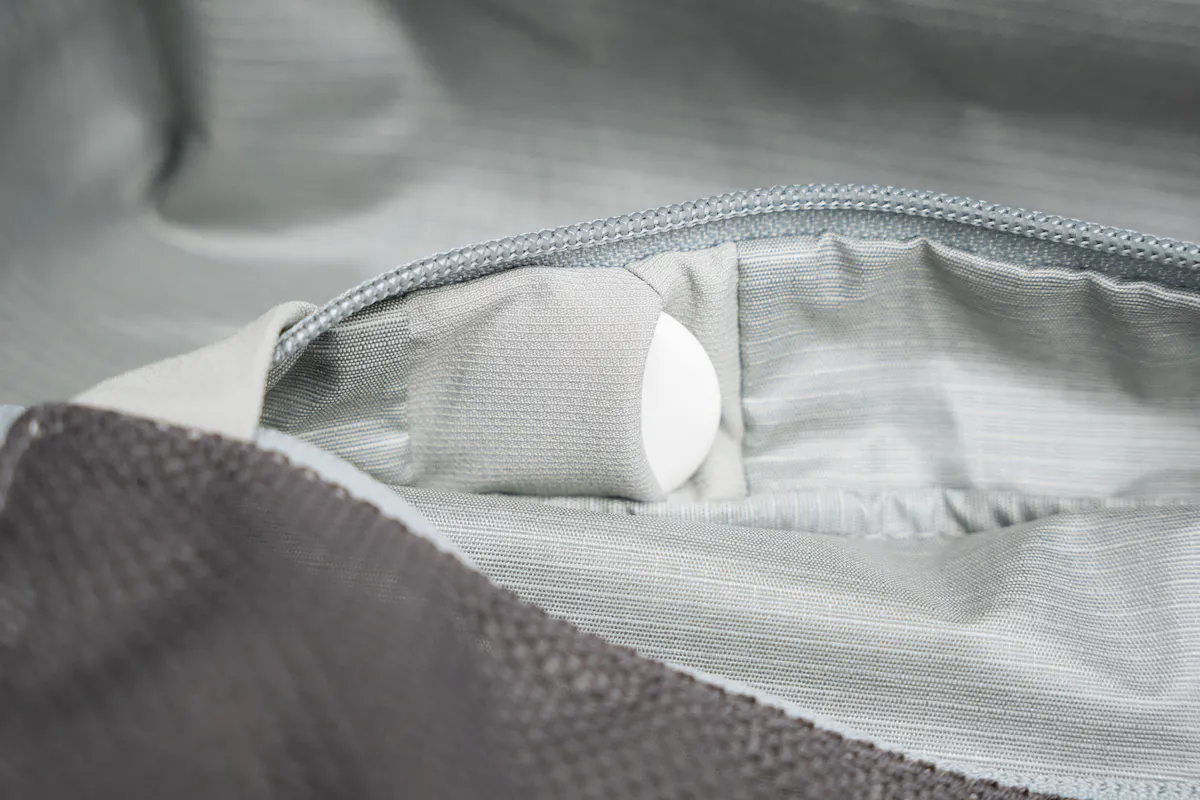
There’s also a discreet AirTag pocket tucked away in the corner of the upper pocket. It’s a simple but thoughtful addition for travelers who want another way to track their luggage. We also like that there’s a bright orange label inserted into the pocket to help you find it the first time.
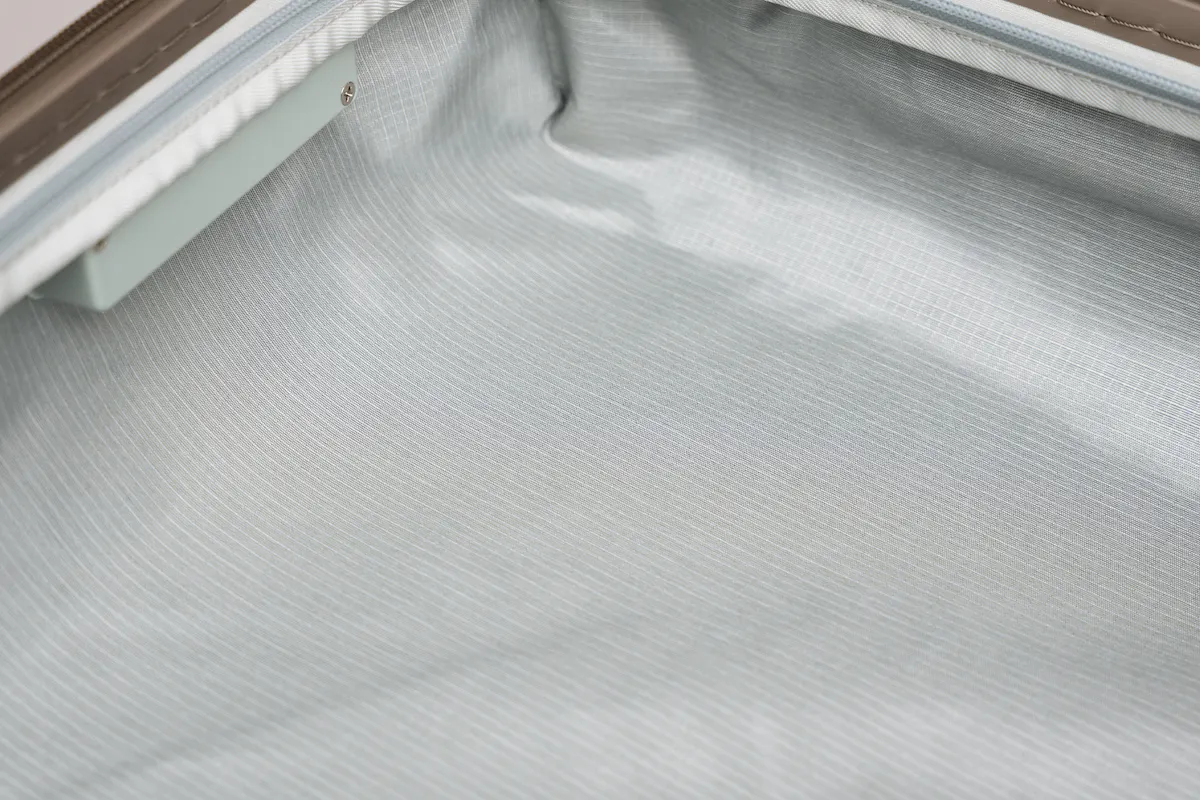
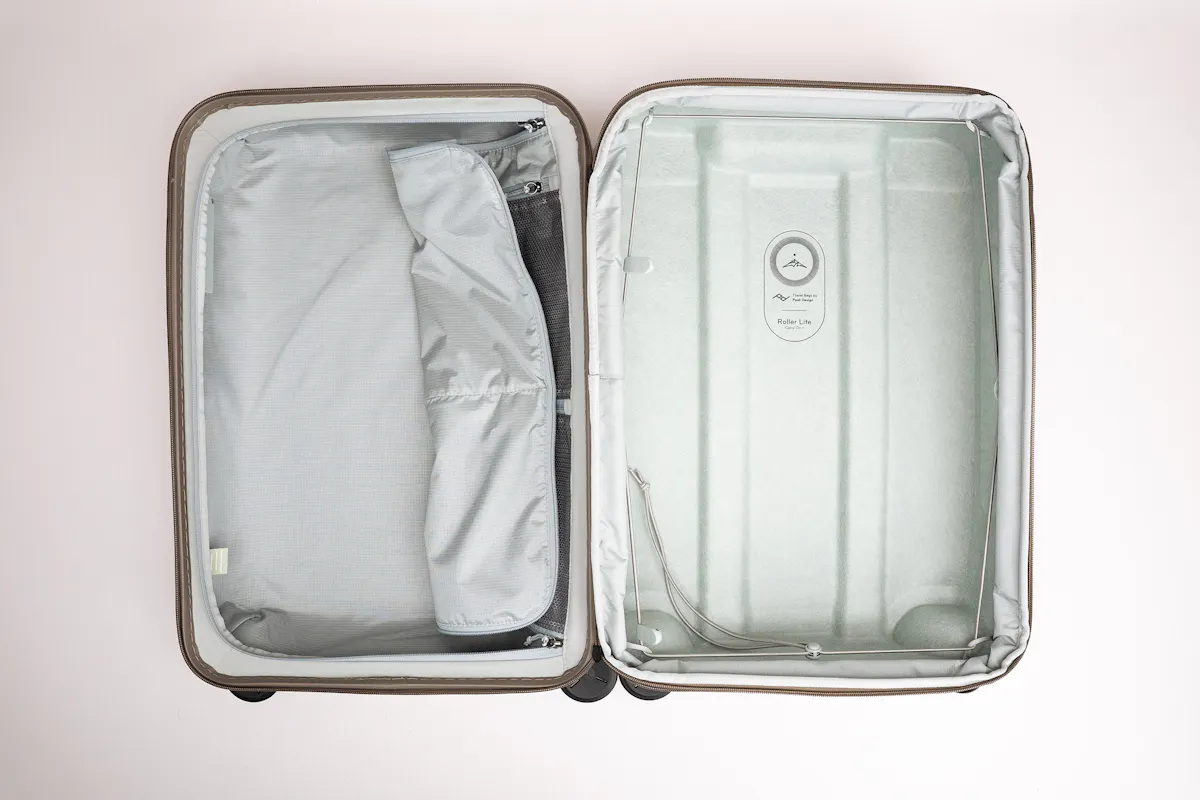
On the opposite side, a zippered divider opens into a large compartment with enough space for packing cubes. During testing, we fit three standard packing cubes inside, and Peak Design’s own packing cubes should fit particularly well for anyone already using the brand’s travel accessories. The compartment has a clean, streamlined construction, with its lining sitting close to the shell rather than leaving excess fabric hanging around. That helps keep the interior from feeling cluttered while packing.
The flat carbon-fiber trolley handle makes a noticeable difference here. Traditional rounded trolley tubes create large bumps inside a suitcase, leaving awkward areas that are harder to pack around. The flatter design takes up less room, allowing us to use more of the available depth. It’s not a feature that dramatically changes how we pack, but it’s an improvement we’ll appreciate when trying to fit everything into a carry-on.
The interior’s highlight, however, is Peak Design’s Cord Hook Internal Retention System. In practical terms, it’s a series of elastic straps with repositionable hooks that let us secure our belongings in different configurations. The straps can run horizontally or diagonally, and we can move the attachment points to suit what we’re carrying. If we don’t need them, we can tighten the system and keep it tucked out of the way.
We particularly like this flexibility. Rather than relying on a fixed compression panel, we can adjust the straps around different items, whether we’re packing clothing in cubes or trying to keep bulkier pieces from shifting. During testing, we fit approximately two weeks’ worth of gear inside, including a pair of men’s size 11 shoes. That’s a useful demonstration of how the system can accommodate a mix of belongings without requiring a highly specialized packing setup.
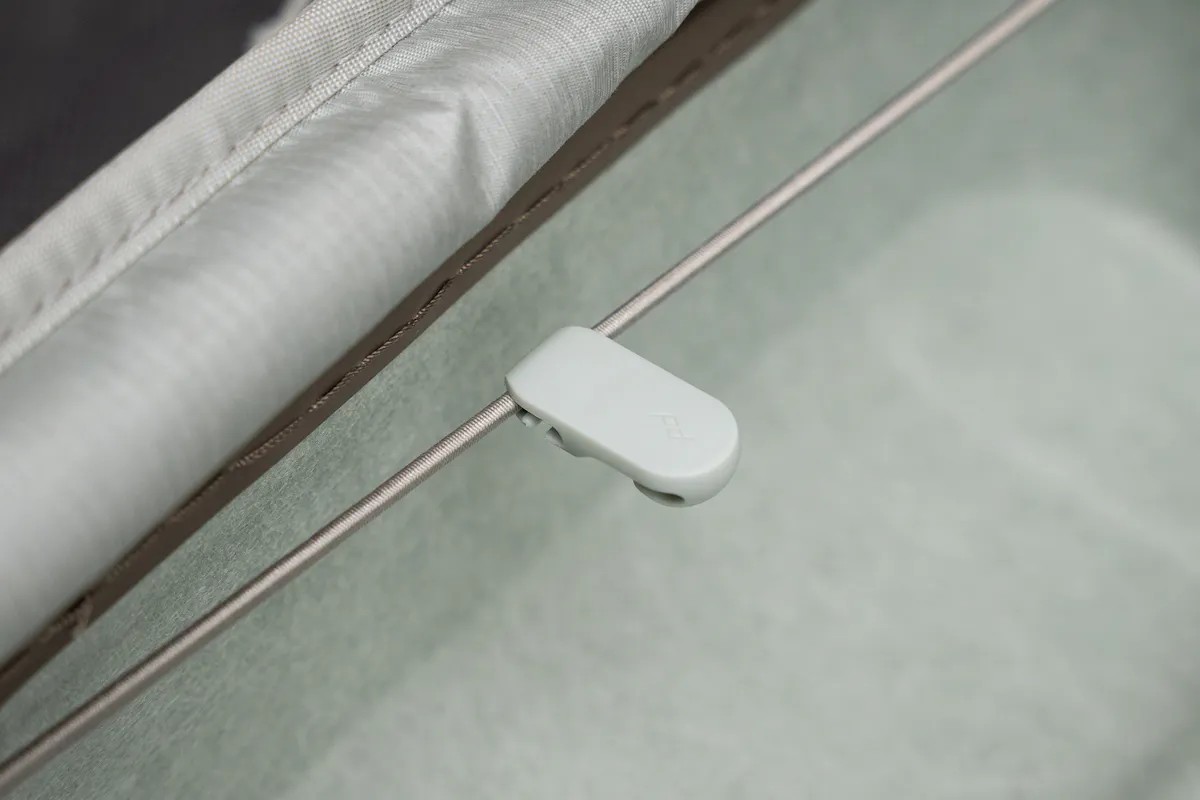
The compartment with the bungee system also uses a compression-molded felt liner that sits close to the shell. By minimizing excess lining material, Peak Design preserves more usable space inside. We like the streamlined construction, although felt may show dirt more quickly than a smoother fabric. We didn’t mind the material’s feel, but it’s a detail worth considering if you prefer an interior that’s easy to wipe clean.
Opening the expansion zipper provides additional room on this side, with the interior lifting slightly to accommodate the extra capacity. That makes the expanded configuration useful when your packing list grows, although you’ll still need to keep airline size limits in mind.
The suitcase can also accommodate Peak Design camera cubes, including the largest size. We tested the fit and found that while the cube fits inside the compartment, it takes up most of the available space. Since the suitcase isn’t specifically designed for quick camera access, we’d view this as an option for photographers who want to transport camera gear alongside a regular luggage setup, rather than a compelling reason to choose this suitcase.
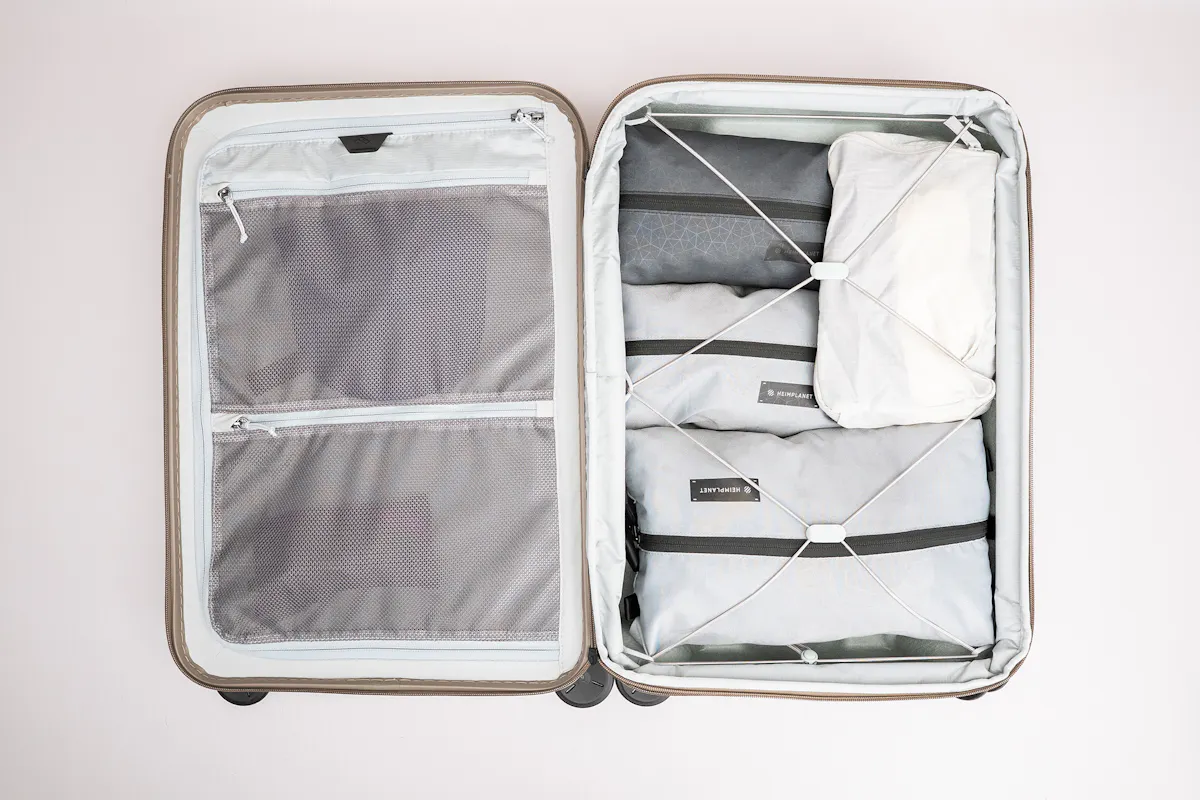
Overall, the interior works well, but it doesn’t reinvent the packing experience. The bungee system is the most versatile feature, while the flatter trolley handle makes the available space easier to use. The remaining pockets and compartments are familiar enough that we wouldn’t choose this suitcase for organization alone. Instead, we see them as a practical foundation that works best when paired with our own packing cubes.
Usage Timeline
Condition: Excellent
- Feels super lightweight compared to the Roller Pro Carry On
- Heat shrink on a zipper pull came off immediately—we’re chalking that up to this bag being a pre-production sample
- Wheels are super smooth
Condition: Excellent
- Surprisingly hard to scuff up, which is great if you have to check it
- Organization feels pretty basic


Black Friday/Cyber Monday deals are on. Don't miss out on huge sales and big discounts! Check it out →


Get your questions about the Peak Design Roller Lite Carry On Plus answered from our team and the Pro Community right here on the page. Plus, join discussions with other members about gear, guides, and more.
Join Pack Hacker Pro or, Sign In