Peak Design Travel Weekender 25L Review
The Peak Design Travel Weekender 25L blends sleek design, smart organization, and clamshell access into duffle form—just be careful not to overpack it.
Our Verdict
Save time. Get access to brief summaries of our reviews so you can browse and make decisions more efficiently.
Pros
- It pairs premium materials with durable hardware
- The clamshell opening provides excellent visibility and packing control
- It has a clean, professional aesthetic suitable for multiple environments
Cons
- You must pack the bag carefully to avoid closure difficulty
- External and internal storage compete for total volume
- It's heavier than many duffles with similar capacities
Technical Details
-
Capacity
25l
-
Weight (lb)
2.76 lb (1.3 kg)
-
Dimensions
12.6 in x 18.5 in x 8.86 in (32 x 47 x 22.5 cm)
-
Notable Materials
Recycled Nylon, Zoom Zippers, Hypalon®, Thermoplastic Polyurethane (TPU)
-
Tablet Sleeve Size
14"
-
Laptop Compartment Size
16"
-
Warranty Information
Full Review
Get up to 10% off Peak Design • Join Pack Hacker Pro
The Peak Design Travel Weekender 25L marks the brand’s first true entry into the classic weekender or duffle-style travel bag category. Known for structured silhouettes, clean aesthetics, and thoughtful engineering, Peak Design approaches this format with the same design-forward mentality we’ve seen across their travel and camera lineups. Rather than delivering a floppy gym duffle, they’ve created what they describe as an elevated take on the form—something that blends the accessibility of a duffle with the organization and refinement of a modern travel bag.
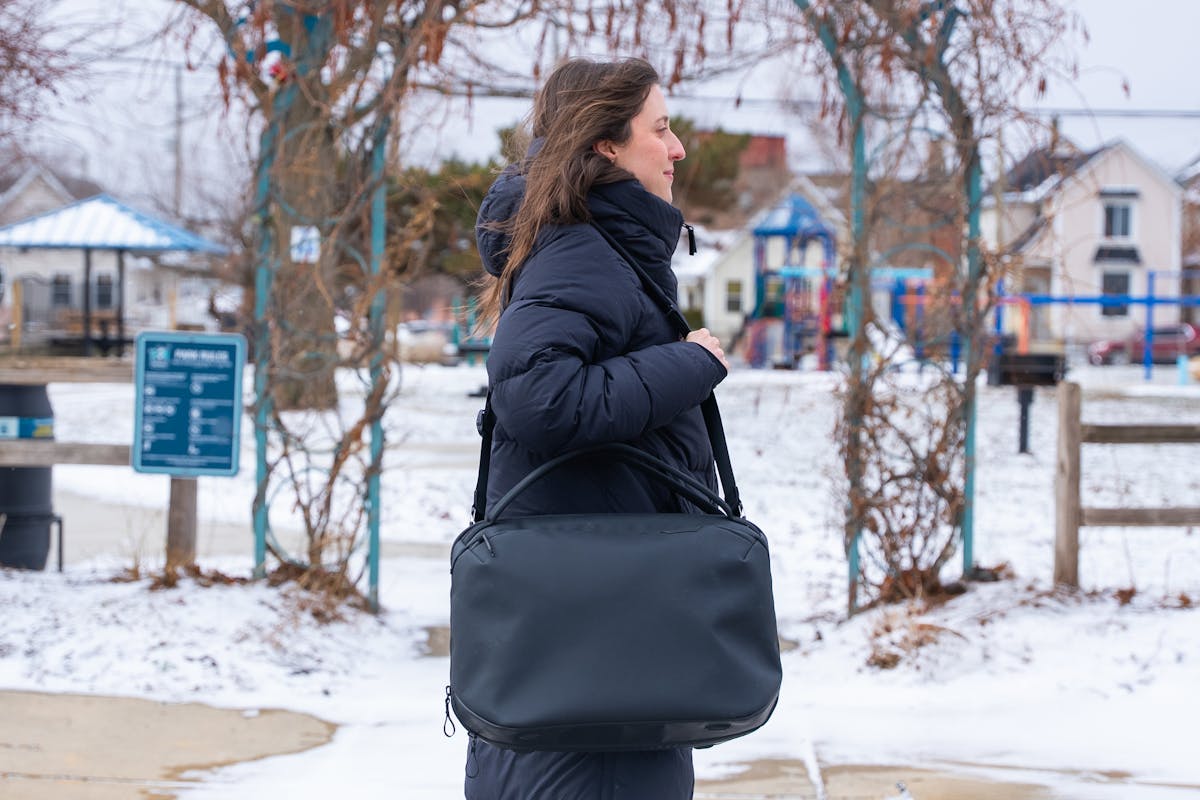
After two weeks of testing in daily carry, transit days, and short-term travel, we found that the bag excels in structure, materials, and internal visibility, but requires more intention when packing. It’s a sleek, professional-looking carry that feels premium from the moment you pick it up—but that structure and polish come with trade-offs. As always, our testing focuses on how the bag performs in real-world use, not just spec sheets or marketing claims, and this one definitely sparked some strong opinions.
External Components
From the outside, the bag immediately reads as a refined travel piece rather than a casual duffle. The silhouette is structured and composed, with smooth panels and minimal external clutter. There’s a strong emphasis on clean lines, subtle curves, and understated branding. It feels intentionally designed to transition between travel environments such as airport terminals, trains, rideshares, and even professional office settings without looking out of place.
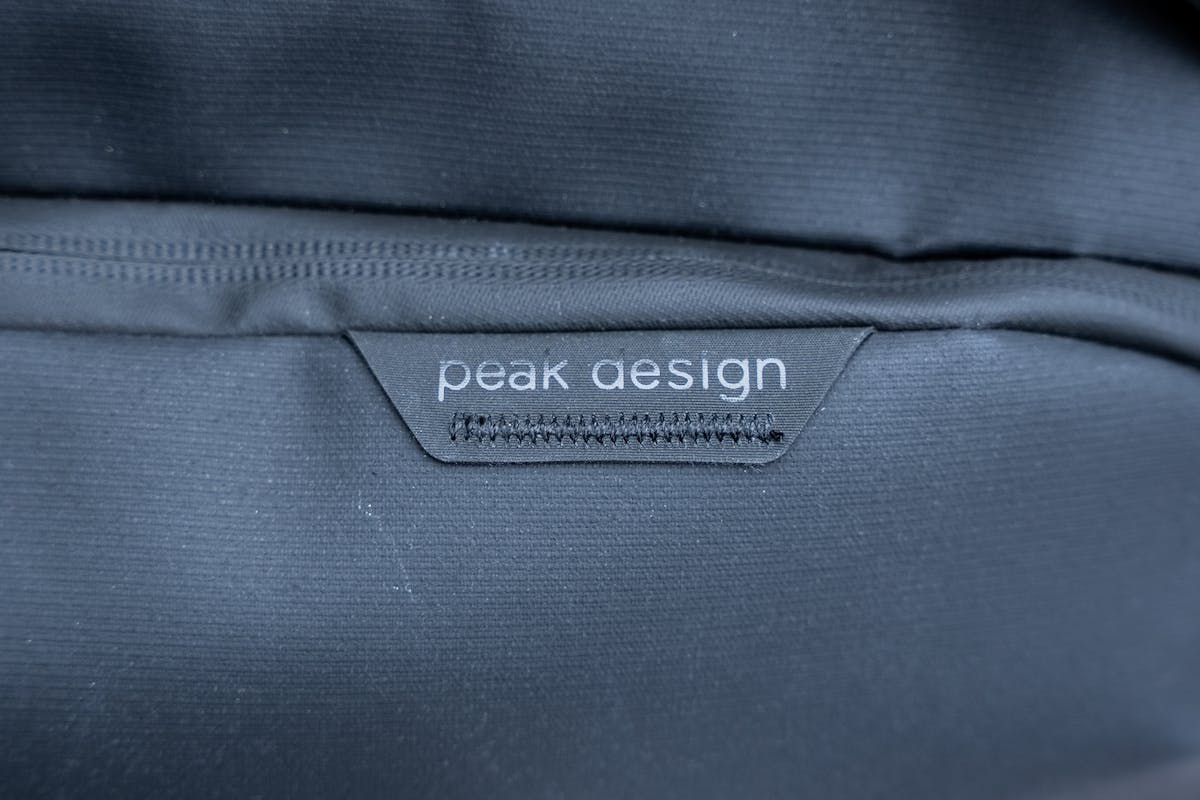
The exterior fabric is made from 400D Versa Shell, a recycled, weather-resistant material. During testing, the fabric felt dense and slightly padded, which significantly contributes to the bag’s ability to hold its shape even when partially packed. This structure is a major part of the user experience. Unlike softer duffles that collapse when empty or underfilled, this bag maintains a consistent profile. That consistency makes it easier to pack and visually scan, but it also means it doesn’t flex outward easily when you try to push beyond its intended capacity.
Weather resistance is solid. Light rain and transit grime brushed off easily, and the fabric didn’t show staining or discoloration during testing. We did notice some very minor surface fuzzing in high-contact areas after extended use. This is cosmetic and doesn’t affect performance, but long-term users may notice slight texture wear over time, depending on usage patterns.
The bottom panel is reinforced with thicker 900D fabric (also Versa Shell), which adds confidence when setting the bag down on rough surfaces. TPU protective feet are integrated into the base. In real use, these feet do help prevent tipping and add structure when the bag is partially loaded. When the bag is fully packed, however, the bottom can bow slightly and still contact the ground. The feet are helpful, but not a full suspension system.
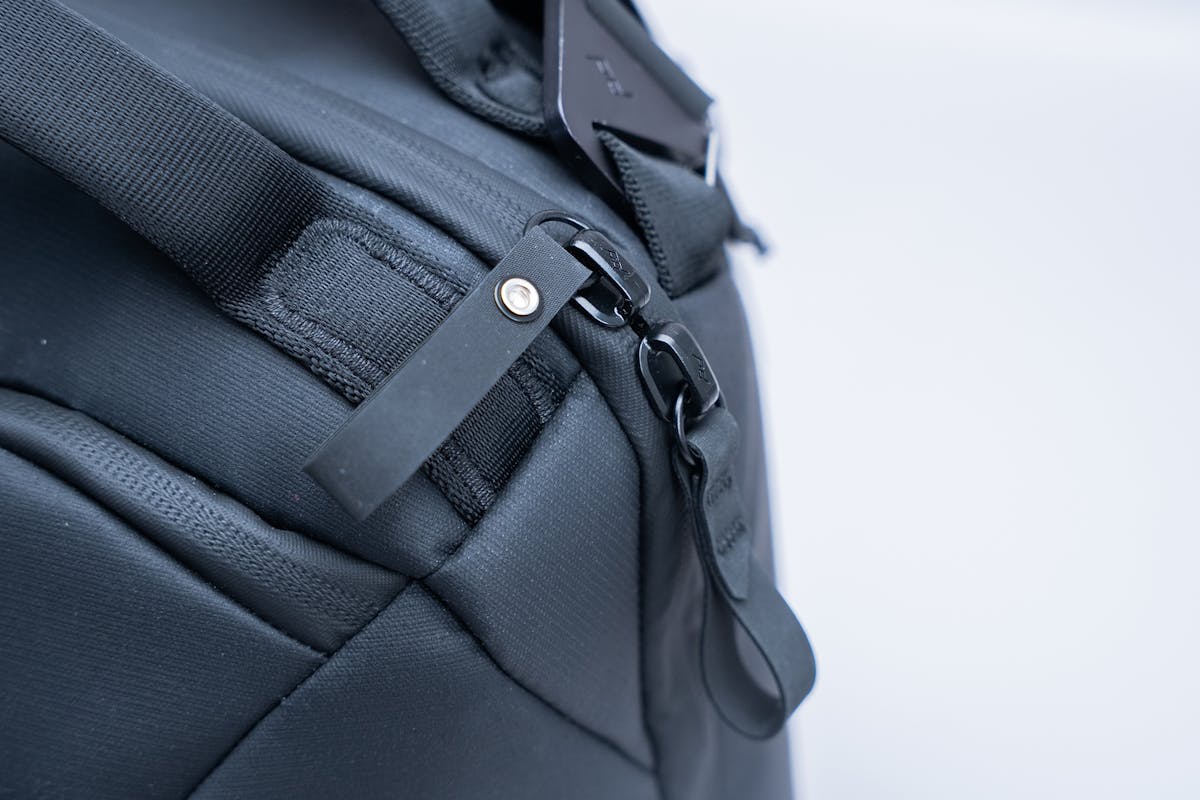
Hardware is a major highlight. The proprietary UltraZips, co-developed with Zoom (the zipper company, not the video conferencing one), feel extremely smooth and durable. The reverse coil design adds an extra layer of weather resistance, and zipper operation remained consistent throughout testing, even under compression from overpacking. The zipper pulls are made from a Hypalon-like material that offers grip without feeling bulky.
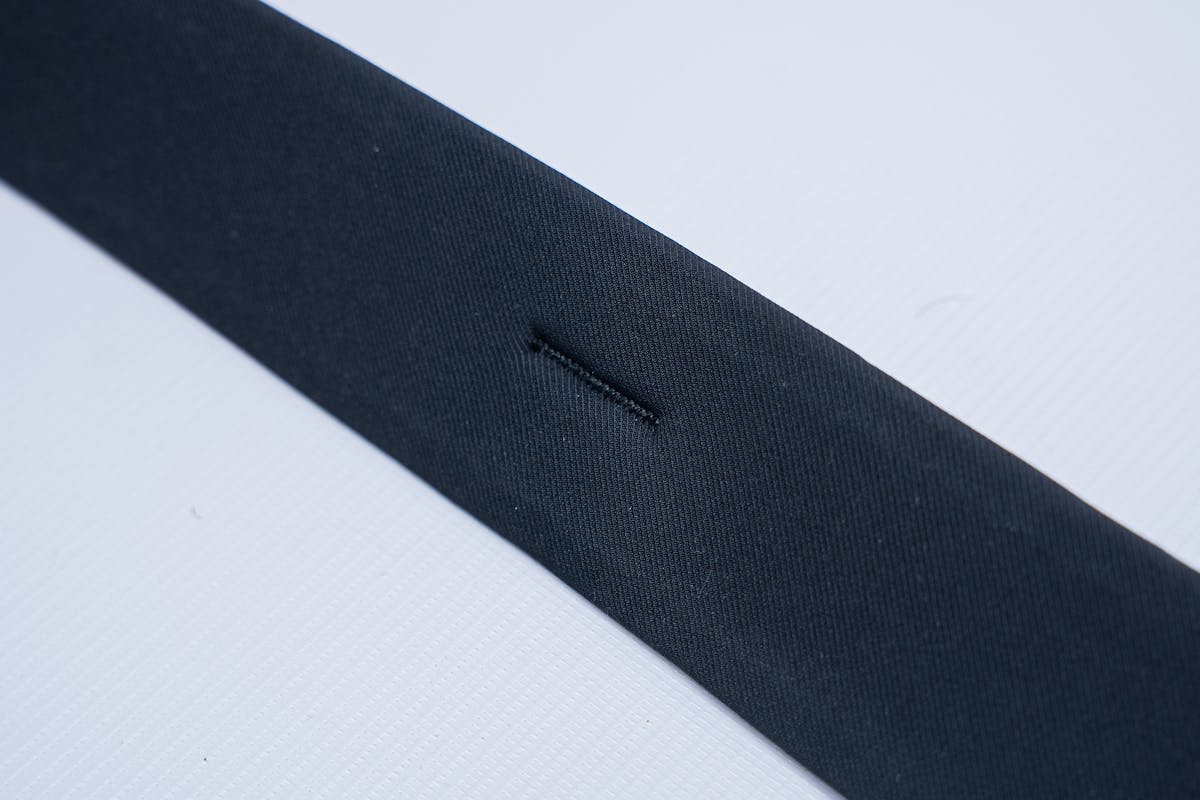
The main compartment zippers can be threaded together using a small integrated button-and-loop design. It’s not meant to replace a dedicated lock, but it does slow down casual access attempts and provides some peace of mind in crowded transit environments.
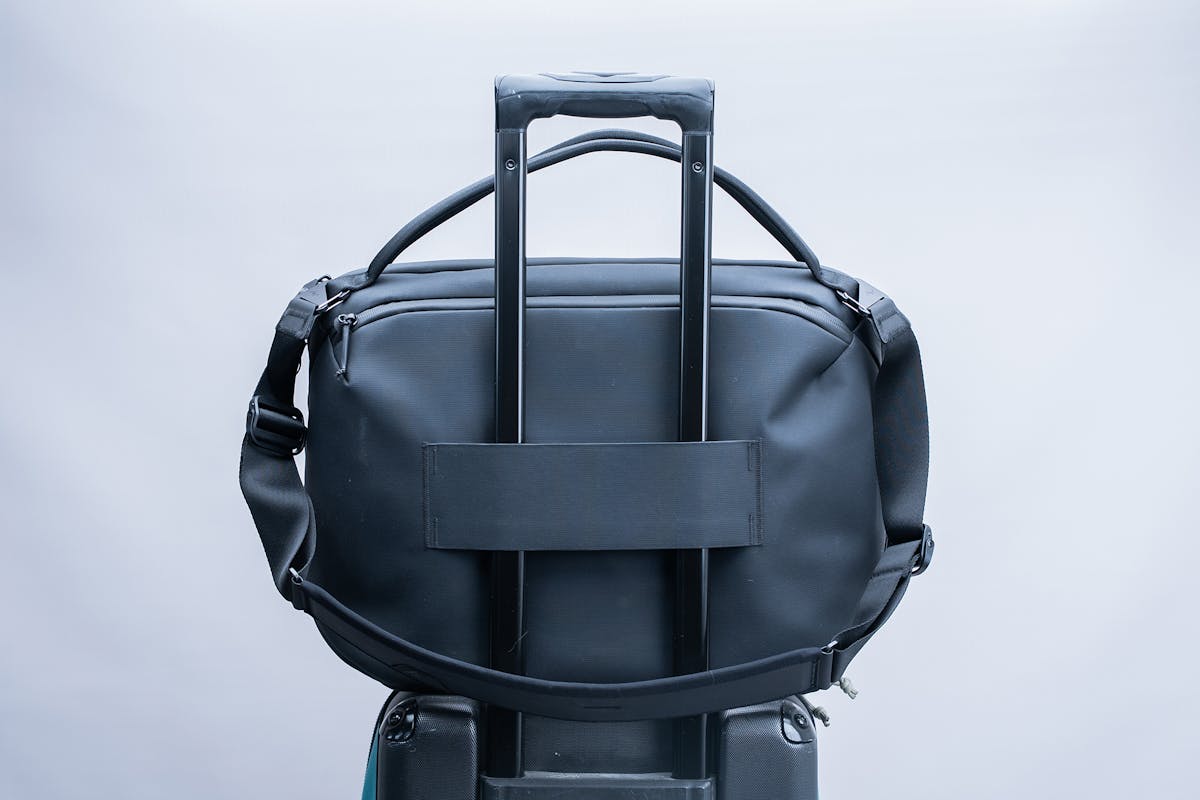
Externally, the bag also includes a luggage pass-through that integrates cleanly into the rear panel. When not in use, it disappears into the design. When paired with rolling luggage, it stabilizes the bag well and keeps weight off your shoulder. During testing, this became one of our favorite use cases for the bag. There are also small attachment loops for accessories like luggage tags and anchor points for strap hardware. The shoulder strap connects via wide, flat gatekeeper clips that are easier to use than many similar clip systems. They stay low profile and don’t dig into the bag body or create pressure points when packed.
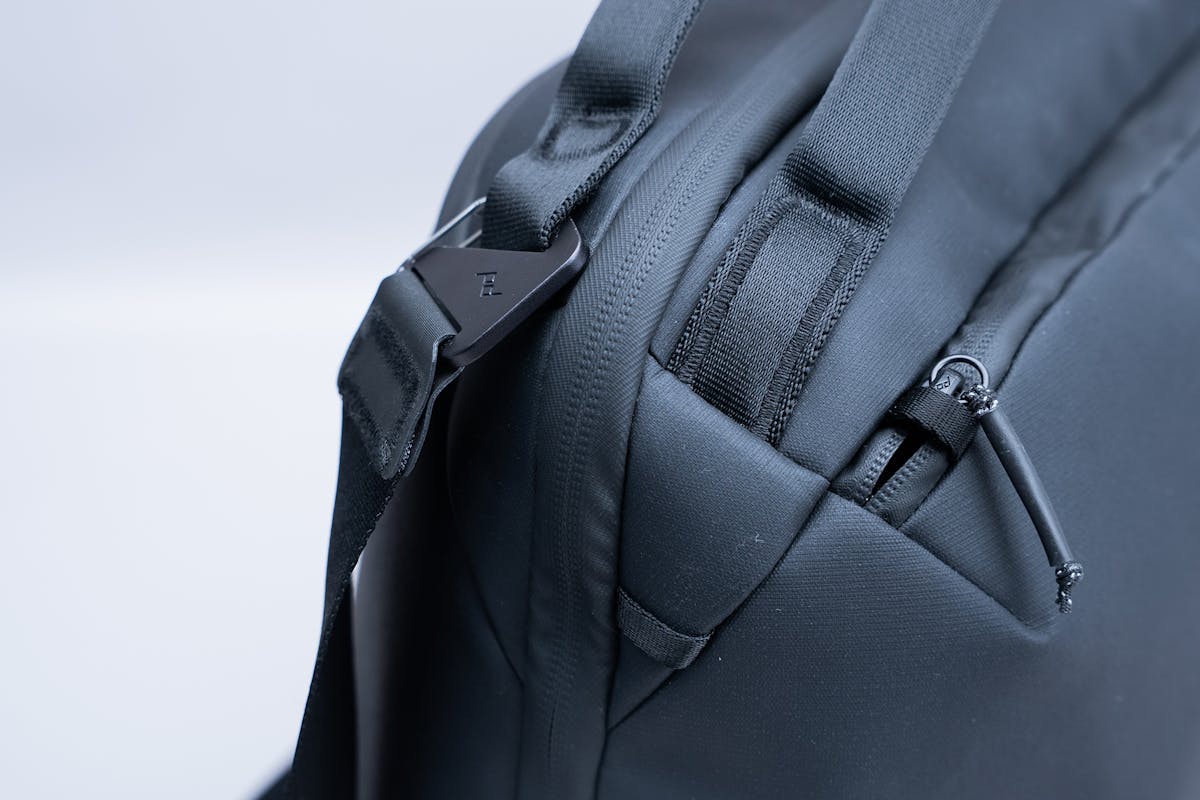
The carry system itself is straightforward but well executed. Top handles feature soft nylon with internal padding, making them comfortable even during longer hand carries. They stand upright when not in use, which is a small but meaningful quality-of-life feature for quick grabs.
The shoulder strap uses relatively thin but dense padding. At first glance, it may look minimal, but weight distribution is surprisingly good. Dual adjustment points allow you to fine-tune strap placement since the padding itself doesn’t slide. This is particularly useful depending on torso length and preferred carry height. At roughly 2.76 pounds empty, the bag is heavier than many minimalist duffles. Once packed, the weight becomes noticeable. That said, the strap does a solid job managing the load, as long as you position it correctly.
Overall, the external design prioritizes structure, durability, and aesthetic restraint over expandability or softness. If you like structured travel bags, this will likely resonate strongly with you.
Fit Notes
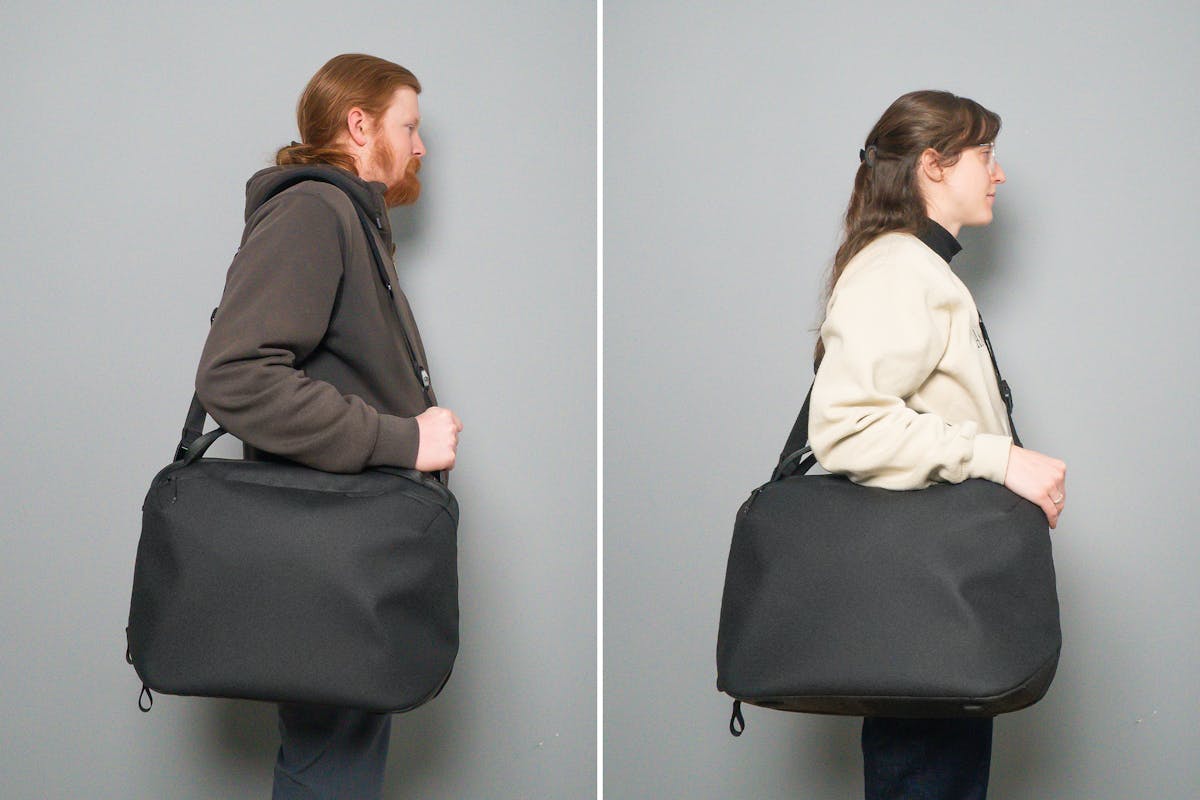
We found crossbody carry to be the most stable and comfortable configuration for extended movement. When worn across the torso, the bag sits close to the body, minimizing swing while walking quickly through transit hubs. The structured shape actually helps here—it doesn’t collapse or shift unpredictably, which makes movement feel more controlled. The strap padding distributes weight well across the shoulder, even when the bag is nearly full. Because the bag itself starts heavier than many duffles, this becomes especially important on longer carry days.
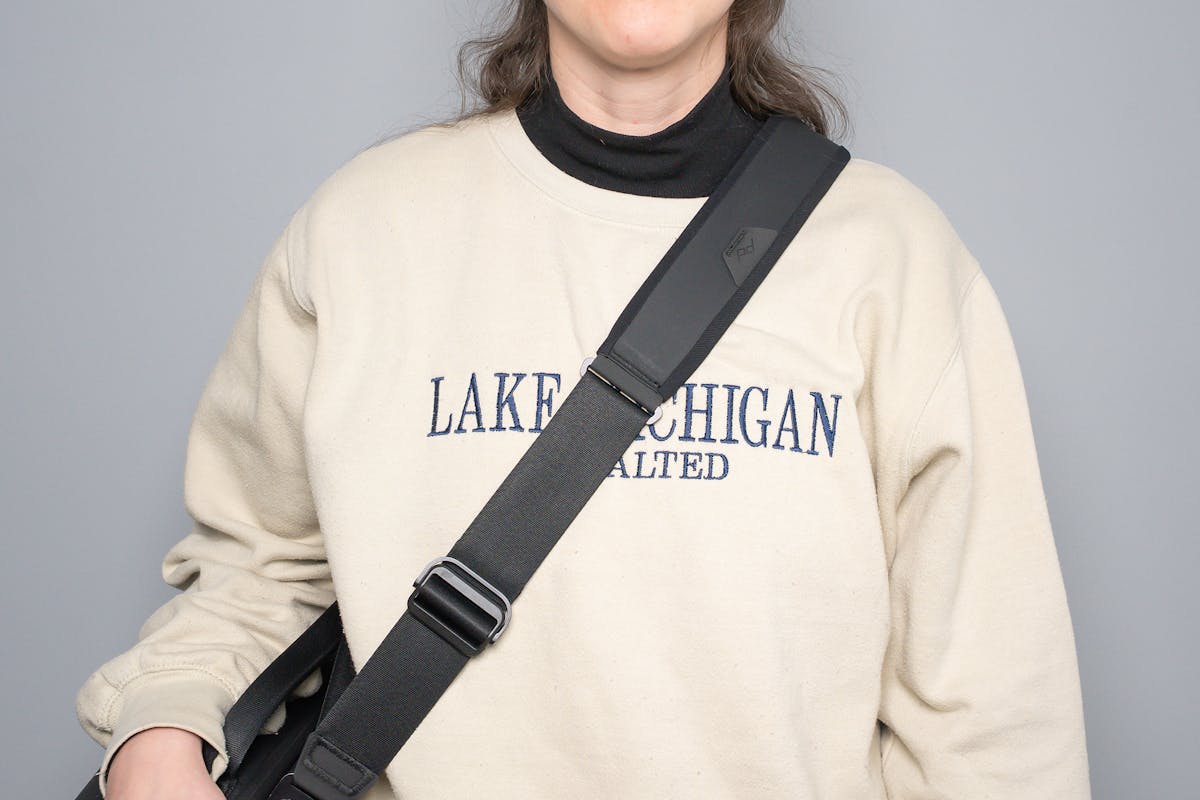
Single-shoulder carry works best for shorter distances or quick transitions between locations. The strap can slide slightly, depending on clothing texture and body frame, particularly if you’re wearing slick outerwear. The top handles are excellent for quick lifts and short carries, especially when loading into overhead bins or moving through tight spaces. We also liked using the top handles in the crook of the elbow during short walking segments, which felt natural due to the soft handle padding and moderate bag width.
Inside The Duffle
The full clamshell opening dramatically changes how you interact with the main compartment. Instead of blindly reaching into a tube-shaped cavity, you get full visibility of the entire interior layout. Packing feels closer to using a small suitcase than a gym bag. The zipper tracks extend deep down both sides, allowing the front panel to fold almost fully open. This is one of the biggest usability wins. Many weekender-style bags sacrifice visibility for structure, but here you get both. During packing, this allowed us to layer gear more intentionally and quickly identify items without digging.
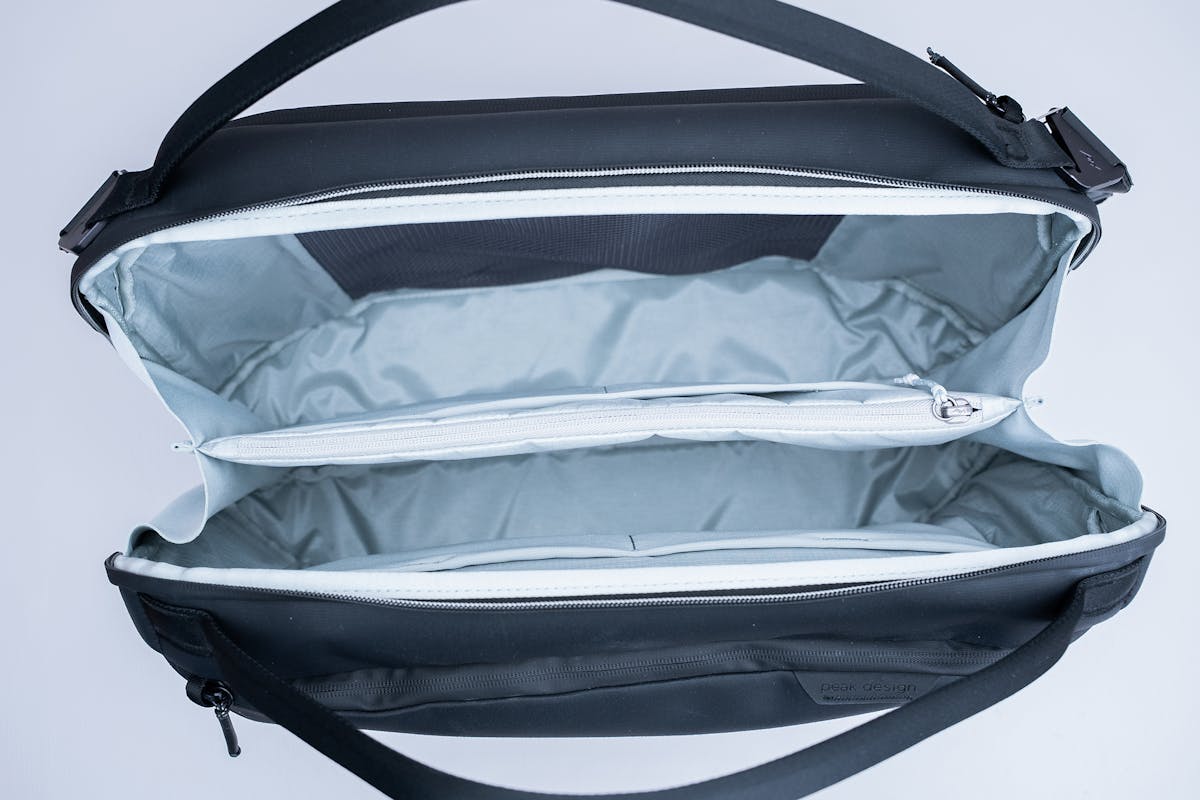
However, this structure also defines the bag’s biggest learning curve: it rewards precise packing. While the 25-liter capacity is real, it behaves like a structured 25 liters rather than an expandable or forgiving space. If your packing cubes are slightly overfilled or irregularly shaped, space efficiency drops quickly. Internally, the bag includes multiple zippered mesh pockets along the clamshell panels. These are great for separating categories like socks, cables, or small accessories. Because they’re mesh, visibility remains strong even when fully packed.
There’s also a raised central zipper pocket designed for smaller loose items. We found this especially useful for dongles, adapters, and small tech accessories. Because it sits elevated off the base, items don’t get buried under the weight of heavier packing cubes. A slim side pocket works well for notebooks, travel documents, or flat accessories. It’s not designed for bulky storage but provides nice segmentation for paper goods or thin tech accessories. There’s also a tracker pocket designed for small trackers. It easily fits multiple tracker styles and is positioned discreetly enough to remain hidden while still allowing signal transmission.
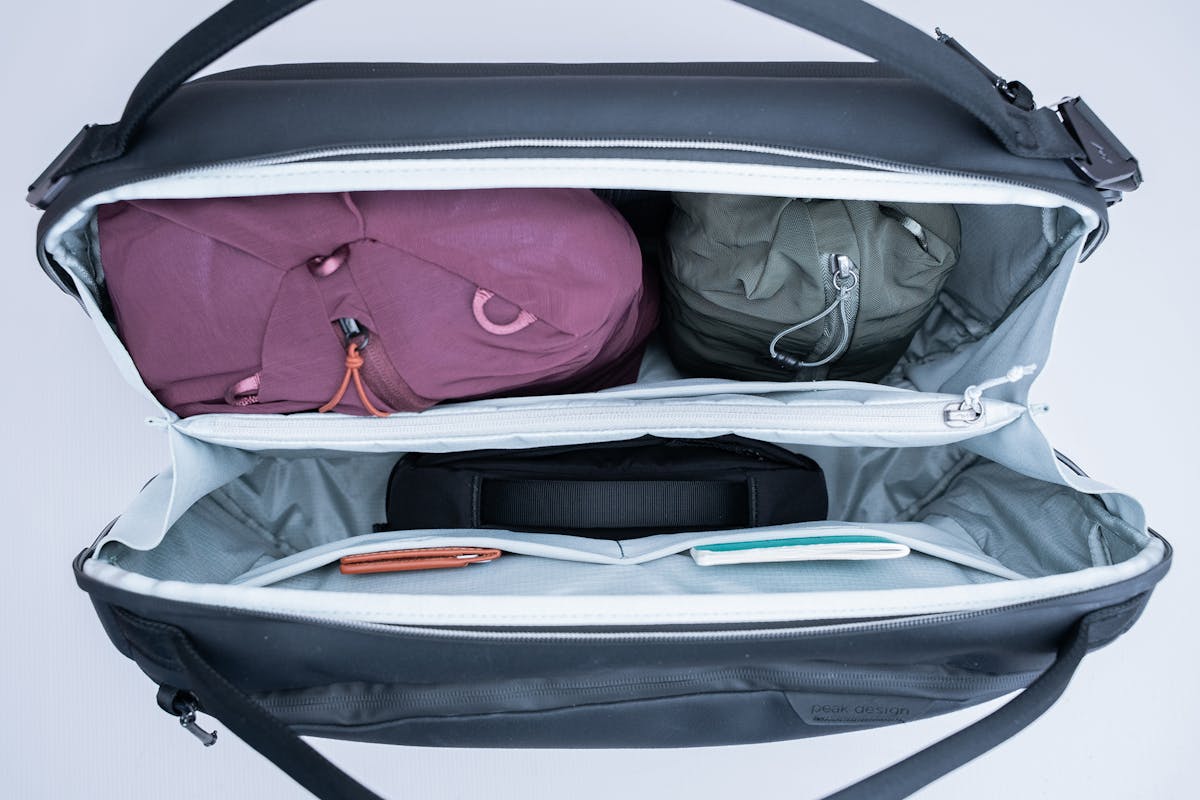
Where the interior becomes more complicated is how it interacts with external storage. The laptop compartment sits behind the main compartment. It fits larger laptops but becomes noticeably tighter when the main compartment is full. There’s no suspended false bottom, though padding and seam positioning help mitigate the risk of direct impact.
The front quick-access pocket contains multiple slip pockets and mesh sleeves. In light load scenarios, this pocket is very functional. However, access becomes more difficult when you fully pack the main compartment, and the zipper becomes tighter.
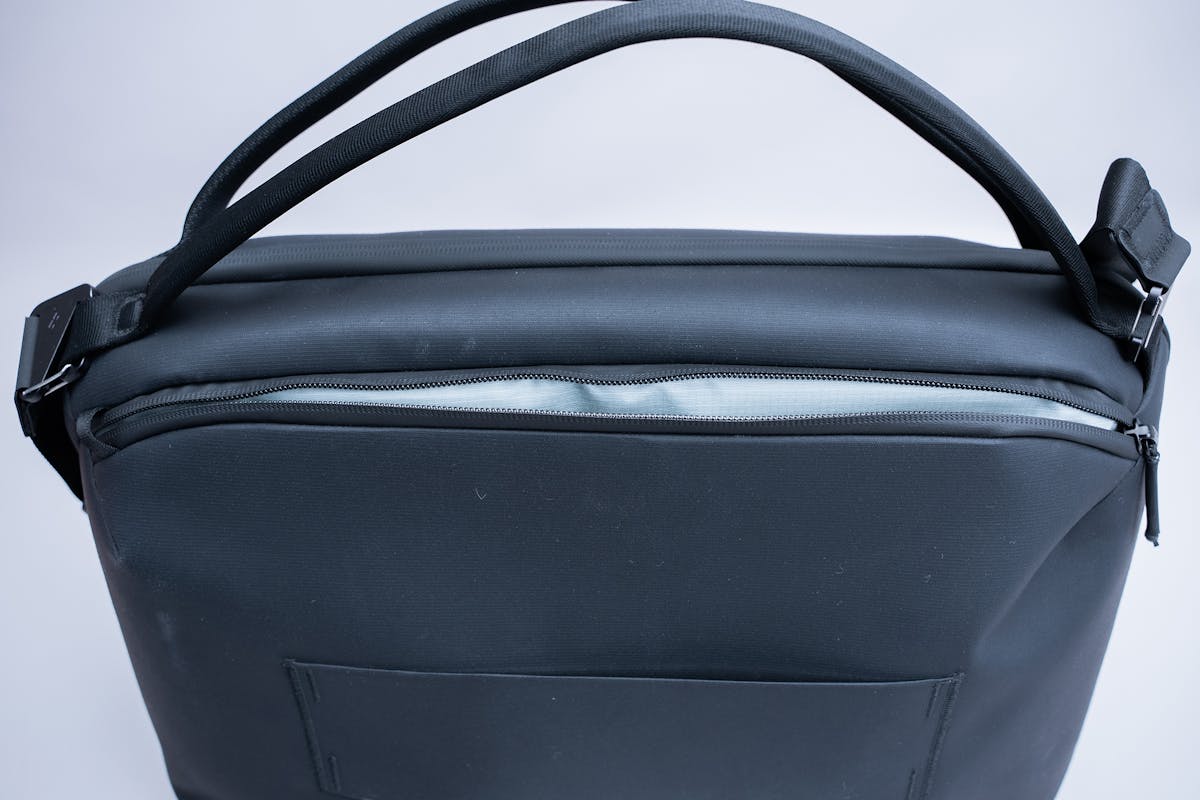
One of the most important real-world lessons we learned is that packing order matters. Filling external pockets first, which compresses the main cavity, creates access problems later. The best workflow is to load the main cavity first, then add external pocket items last. Fortunately, this is probably how most would pack a bag for travel. But there might be packing issues for those who plan to swap out gear stowed in the main compartment while keeping the everyday carry accessories in the other pockets.
The bag can technically hold multiple packing cubes plus accessories. In reality, pushing beyond a comfortable packing threshold can make zipper closure difficult. We’ve had situations where closing the bag required gradual compression along the zipper track rather than a smooth one-motion close. This doesn’t make the bag unusable—it just shifts it into the category of structured travel bags that reward discipline. If you treat it like a soft duffle and overstuff, you’ll feel the difficulty. If you treat it like a structured travel cube, you’ll feel better packing it.
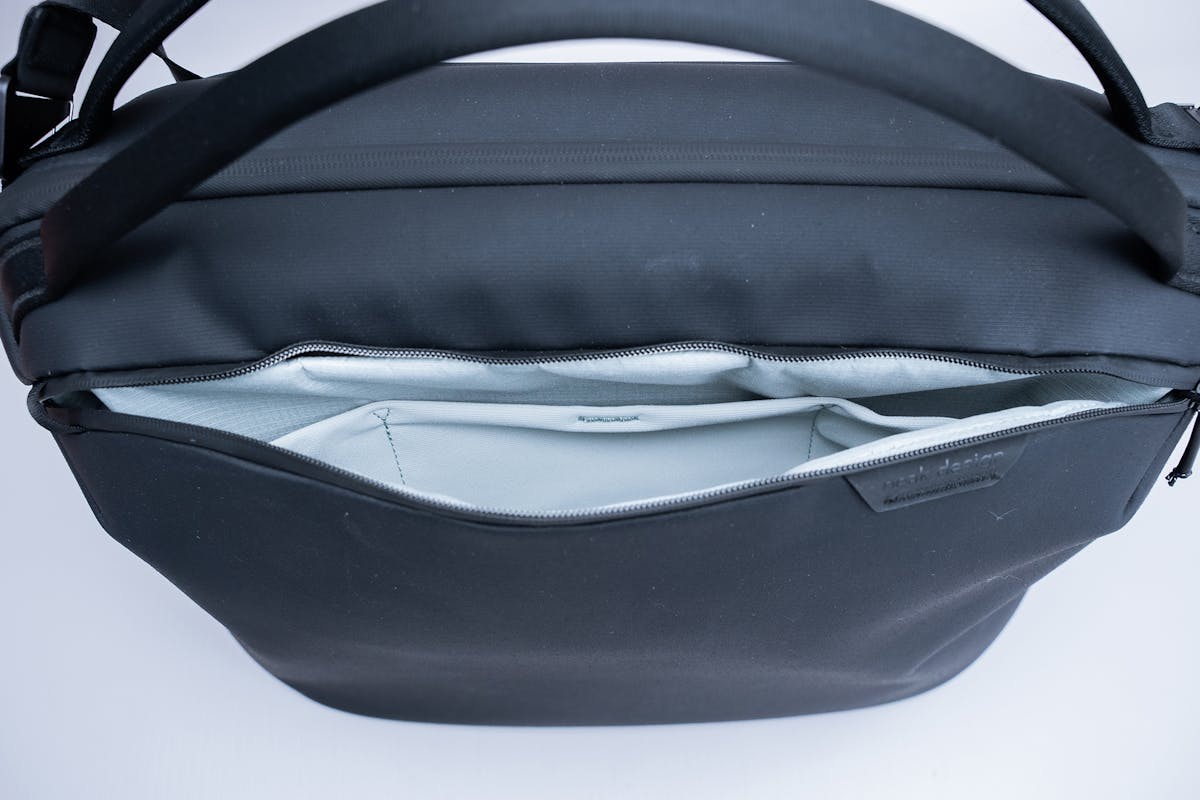
Lastly, the bottom accordion structure allows some compression when the bag is not completely filled. This helps with under-seat storage and general storage when not in use (i.e., once you’re home and want to put the duffle away). Overall, the interior design prioritizes visibility, segmentation, and structure over flexibility. For some travelers, that’s exactly what they want.
Usage Timeline
Condition: Excellent
- Made with durable materials across the board
- Digging the gusseted base that allows for easier storage
- Interested to see if the structured design is too stiff
Condition: Excellent
- Still looks like-new, though there’s a little fuzzy pilling on the front of the bag
- Wide opening gives the illusion of more space than the bag actually has
- Digging the subtle padding


Get your hands on the Ultra Sling before it’s gone! Check it out →


Get your questions about the Peak Design Travel Weekender 25L answered from our team and the Pro Community right here on the page. Plus, join discussions with other members about gear, guides, and more.
Join Pack Hacker Pro or, Sign In