The North Face Base Camp Fusebox Review
The North Face Base Camp Fusebox looks boxy and sacrifices some comfort for structure and ample cargo space, but it packs like a champ.
Our Verdict
Save time. Get access to brief summaries of our reviews so you can browse and make decisions more efficiently.
Pros
- The extremely structured shape makes packing, loading, and accessing gear simple
- Its durable materials feel capable of surviving years of regular use
- Spacious rectangular interior maximizes usable packing volume
Cons
- The shoulder straps and back panel become uncomfortable during extended wear
- The limited quick-access organization creates cluttered storage
- Its boxy design and oversized branding won’t appeal to everyone
Technical Details
-
Capacity
30l
-
Weight (lb)
2.31 lb (1 kg)
-
Dimensions
18 in x 13 in x 6 in (45.7 x 33 x 15.2 cm)
-
Notable Materials
Recycled Polyester, Nylon, PVC
-
Laptop Compartment Size
15"
-
Warranty Information
Full Review
The North Face Base Camp Fusebox is one of those backpacks that immediately makes an impression. Whether that impression is positive or negative depends largely on how you feel about big logos, boxy silhouettes, and gear that looks like it belongs strapped to the roof of an expedition vehicle. There’s no mistaking where this bag comes from—it borrows heavily from the aesthetic and material choices of The North Face’s larger Base Camp line, shrinking them down into something designed for everyday carry, commuting, travel, and shorter adventures.
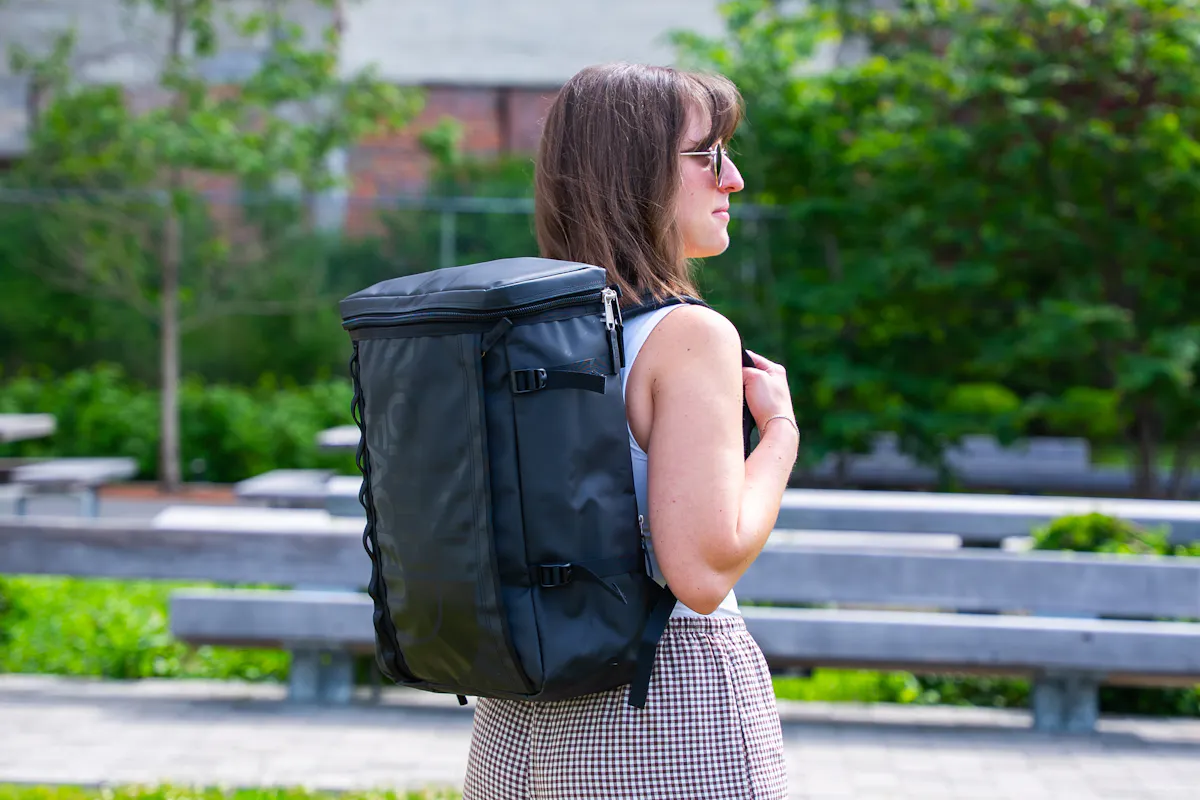
After testing the pack for two weeks, we appreciate what makes this bag unique. However, we also encountered some limitations that keep it from becoming an easy recommendation for everyone. The North Face Base Camp Fusebox has excellent structure, impressive durability, and a deceptively spacious interior, but comfort and organization aren’t necessarily its strongest qualities. Depending on how you travel and what you prioritize, those tradeoffs may or may not matter.
External Components
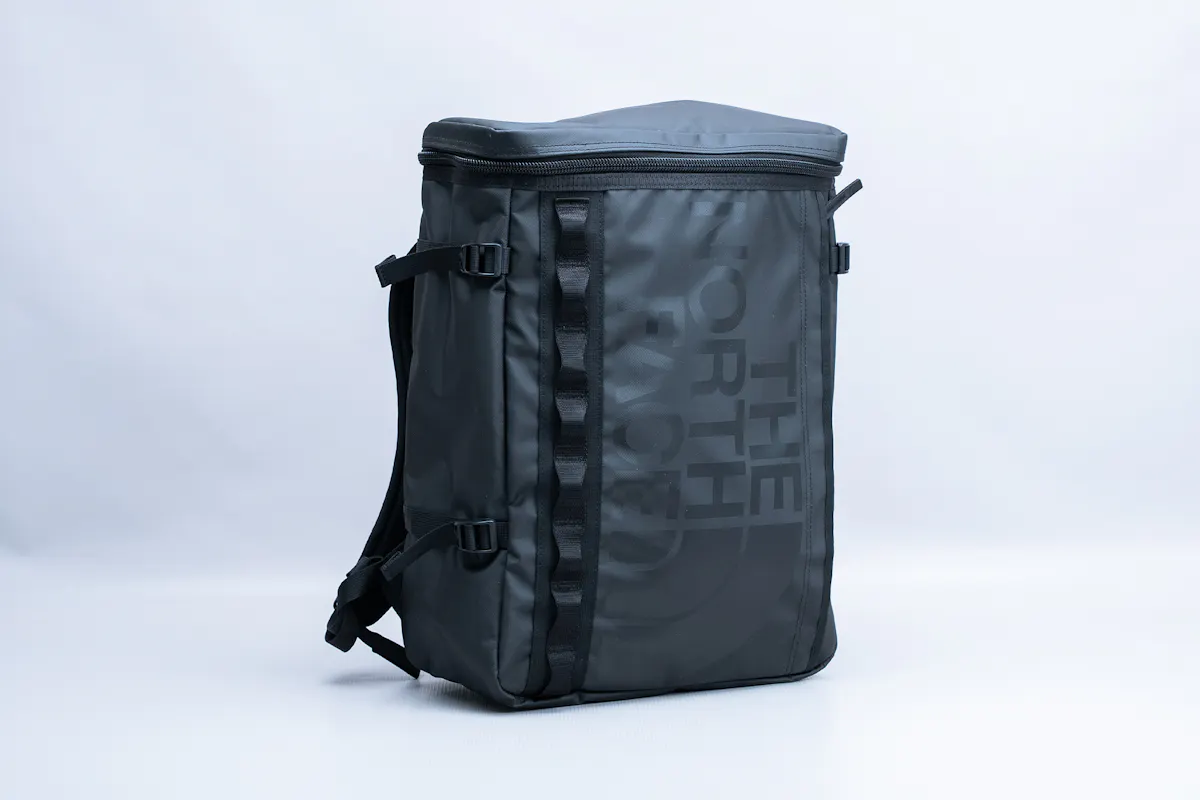
The North Face Base Camp Fusebox uses the same material language that has made the broader Base Camp lineup recognizable over the years. The exterior combines 1,000D recycled polyester with 840D nylon, creating a thick, structured shell that feels rugged. During testing, the materials inspired confidence. The pack feels capable of surviving years of commuting, travel days, and general abuse without major structural concerns.
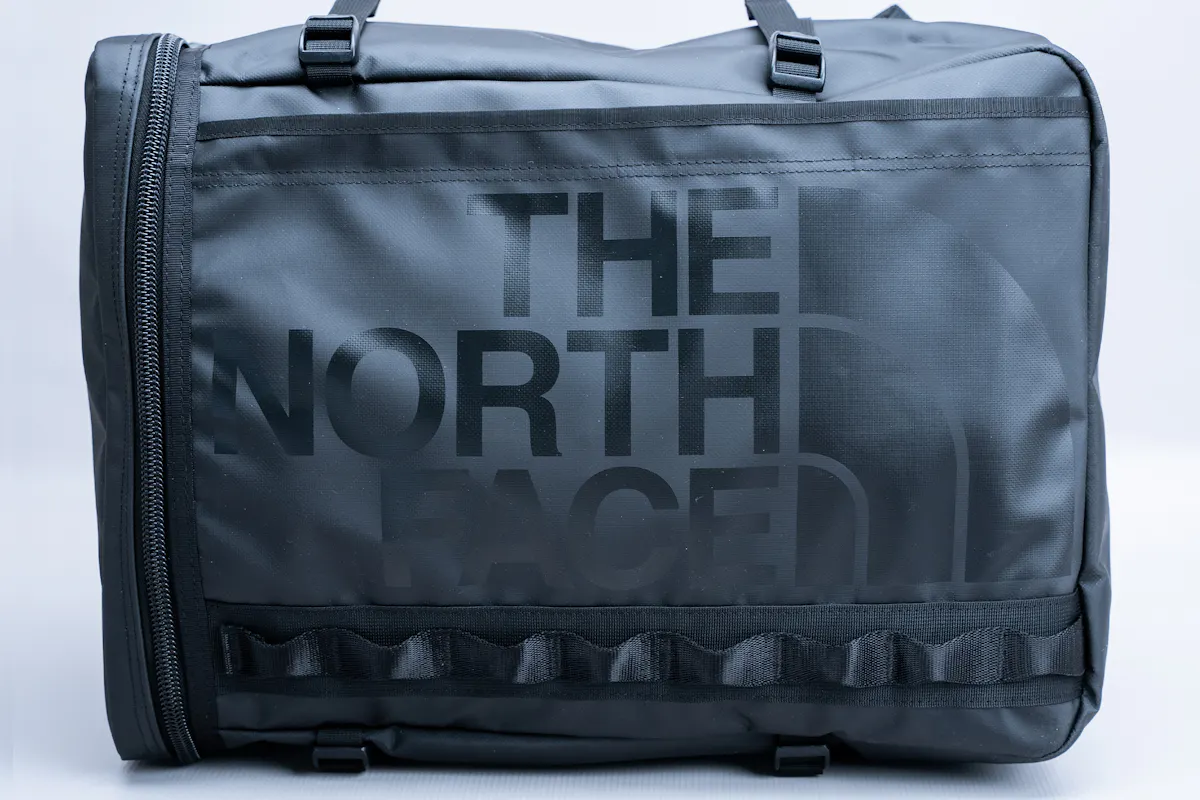
That said, durability and appearance are not always the same thing. While the material itself feels tough, it also tends to collect visible marks and scuffs fairly easily. Dirt accumulated along the bottom panel during testing, though thankfully, it wiped away without much effort. If you opt for darker colorways, you may notice these marks less frequently, but lighter options could show wear faster.
Visually, this is not a subtle backpack, as evidenced by the oversized branding across the front panel. The design itself almost resembles a soft cooler or equipment case more than a traditional backpack, which means you’ll either immediately embrace the look or spend most of your time wishing it looked like something else. The Fusebox feels intentionally angular, bold, and different.
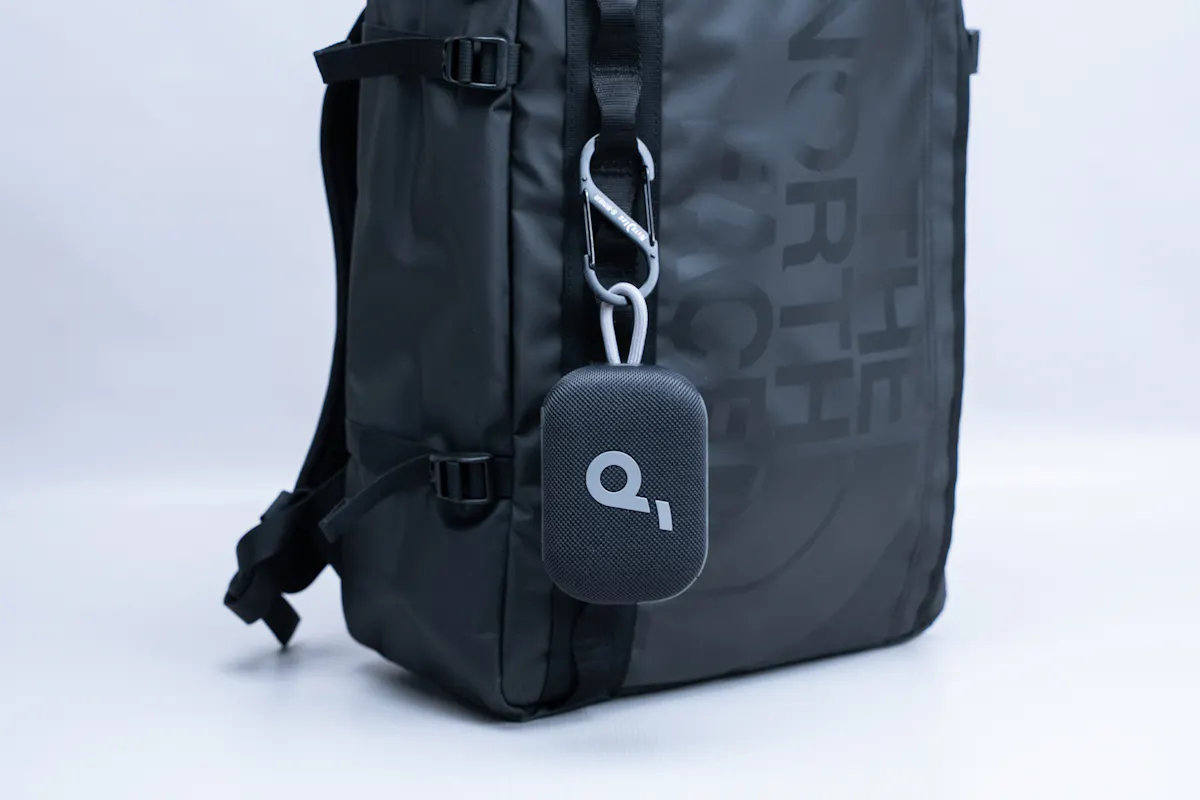
A daisy chain on the front provides additional attachment points for gear. We spent time thinking about what we would realistically clip onto these and landed somewhere between wet shoes, towels, and miscellaneous outdoor equipment. They’re useful enough to have, though perhaps not something everyone will use regularly.
Compression straps line the sides, allowing you to cinch down the load based on how much gear you’re carrying. Interestingly, we found ourselves avoiding heavy compression because the bag simply looks and functions better in its natural rectangular shape. Compressing the bag too aggressively makes accessing zippers more difficult and somewhat works against what makes the design appealing in the first place.
At 30 liters and roughly 2.3 pounds (1 kg), the Fusebox isn’t particularly lightweight for its size. The heavier materials contribute significantly here. However, that structure pays dividends elsewhere. The bag stands upright almost effortlessly, making loading and unloading gear significantly easier than many similarly sized packs. Despite the boxy shape, the dimensions also work surprisingly well for personal-item travel, depending on your airline’s restrictions.
The harness system is where things become more complicated. The shoulder straps use dense foam padding that initially feels comfortable when squeezed by hand. However, during extended use, that same padding feels somewhat stiff and unforgiving. The edges of the straps create pressure points, particularly for users with narrower shoulders.
The sternum strap helps considerably. We appreciate that it rides on rails because micro-adjustments matter more than many people realize. There’s also an integrated whistle, adding a small amount of emergency functionality. However, there are no strap keepers, meaning excess webbing tends to flap around.
The back panel itself offers minimal ventilation. There are no channels or mesh structures designed to encourage airflow, and during warmer conditions, we definitely noticed additional heat buildup. Combined with the stiff shoulder straps, this is not the kind of harness system we would want for long walking days.
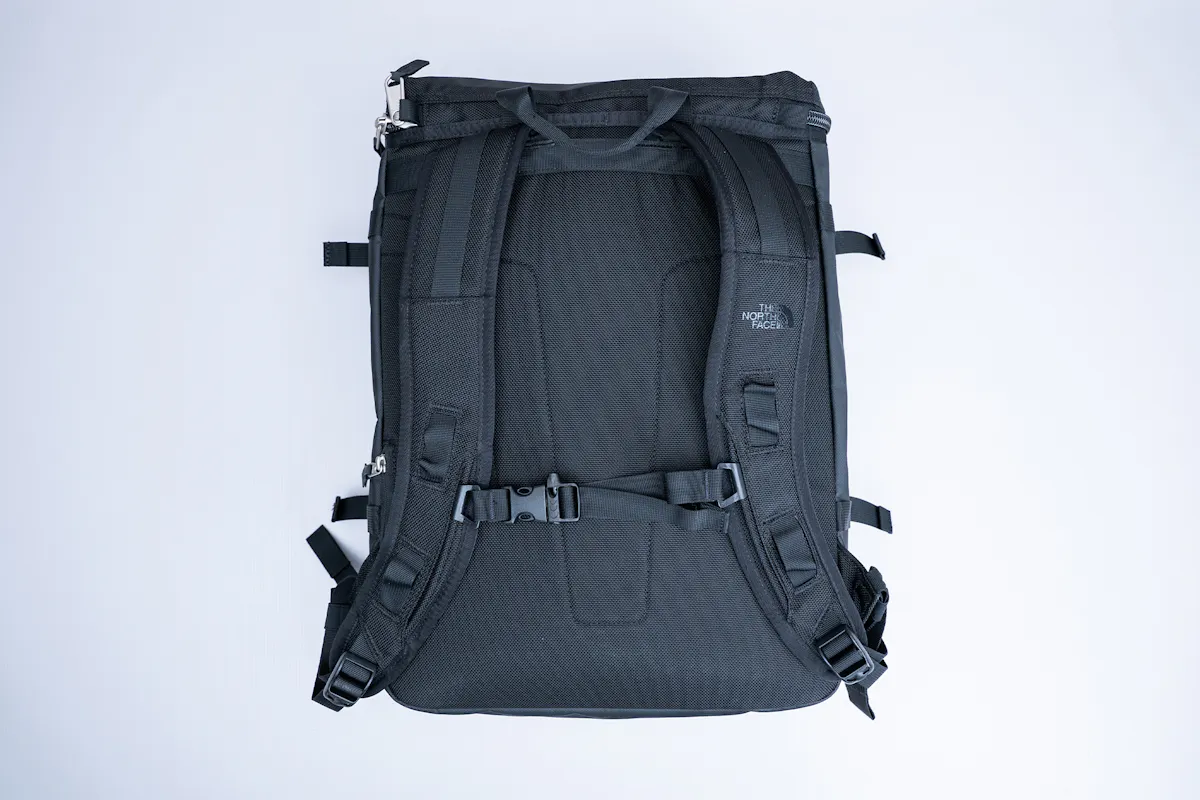
There is a grab handle positioned along the top that works well for quick pickups and hanging the bag when necessary. It’s simple but functional—something we appreciated considering how frequently this bag encourages grab-and-go use.
Fit Notes
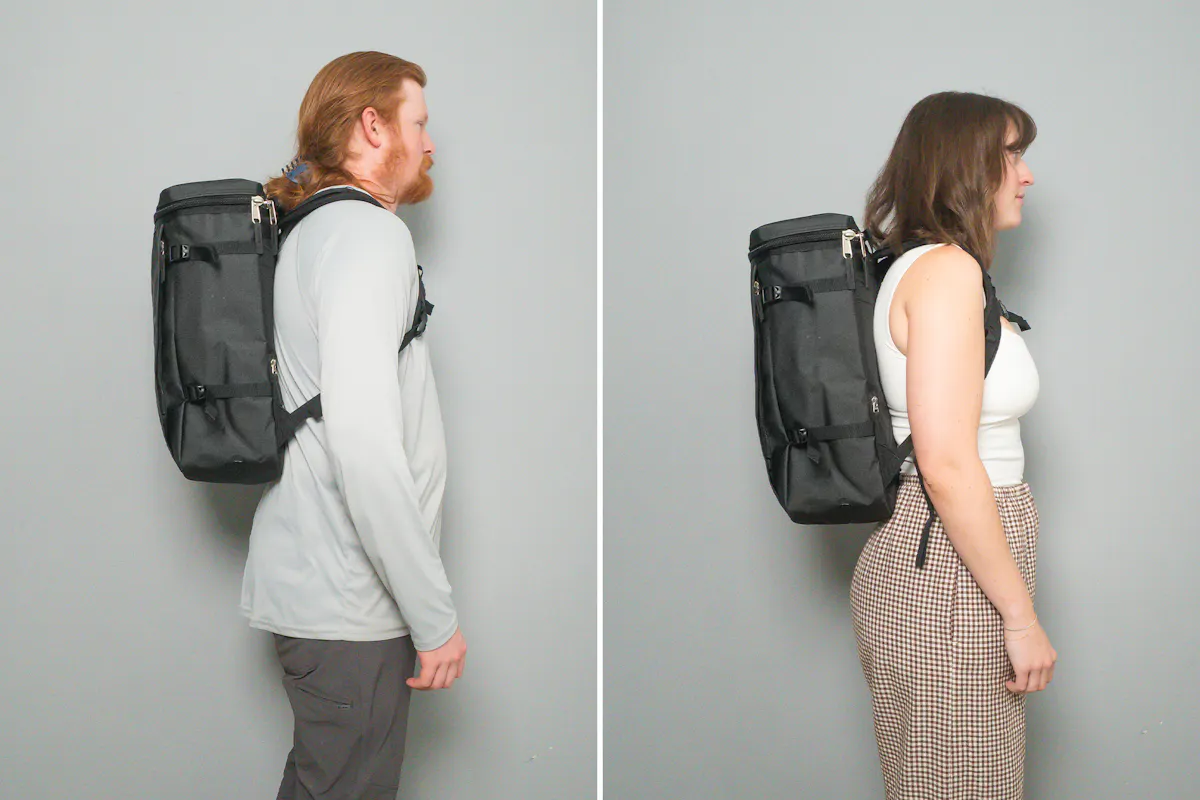
Comfort depends heavily on body type with The North Face Base Camp Fusebox. During testing, we found that narrower frames tended to struggle more with the shoulder strap’s shape. The straps naturally angle inward, which can cause them to press toward the neck while simultaneously lifting slightly away from the shoulders. Using the sternum strap helps pull everything into a more comfortable position, but it also becomes something we feel is almost required rather than optional.
Positioning matters, too. We found the most comfortable carry occurred when wearing the bag slightly lower than we normally prefer. Higher positioning caused additional pressure near the lower back and increased discomfort around the shoulders. Even when dialed in correctly, however, the lack of ventilation and relatively stiff harness system meant this remained more suitable for shorter carry sessions than all-day use.
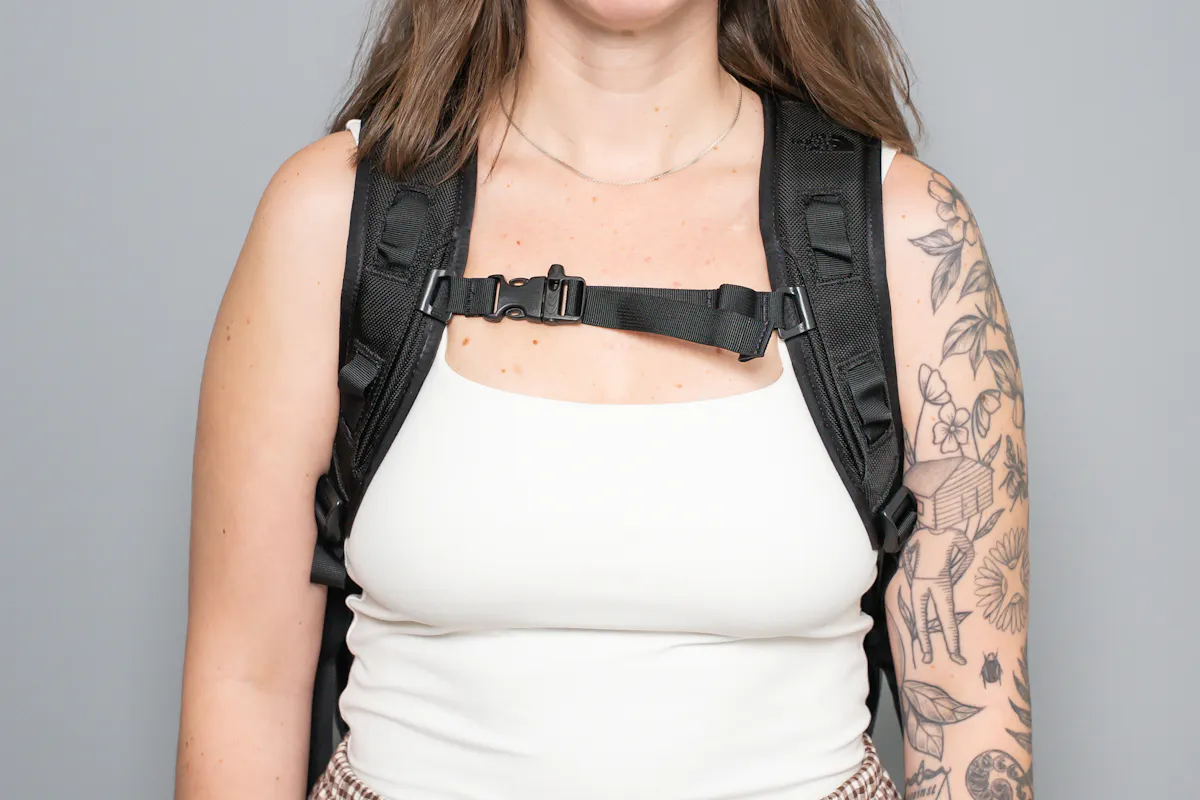
Broader shoulders improve the experience somewhat. Team members with larger frames reported fewer comfort complaints, though nobody described it as exceptionally comfortable. Ultimately, this feels like a daypack designed primarily to efficiently transport gear from point A to point B rather than to maximize comfort during extended movement.
Inside The Backpack
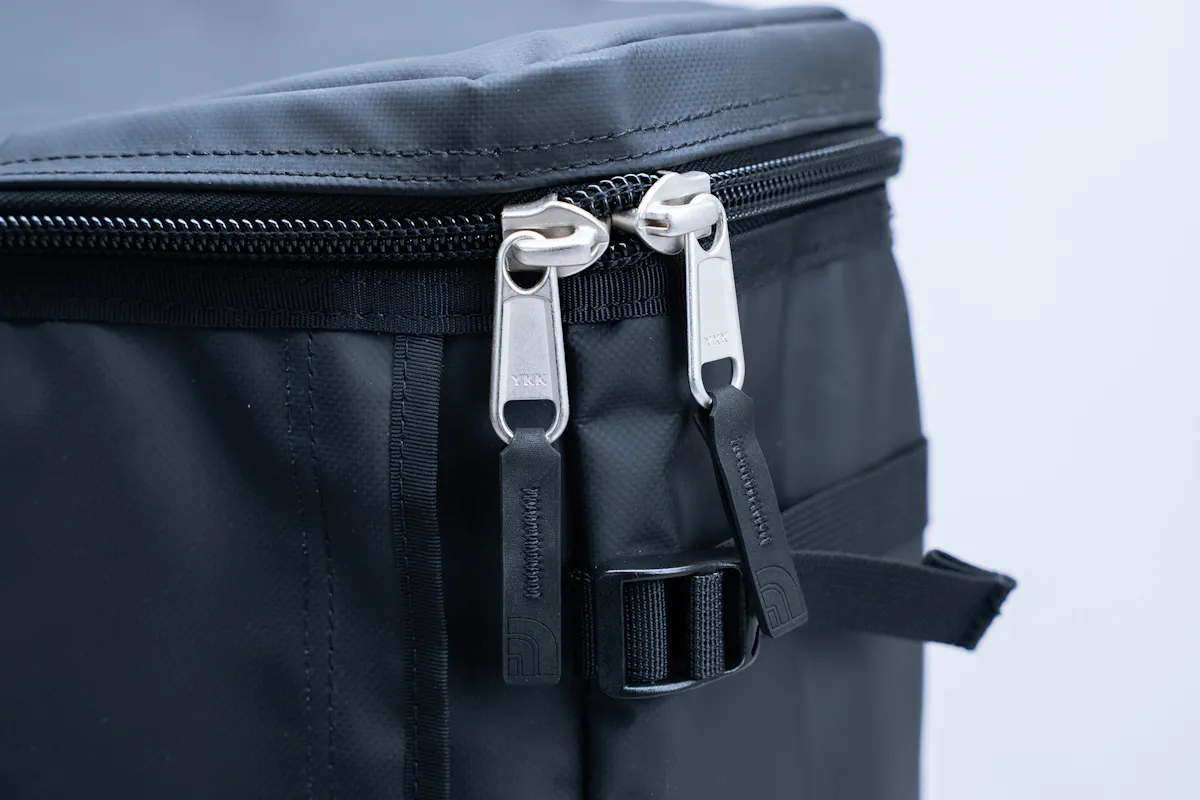
The interior layout is simultaneously one of the Fusebox’s strongest features and one of its biggest compromises. You can only access the main compartment through the large top zipper. Thankfully, The North Face uses chunky YKK zippers paired with large Hypalon-style pulls, which create a reassuringly smooth and durable opening experience. The zipper path is more difficult around corners when the bag is partially packed and compressed, though maintaining the natural box shape largely eliminates this problem.
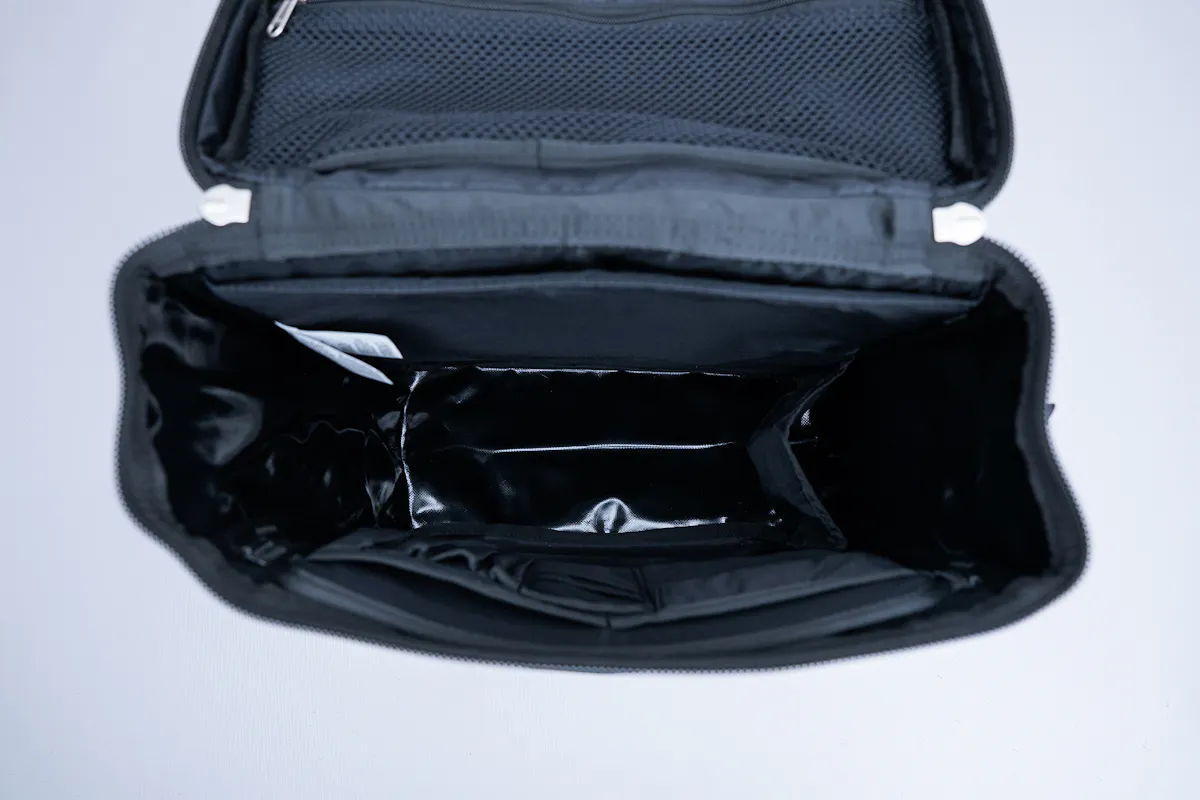
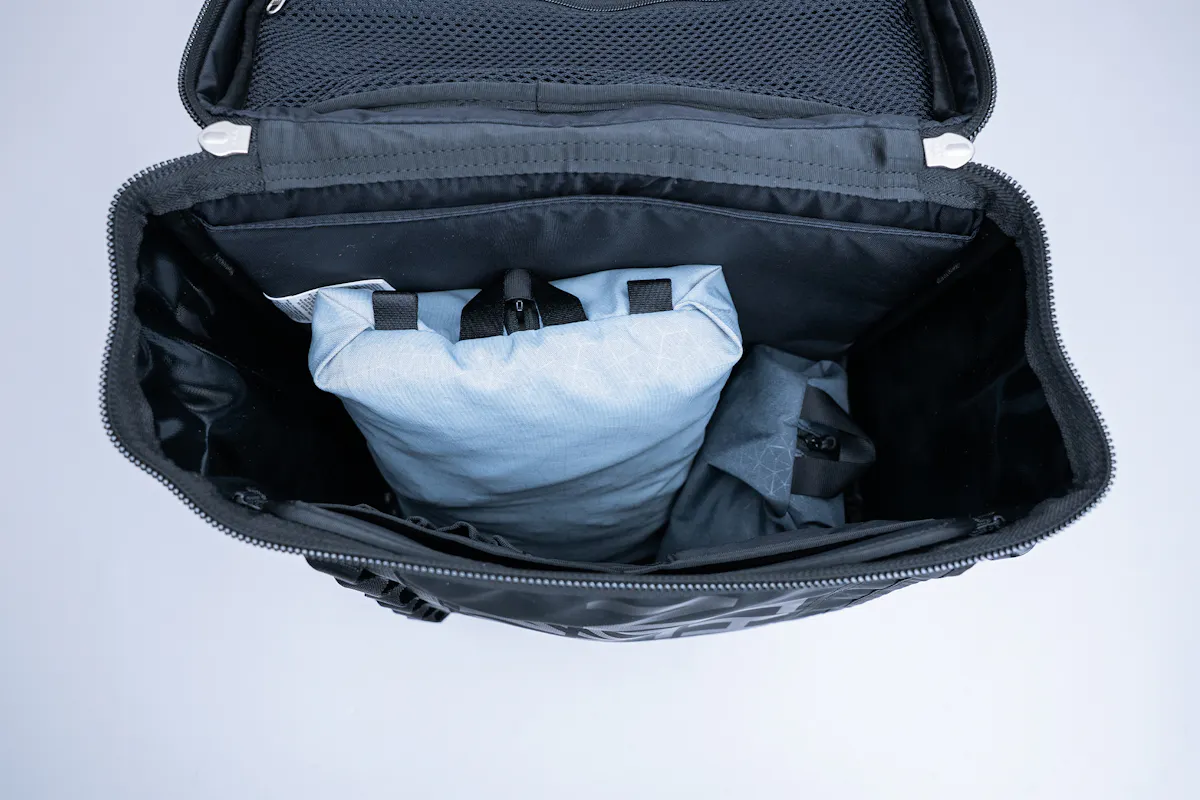
Once opened, the first thing you notice is space. Surprise, surprise, a rectangular shape makes for a rather ideal packing space. Unlike tapered bags that sacrifice volume through aggressive shaping, the Fusebox maintains consistent dimensions throughout most of the compartment. Packing cubes, travel jackets, electronics, and larger accessories fit easily. Because of this efficient shape, we found the bag perfectly capable of supporting weekend travel. With careful packing, stretching into weeklong travel doesn’t feel unrealistic either. Organization, however, remains limited.
The primary quick-access solution comes in the form of a mesh pocket near the top opening. We used this pocket most during testing because the external organization simply wasn’t sufficient. Battery banks, keys, and smaller accessories naturally migrated here. One nice detail is that this pocket loads outward independently from the main compartment. In practical use, this means stuffing smaller items inside doesn’t immediately eat into your primary packing space.
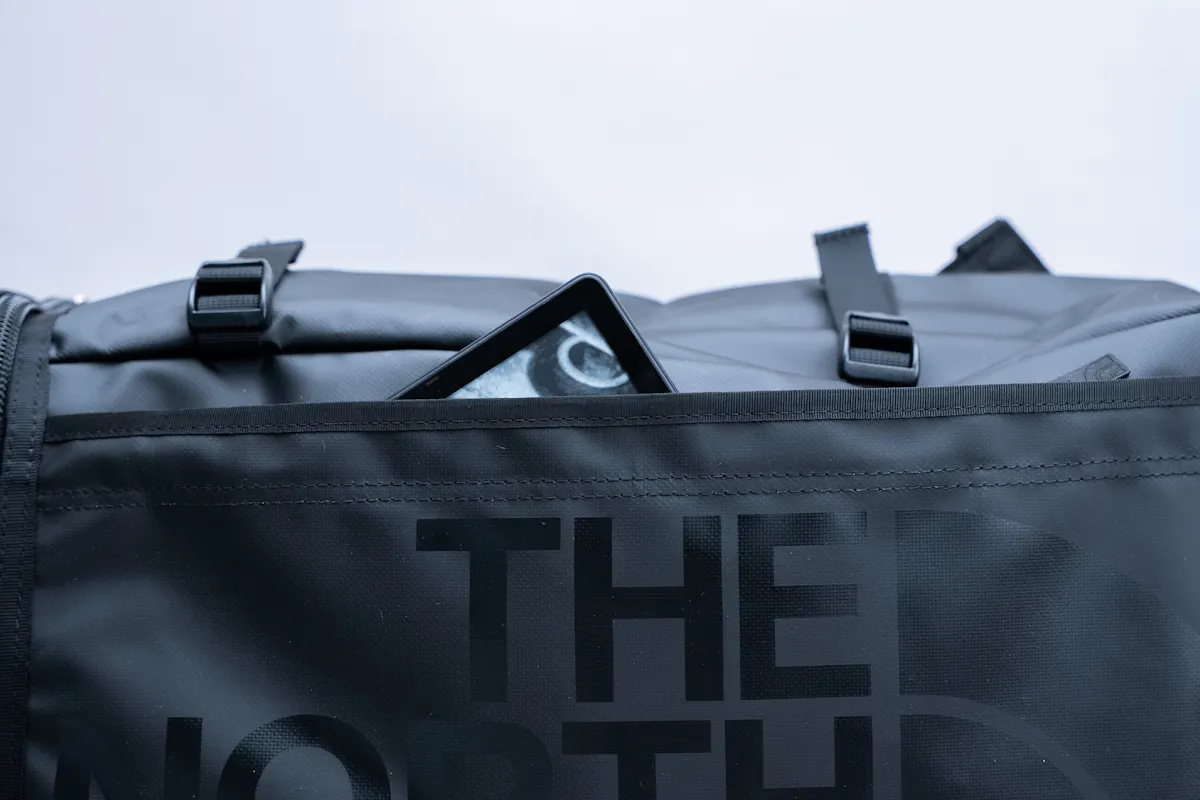
The front external pocket sounds more useful on paper than it feels in practice. It spans much of the front panel, creating a large catch-all compartment with almost no organization. Because the pocket is so large and lacks segmentation, smaller items quickly become jumbled together. Instead of functioning like a streamlined quick-access pocket, it often became a mini black hole for sunglasses, wallets, phones, and accessories.
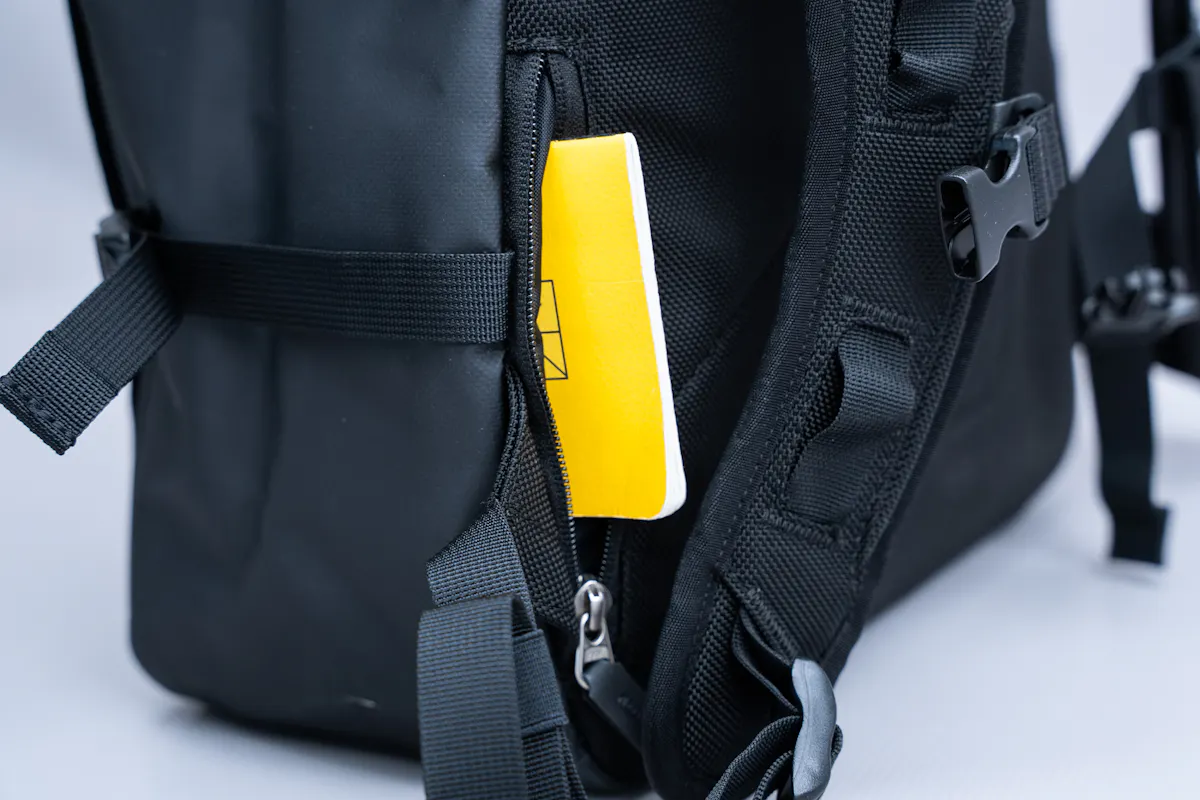
There’s also a hidden rear pocket intended for valuables like passports. While additional security is always welcome, the placement and shape make this pocket feel somewhat awkward. We rarely used it.
Laptop storage is much better. The dedicated sleeve easily accommodates larger devices, including 16-inch laptops, though The North Face officially says that devices up to 15 inches fit inside. The compartment includes padding and false-bottom protection, creating a reassuring environment for expensive devices.
Along one side sits an interesting water bottle solution. Rather than using a traditional suspended pocket, the Fusebox employs a divider-style sleeve that allows bottles to rest against the bottom while remaining separated from the rest of your gear. It works adequately, though tall objects generally perform better than shorter accessories here.
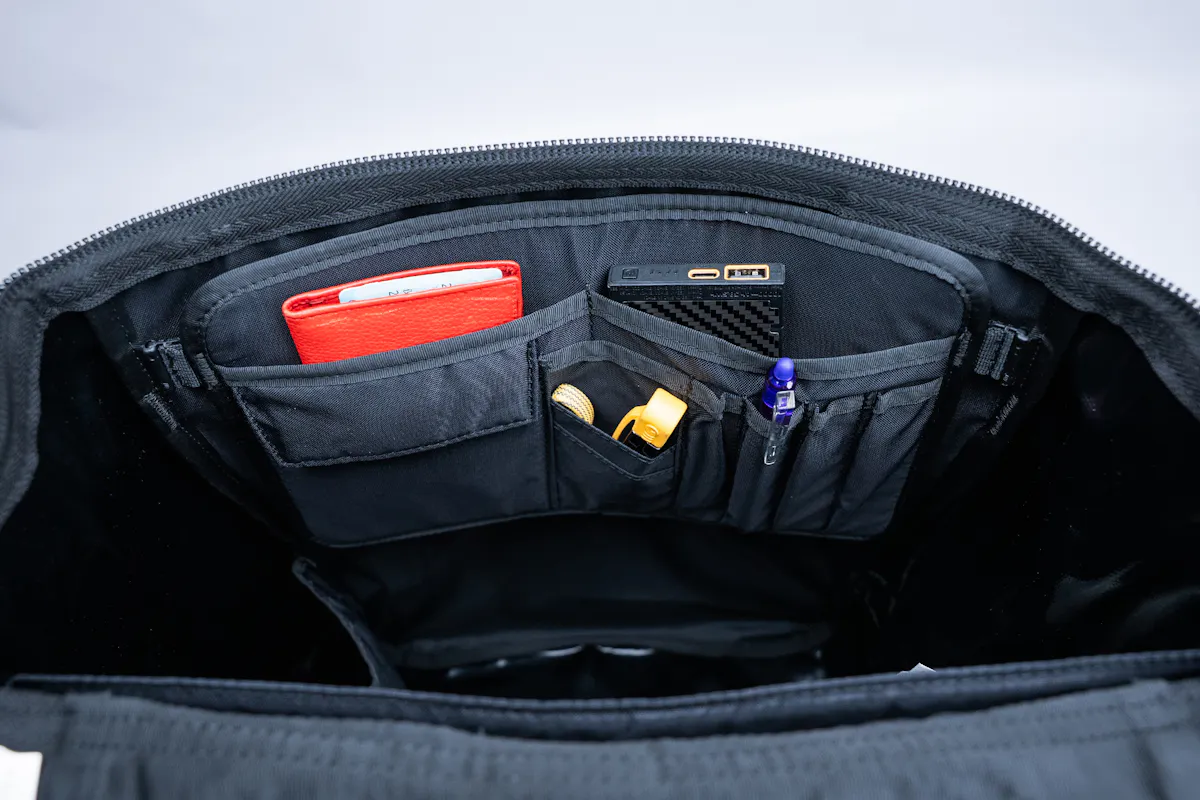
The most unique organizational component is the removable front-panel organizer. This panel attaches using simple hooks and includes pen slots, card storage, pockets, and a zippered compartment. While we appreciate modularity and removable organization, the implementation feels overly specific. Four pen slots may be useful for some users, but we found ourselves wanting more flexible storage instead.
The panel works best for users carrying small tech accessories, notebooks, chargers, or compact electronics. However, if your packing style leans more toward pouches and cubes, you may remove it entirely. Ultimately, the interior succeeds because the space itself is excellent, even if the organization occasionally feels mismatched.
Usage Timeline
Condition: Excellent
- Quite an interesting shape—will opening it get easier?
- The material feels very durable
- Curious to see how accessing gear feels throughout the day
Condition: Excellent
- Easier to open the lid than expected
- Dirt shows pretty easily on the dark fabric, but it’s easy to wipe clean
- We miss having a smaller quick-grab pocket on the outside


We’ve teamed up with Almond Oak to give away a selection of top travel gear! Check it out →


Get your questions about the The North Face Base Camp Fusebox answered from our team and the Pro Community right here on the page. Plus, join discussions with other members about gear, guides, and more.
Join Pack Hacker Pro or, Sign In