ALPAKA Flow Totepack Review
The ALPAKA Flow Totepack is sleek, structured, and well-organized. However, while we like the dual carry options, we wish it had more usable capacity.
Our Verdict
Save time. Get access to brief summaries of our reviews so you can browse and make decisions more efficiently.
Pros
- You can lock down smaller gear so you won't lose it
- It converts to a backpack when you want to carry it differently
- The material provides a lot of structure, and the bag looks clean and polished
Cons
- Not much usable space remains after filling every pocket
- The shoulder straps feel too short to wear over your shoulder, especially with a thick coat
- Backpack mode feels like an afterthought
Technical Details
-
Capacity
14l
-
Weight (lb)
2.32 lb (1.1 kg)
-
Dimensions
16.9 in x 16.1 in x 4.1 in (42.9 x 40.9 x 10.4 cm)
-
Notable Materials
Recycled Nylon, Ripstop Polyester, DWR Coating, YKK Zippers, Unbranded Hardware
-
Manufacturing Country
China
-
Tablet Sleeve Size
11"
-
Laptop Compartment Size
16"
-
Warranty Information
Full Review
Get up to 15% off ALPAKA • Join Pack Hacker Pro
Totes are having a moment, so you might be seeing them more often than you expect. We’ve always had a soft spot for well-organized bags in every size, shape, and form, though, so we were excited to get the ALPAKA Flow Totepack in hand for a test. A tote that can be a backpack when necessary? Yes, please!
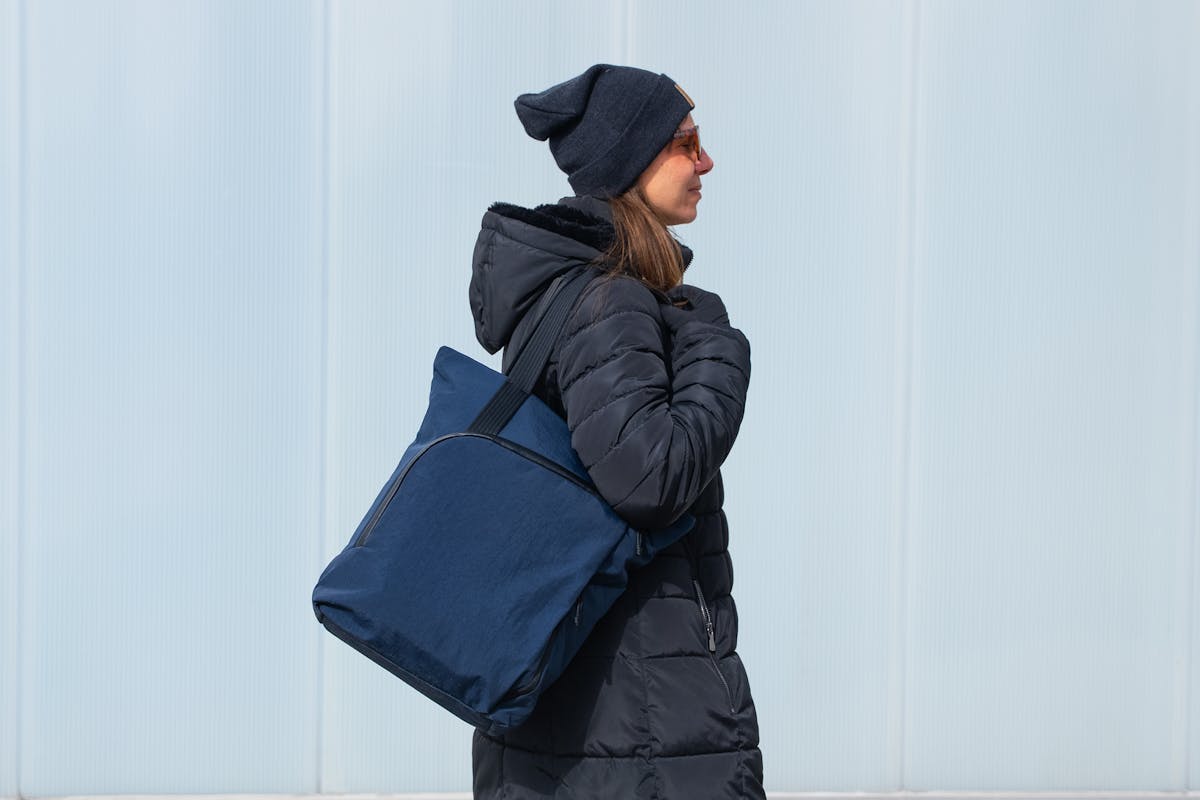
So, did it live up to our expectations? Keep reading to find out.
External Components
As you might expect from ALPAKA, the Flow Totepack looks much more polished and professional than your average travel tote. The 14L bag is made from 400D Axoflux washed nylon, which has a slight sheen but isn’t shiny like more traditional nylon materials. The material is also water-resistant in case you get caught in the rain, which is bound to happen at some point or another, whether you use this bag for your daily commute or travel.
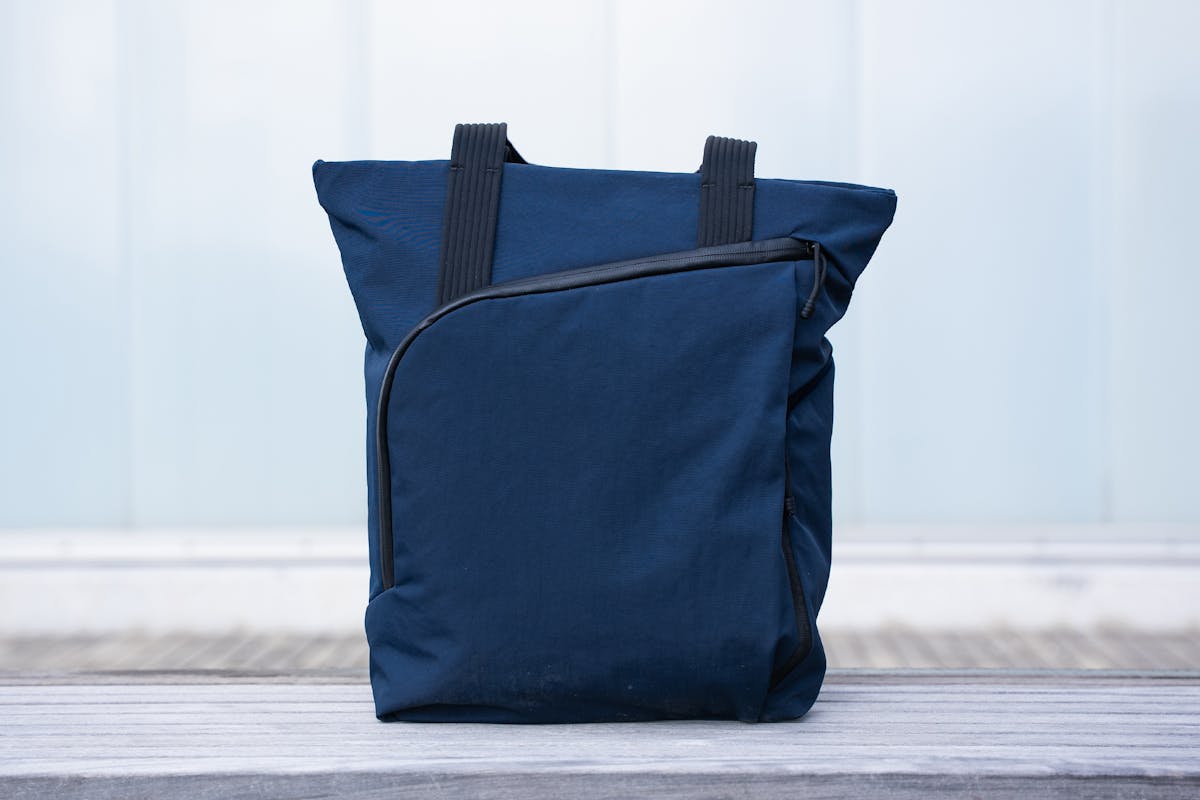
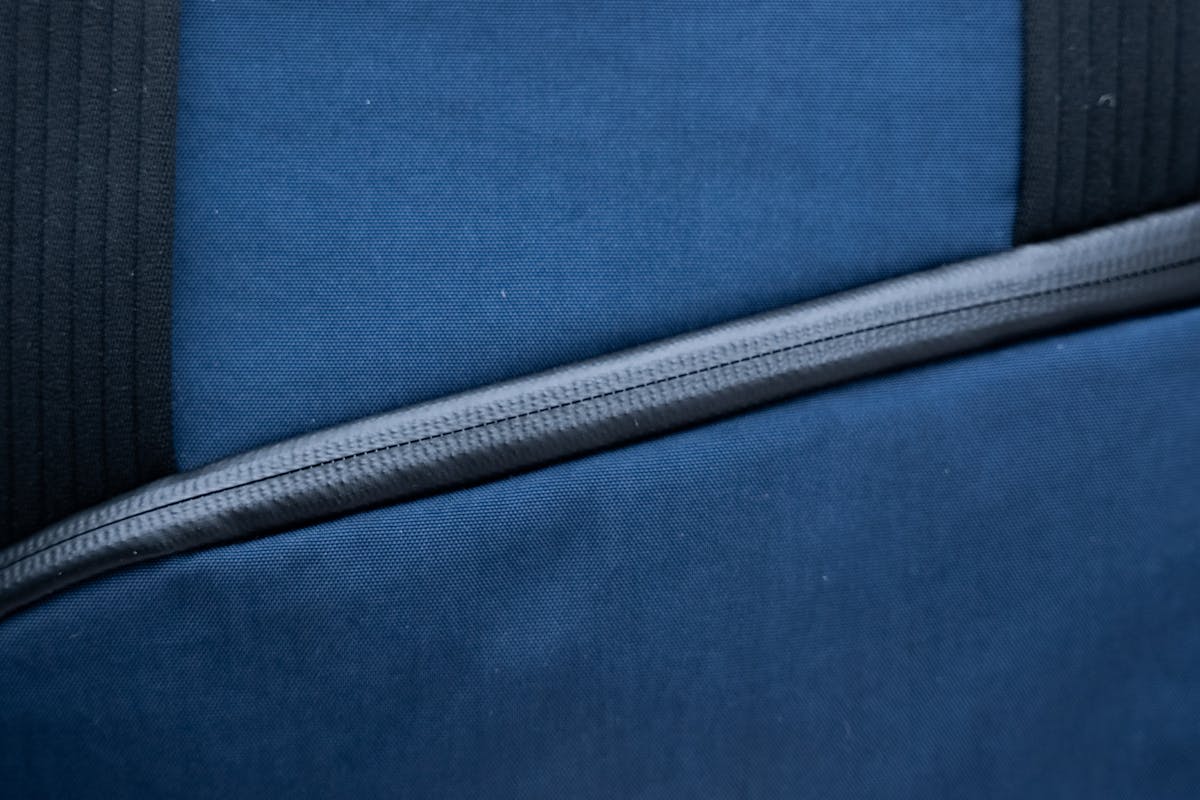
In addition to weather-resistant material, the front pocket features a YKK AquaGuard zipper. We’re happy to see the pairing, since we’ve tested many bags with water-resistant fabric but zippers that aren’t. The zipper is fairly stiff, as we’re used to with AquaGuard models, yet easy enough to use thanks to the paracord pull that makes it easy to grasp. The main compartment zipper is a No. 8 reverse-coil YKK, but it’s slightly recessed to protect it from moisture.
There’s no external branding, so the front of the bag has a clean look we like.
The harness system is different from what you might expect on a traditional tote bag. It has two thick, quilted shoulder straps that rise from the top of the bag and fold in half for added heft on your shoulders.
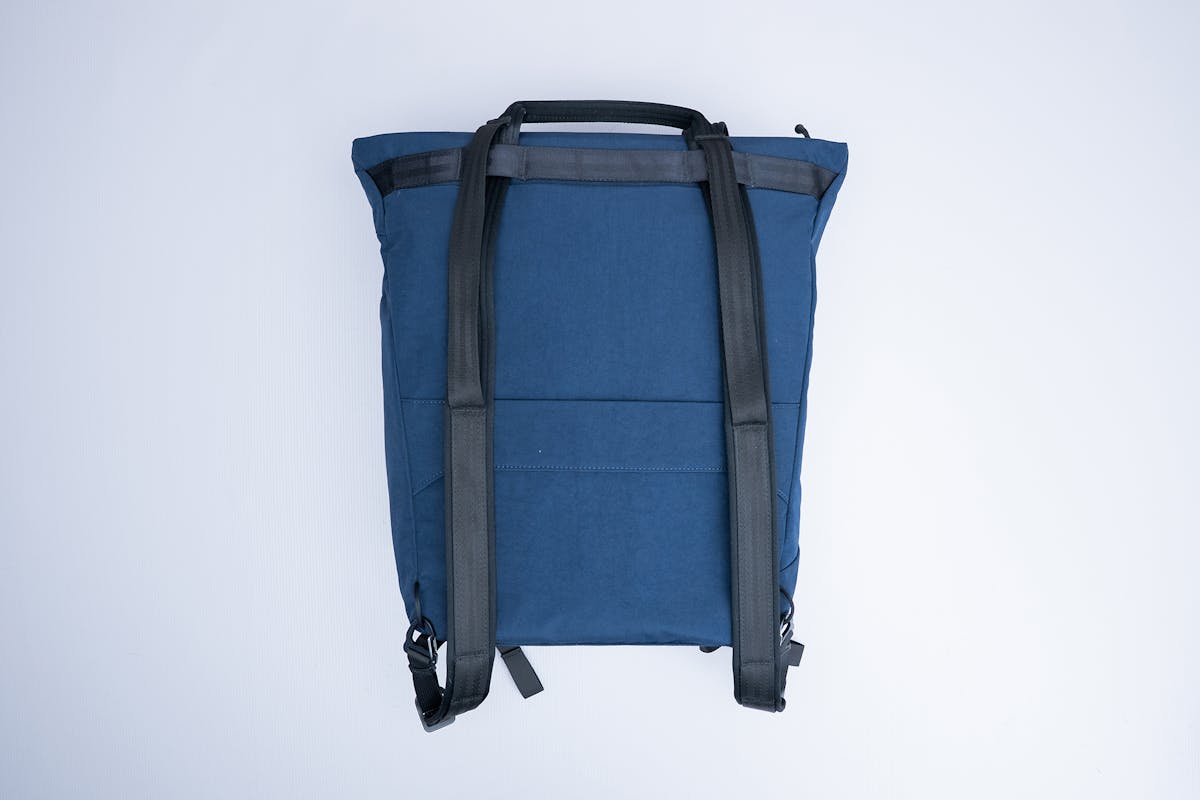
However, the rear strap also has a webbing strip stitched on top for a few reasons. Near the top, the webbing has a large loop that slides through horizontal webbing at the top of the bag. That allows you to adjust the straps above the bag to carry it like a tote or pull them down for use as a backpack. That shoulder strap extends all the way down the back panel, attaching with gatekeeper clips to loops in the bottom corners to create backpack straps. If you are wearing it as a backpack, there are webbing loops near the bottom where you can attach a carabiner or an ALPAKA MOD accessory to keep them within easy reach on the straps.
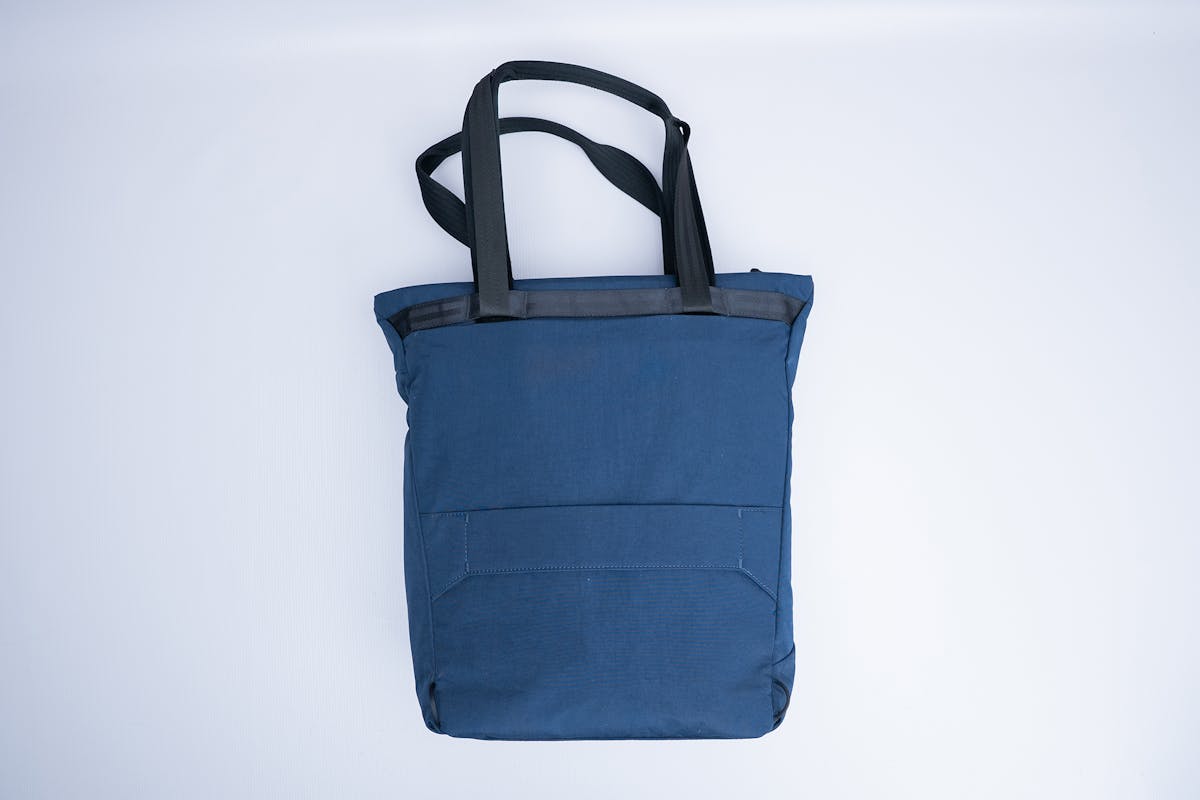
If you are carrying it as a tote, you can either leave the straps connected to the backpack loops or disconnect them and tuck them inside a magnetic pocket against the back panel. We didn’t really feel a need to do that, as the straps aren’t thick enough to get in the way when carrying it as a tote. Then you don’t have to keep connecting and disconnecting the straps whenever you want to change carry styles.
And if that wasn’t enough, there’s also a horizontal luggage pass-through to slide it over the handle of a rolling carry on as you go through the airport.
Fit Notes
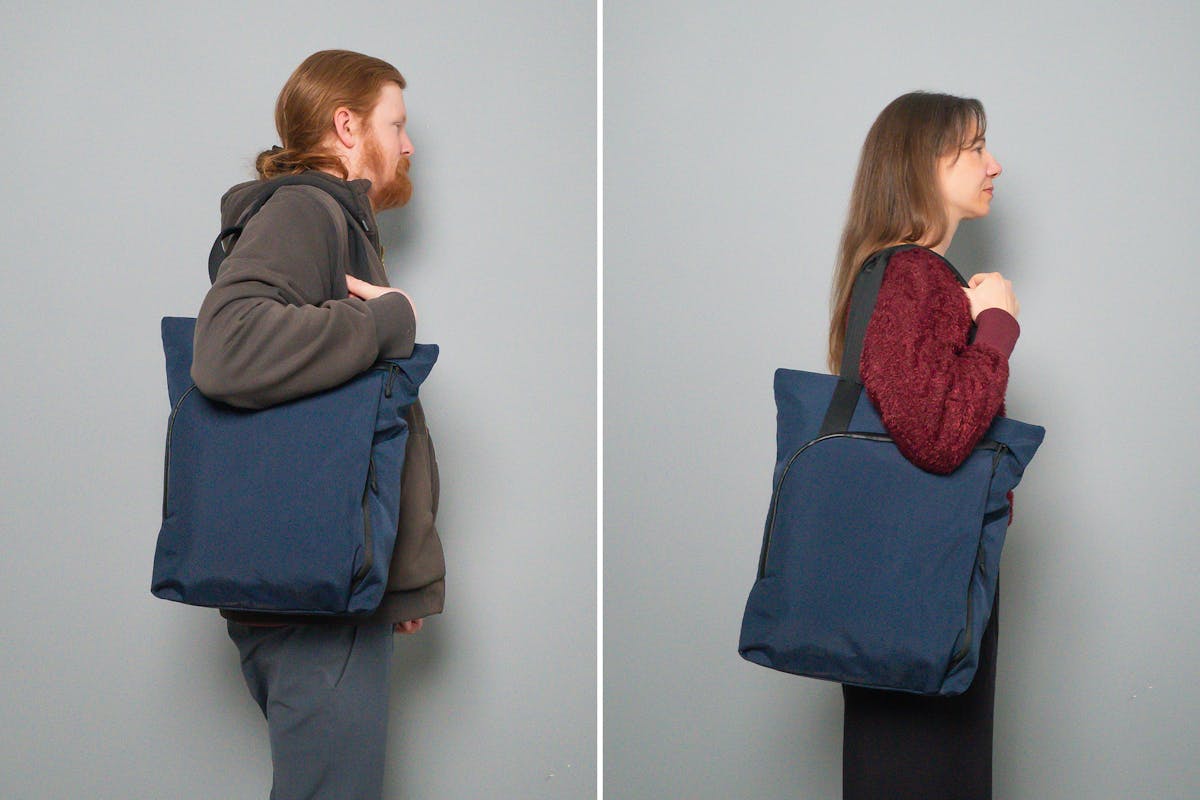
As we noted above, the shoulder straps are comfortable in both tote and backpack modes. We have had issues with fitting the tote straps over a thick winter coat when the bag is packed full—they fit, but it’s tighter and slides off the shoulder rather easily. However, if your coat isn’t as puffy or shiny as our tester’s, it stays in place more easily. She had less of an issue using it as a tote over the shoulder while wearing a wool coat, for instance, and you can also carry it in the crook of your elbow for short periods of time if your coat is too thick.
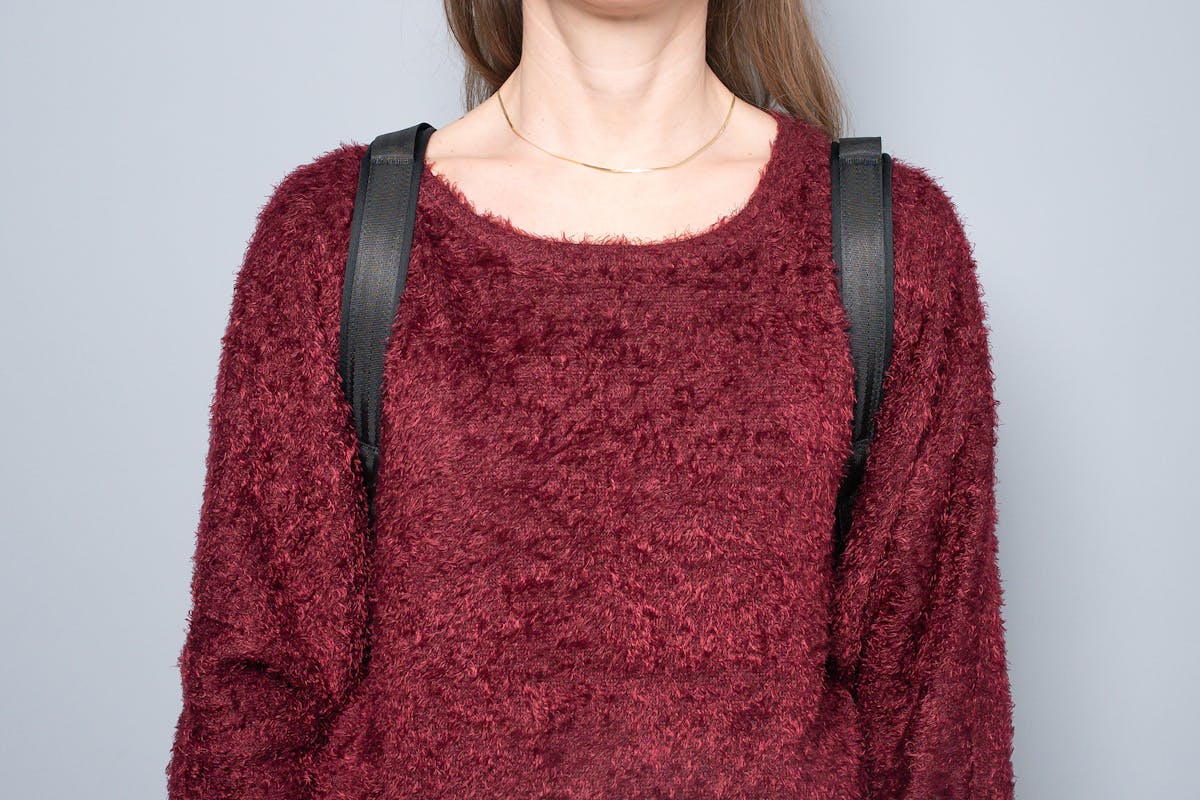
You can also carry it in backpack mode. The back panel isn’t as well-padded as other daypacks, but it is adjacent to the laptop compartment, so there’s some padding back there. However, the bag itself is pretty boxy, so it definitely feels like you’re putting a tote bag on your back, not carrying a backpack. We prefer carrying it as a tote, but if you need to carry it for longer periods, need to be hands-free, and don’t want to worry about it slipping off your shoulder, it is a nice option.
Inside The Totepack
There is much more organization in this bag than you might expect if you’re picturing a traditional canvas tote. However—spoiler alert—it can be hard to use all of it while still leaving capacity in the main compartment.
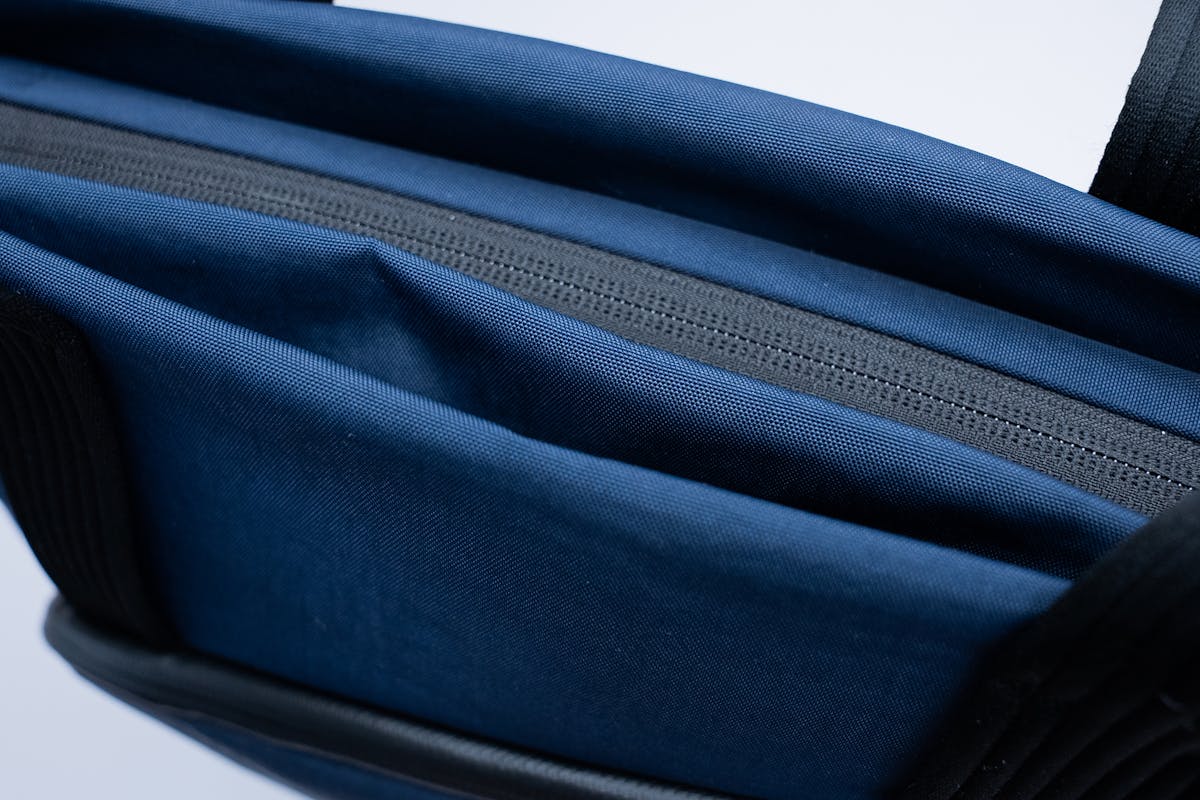
We’ll start at the top of the bag, where there’s a large, magnetic slip pocket for your phone and small travel accessories you want easy access to. It’s also a great spot to tuck the front strap if you’re carrying the bag in backpack mode; then it doesn’t flop around unnecessarily, muddying the bag’s clean look.
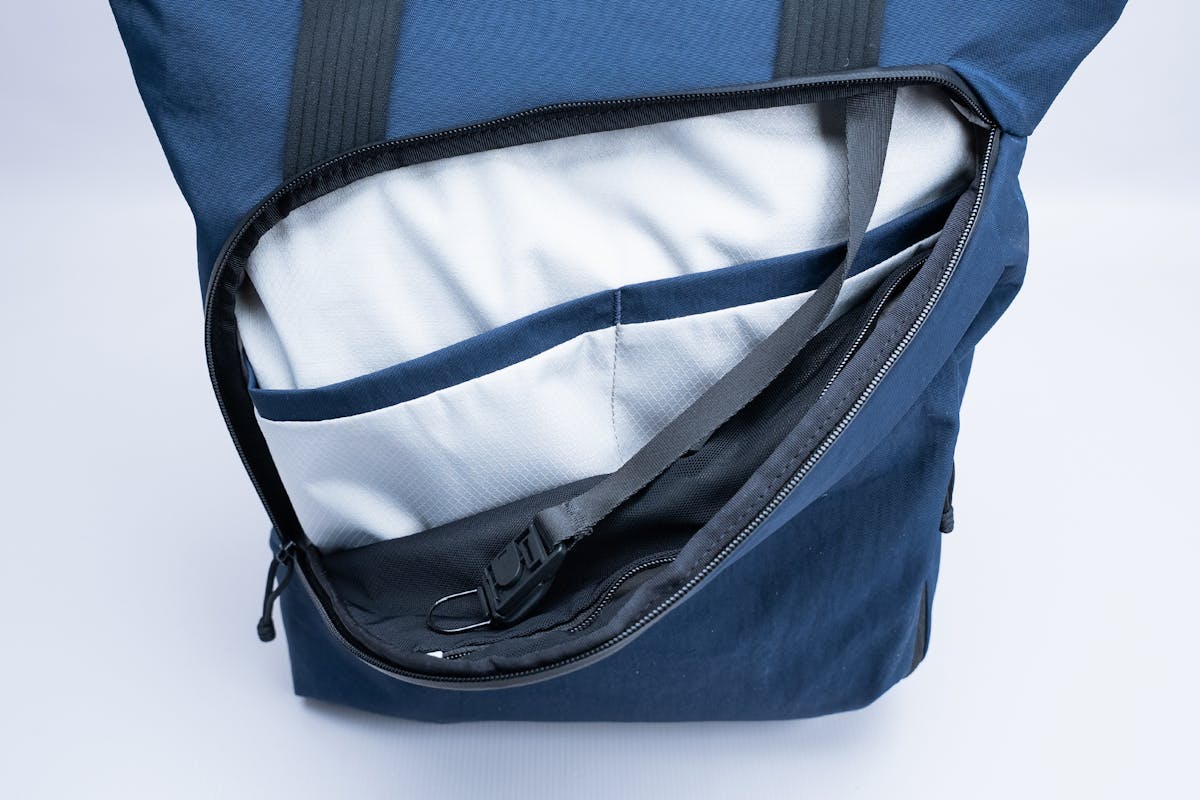
Below that is a sizable front compartment. It opens across the top and left side of the section, and includes quite a bit of admin-style organization. Against the front panel is a large zippered mesh pocket. The mesh is slightly stretchy, so you can put bulky gear here. We’ve been using it to lock down smaller accessories, though, like AirPods, a small pouch, and a few cords.
Against the back panel are two very large slip pockets. Our tester has been using one for a glasses case, but they’re big enough for a Kindle, Nintendo Switch, a USB hub, or any other large accessory you need. There’s also space left in the middle, but loading this compartment reduces space in the main compartment. The exterior Axoflux material is so structured that it doesn’t flex outward. The liner material is a much thinner 150D Axoflux X-Grid, a ripstop polyester that’s much more flexible; hence, it presses inside rather than outside. That’s great for aesthetics, but not necessarily for carry capacity.
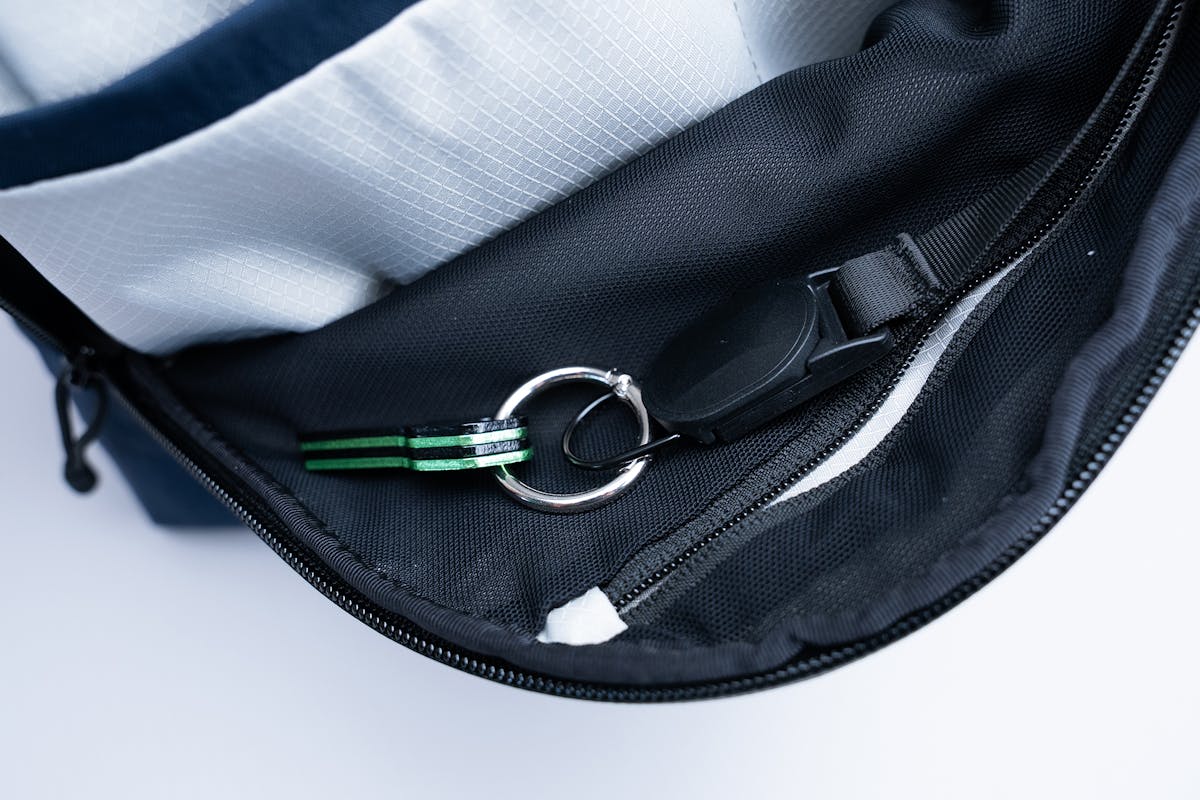
This pocket also contains the MOD key tether, which is a magnetic keychain that attaches to a very long leash. The leash is attached right next to the end of the zipper, so you can unzip it just a little, pull out the leash, and have easy access to your keys without taking the bag off your shoulder or your keys off the tether. Our tester has been using it daily to get into the office without having to take the bag off her shoulder, and she finds it one of the most convenient features of the bag.
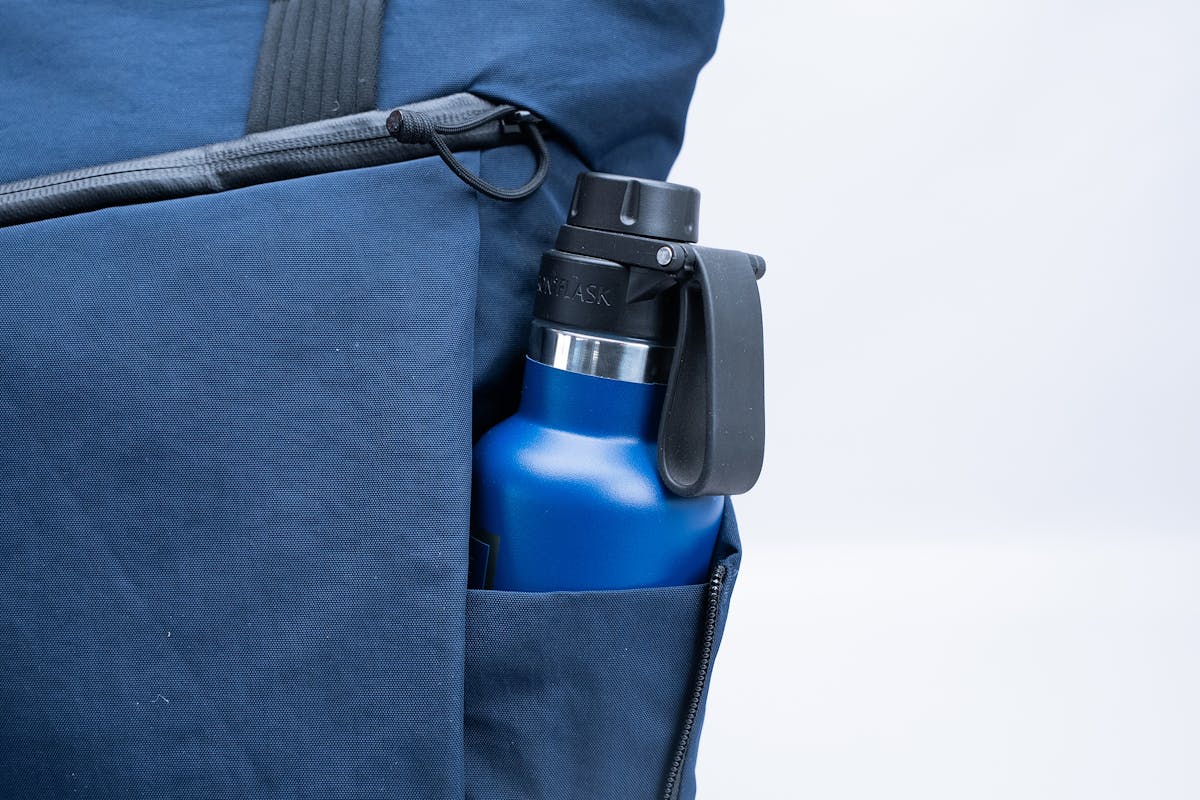
On the right side of the bag is another vertical zipper. It’s actually the side of the water bottle pocket. Unzipping it allows it to expand to accommodate wider bottles or mugs. It even has a stretchy cord inside that you can wrap around your bottle to ensure it stays in place. It comes in handy for taller bottles, too, and includes a toggle you can slide to tighten the cord and keep your bottle in place as you move. One more note, however—wider bottles also press into the main compartment.
That’s it for the outside, so let’s head into the main compartment. It’s not lacking organization, either.
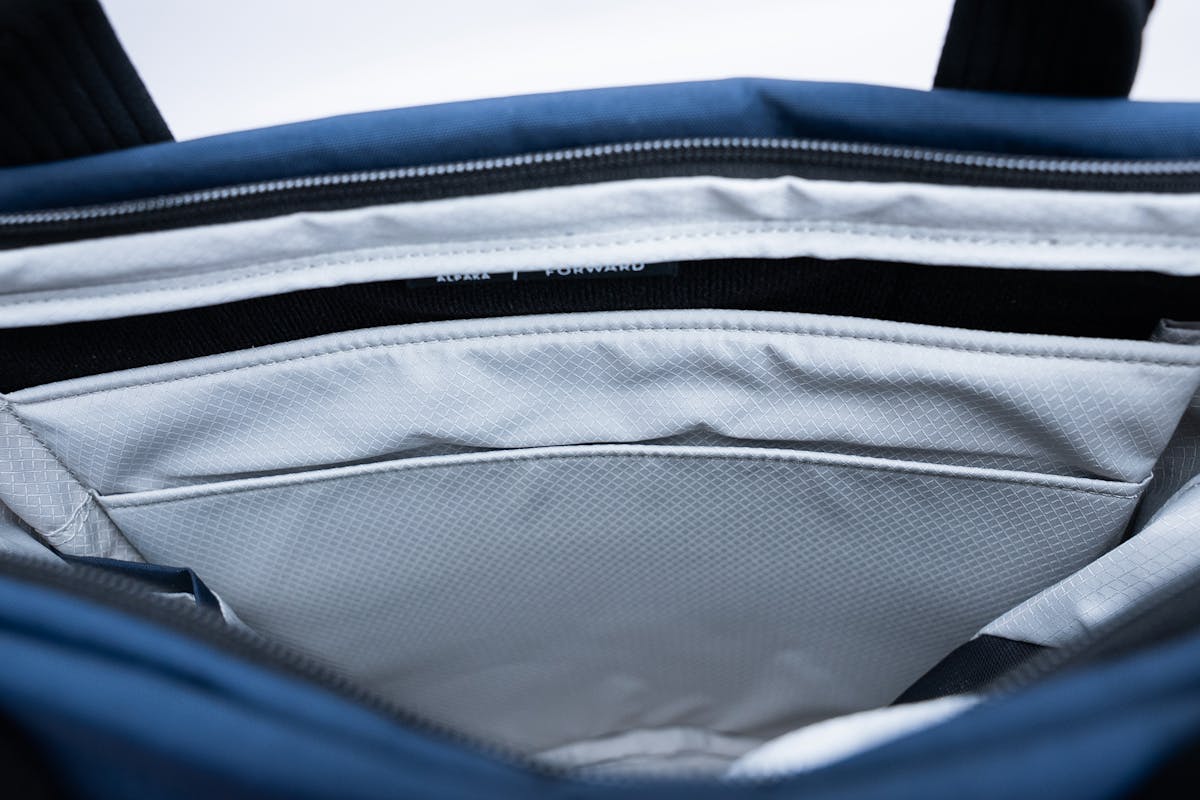
Against the back panel is a softly lined, well-padded laptop sleeve that fits up to a 16-inch MacBook Pro. It has a slight false bottom, and the bottom of the bag is fairly thick, so your device should be safe when you set it down. There’s a tablet sleeve in front of that for up to an 11-inch device, as well, so you can carry a lot of tech with you in this bag.
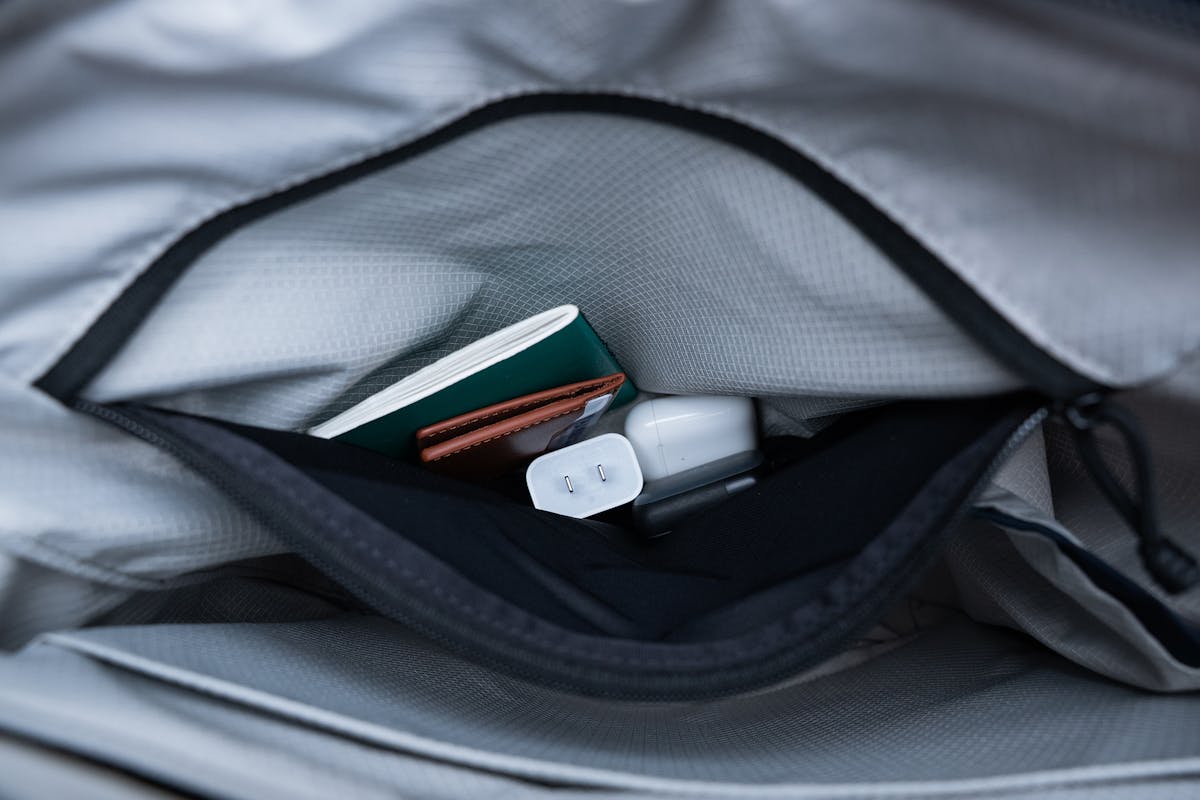
Adjacent to the front is a very large zippered mesh pocket to lock down tech accessories if you don’t have your own pouch. We, frankly, never used it because there was so little space left in the main compartment after we packed the front pocket, and we wanted at least a little space for larger gear. It lies flat against the side, though, so it’s not in the way if you don’t want to use it.
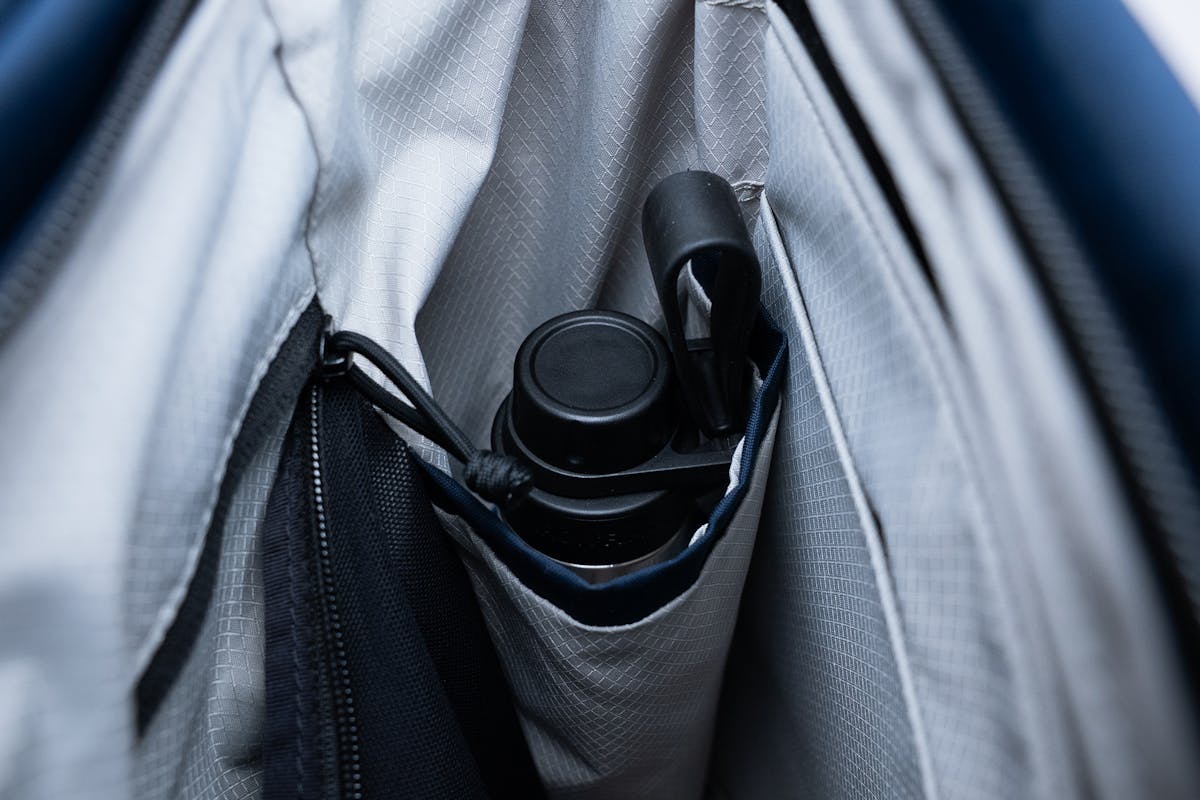
There’s also an internal water bottle pocket on the opposite side of the external one. We don’t love putting liquids next to our laptop, but you don’t have to use it for a bottle if you don’t want to. We slid our slim Aer Split Kit into it to make it easy to grab quickly, instead of having to scrounge for it at the bottom of the bag.
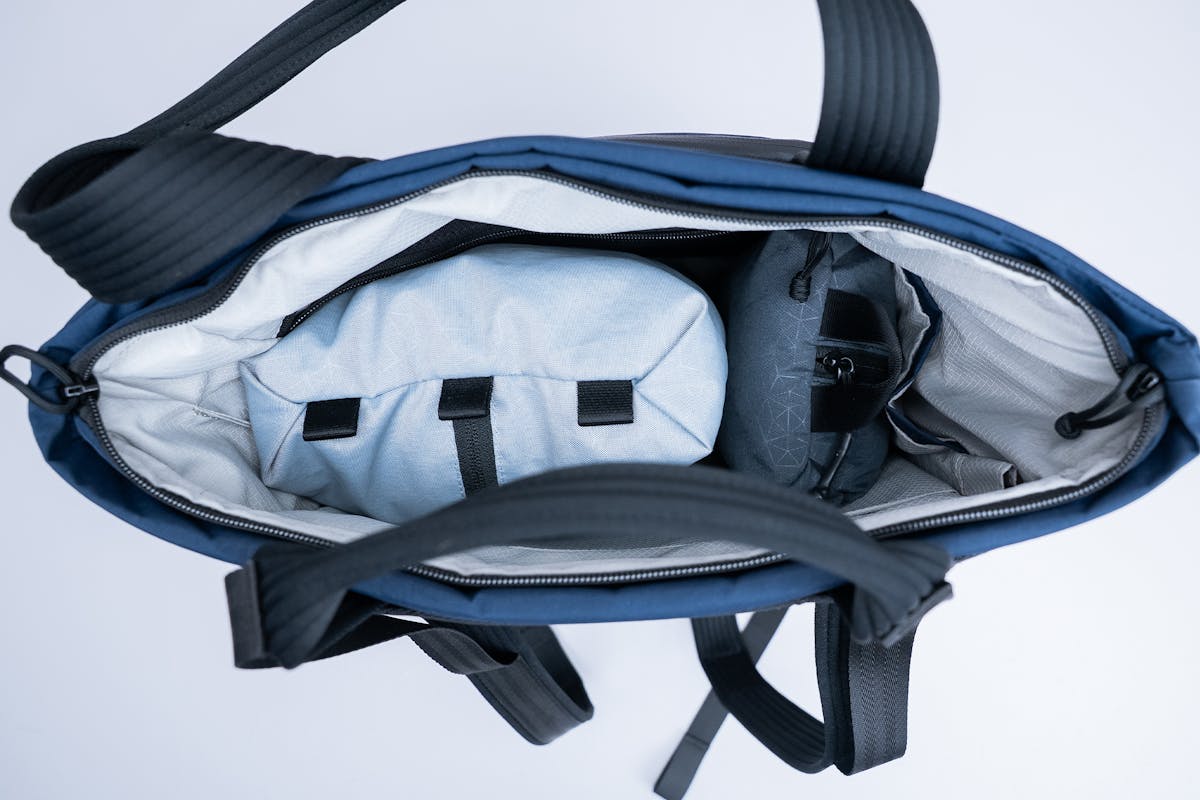
The remaining space is large enough for a packable jacket, small toiletry bag, over-ear headphones, or a slim container like a bento box, but it wasn’t wide enough for a small cooler (which is how our tester packs her lunch). Your mileage will vary on whether that’s enough space for the rest of your everyday carry gear.
What you need to know about this bag is that it has great structure and aesthetics, along with tons of helpful organization, but it all impacts how much usable space you get from its 14L capacity. Our tester actually felt like there was more space in the 10L messenger-style sling that she tested before than in this bag, but that’s like comparing Red Delicious apples to Honeycrisps. They’re both apples, but you’re choosing them for different reasons. While you’d get more usable space out of a 14L canvas tote without any pockets and compartments, you’d be giving up all of the great segmentation and structure you get with the ALPAKA Flow Totepack—plus the option to wear it as a backpack. What style is best? That’s up to you.
Usage Timeline
Condition: Excellent
- It’s comfortable as a tote even with the backpack straps connected
- We wish the straps were a little longer
- It doesn’t feel like it has a lot of space for gear




Get your questions about the ALPAKA Flow Totepack answered from our team and the Pro Community right here on the page. Plus, join discussions with other members about gear, guides, and more.
Join Pack Hacker Pro or, Sign In