ALPAKA Momentum Backpack 22L Review
The ALPAKA Momentum Backpack 22L uses Axodyne fabric in a sleek ultralight build, though laptop protection and structure feel slightly underdeveloped.
Our Verdict
Save time. Get access to brief summaries of our reviews so you can browse and make decisions more efficiently.
Pros
- It's extremely lightweight, at 1.5 lbs for a 22L capacity
- The harness system is breathable and comfortable, despite minimal padding
- It has a clean, modern aesthetic using Axodyne fabric
Cons
- The laptop sleeve lacks meaningful drop protection
- Its partial clamshell-style opening feels awkward in practice
- The light structure can cause an imbalance when unevenly packed
Technical Details
-
Capacity
22l
-
Weight (lb)
1.5 lb (0.7 kg)
-
Dimensions
18.9 in x 11.8 in x 6.7 in (48 x 30 x 17 cm)
-
Notable Materials
Ultra-High-Molecular-Weight Polyethylene (UHMWPE), Nylon, Thermoplastic Polyurethane (TPU), YKK Zippers
-
Laptop Compartment Size
16"
-
Warranty Information
Full Review
Get up to 15% off ALPAKA • Join Pack Hacker Pro
The ALPAKA Momentum Backpack 22L represents a more experimental direction for ALPAKA, built around its new Axodyne fabric. This material immediately stands out thanks to its semi-translucent look, visible ripstop grid, and lightweight laminated construction. It visually resembles high-end ultralight textiles like X-Pac or Dyneema, but it feels distinctly softer and more minimal in execution.
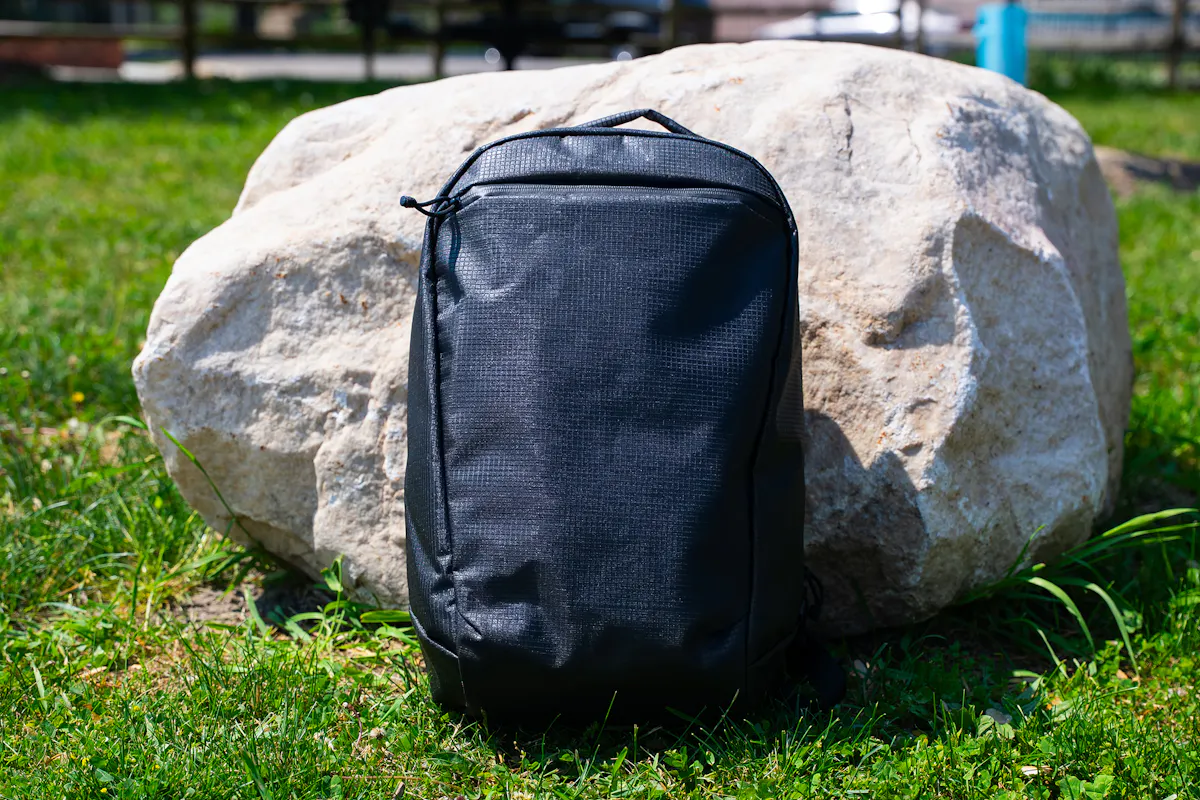
At just 1.5 pounds, the daypack prioritizes weight savings without fully sacrificing durability or structure. The Axodyne shell contributes significantly to that balance, keeping the bag light while still feeling weather-resistant and modern. After two weeks of testing, the design feels focused and intentional, though it comes with a few compromises in usability.
External Components
The most defining element of the bag is its Axodyne fabric. It has a glossy, technical finish with a very pronounced ripstop grid that enhances tear resistance while maintaining an ultralight profile. The TPU-backed construction adds weather resistance, and the semi-translucent nature of the material even allows light and silhouettes of internal items to show through, reinforcing its ultralight identity.
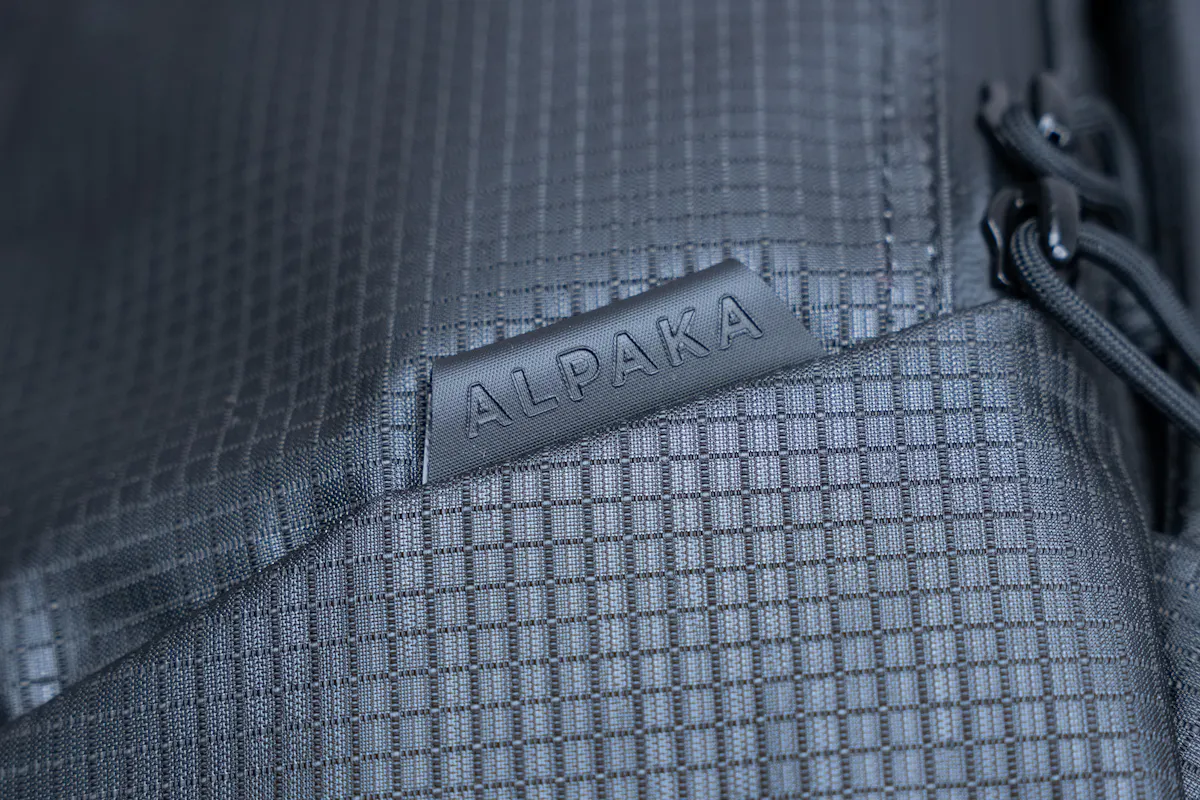
Despite its thin feel, the Axodyne shell holds up well in day-to-day use. It gives the bag a structured shape that’s still flexible, though the lack of padding across the body becomes noticeable when the pack is set down roughly. In testing, there were moments where the gear inside felt more exposed than in traditionally padded backpacks, especially along the sides. It sort of reminds us of the Peak Design Outdoor Backpack 25L and its Terra Shell fabric, which also carries that faint visual translucency and lightweight technical feel.
One thing that becomes apparent over time is how much the material dictates behavior. Because Axodyne is so light and pliable, the bag tends to shift its shape depending on load distribution. This isn’t necessarily a flaw, but it does mean the pack feels more “alive” on your back compared to stiffer, foam-reinforced designs. When packed evenly, it sits neatly and disappears as you carry it. When unevenly packed, however, the shell’s softness makes imbalances more noticeable.
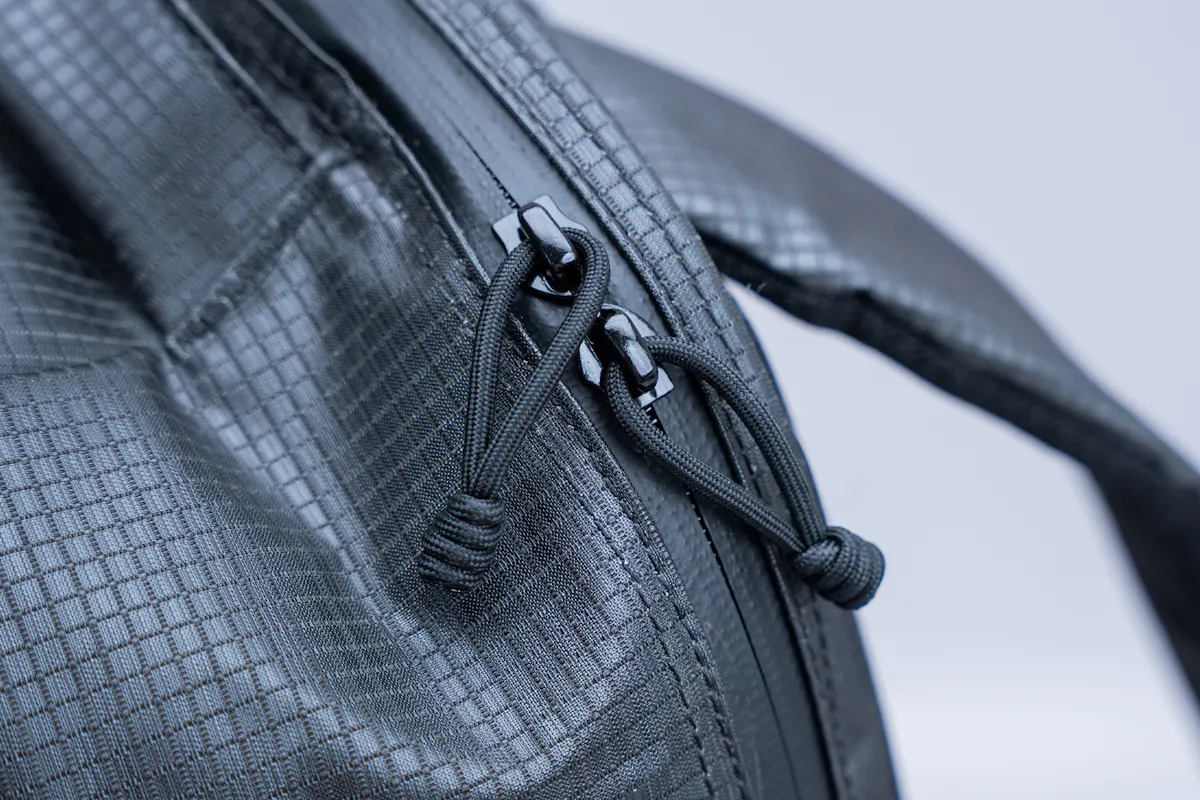
Hardware remains simple and reliable, with YKK zippers throughout. The overall construction leans minimal but cohesive, reinforcing the lightweight philosophy without feeling cheap or unfinished. ALPAKA has always made solid choices when it comes to hardware, so it’s not surprising that they’re sticking with the usual names. Zipper action feels smooth and consistent, and the pulls are sized appropriately for quick access without being bulky or over-designed.
It’s worth noting that we are testing a preproduction sample, and so some imperfections have been duly noted. For example, there are very small points along the fabric where the layers underneath seem to almost poke out. The fabric also feels a bit scratchier than intended in some areas. All of that said, these details should get ironed out in retail samples, but due diligence compels us to point them out.
The harness system follows the same design logic. Shoulder straps are thin but contoured enough to remain comfortable, and the breathable back panel provides solid ventilation with both vertical and horizontal airflow channels. Even under load, the bag stays comfortable for commuting and short travel days. There is a sense that the design prioritizes long-term wearability through airflow rather than thick cushioning, which aligns well with the overall ultralight ethos.
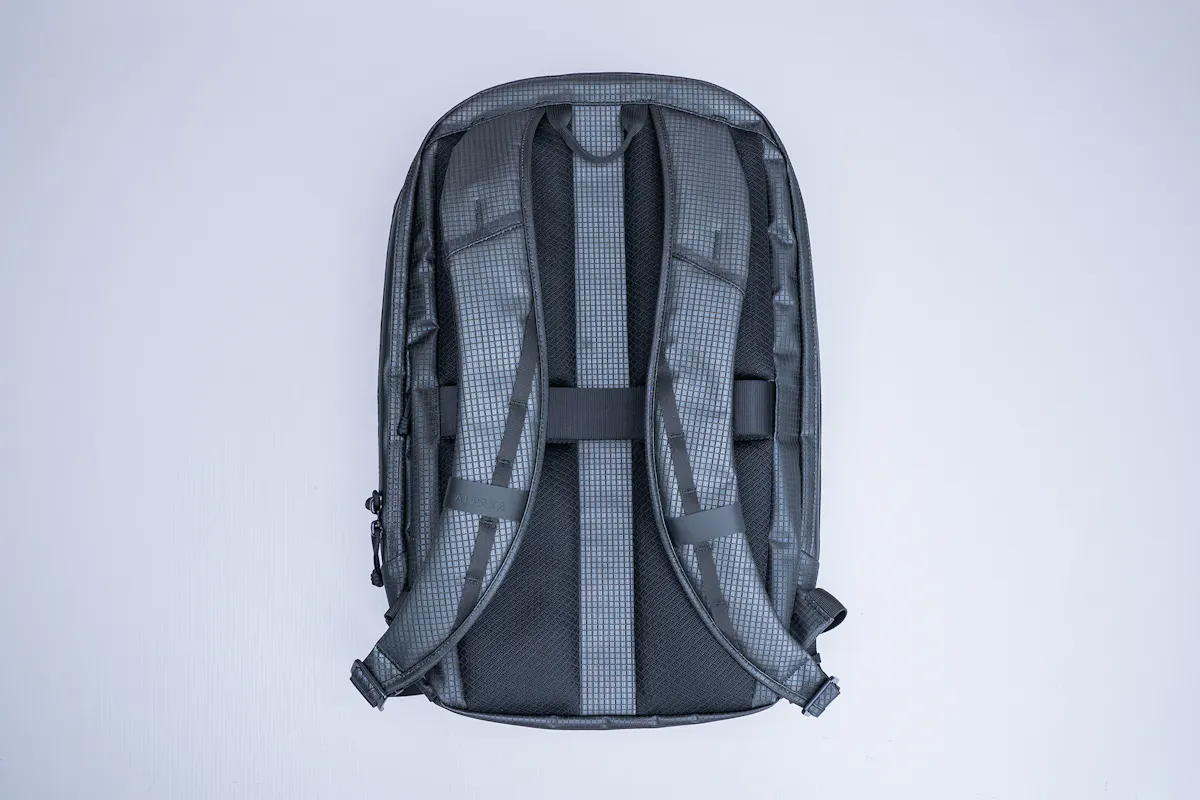
A sternum strap is included in final configurations (though missing in the pre-production unit), and Hypalon loops allow for accessory attachment. A luggage pass-through adds travel utility, making the pack easy to integrate into rolling luggage setups. These touches help ground the bag in real-world travel use, even if the core design leans more toward minimal everyday carry than full travel expansion.
Fit Notes
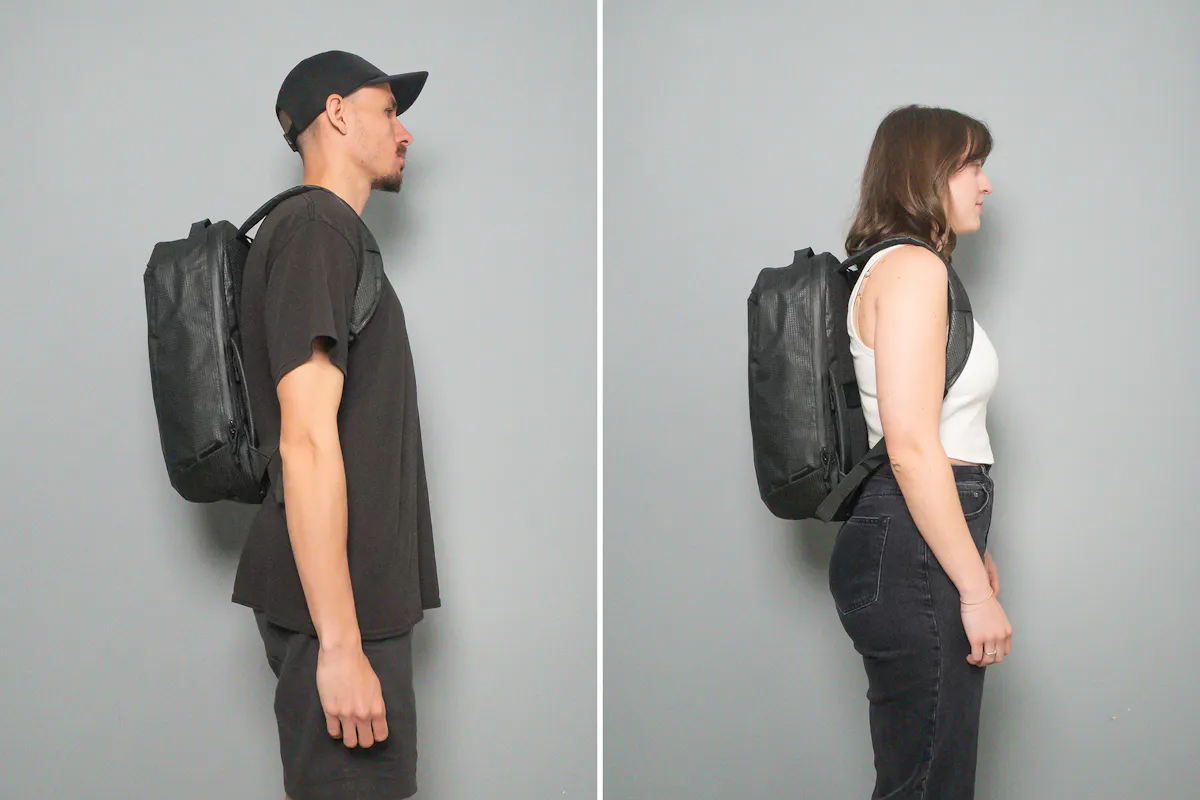
While wearing it, the ALPAKA Momentum Backpack 22L feels lighter than its capacity suggests, largely thanks to the Axodyne fabric and overall minimal structure. The shoulder straps are thin but well-shaped, so weight is distributed comfortably for everyday commuting. However, the limited padding becomes noticeable on longer walks or when wearing thinner clothing. The back panel does most of the cushioning, with enough foam and airflow channels to keep the pack stable, breathable, and centered without much bounce.
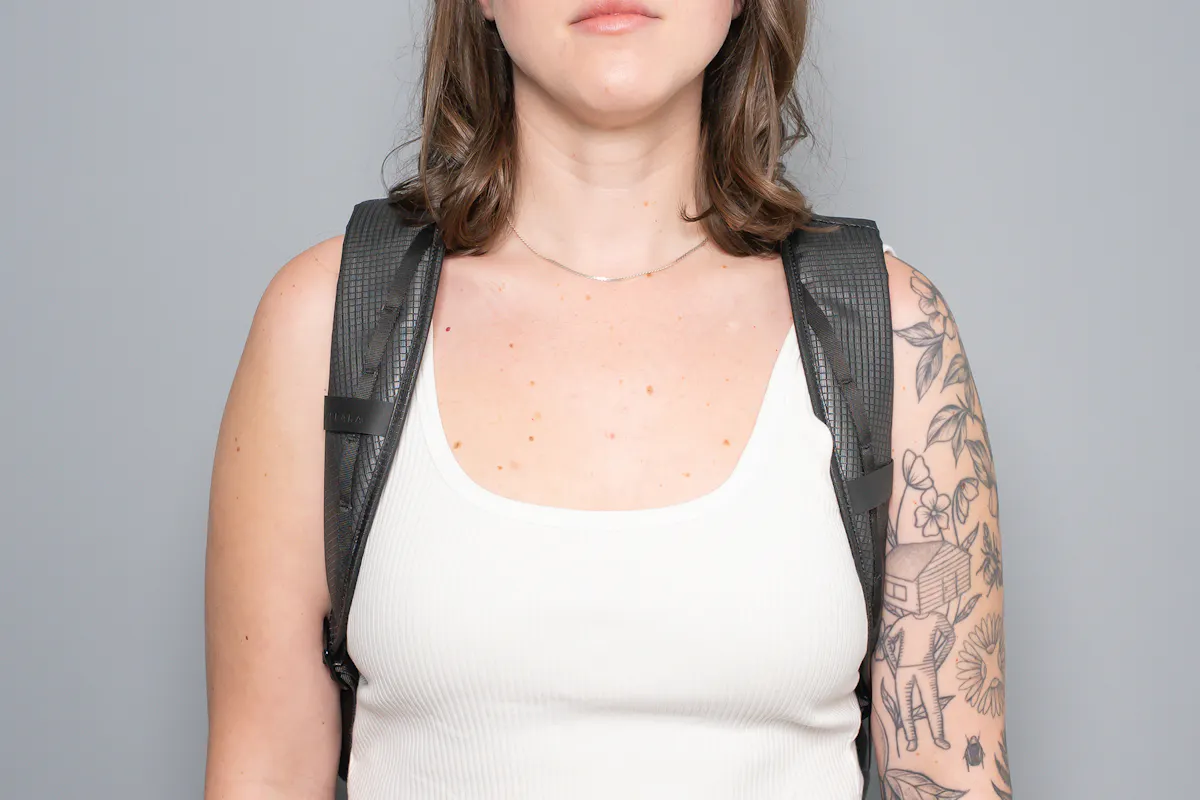
Fit-wise, the bag rides a bit long on smaller torsos, sitting lower on the back rather than high and compact, but it remains stable as long as you pack the load evenly. There’s no hip belt to complicate movement, and the sternum strap (when included) mainly helps fine-tune stability rather than compensate for the load. Overall, it feels light and unobtrusive on the body—prioritizing low weight and breathability over rigid structure or heavy-duty support. The most noticeable characteristic over time is how little the bag fights you as you move; instead, it simply follows along, which makes it easy to forget you’re carrying it during short to medium-length commutes.
Inside The Backpack
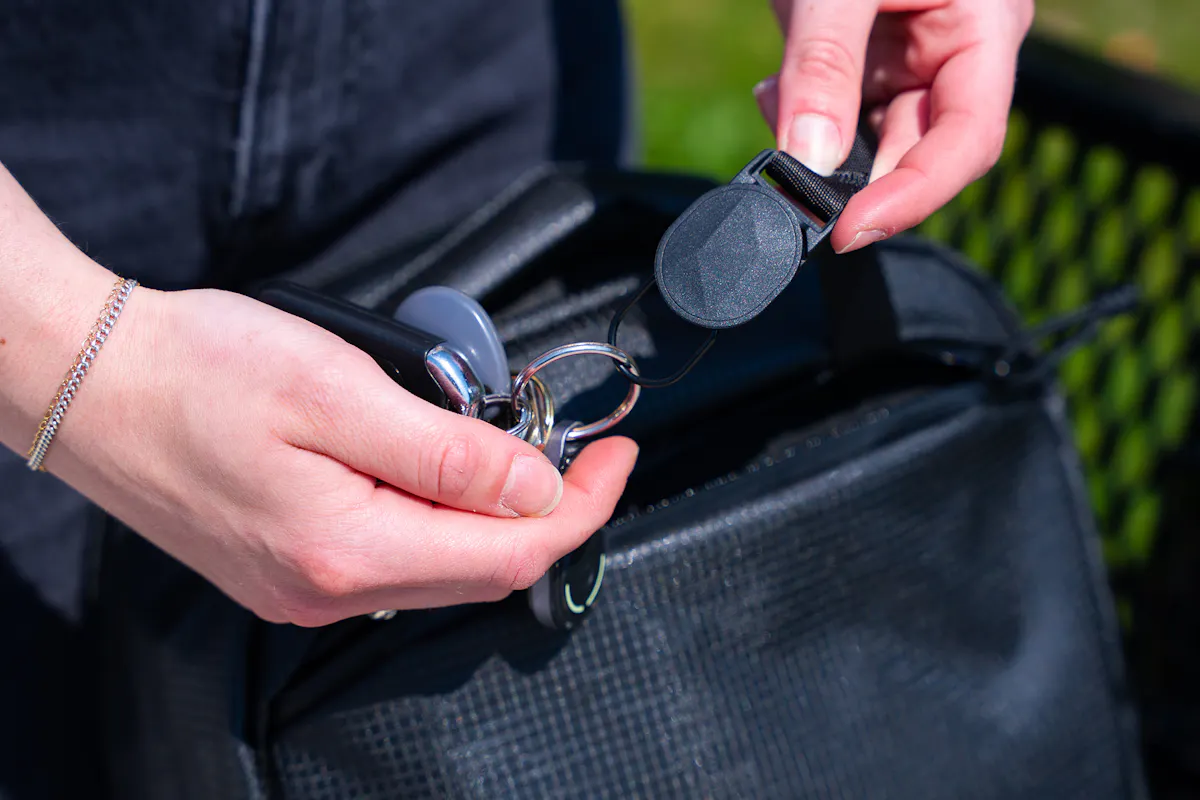
External organization is minimal, consisting mainly of a single top quick-access pocket. Despite its simplicity, it is functional enough for everyday essentials like a phone, wallet, keys, earbuds, and small accessories.
The Axodyne fabric may keep the bag lightweight, but it also means that weight distribution becomes pronounced when overpacked. Because the bag lacks a rigid structure, loading the front pocket heavily can cause a slight forward pull, especially when you don’t completely fill the main compartment. Over time, this reinforces the idea that the bag performs best when packed intentionally rather than casually overstuffed.
A detachable magnetic key leash adds convenience, and internal dividers help keep small items from becoming lost in the pocket. However, the overall organization remains intentionally sparse, encouraging users to rely on pouches like packing cubes and toiletry bags. This approach keeps the interior flexible but places more responsibility on your packing strategy.
The main compartment uses dual zippers that run nearly the full height of the bag, creating an opening that sits between a standard top-loader and a full clamshell design. While it offers good visibility and access, it never fully achieves the convenience of a true clamshell layout. Packing can feel slightly unintuitive as a result, especially when the bag is partially filled. The Axodyne fabric contributes to this by remaining soft and flexible, meaning the bag doesn’t always hold a structured shape during loading.
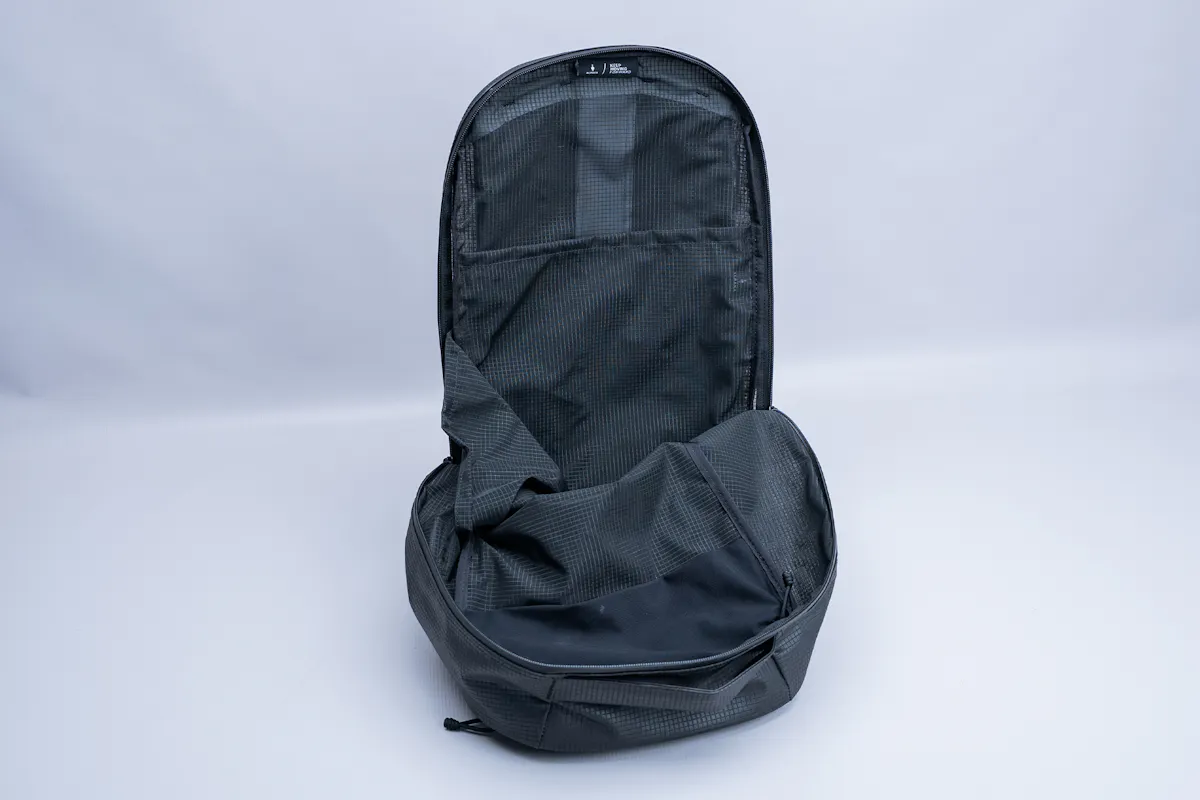
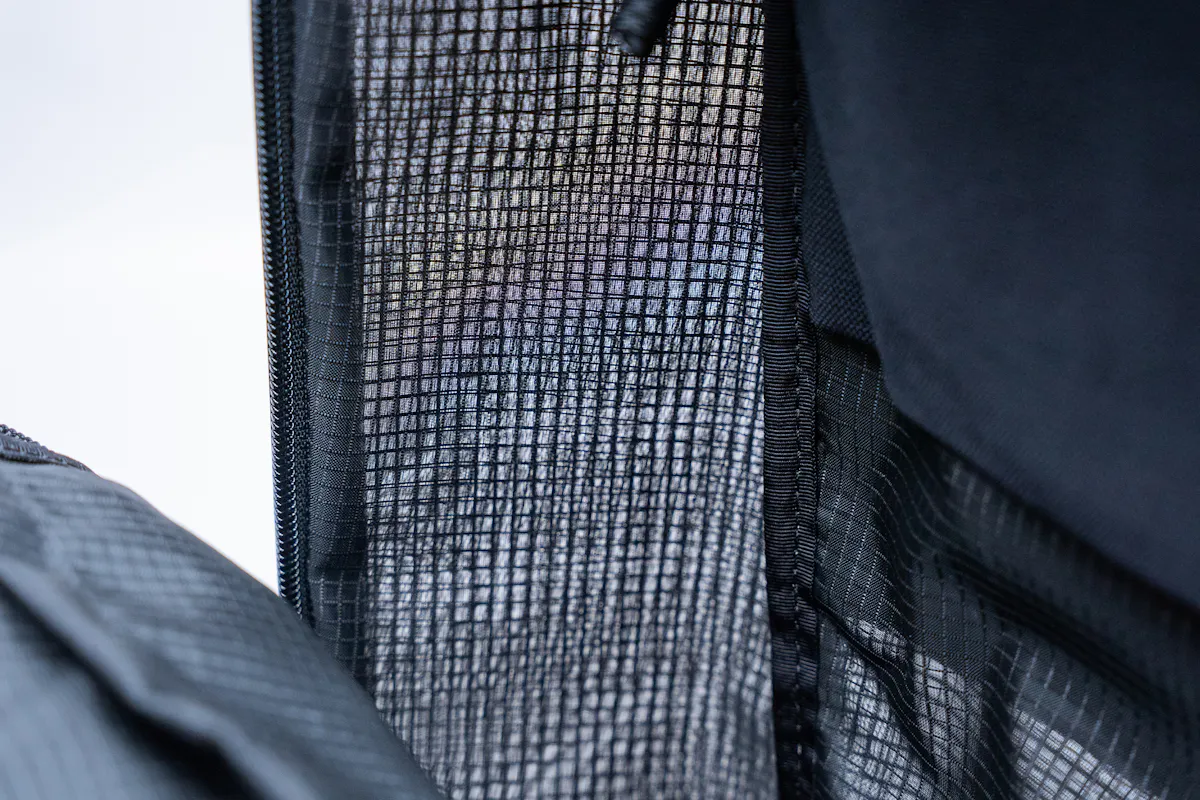
Internally, the organization is also quite minimal. A suspended water bottle sleeve sits along the sidewall, keeping bottles stable without consuming main compartment space. This is one of the more effective design choices, as it maintains flexibility while solving a common packing issue. A mesh lid pocket provides additional storage for items like headphones or small tech accessories. However, placing heavier items in this area can affect balance due to the bag’s ultralight construction.
The laptop compartment is sized for up to 16-inch devices but offers limited drop protection. The suspended base prevents direct ground contact in most cases, but its thin construction still raises concerns about impact. The Axodyne fabric’s lightweight nature contributes to this trade-off, prioritizing weight savings over protection. Over time, this becomes one of the most important considerations, depending on how often you set the bag down or use it in transit-heavy environments.
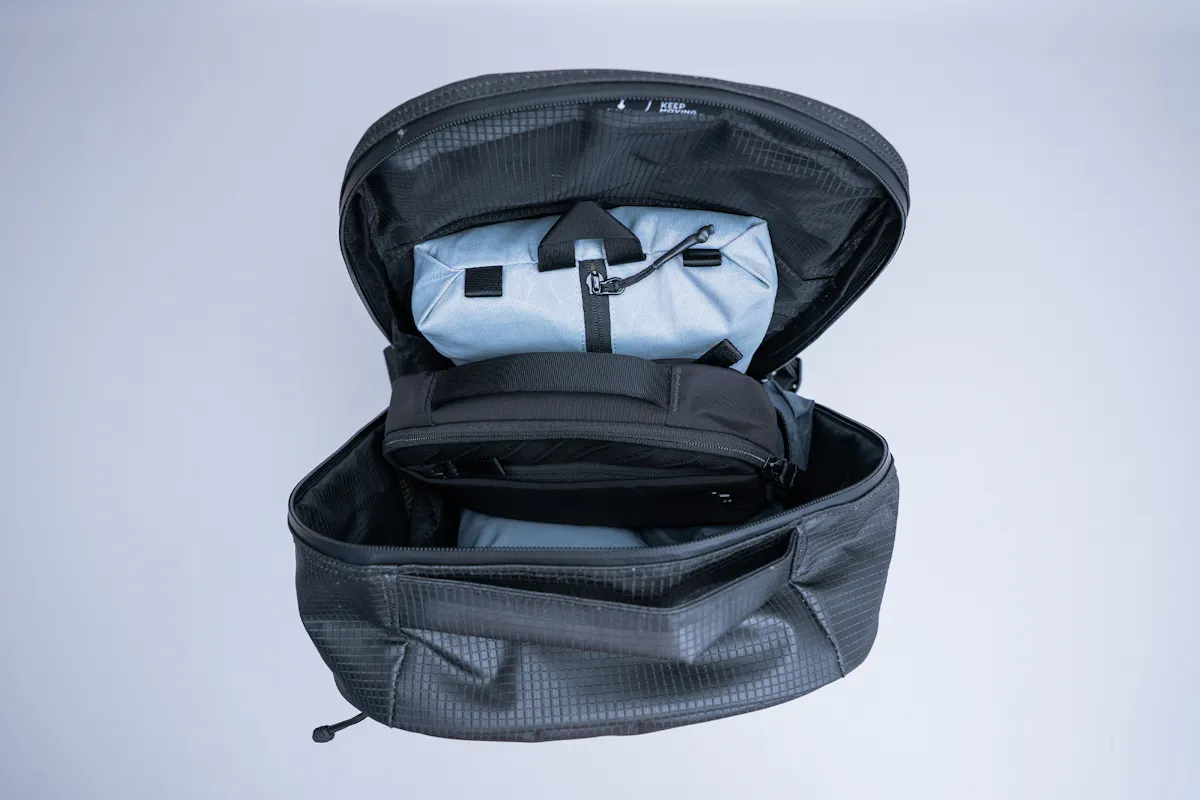
Ultimately, the interior works best for light, flexible packing setups rather than heavy tech organization. The Axodyne material defines this experience: extremely light, visually striking, and performance-oriented, but with deliberate compromises in structure and protection.
Usage Timeline
Condition: Excellent
- Material is so lightweight that it’s actually somewhat transparent
- Feels durable despite the lightweight design
- Interested to see if our gear feels protected inside
Condition: Excellent
- Ultralight design is great for those looking to cut down on weight
- Only a few loose threads, though we attribute them to the fact that we’re testing a pre-production sample
- Not a ton of padding, so sensitive gear is definitely at risk



Get your questions about the ALPAKA Momentum Backpack 22L answered from our team and the Pro Community right here on the page. Plus, join discussions with other members about gear, guides, and more.
Join Pack Hacker Pro or, Sign In